


Manifestaciones inscritas en la lista de
Patrimonio Mundial Inmaterial de la UNESCO
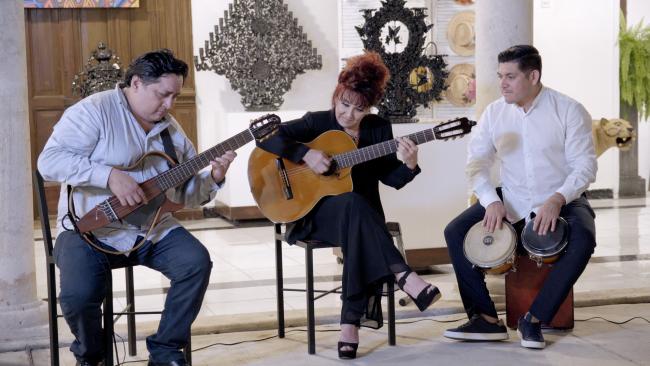
Bolero: identidad, emoción y poesía hecho canción

Patrimonio Inmaterial
Intangible / Tradiciones y expresiones orales
Instrumental and vocal ensembles, as well as soloists, perform bolero. This element is practiced and transmitted in family, neighborhood, community, and social settings, and is expressed through codes of conduct and styles of dress. Its bearers assume different roles, from writing to…

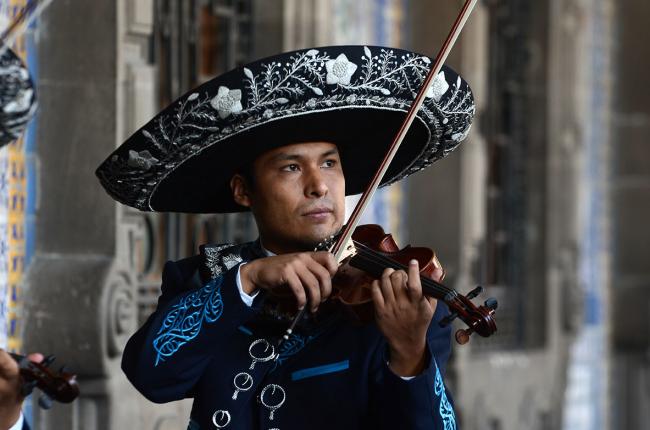
El Mariachi, música de cuerdas, canto y trompeta
Patrimonio Inmaterial
Intangible / Usos sociales, rituales y actos festivos
Mariachi music is a fundamental element of Mexican culture. It originated in small string ensembles that wore ritual clothing and performed a repertoire of religious minuets, jarabes-sones, valonas, corridos, songs, waltzes, polkas, and chotices by ear.
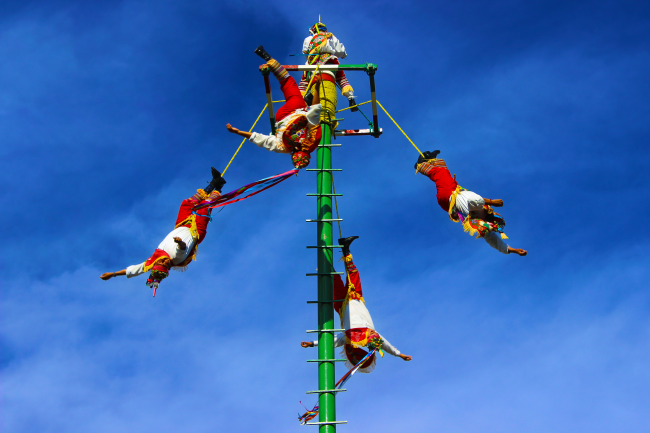
La ceremonia ritual de los Voladores
Patrimonio Inmaterial
Intangible / Usos sociales, rituales y actos festivos
The ritual ceremony of the voladores is a dance associated with fertility practiced by various indigenous peoples of Mexico and Central America—including the Totonacs, Teeneks, Nahuas, Ñañhus, and Mayans—although its most representative and emblematic value is concentrated in Totonacapan,…

La charrería, tradición ecuestre en México
Patrimonio Inmaterial
Intangible / Tradiciones y expresiones orales
Its origins date back to the 16th century when cattle ranches in the north and center of the country, due to their rapid development, found it necessary for the cowboys of the region to work together and cooperate in order to keep track of the cattle on each property.
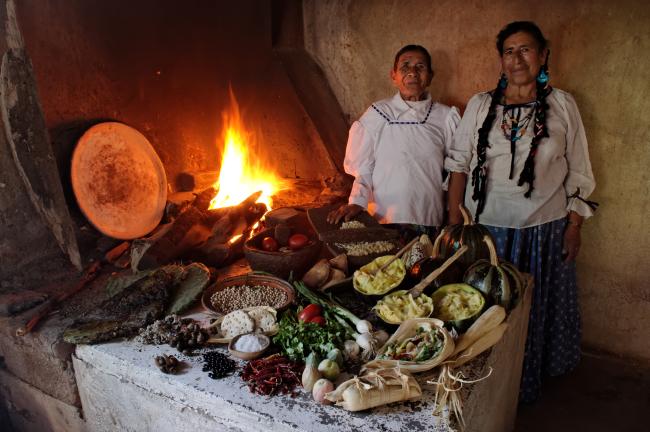
La cocina tradicional mexicana: Una cultura comunitaria, ancestral y viva y el paradigma de Michoacán
Patrimonio Inmaterial
Intangible / Conocimientos y usos relacioandos con la naturaleza y el universo
Mexican cuisine is a living manifestation of a cultural system of collective participation that includes agricultural practices, (rotational cultivation of corn and other plants, with slash-and-burn farming) and chinampa (artificial islands for cultivation in lake areas), ritual…
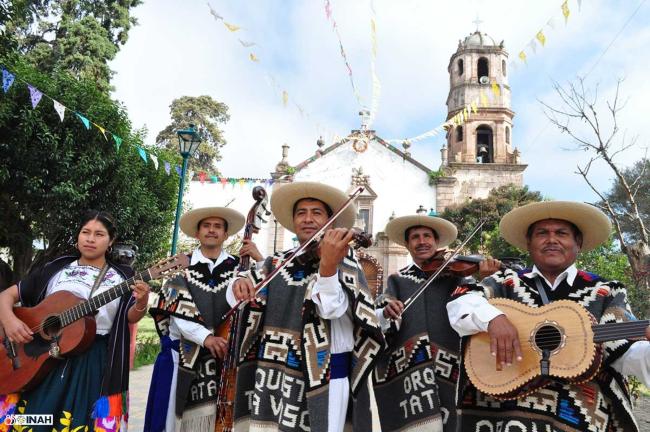
La pirekua, canto tradicional de los p’urhépechas
Patrimonio Inmaterial
Intangible / Usos sociales, rituales y actos festivos
Pirekua is a musical creation representative of the P'urhépecha community in the state of Michoacán, whose origins date back to the 16th century as a result of a mixture of Amerindian, European, and African influences.
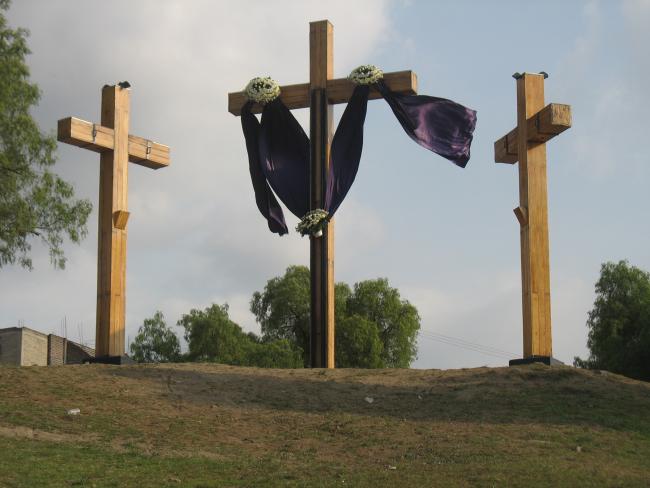
La representación de la Pasión, Muerte y Resurrección de Cristo en Iztapalapa
Patrimonio Inmaterial
Intangible / Tradiciones y expresiones orales
The Representation of the Passion of Christ in Iztapalapa is a ritual tradition with deep historical roots that expresses the collective identity of a community of pre-Hispanic origin, in which indigenous and Christian elements are articulated.

La romería de Zapopan: ciclo ritual de La Llevada de la Virgen
Patrimonio Inmaterial
Intangible / Usos sociales, rituales y actos festivos
Held on October 12 each year, the Pilgrimage in honor of the Virgin of Zapopan is a religious and cultural tradition whose origins date back to 1734.
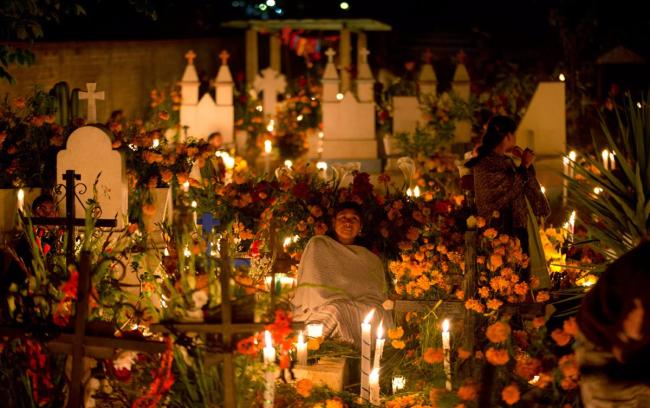
Las fiestas indígenas dedicadas a los muertos
Patrimonio Inmaterial
Intangible / Usos sociales, rituales y actos festivos
Every year at the end of the annual corn cycle, Mexico's indigenous communities celebrate the Day of the Dead with festivities, marking the temporary return of their ancestors' souls to Earth. This ceremony reaffirms the role of individuals in society and reinforces the sociopolitical…
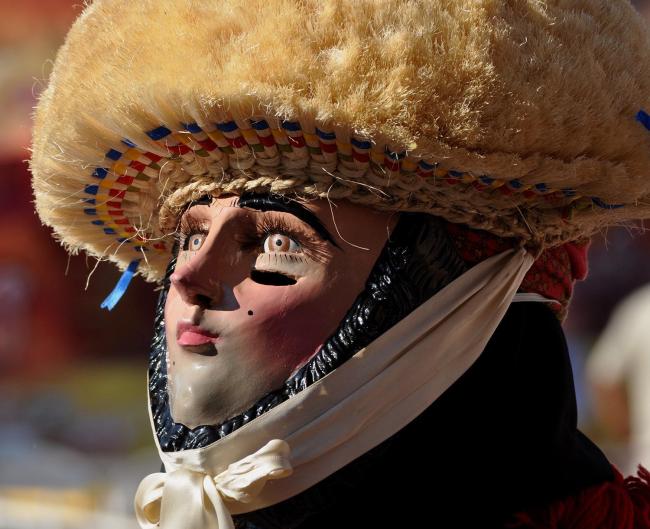
Los parachicos en la fiesta tradicional de enero de Chiapa de Corzo
Patrimonio Inmaterial
Intangible / Usos sociales, rituales y actos festivos
Since the 18th century, the traditional Fiesta Grande de Chiapa de Corzo has been held every year from January 4 to 23 in the state of Chiapas.

Lugares de memoria y tradiciones vivas de los otomí-chichimecas de Tolimán: la Peña de Bernal, guardiana de un territorio sagrado
Patrimonio Inmaterial
Intangible / Usos sociales, rituales y actos festivos
Every year, the Otomí-Chichimeca peoples settled in the semi-desert region of the state of Querétaro, in central Mexico, gather at the symbolic triangle formed by Peña de Bernal and the Zamorano and Frontón hills.

Procesos artesanales para la elaboración de la Talavera de Puebla y Tlaxcala (México) y de la cerámica de Talavera de la Reina y El Puente del Arzobispo (España)
Patrimonio Inmaterial
Intangible / Técnicas artesanales tradicionales
The process of making Talavera pottery involves traditional techniques that have been passed down from generation to generation through the intrinsic work carried out in pottery workshops (each of which has its own distinctive features, distinguishing one piece from another) or simply…
