









La romería de Zapopan: ciclo ritual de La Llevada de la Virgen
La romería de Zapopan: ciclo ritual de La Llevada de la Virgen

World Heritage
Intangible
Usos sociales, rituales y actos festivos
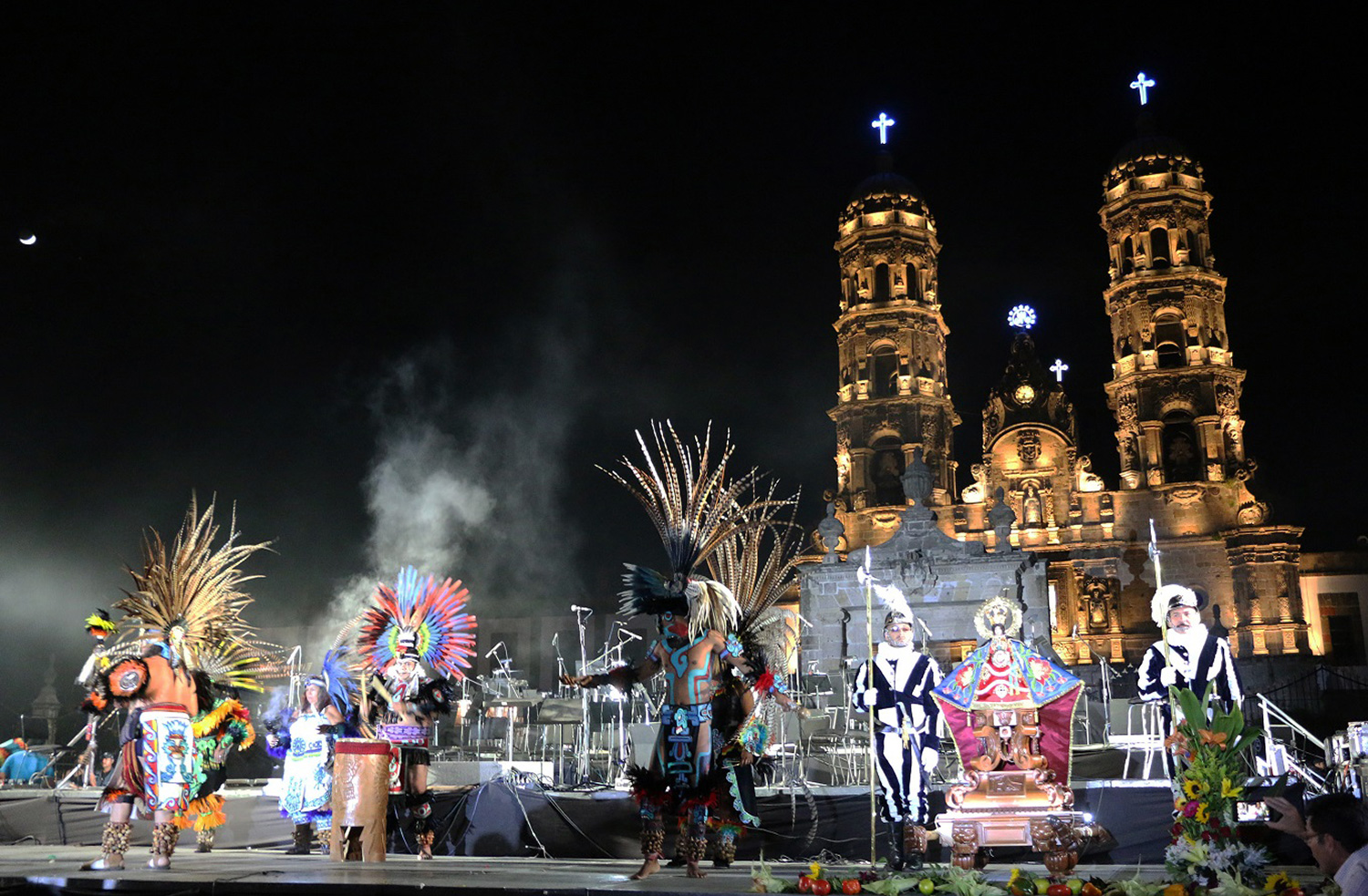
Held on October 12 each year, the Pilgrimage in honor of the Virgin of Zapopan is a religious and cultural tradition whose origins date back to 1734. That day marks the end of the annual cycle of rituals popularly known as “La Llevada de la Virgen” (The Carrying of the Virgin), which begins in May and includes numerous liturgical and community activities. At the end of this cycle, the return of the Virgin to her basilica in the town of Zapopan is celebrated with (pre-Hispanic) dances, music, prayers, and fireworks, in which more than 30,000 dancers participate and around 2 million pilgrims take part, whose entire families have preserved the tradition for almost 300 years, passing it down from one generation to the next.
The annual celebration of La Romería on October 12, in honor of the image of the Virgin of Zapopan, is a tradition that dates back to 1734. This day marks the final phase of the annual ritual cycle popularly known as “La Llevada de la Virgen” (The Carrying of the Virgin), which begins in May and includes numerous community and liturgical activities. The cycle culminates with the return to the Basilica of Zapopan.
More than two million people participate, and one of the main features of the festival is the large presence and participation of different indigenous dance groups. La Llevada and the activities derived from the ritual cycle comprise a massive public demonstration in which the streets and public spaces become a ritual festival for the community, with various artistic expressions of collective collaboration.
Throughout the year, the planning of activities depends on interaction between different communities, which helps them renew and strengthen their social ties. Thanks to community support for this practice year after year, La Romería is considered one of the most popular and deeply rooted traditions in western Mexico. Through organized civil and ecclesiastical groups, the community of bearers and practitioners has ensured the survival of this cultural manifestation.
The ritual of “La Llevada” and the activities surrounding this tradition bring together huge crowds and turn the streets and public spaces into a great community celebration, accompanied by different artistic expressions that are the result of prior collective preparation.
Declaratoria UNESCO

Patrimonio Intangible
Categoría Usos sociales, rituales y actos festivos
Fecha 2018
Criterios de valor Universal Excepcional
Este lugar cumple con los siguientes criterios de valor Universal Excepcional
R.1
El elemento es patrimonio cultural inmaterial, en el sentido del Artículo 2 de la Convención.
R.2
La inscripción del elemento contribuirá a dar a conocer el patrimonio cultural inmaterial, a lograr que se tome conciencia de su importancia y a propiciar el diálogo, poniendo así de manifiesto la diversidad cultural a escala mundial y dando testimonio de la creatividad humana.
R.3
Se elaboran medidas de salvaguardia que podrían proteger y promover el elemento.
R.4
La propuesta de inscripción del elemento se ha presentado con la participación más amplia posible de la comunidad, el grupo o, si procede, los individuos interesados y con su consentimiento libre, previo e informado.
R.5
El elemento figura en un inventario del patrimonio cultural inmaterial presente en el(los) territorio(s) del(los) Estado(s) Parte(s) solicitante(s), de conformidad con los artículos 11 y 12 de la Convención.


