

Región cultural Norte
Cueva de la Olla

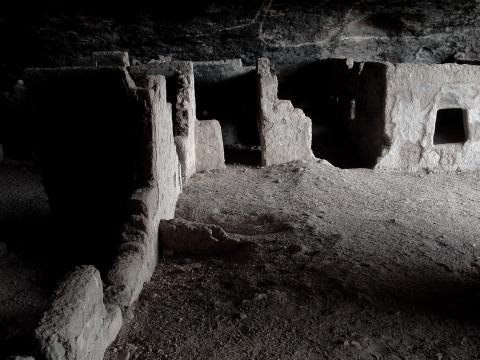
Impressive remains of habitation in the zone which date back to 5500 years BC, the oldest in Arid America and all of Mexico. Remarkable for the enormous communal granary in the shape of a cooking vessel, marvellously preserved, with a structure of twisted dry leaves covered in clay.

Cueva de la Olla
Impressive remains of habitation in the zone which date back to 5500 years BC, the oldest in Arid America and all of Mexico. Remarkable for the enormous communal granary in the shape of a cooking vessel, marvellously preserved, with a structure of twisted dry leaves covered in clay.
Cueva Grande
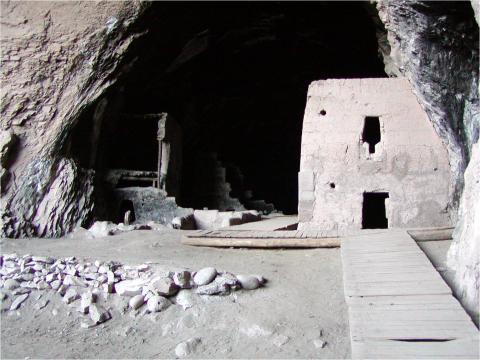
Eight centuries old, one of the largest sites of gatherers and the first settled farmers in Arid America. Among the many constructions in the shelter of the cave, it preserves the remains of a watchtower, so the inhabitants could keep a lookout and be in communication with the important enclave…
Cueva Grande
Eight centuries old, one of the largest sites of gatherers and the first settled farmers in Arid America. Among the many constructions in the shelter of the cave, it preserves the remains of a watchtower, so the inhabitants could keep a lookout and be in communication with the important enclave…
El Sabinito
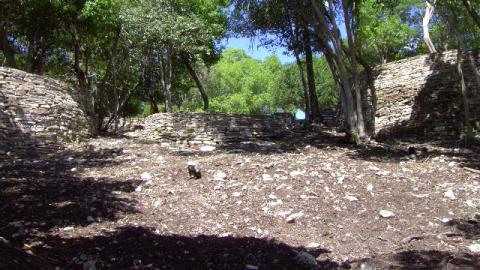
In the foothills of the Sierra de Tamaulipas, it has more than 600 structures adapted to the irregular local terrain. The highlights are two enormous circular constructions and a pyramid with a ceremonial altar.
El Sabinito
In the foothills of the Sierra de Tamaulipas, it has more than 600 structures adapted to the irregular local terrain. The highlights are two enormous circular constructions and a pyramid with a ceremonial altar.
El Vallecito
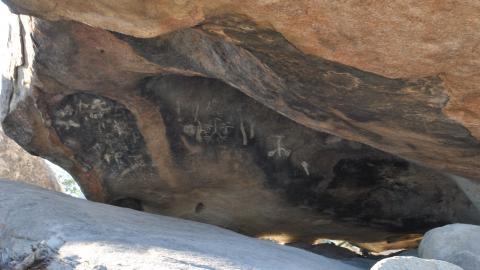
In rocky shelters of the Sierra de Juárez, there are numerous examples of cave paintings: geometric figures, zoomorphic and anthropomorphic designs appear on the walls. During the winter solstice, a ray of light enters the cave and lights up the eyes of an image known as El Diablito (Little…
El Vallecito
In rocky shelters of the Sierra de Juárez, there are numerous examples of cave paintings: geometric figures, zoomorphic and anthropomorphic designs appear on the walls. During the winter solstice, a ray of light enters the cave and lights up the eyes of an image known as El Diablito (Little…
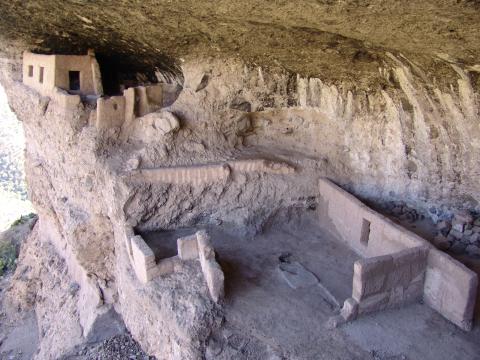
Huapoca
The rocky shelters of the Chihuahua sierra house dozens of human settlements separated by great distances. The houses are three and four stories high, inside the caves and built of moulded clay. Their “T” shaped doors are a characteristic of Paquimé.
Huapoca
The rocky shelters of the Chihuahua sierra house dozens of human settlements separated by great distances. The houses are three and four stories high, inside the caves and built of moulded clay. Their “T” shaped doors are a characteristic of Paquimé.
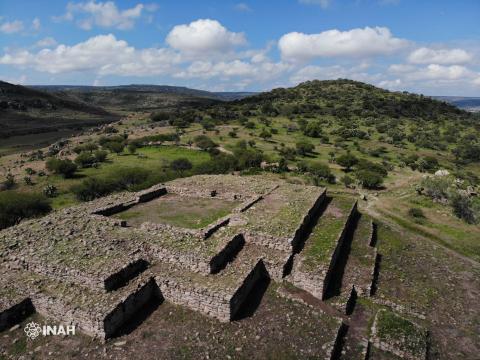
La Ferrería
This was an important religious center as shown by the circular foundations of its temples, a pyramid with a sunken courtyard, ballcourts, altars and terraces, plus mural and cave paintings. Believed to have been the most populous and extensive site in the Guadiana Valley.
La Ferrería
This was an important religious center as shown by the circular foundations of its temples, a pyramid with a sunken courtyard, ballcourts, altars and terraces, plus mural and cave paintings. Believed to have been the most populous and extensive site in the Guadiana Valley.
