




Huei Tzompantli
Huei Tzompantli
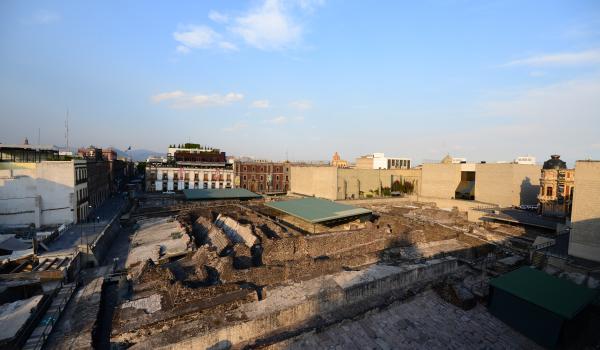
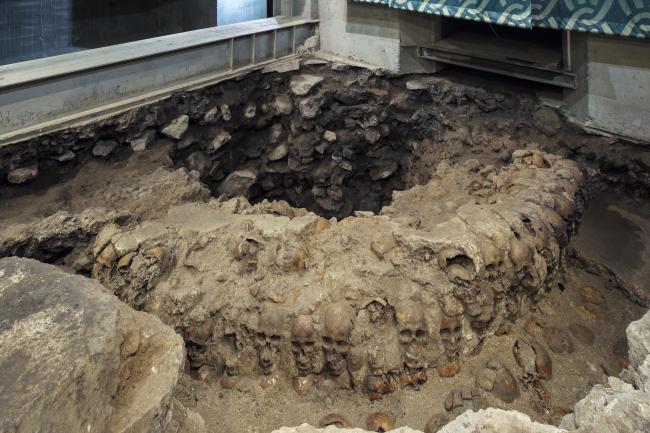
Beneath a historic building, a fragment of the Huei Tzompantli was found, a building where the skulls of sacrificed people were placed.
Between 2015 and 2017, during the foundation work on the building located at 24 República de Guatemala, in the Historic Center of Mexico City, archaeological remains were found. prompting the Urban Archaeology Program (PAU) of the National Institute of Anthropology and History (INAH) to conduct two field seasons in which they discovered that the remains located there are part of the Huei Tzompantli of Tenochtitlan.
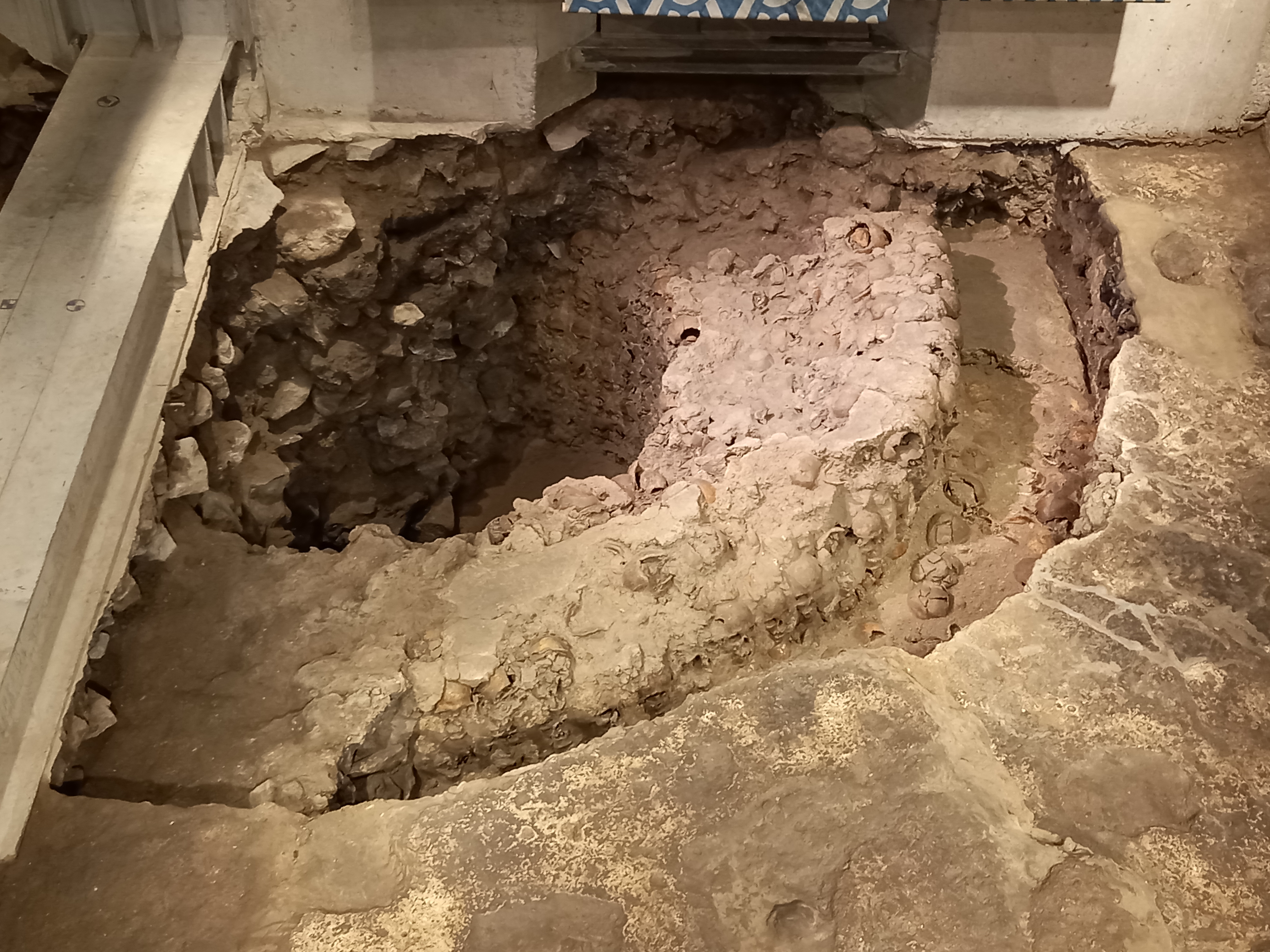
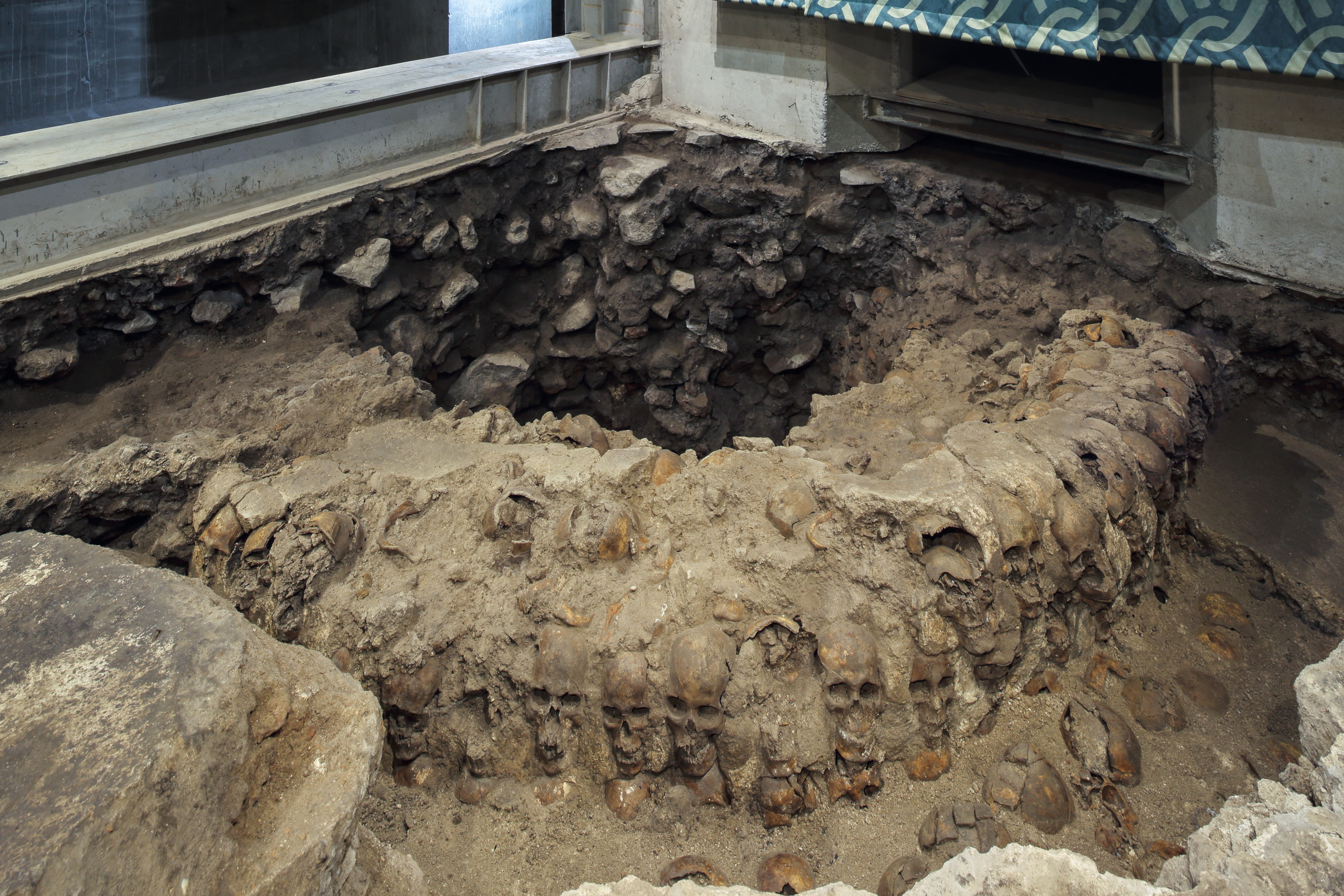
What can be seen is the northeast end of a low platform with a north-south orientation, approximately 70 cm high. The size of the Huei Tzompantli is unknown, but it is believed to have been between 36 and 40 m long and 12 or 14 m wide.
Two construction phases of the building have been identified, corresponding to phases VI (1486-1502) and VII (1502-1521) of the Templo Mayor. The best-preserved part is the stucco surface, which has circular holes 25 cm in diameter arranged in lines every 80 cm, where the wooden posts or beams that supported the rods with the skulls pierced through the temples and parietal bones were placed.
Two offerings were also found, the first consisting of fragments of carbonated stone objects (1502-1521) and the second, partially damaged during the viceregal period, consisting of twenty-one copper bells, skull fragments, and two green stone beads (1486-1502).
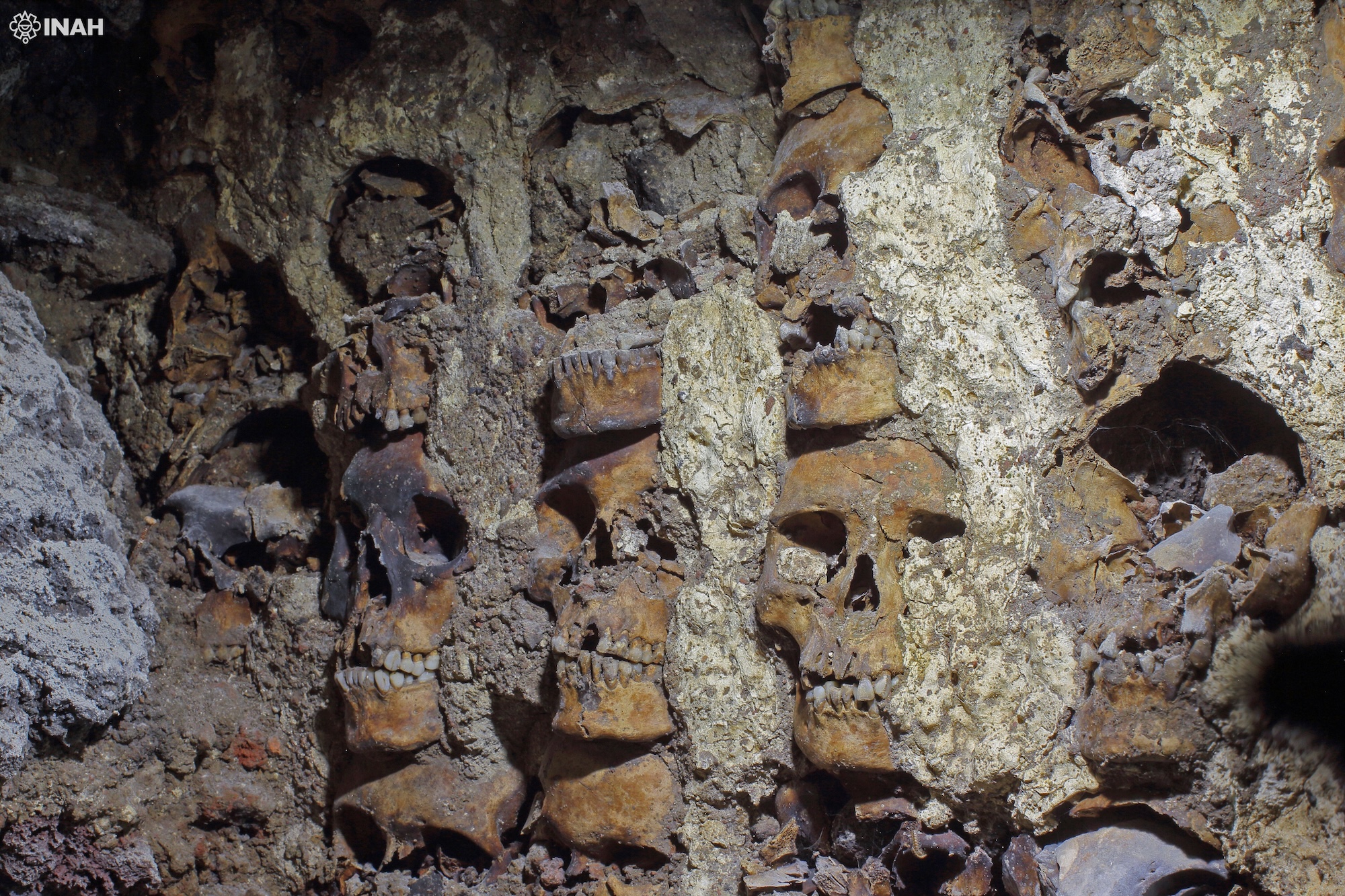
At the northern end of the platform, a circular element made of skulls joined together with lime and clay was found. These were placed in a sequence of concentric circles arranged in overlapping rows; some of them have the skulls facing the center of the circle, while others face outward. It is believed that this architectural element must have been taller. Currently, the element is between 1.25 m and 1.80 m high, with an approximate thickness of 1.56 m. A sample of 179 skulls was removed and studied; most of them corresponded to young adult males, with a smaller number identified as females and infants.
Source: Raúl Barrera Rodríguez, director of the Urban Archaeology Program