




Palacio Nacional Ventana 3
Palacio Nacional Ventana 3
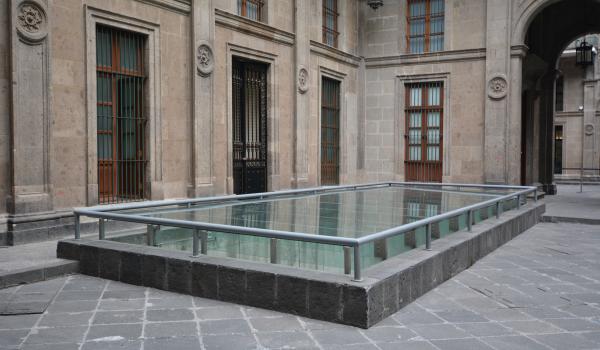
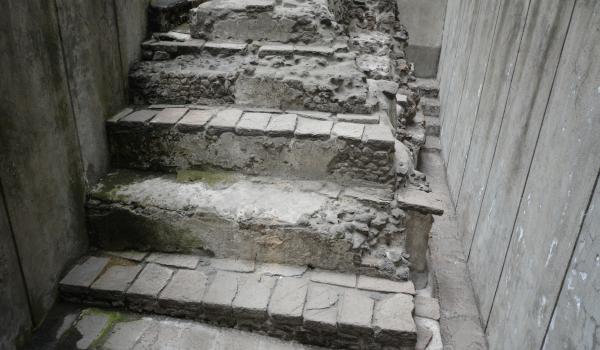
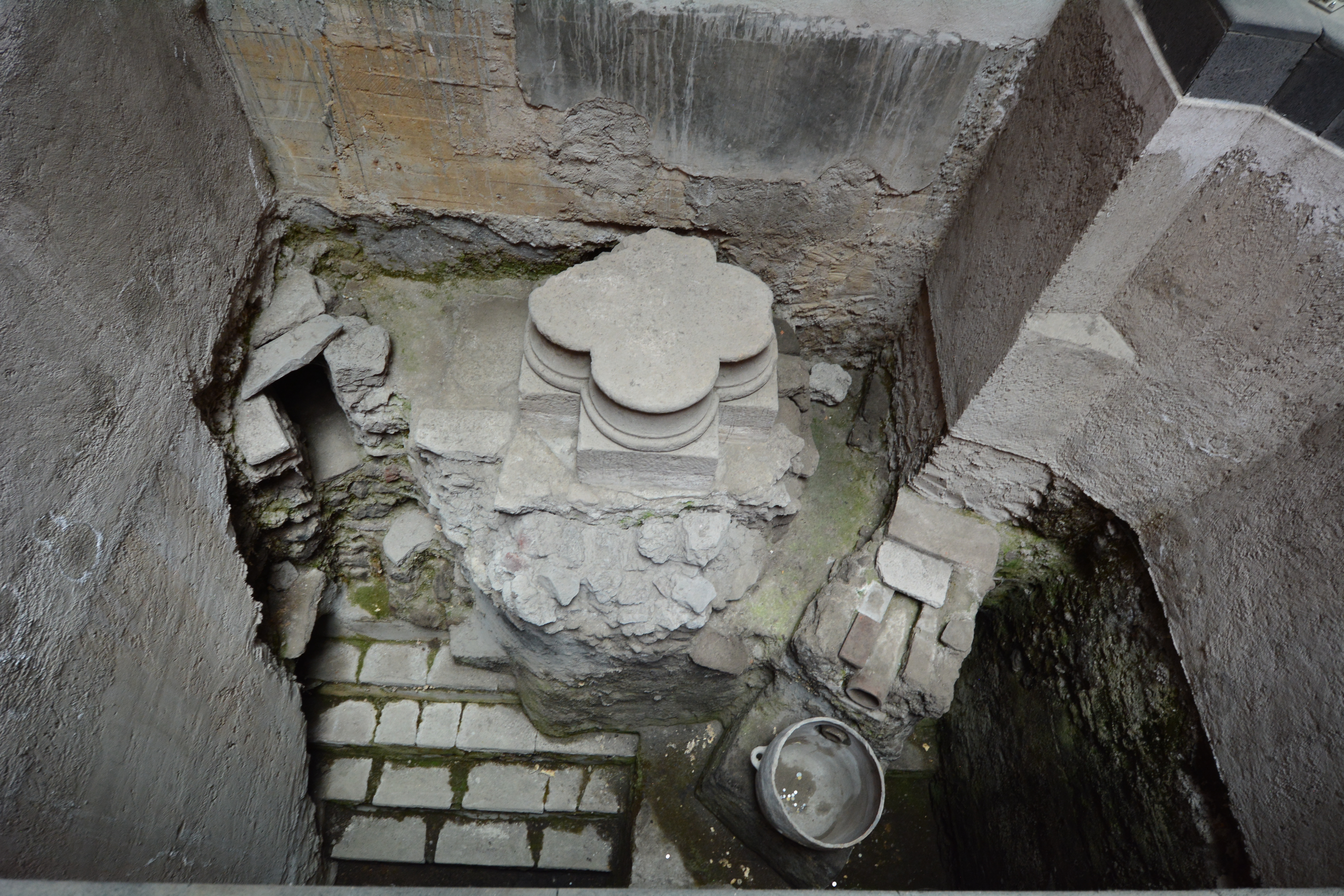
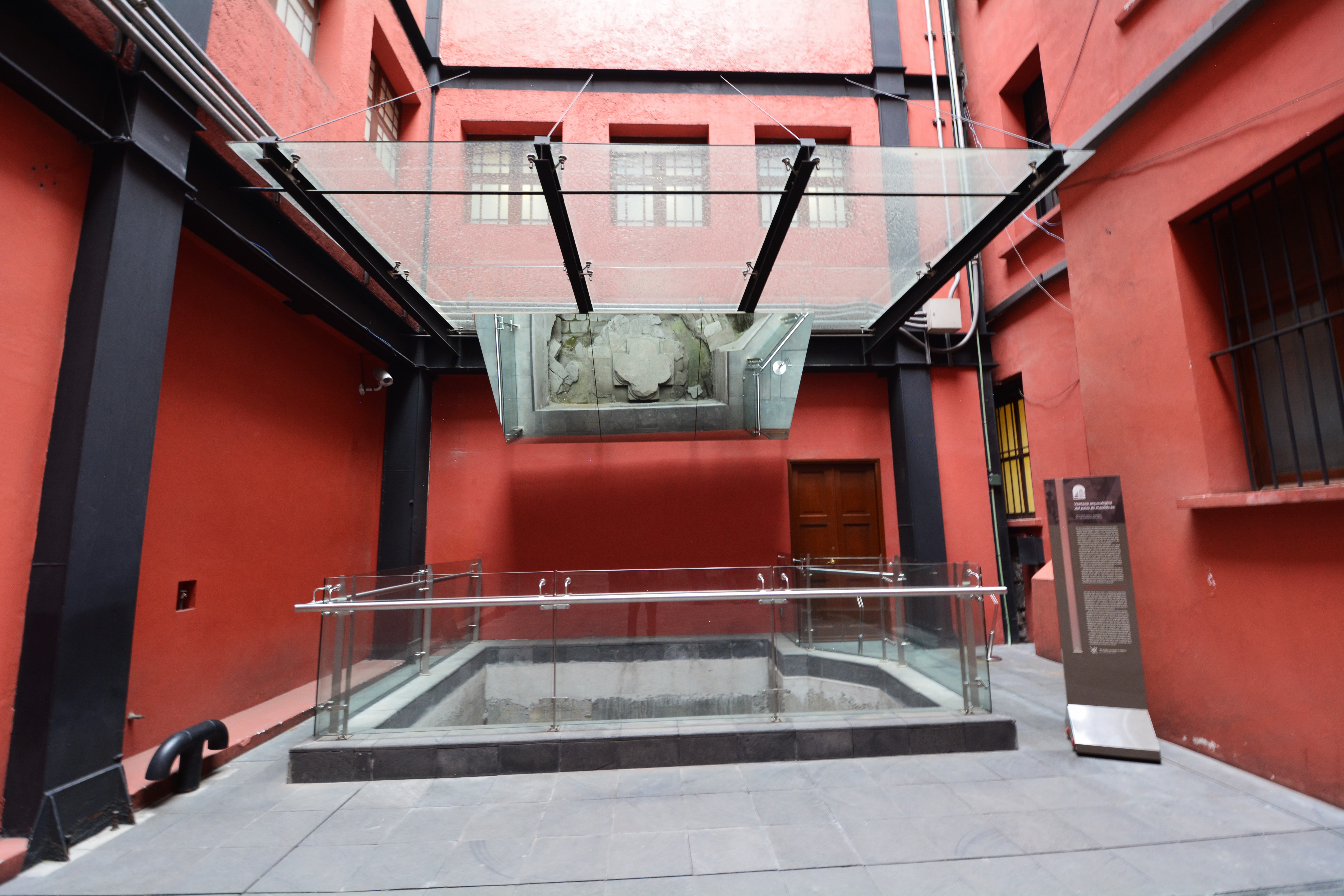
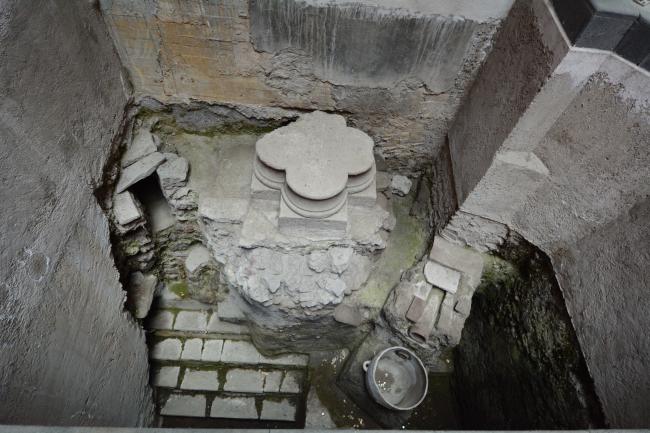
In the courtyard of the National Palace, you can see a cruciform base, the start of a staircase, stucco flooring, and drains that probably belonged to the palace of Moctezuma II.
During the heyday of Tenochtitlan, the area now occupied by the National Palace, seat of the Federal Executive Power, and up to the current building of the Supreme Court of Justice of the Nation, was home to the New Houses of the tlatoani Moctezuma Xocoyotzin. It was a majestic place with temples, warehouses, courtyards, offices, kitchens, bedrooms, bathrooms, a freshwater fountain from Chapultepec, and several doors leading to the public square and surrounding streets.
After the conquest, Hernán Cortés took ownership of this property along with others nearby. Upon his death, his heirs sold the property to the Spanish Crown in 1562 to be used as the viceroy's palace and seat of the Audiencia of New Spain.
After Mexico's declaration of independence in 1821, this building was transformed into the National Palace. Thus, from Tenochtitlan to the present day, this space has housed the political and economic power of the country, hence the importance of the remains displayed in the seven archaeological windows that visitors can see.
In the maneuvering yard, between the Courtyard of Honor and the Nezahualcóyotl Garden, there is an archaeological window measuring 6 m long by 4 m wide that displays pre-Hispanic and viceregal remains. The former consist of the remains of a staircase that runs north-south from a basalt slab floor; above are two drains made of clay pipes, one of which has a large clay container that serves as a manhole or inspection chamber. Both are located under the remains of a floor of andesite blocks on which sits a cruciform base that, in turn, serves as a support for a tetralobular column base that researchers believe was part of Hernán Cortés' houses. Finally, there is another, apparently later, drain made of tezontle stones with basalt covers.
Source: Raúl Barrera Rodríguez, director of the Urban Archaeology Program