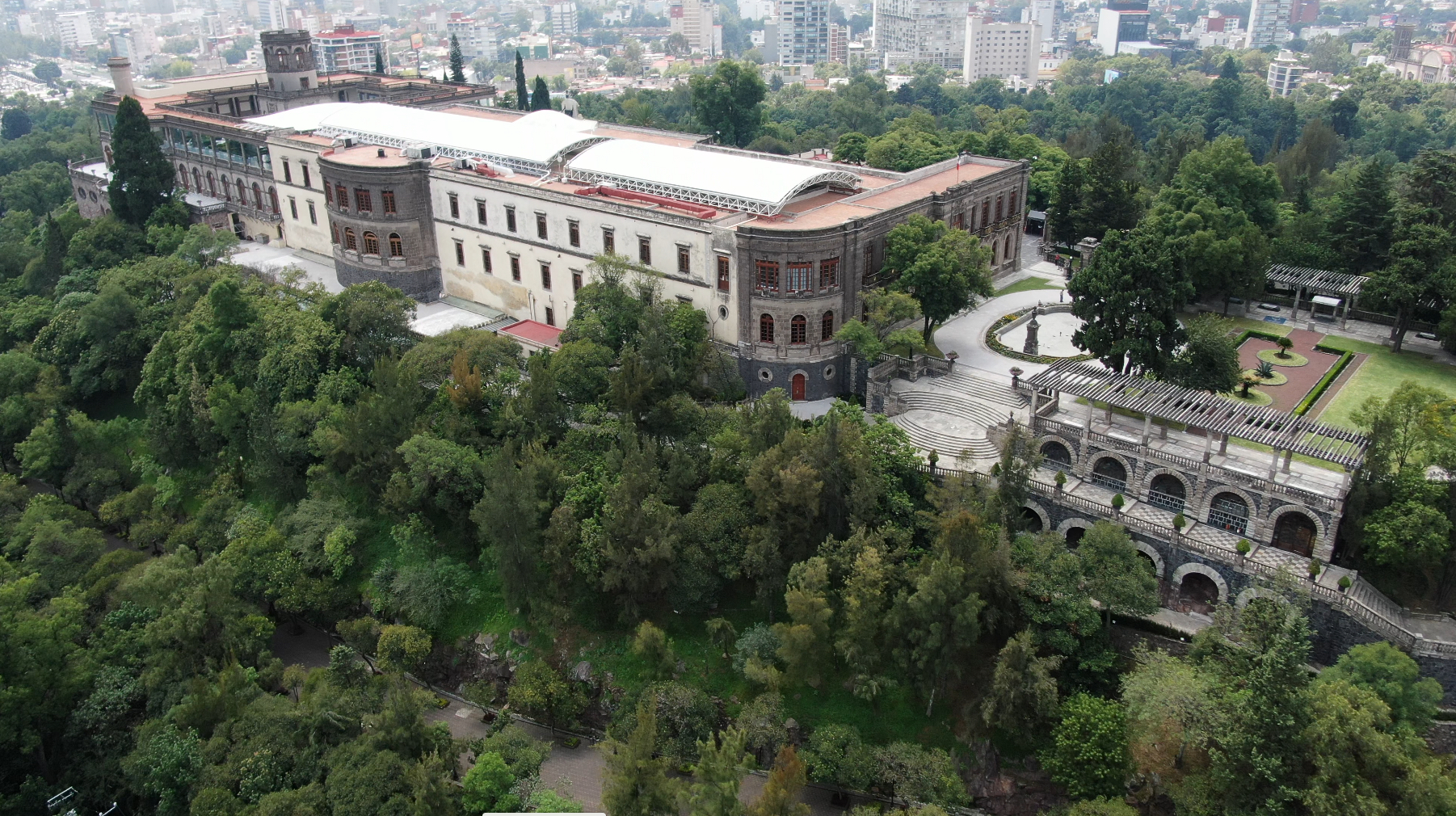











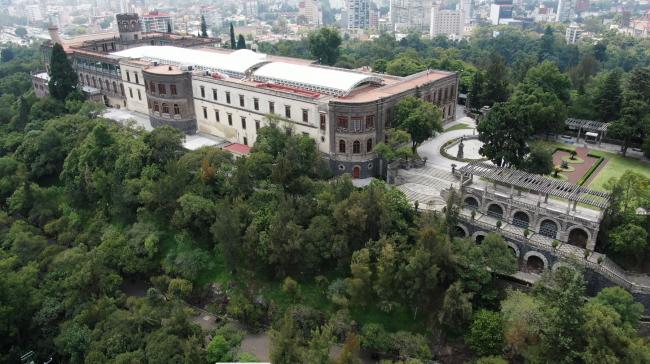

Museo Nacional de Historia Castillo de Chapultepec

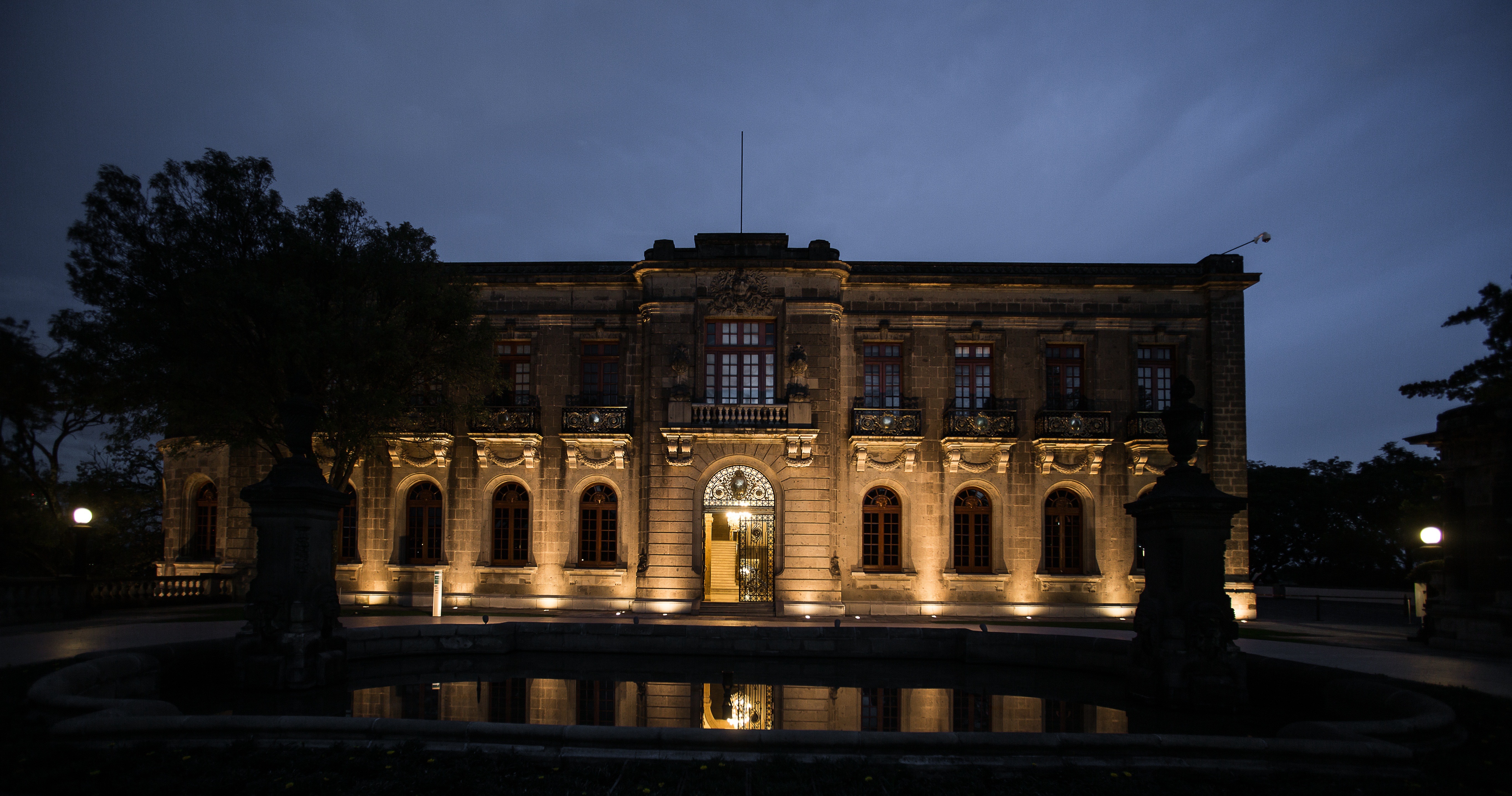
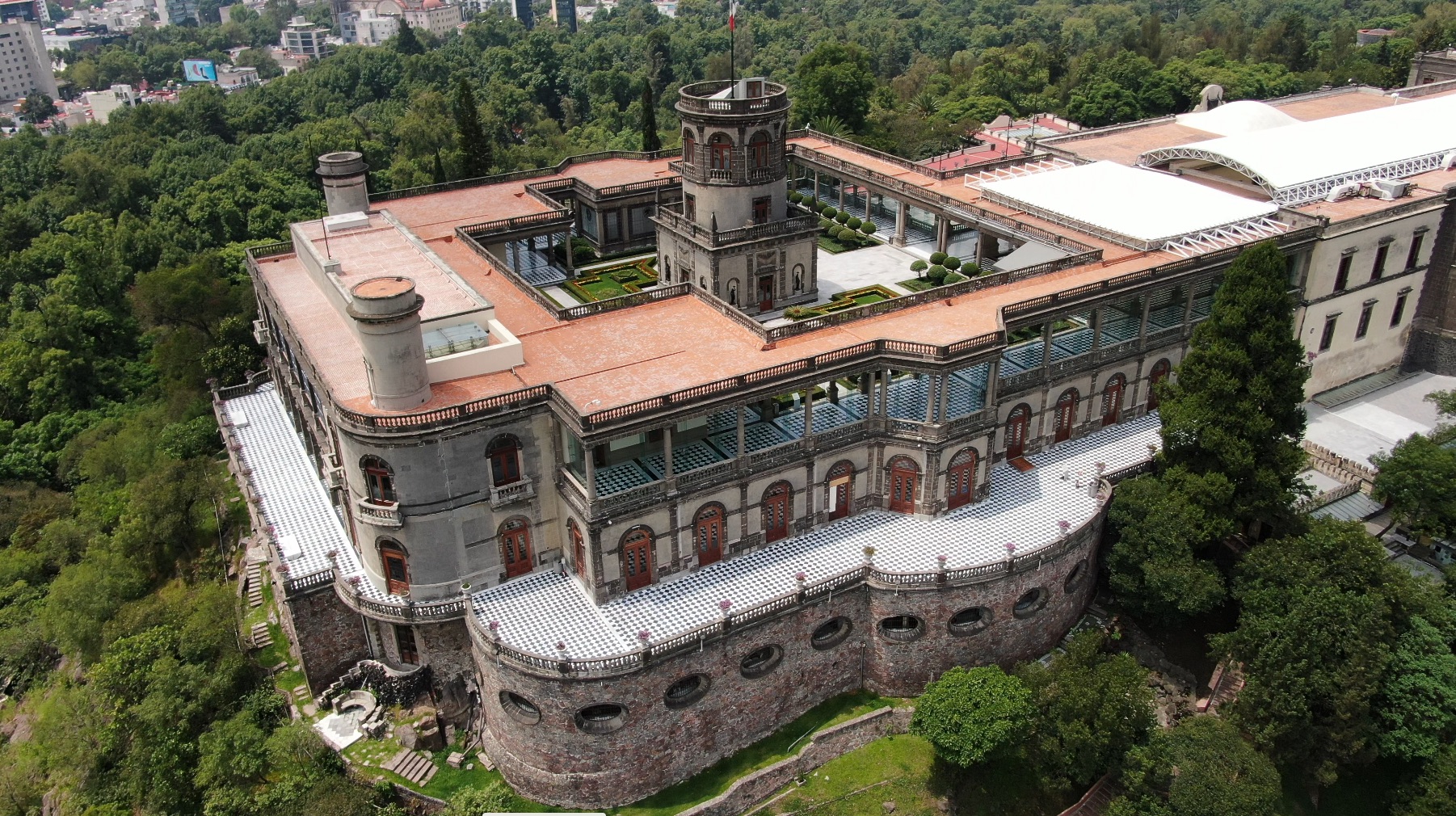
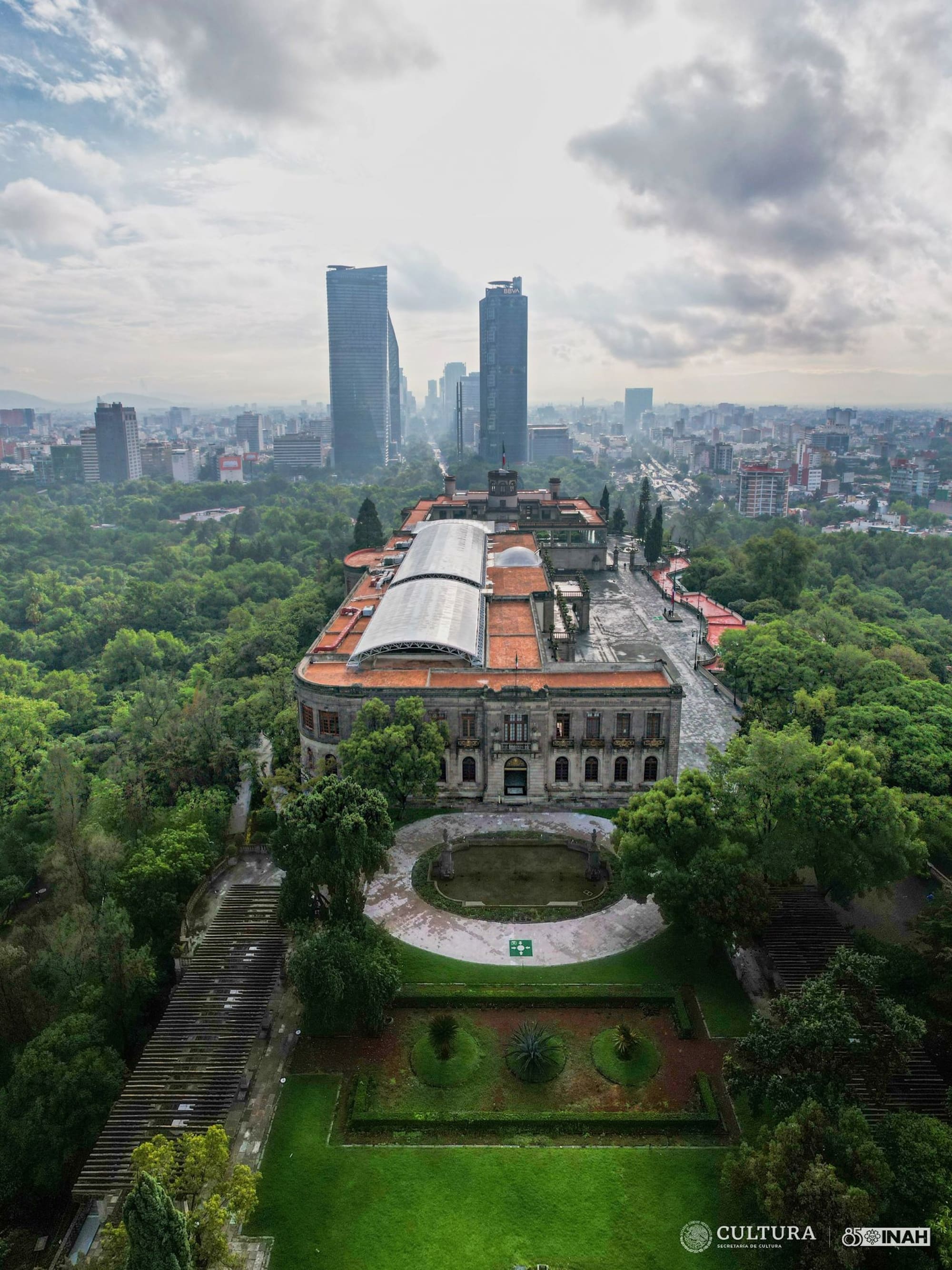
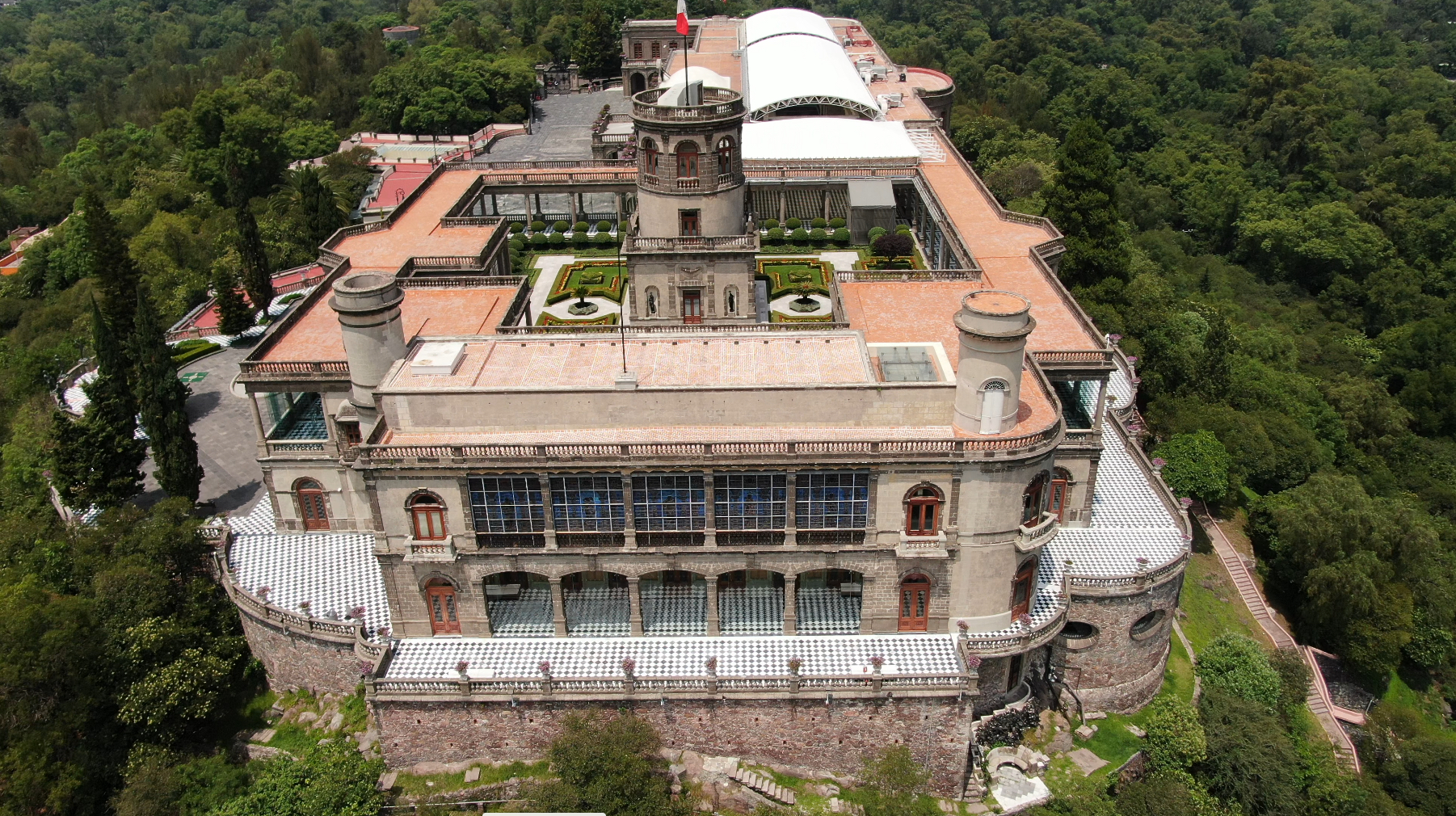
The former residence of viceroys, presidents and an emperor, Chapultepec Castle was the site of a major encounter during the Mexican-American war of 1847, and contains a splendid collection of historical artifacts.
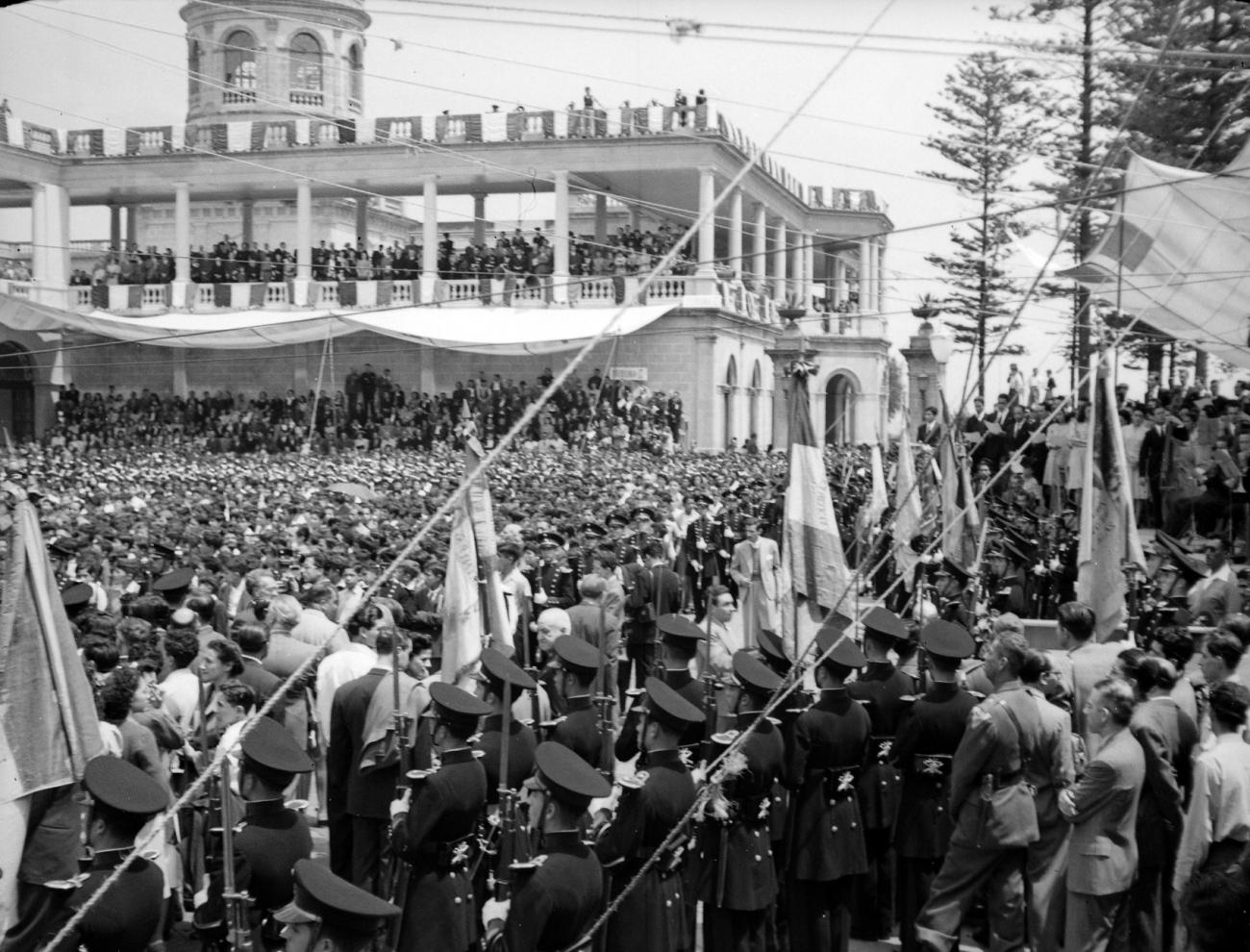
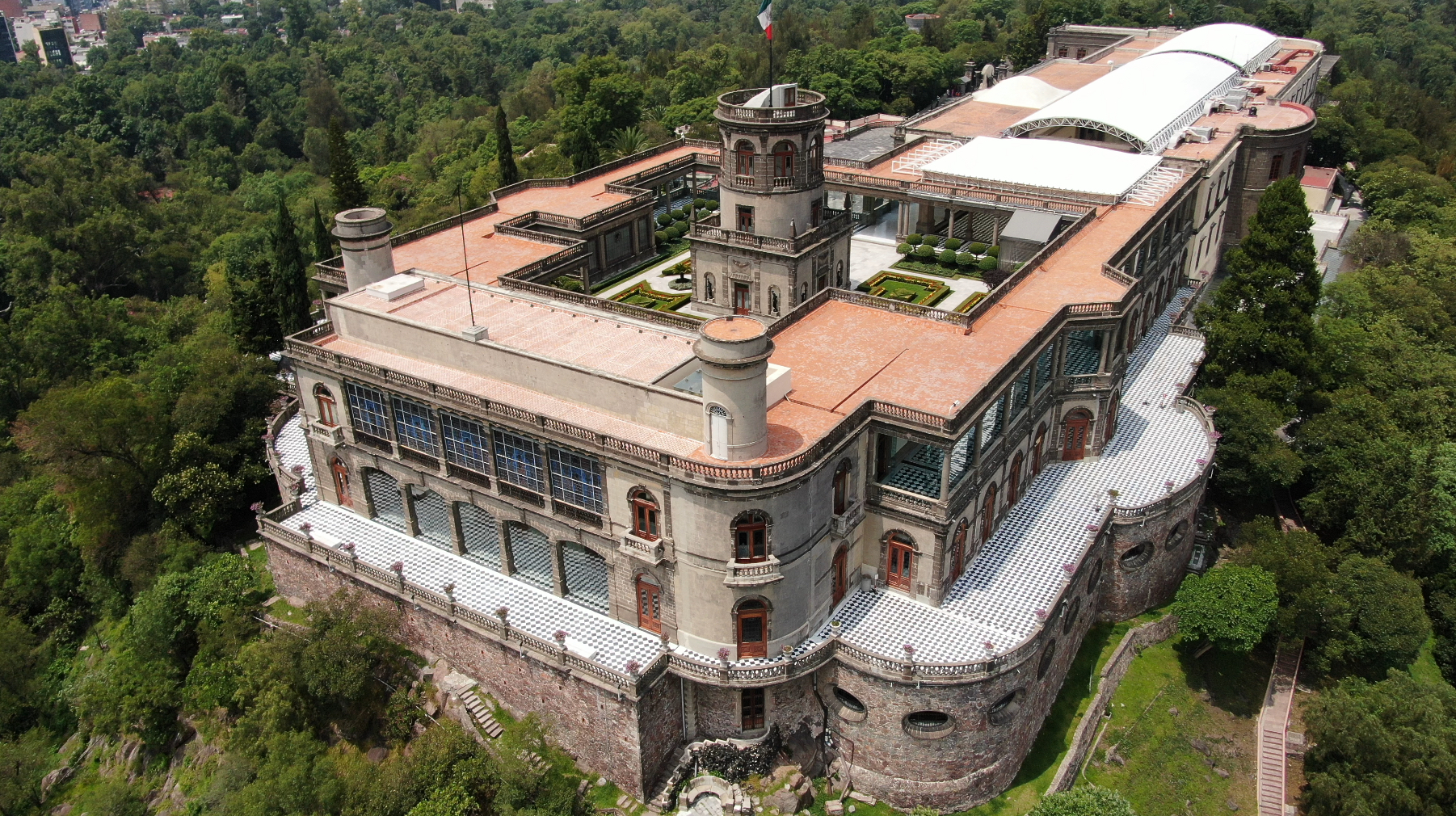
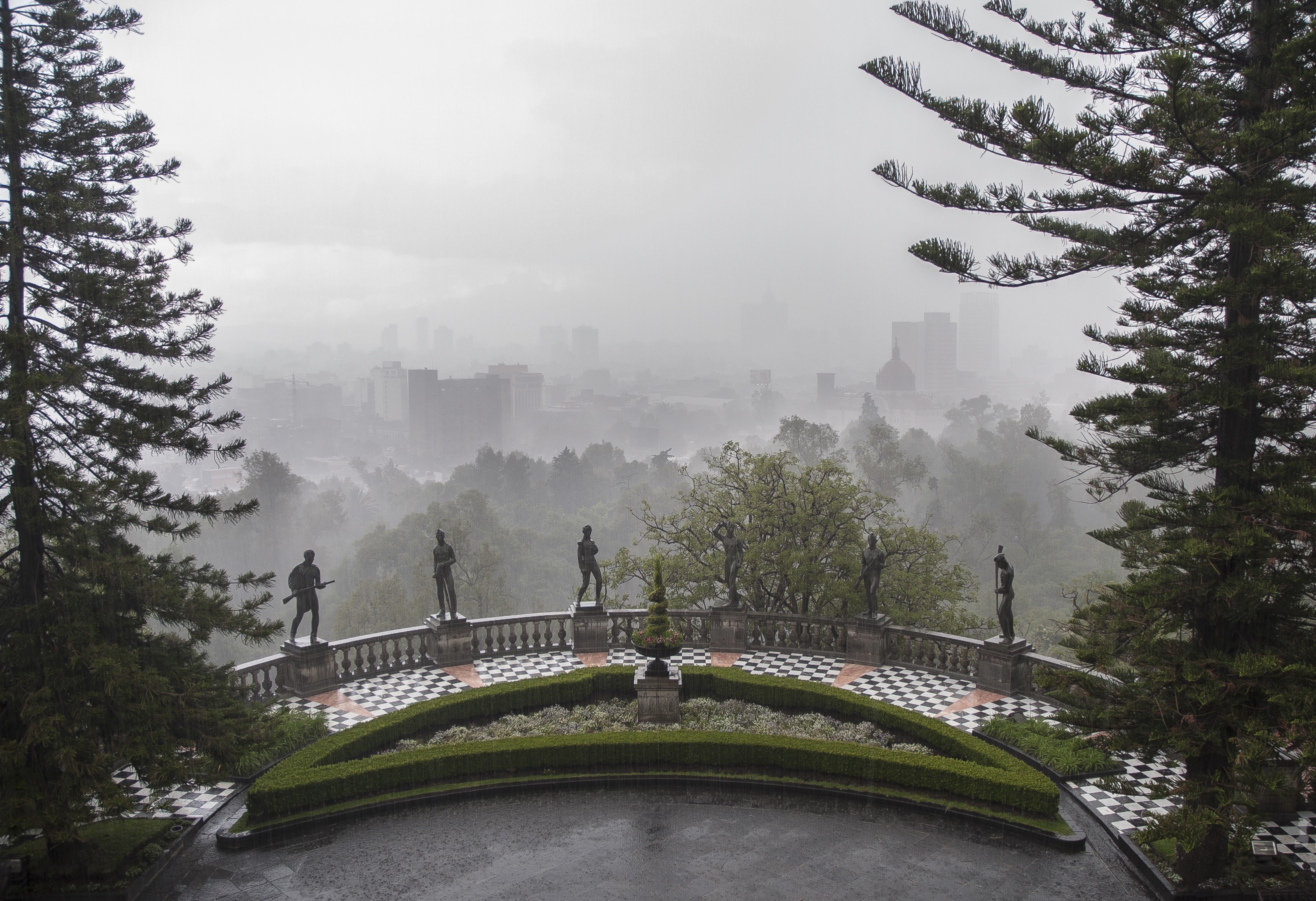
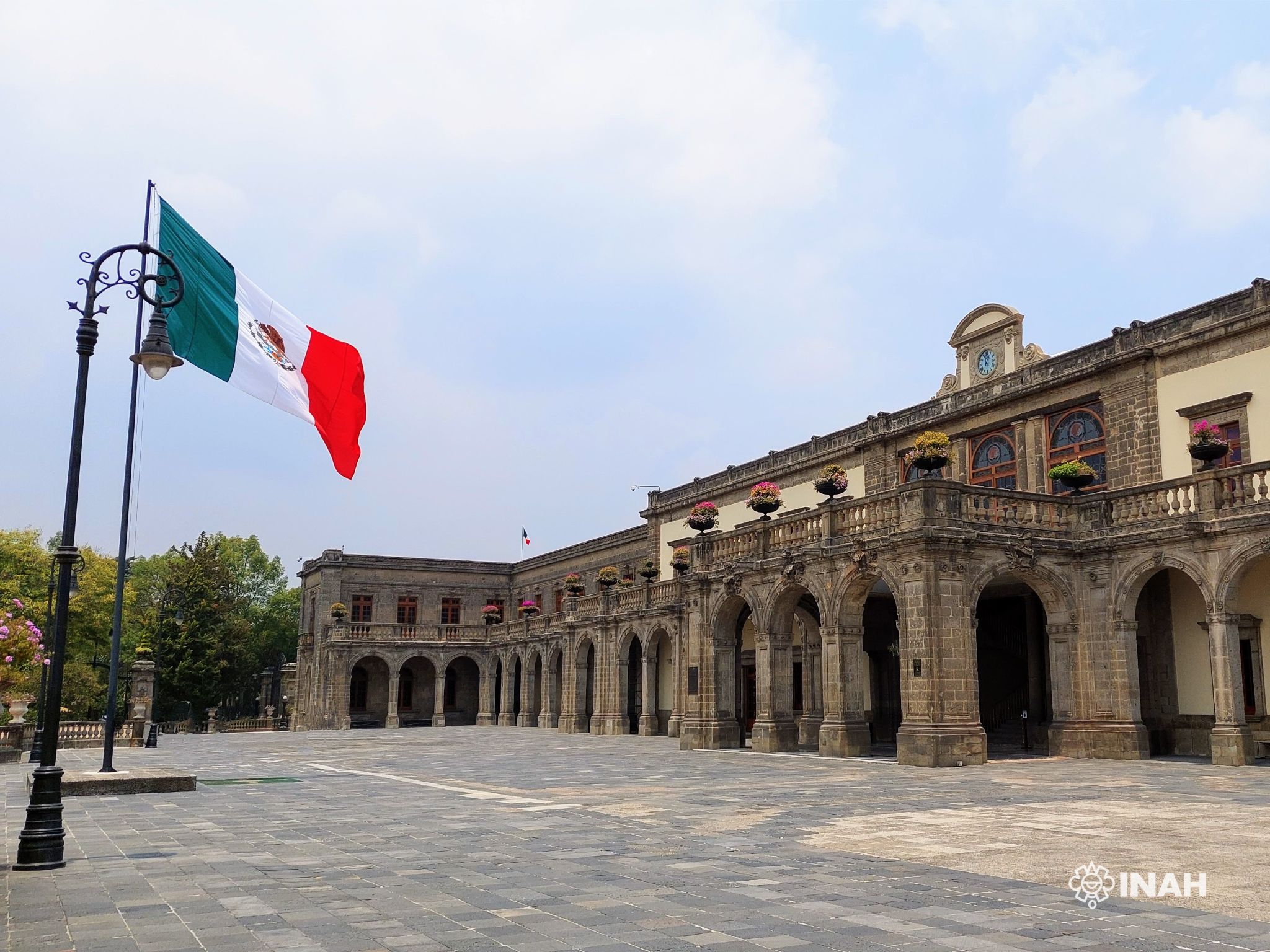
Chapultepec Castle is a magnificent late-eighteenth century construction (1785-1787) designed and built as a stately home at the behest of the Viceroy of New Spain at the time, Bernardo de Gálvez. Over the years, however, the building has been adapted several times for different uses. It was the headquarters of Mexico’s military academy, the site of battles fought during the US invasion, residence of Emperor Maximilian and Empress Carlota, and of a number of Mexican presidents. President Lázaro Cárdenas eventually issued a presidential decree in 1939 for the Castle to be used as a museum housing the collections and personal effects of Mexico’s leading historical figures. The building, standing at the highest point of Chapultepec Park, opened its doors as a museum in September 1944.
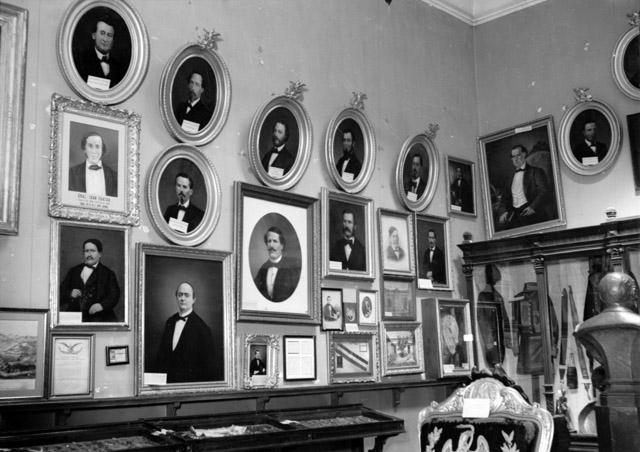
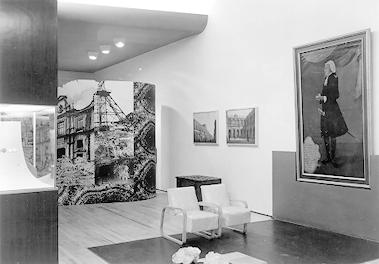
The National Museum of History—undoubtedly one of the most important exhibition spaces in Mexico—offers visitors a comprehensive view of national history, from the Conquest and the founding of New Spain until the dawn of the twentieth century. On display are more than 65,000 objects including paintings, sculptures, furniture, clothing, coins, musical instruments, silver and ceramic utensils, flags, carriages, and documents.
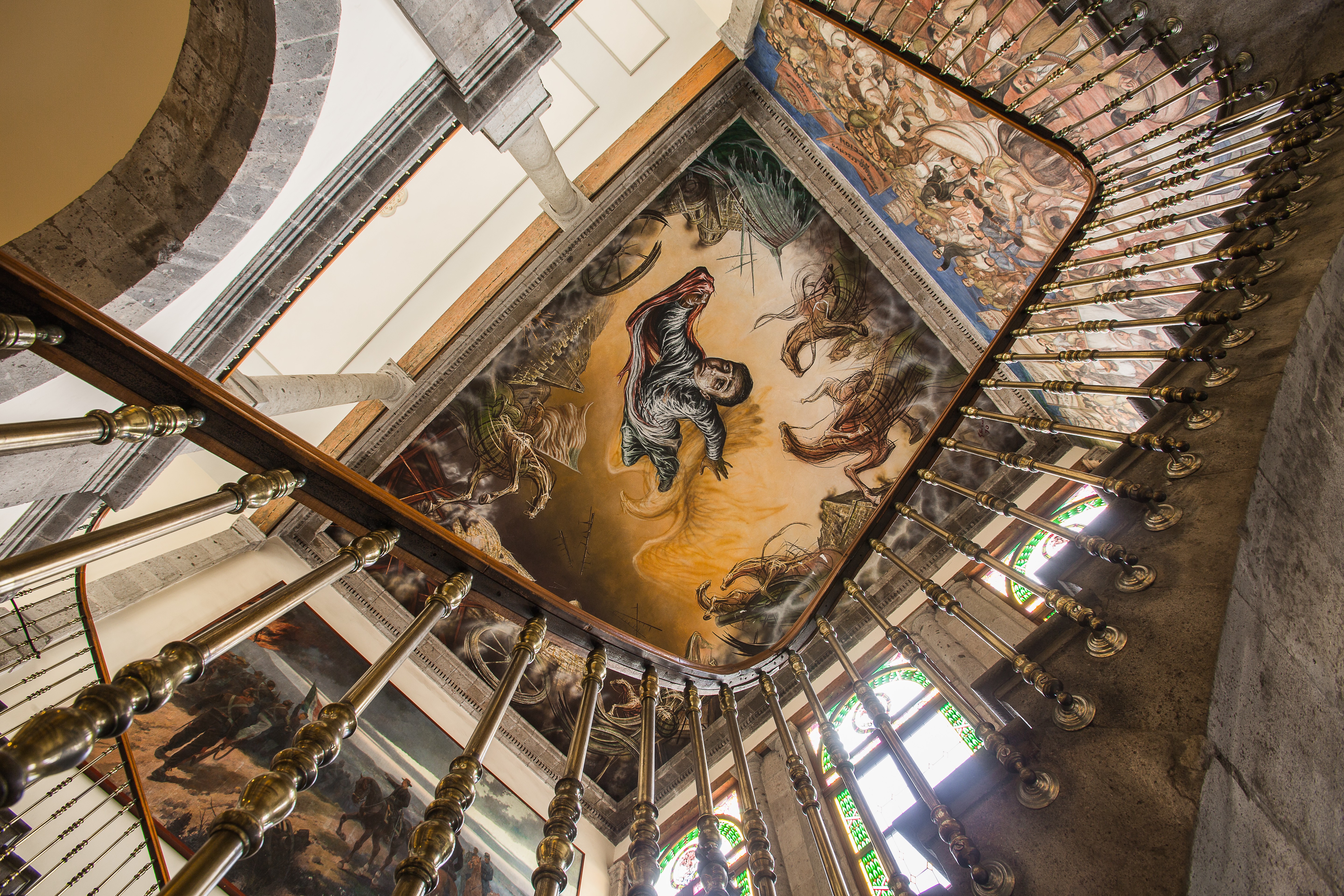
In the former military academy the galleries’ exhibits date from the time of the Conquest until the 1910 Revolution. Visitors to this part of the museum can also admire mural paintings created by leading artists between 1933 and 1970, notably Jorge González Camarena’s “La fusión de dos culturas” (“Fusion of Two Cultures”) and “La Constitución de 1917” (“1917 Constitution”); Juan O’Gorman’s “El retablo de la Independencia” (“Independence Altarpiece”), “El feudalismo porfirista” (“Porfirian Feudalism”) and “Sufragio Efectivo, no Reelección” (“Effective Suffrage, No Reelection”); José Clemente Orozco’s "La Reforma y la caída del Imperio" (“The Reform and the Fall of the Empire”), and Siqueiros’s “Del Porfirismo a la Revolución” (“From the Dictatorship of Porfirio Díaz to the Revolution”).
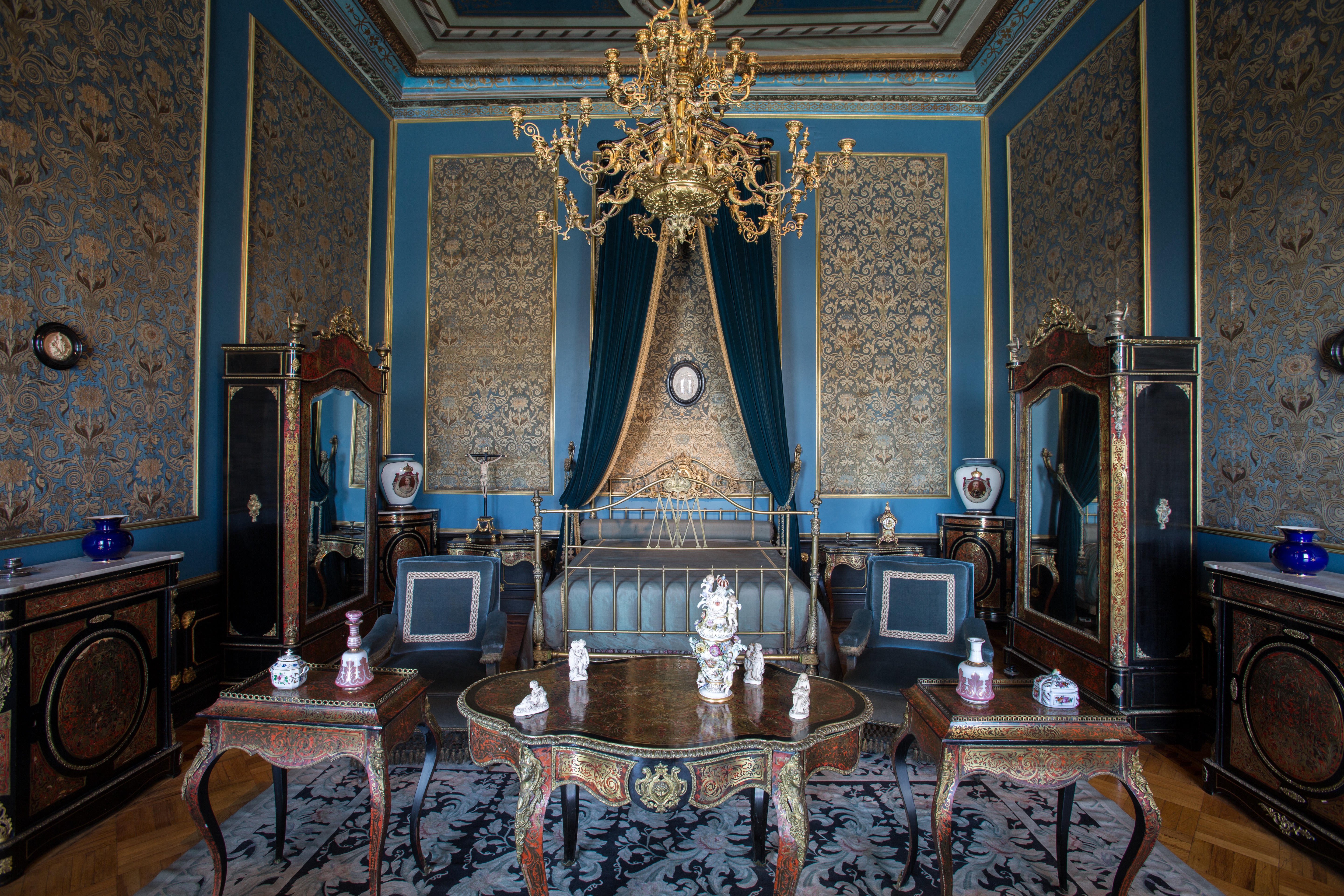
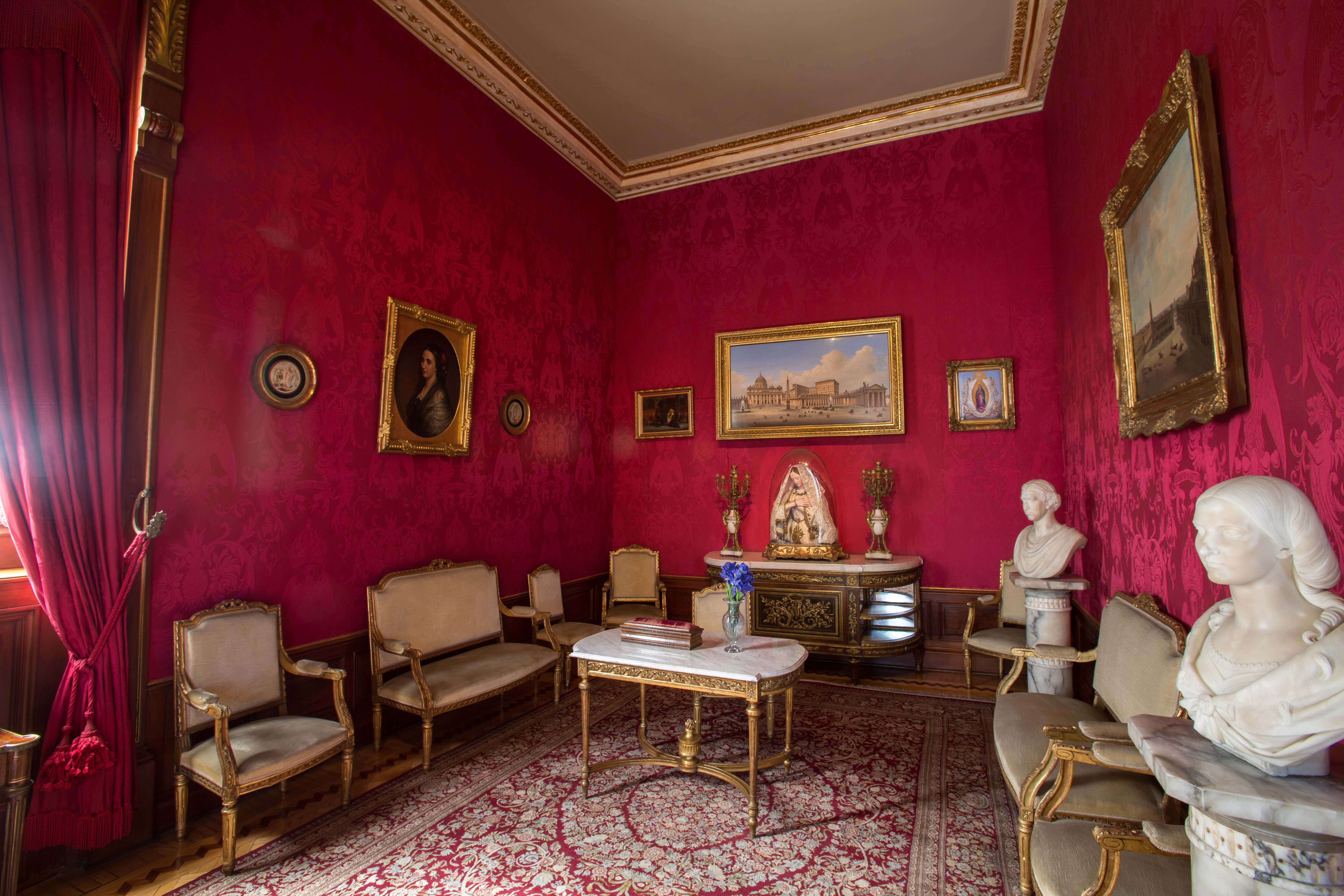
The ground-floor rooms in the building known as the Alcázar (“Fortress”) are decorated with furniture, domestic items, jewelry, paintings and various objects related mainly to the imperial era of Maximilian and Carlota, while the top floor contains the furniture, paintings and other belongings of President Porfirio Díaz and his wife Carmen Romero Rubio.
Chapultepec Hill and the Chapultepec Castle’s National Museum of History have their own history. In pre-Hispanic times, Moctezuma had his pools and baths here, as well as a shrine and living quarters; it is also known that Moctezuma I ordered the construction of the aqueduct to carry water from Chapultepec to Mexico-Tenochtitlan, and that Nezahualcóyotl, Lord of Texcoco, was responsible for the actual building work.
Construction on this hilltop took place between 1785 and 1787; the residence was commissioned by Viceroy Bernardo de Gálvez, who died before seeing it completed. Due to the building’s exorbitant cost, the Spanish crown tried to sell it but there were no buyers and it fell into disuse.
The Mexico City government acquired the property in 1806, but at the outbreak of the War of Independence it did not make any further use of it. It was not until 1833 that a decree was issued for it to be converted into a military academy and, after a period of alterations, it began to operate as such in 1844. On September 12 and 13, 1847, it resisted bombardment from the US army, which nevertheless caused it serious damage. After its reconstruction, the military academy reopened and Miguel Miramón, a former pupil and survivor of the Battle of Chapultepec in 1847, ordered the construction of some rooms on the second floor of the Alcázar. However, its current appearance dates from the time when Maximilian and Carlota decided to make it their imperial residence, and their team of Austrian, French, Belgian, and Mexican architects transformed it. At the end of the Second Mexican Empire, the building was abandoned once again.
From 1878 to 1883 it briefly became an astronomical, meteorological and magnetic observatory, until the military academy returned, and the Castle itself was converted into a presidential residence, providing a home successively for Porfirio Díaz, Francisco I. Madero, Venustiano Carranza, Álvaro Obregón, Plutarco Elías Calles, Emilio Portes Gil, Pascual Ortiz Rubio and Abelardo Rodríguez. On February 3, 1939, it was declared the National Museum of History.
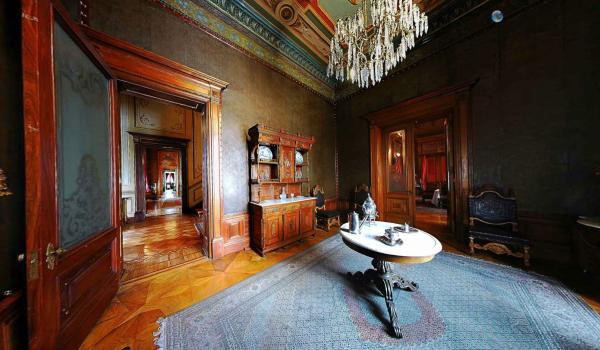
Pantry Room
Behind the scenes: In addition to its distinguished residents, the Alcázar housed dozens of servants whose work ensured that the palace functioned smoothly and the needs of its occupants were met.
Pantry Room
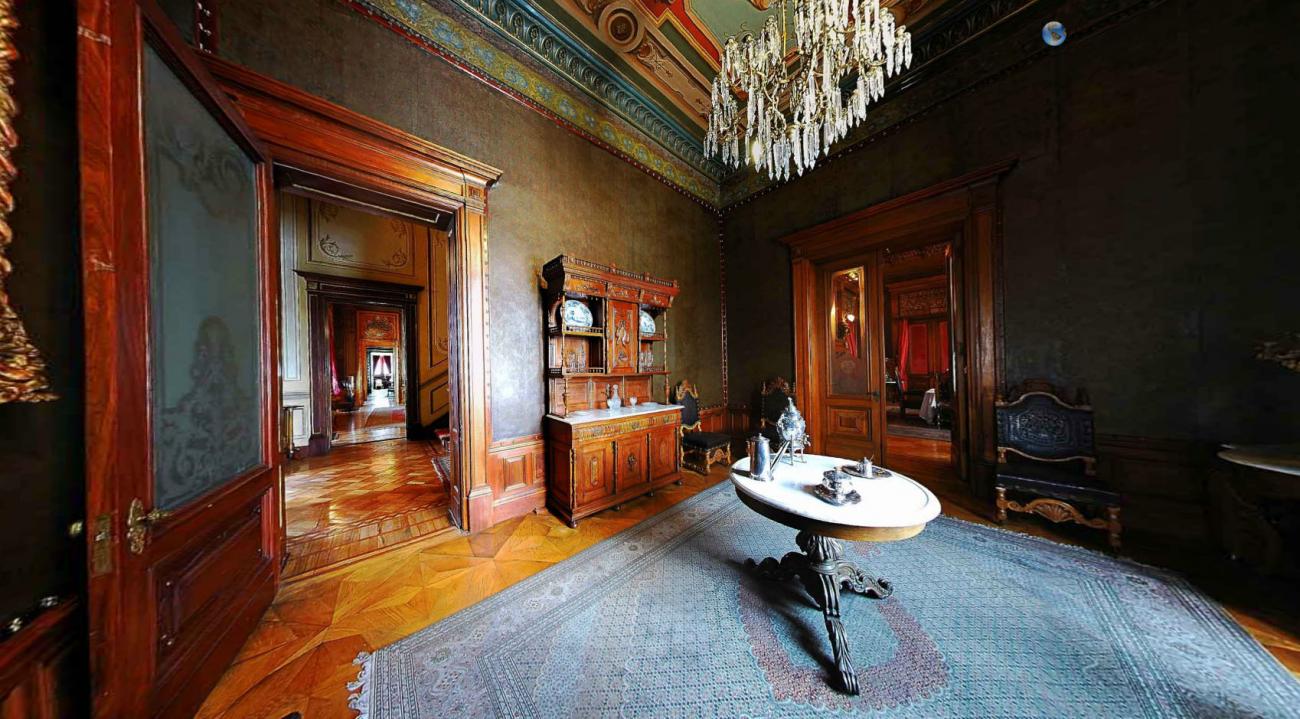

Behind the scenes: In addition to its distinguished residents, the Alcázar housed dozens of servants whose work ensured that the palace functioned smoothly and the needs of its occupants were met. From early morning, the basement and ground floor bustled with valets, cleaning and maintenance staff, housekeepers, cooks, laundresses, and waiters—people whose names are absent from the pages of history. At the sides of this room, a staircase and a dumbwaiter were used to bring food up from the basement kitchen to the dining room on this level.
This space in earlier times:
- Residence of Maximilian • Kitchen • 1866
- Observatory • Director’s room • 1877
- Presidential Residence (Manuel González) • Pantry • 1882
- Presidential Residence (Porfirio Díaz) • Pantry • 1906
- Presidential Residence (Abelardo Rodríguez) • Pantry • 1932
Council Antechamber
Presidents and their councils: A working visit to the presidential residence was generally reserved for only the most pressing matters of public life.
Council Antechamber
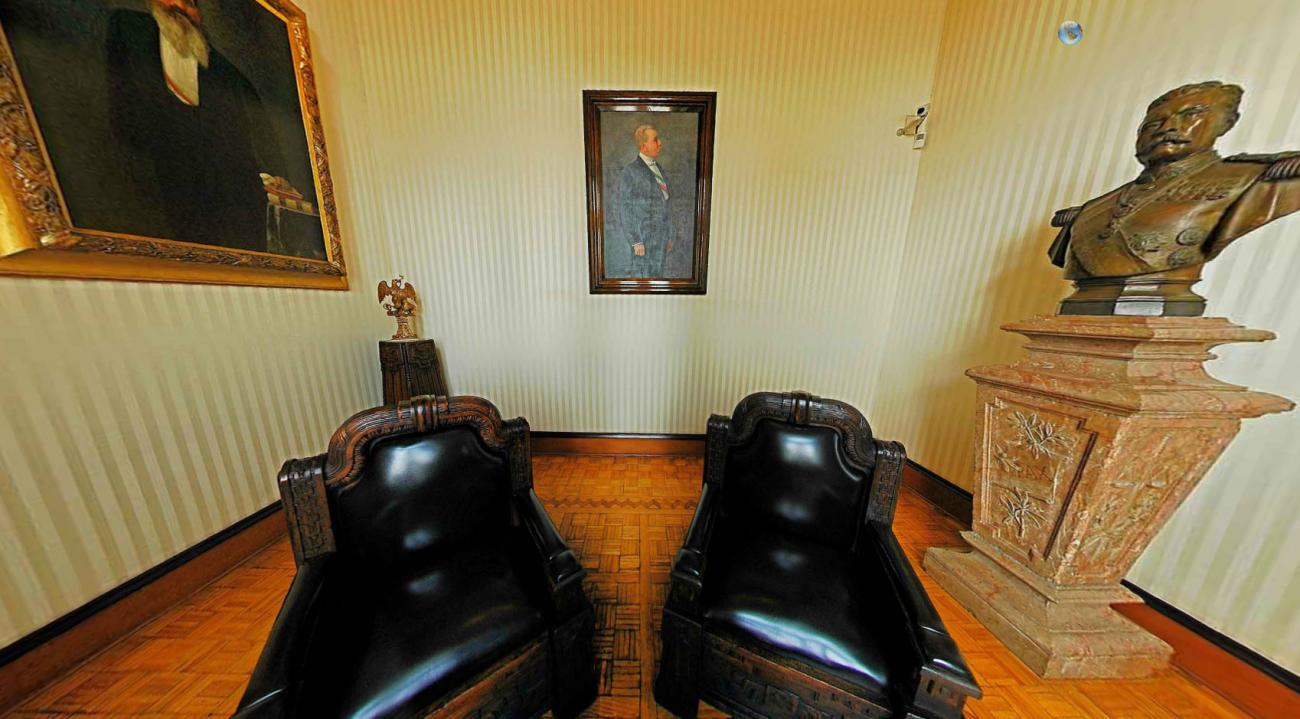

Presidents and their councils: A working visit to the presidential residence was generally reserved for only the most pressing matters of public life. Those waiting in this room for an audience with the president found a moment of respite in the terrace’s openness and the view of the surrounding valley’s mountains. The success of Porfirian Mexico’s pavilion at the 1889 Exposition Universelle in Paris—richly decorated with references to pre-Hispanic cultures—reflected a nationalist aesthetic in vogue at the time, when Maya and Aztec iconography flourished. This style is evident in artistic and decorative pieces such as the painting "Moctezuma Receives the Messengers" by Adrián Unzueta (1893), and in Maya-inspired furniture created in the 20th century.
This space in previous times...
Observatory • Meteorologist’s quarters • 1877
Presidential residence (Manuel González) • Guest room • 1882
Presidential residence (Porfirio Díaz) • Telephone room • 1906
Presidential residence (Abelardo Rodríguez) • Waiting room • 1932
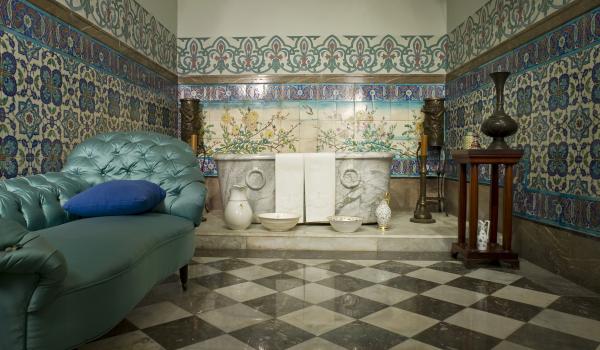
Carlota’s Bathroom
Health and hygiene habits: Maximilian’s intent to “bring Mexico into the advancements of civilization” led him to modernize public services, including the replacement of traditional water carriers with piped potable water, drainage systems for the Valley of Mexico, paved streets,
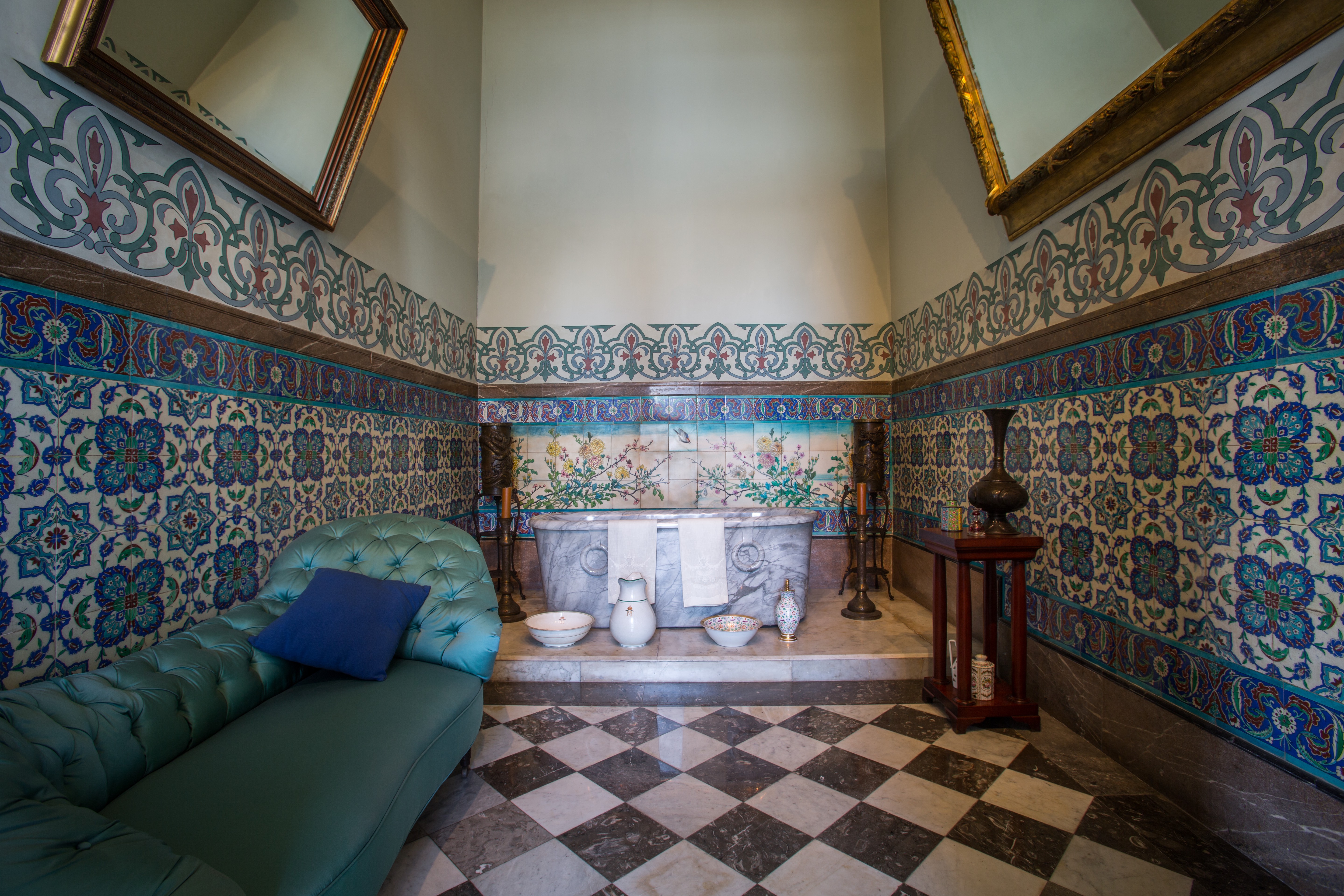
Carlota’s Bathroom
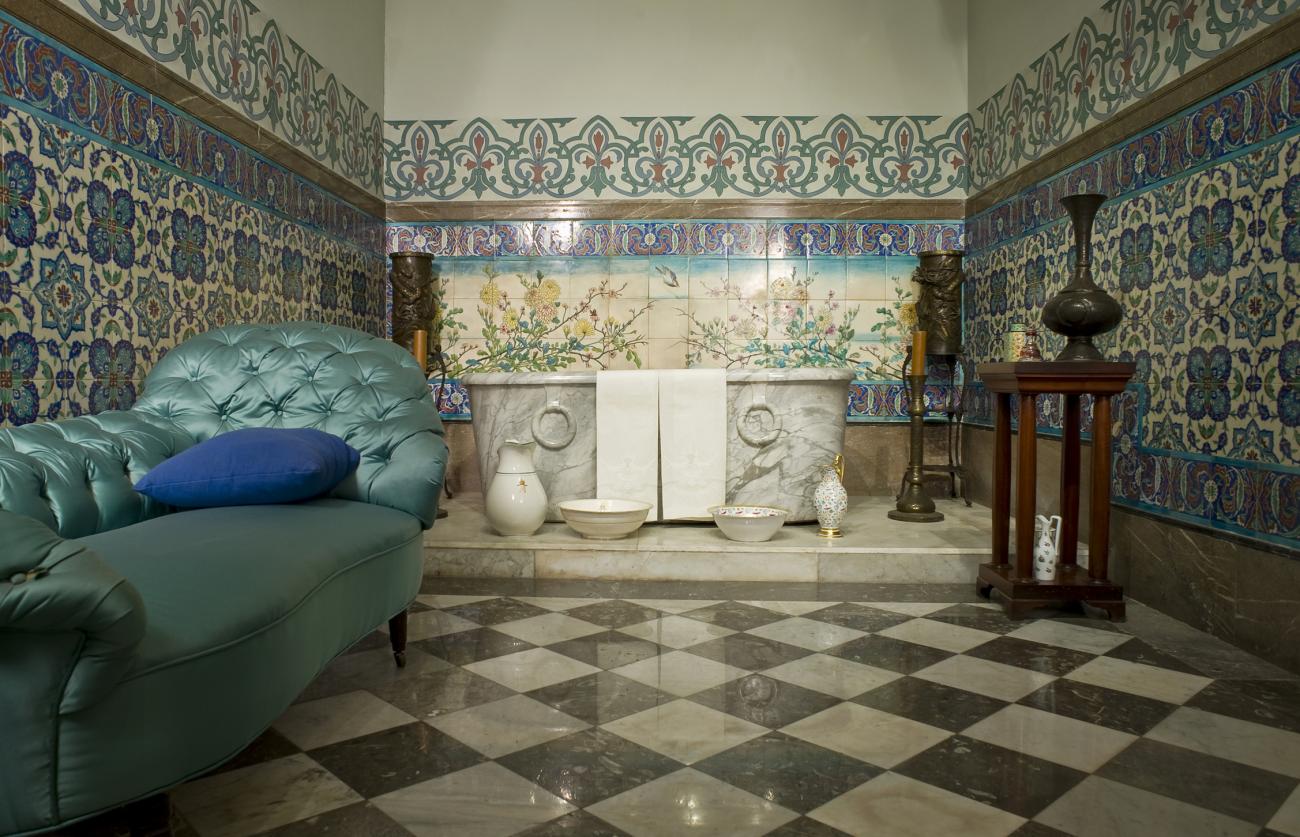
Health and hygiene habits: Maximilian’s intent to “bring Mexico into the advancements of civilization” led him to modernize public services, including the replacement of traditional water carriers with piped potable water, drainage systems for the Valley of Mexico, paved streets, and gas lighting. At the time, bathing involved the use of tubs or basins along with pitchers and washbowls. At the Alcázar, where water arrived on muleback or in carts from nearby springs, both Maximilian and Carlota had private bathing chambers for their personal hygiene.
This space in earlier times:
- Residence of Maximilian • Lady-in-waiting’s room • 1866
- Observatory • Director’s room • 1877
- Presidential Residence (Manuel González) • Washing room • 1882
- Presidential Residence (Porfirio Díaz) • Bathroom • 1906
- Presidential Residence (Abelardo Rodríguez) • Bathroom • 1932
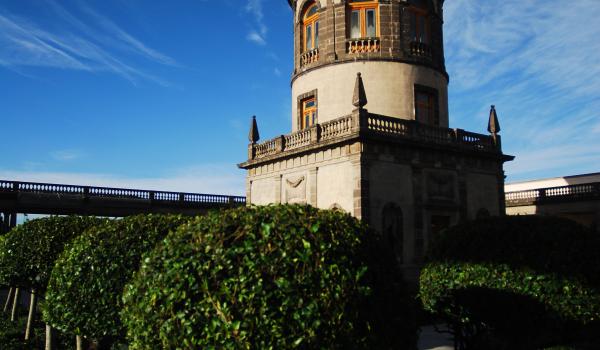
The High Tower
The tower of the Alcázar of Chapultepec—known in military architecture as the “High Knight” or “Caballero Alto”—was built on the highest point of the natural promontory, rising some 45 meters above the level of Mexico City.
The High Tower
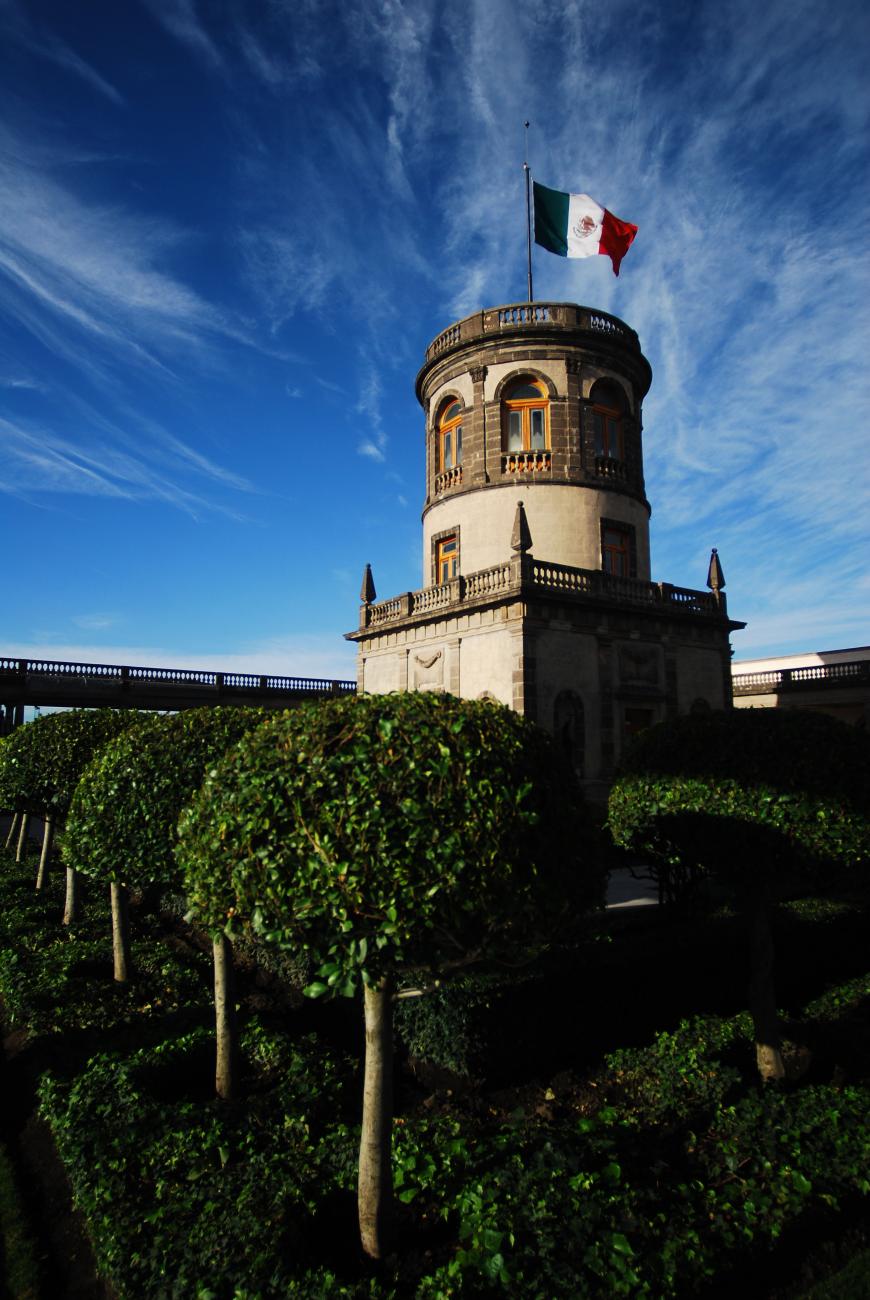
The tower of the Alcázar of Chapultepec—known in military architecture as the “High Knight” or “Caballero Alto”—was built on the highest point of the natural promontory, rising some 45 meters above the level of Mexico City. This site was once home to a pre-Hispanic temple, replaced in the 16th century by a chapel dedicated to Saint Michael the Archangel, which was demolished in the 18th century. The tower was constructed around 1842 as part of the Military College, and in 1877 it was repurposed as an astronomical observatory. It was topped by a dome of metal and glass, which remained in place until the early 20th century, even though the observatory had been relocated to Tacubaya in 1883.

Two Isolated Continents
For millennia, the peoples of Europe and the land that would later be called America remained unaware of each other, separated by the vast Atlantic Ocean. It wasn’t until 1492 that these two worlds came into contact, ushering in a new era in global history.
Two Isolated Continents
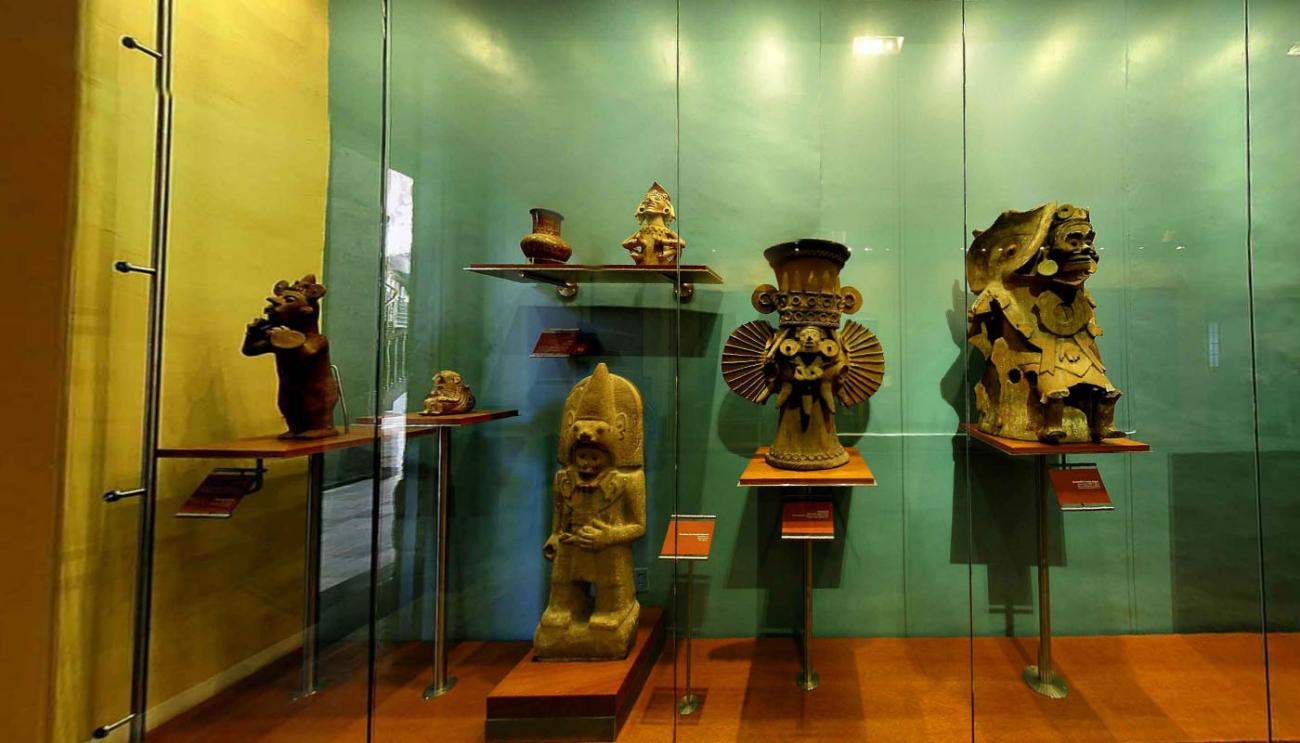

For millennia, the peoples of Europe and the land that would later be called America remained unaware of each other, separated by the vast Atlantic Ocean. It wasn’t until 1492 that these two worlds came into contact, ushering in a new era in global history.
The marriage of Ferdinand of Aragon and Isabella of Castile, the end of centuries of Muslim rule in Spain with the conquest of Granada in 1492, and the expulsion of the Jewish population all contributed to the political unification of Spain under a single monarchy. These events enabled Spain to emerge as one of the most powerful and influential kingdoms in modern Europe.
Meanwhile, the land that we now know as Mexico was home to a wide range of human societies. In the central and southern regions—known as Mesoamerica—ancient civilizations had flourished, and by the early 16th century, they had evolved into powerful societies with their own patron deities. In the north, more diverse groups of farmers and hunter-gatherers lived, with equally complex social structures.
Pre-Hispanic society was multicultural. Despite many shared traits, the peoples of Mesoamerica were not unified under a single national identity. Each community saw itself as an "altépetl"—a self-governing city-state, often symbolized as "water-mountain."

The King's Inspector
Over three centuries, the foundations of what would become modern Mexico were laid. The fusion of various ethnic groups, cultural traditions, languages, and levels of societal development gave rise to a unique new people.
The King's Inspector
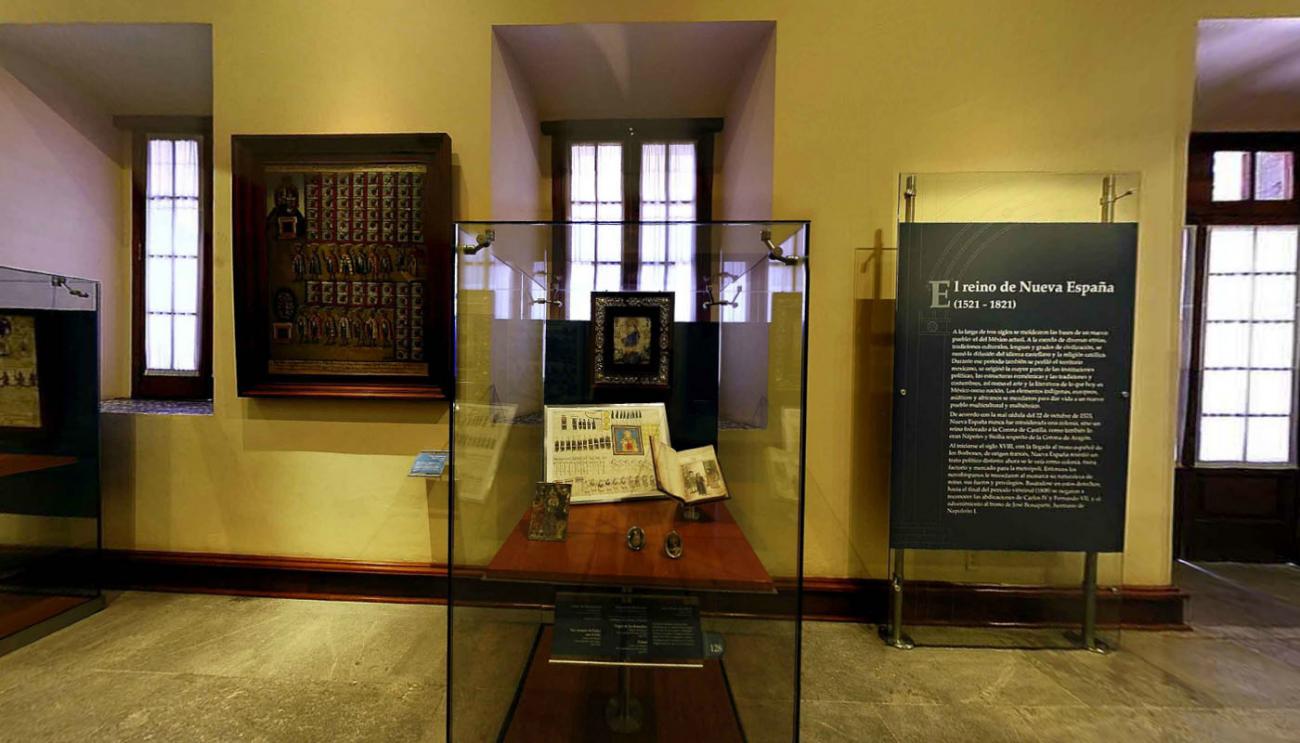

Over three centuries, the foundations of what would become modern Mexico were laid. The fusion of various ethnic groups, cultural traditions, languages, and levels of societal development gave rise to a unique new people. The Spanish language and Catholic faith spread widely, and the territory of present-day Mexico began to take shape. Political institutions, economic structures, customs, artistic traditions, and literature were all forged during this long period, giving rise to a multicultural, multiethnic society enriched by Indigenous, European, Asian, and African influences.
According to the royal decree of October 22, 1523, New Spain was never officially treated as a colony, but rather as a kingdom federated to the Crown of Castile—just as Naples and Sicily were linked to the Crown of Aragon. The Spanish monarch held viceroys accountable through judicial reviews and occasionally dispatched royal inspectors (visitadores) to oversee the administration of justice in New Spain and other realms in the Americas.
When the Bourbon dynasty—of French origin—ascended the Spanish throne in the 18th century, New Spain began to be treated more like a colony: a mere source of raw materials and revenue for the empire. Inspectors now focused primarily on protecting royal income. In response, the people of New Spain reminded the crown of their status as a kingdom, invoking their rights and privileges. In 1808, as the colonial era drew to a close, they refused to recognize the abdications of Charles IV and Ferdinand VII and rejected the imposition of Joseph Bonaparte, Napoleon’s brother, as king.
The Church in the Bourbon Era
As important as military, technological, or artistic conquest was the evangelization of the Indigenous peoples—often referred to as the “spiritual conquest.” In the early years, this task was led by members of the Franciscan, Dominican, and Augustinian orders, later joined by Jesuits and the secu
The Church in the Bourbon Era
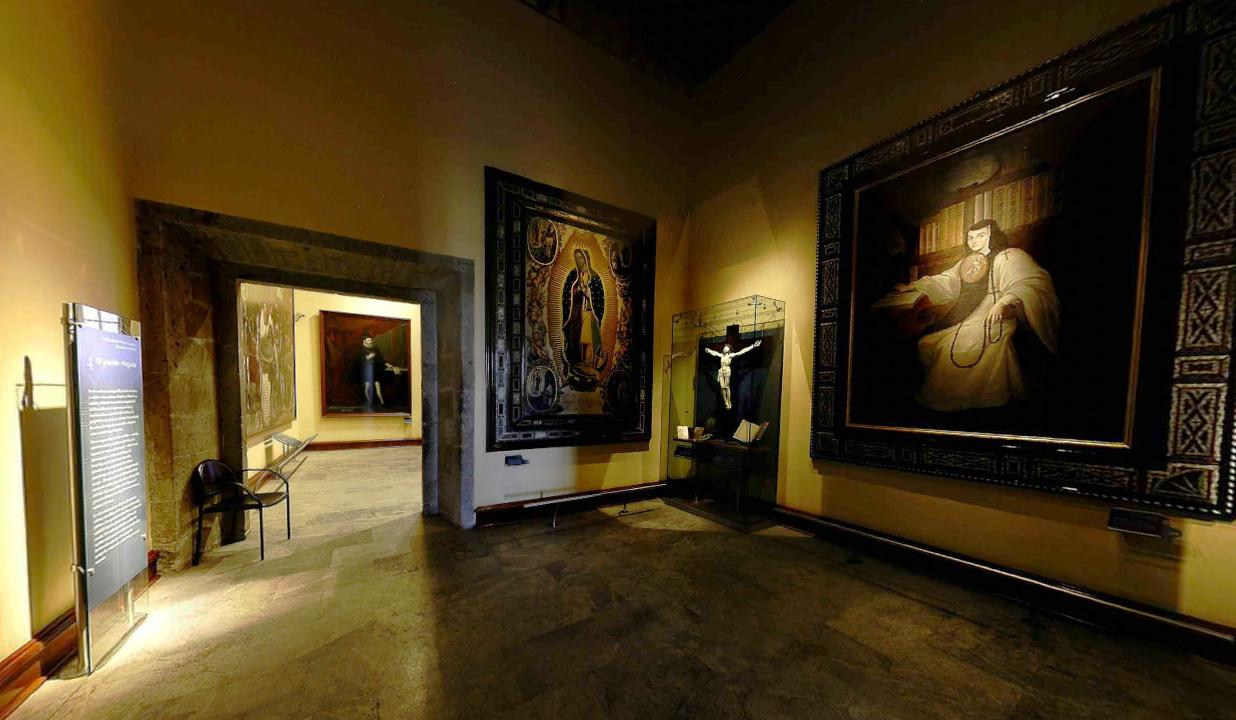

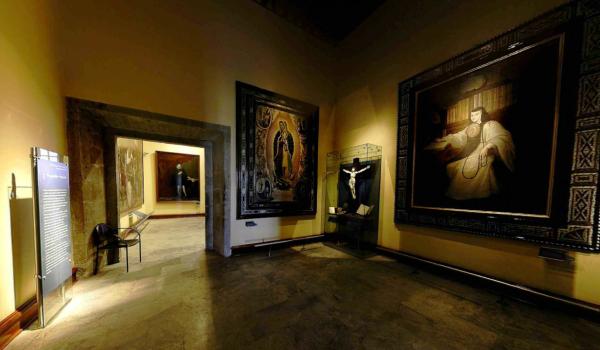
As important as military, technological, or artistic conquest was the evangelization of the Indigenous peoples—often referred to as the “spiritual conquest.” In the early years, this task was led by members of the Franciscan, Dominican, and Augustinian orders, later joined by Jesuits and the secular clergy (priests and deacons from local dioceses).
To make the new faith more appealing to Indigenous communities, religious ceremonies incorporated music, dance (including Indigenous dances, which were soon accepted), singing, flowers, candles, and incense. Short religious plays known as "autos sacramentales" were also staged to teach Christian doctrine. Evangelizers often relied on the sons of Indigenous nobles—educated in convents and church-run schools—as catechists. Some of these young men later became governors or judges in Indigenous towns and continued to spread the Christian faith.
Missionaries gathered Indigenous people into newly established settlements, where they allowed the coexistence of pre-Hispanic and Spanish systems of communal land ownership. They introduced the wheel, iron tools, new crops, and European domesticated animals.
They also produced important writings in many native languages and often defended Indigenous communities against abuses by colonial officials, landowners, miners, and even local chieftains.
The Game of Exchange
By around 1804, Mexico City boasted over 100 "pulperías"—general stores selling a rich variety of global goods: wines from Castile, La Rioja, and Málaga; Castilian vinegar; olives from Seville; Ceylonese cinnamon; cocoa from Caracas; cloves from the Philippines; along with buttons, candles, fine
The Game of Exchange
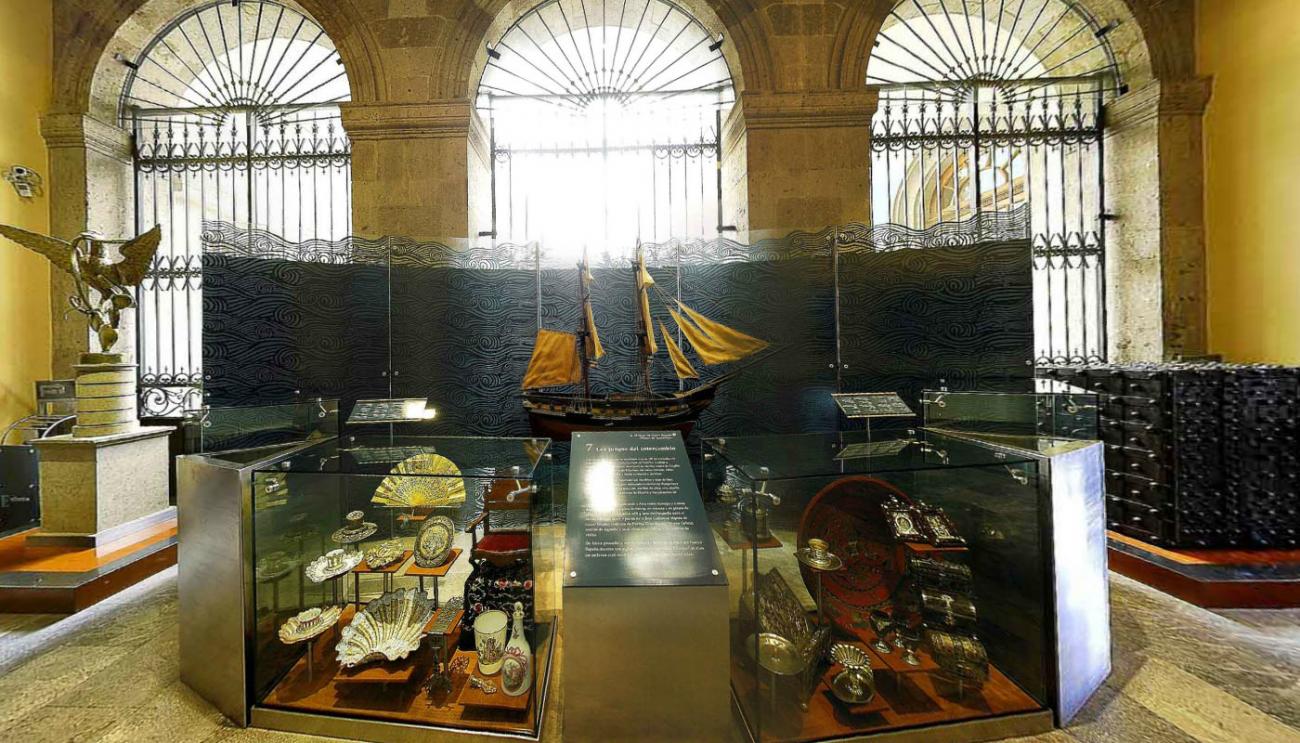
By around 1804, Mexico City boasted over 100 "pulperías"—general stores selling a rich variety of global goods: wines from Castile, La Rioja, and Málaga; Castilian vinegar; olives from Seville; Ceylonese cinnamon; cocoa from Caracas; cloves from the Philippines; along with buttons, candles, fine cloths, velvets, and silks from Europe and Asia.
From East Asia came lacquerware, porcelain, ivory carvings, and in-demand luxuries like beaded jewelry, sequins, silk fans with sticks of silver, gold, ivory, tortoiseshell, or wood, Manila shawls, and cotton "paliacates" (bandanas).
New Spain exported to Asia, Europe, and other parts of the Americas: silver in bars, coins, and finely crafted items; cochineal dye, indigo, and logwood for textiles; tortoiseshell and pearls from Baja California; wrought iron items, ceramics from Puebla, Guanajuato, and Nueva Galicia; cotton and wool textiles, chocolate, vanilla, and glassware.
Africa, meanwhile, was the primary source of enslaved people brought to New Spain over three centuries—an estimated 250,000 in total. At the time, slaves were treated as commodities in both practice and law.

The Age of Reason
By the late 17th century and throughout the 18th, the Enlightenment introduced a bold new way of thinking about life and nature. Reason and science took precedence. Observation and experimentation challenged long-standing truths once accepted without question.
The Age of Reason
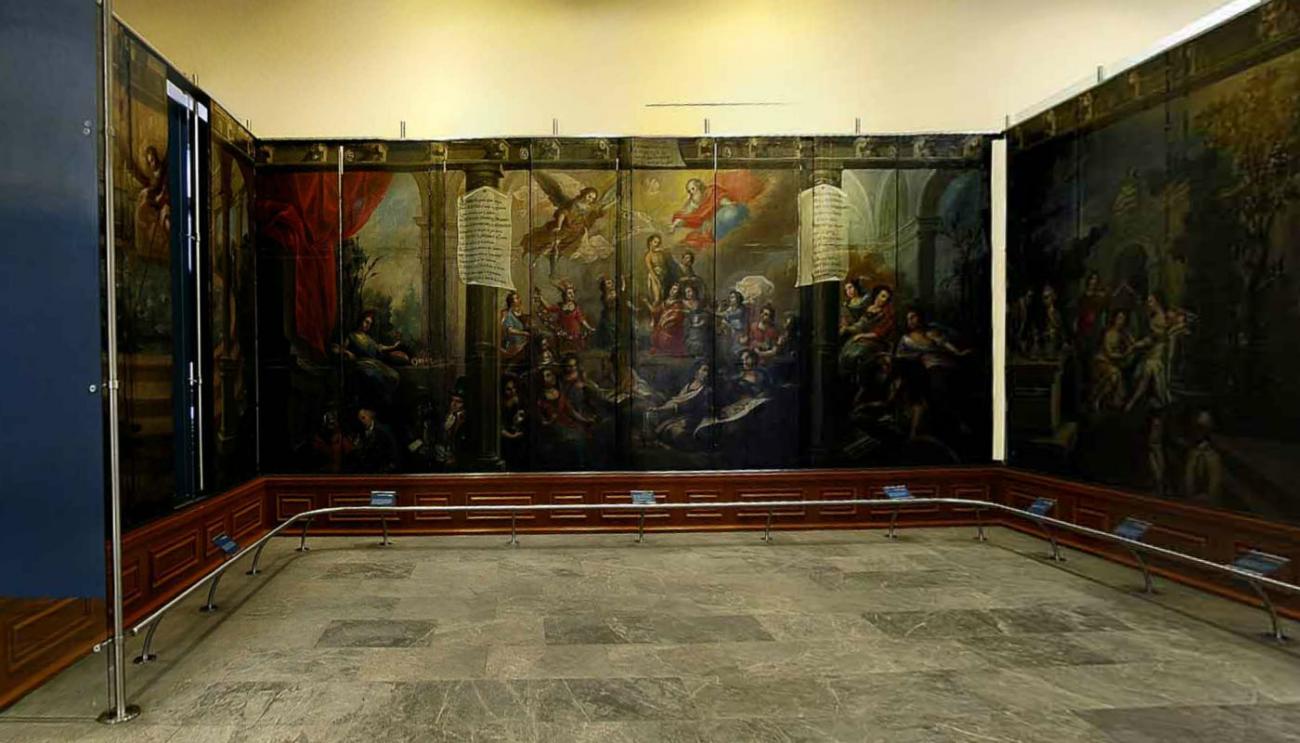

By the late 17th century and throughout the 18th, the Enlightenment introduced a bold new way of thinking about life and nature. Reason and science took precedence. Observation and experimentation challenged long-standing truths once accepted without question.
This trust in reason gave rise to the belief in humanity’s capacity to understand and master the natural world. Laboratories, botanical gardens, observatories, and specialized instruments proliferated. Naturalists collected and classified plants, animals, and minerals, believing that such knowledge was essential to understanding the laws of nature.
In politics, Enlightenment ideals gave way to what is known as “Enlightened Despotism.” Monarchs, while championing scientific progress and geographic exploration, also concentrated power—reducing the influence of the Church and other traditional institutions. They sponsored expeditions to better understand the lands and peoples under their rule, hoping to use this knowledge to manage resources more efficiently.
The Legacy of Miguel Hidalgo
In 1808, when news arrived in New Spain of Napoleon’s invasion of the Iberian Peninsula and the forced abdications of Spanish kings Charles IV and Ferdinand VII, the Mexico City council recalled a royal decree that had originally united New Spain with the Crown of Castile, along with Charles V’s
The Legacy of Miguel Hidalgo
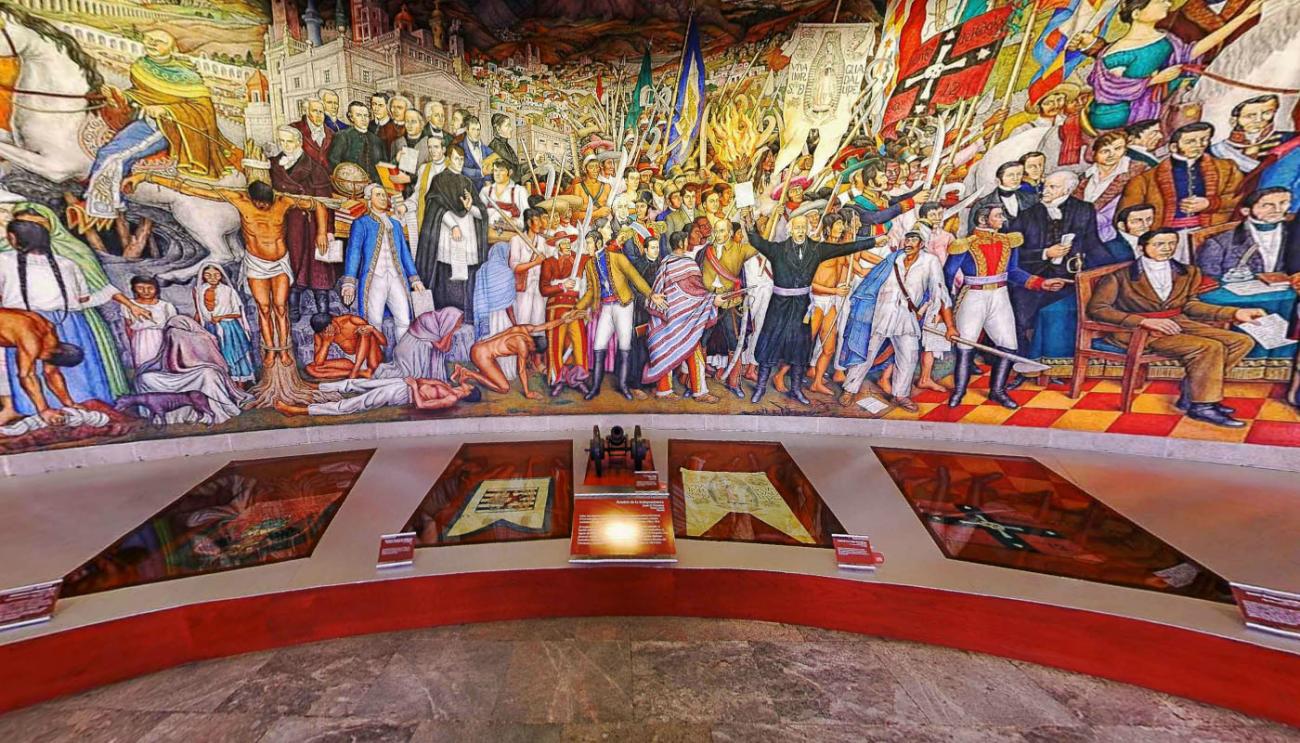

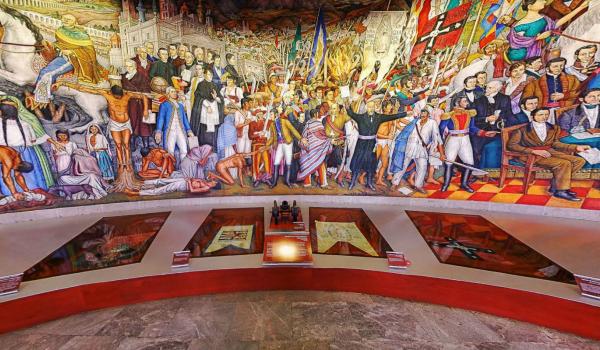
In 1808, when news arrived in New Spain of Napoleon’s invasion of the Iberian Peninsula and the forced abdications of Spanish kings Charles IV and Ferdinand VII, the Mexico City council recalled a royal decree that had originally united New Spain with the Crown of Castile, along with Charles V’s promise never to sell or cede the territory to any other power.
City officials declared the royal abdications and the installation of Joseph Bonaparte on the Spanish throne invalid. Starting in 1809, secret revolutionary cells began forming across New Spain—especially in the Bajío region—working toward autonomy and, eventually, full independence.
The fight for freedom unfolded in four major stages:
- The broad initial uprising led by Miguel Hidalgo (1810–1811);
- The most intense phase under leaders like Ignacio López Rayón and José María Morelos (1811–1815);
- A period of decline and fragmentation with figures like Guadalupe Victoria, Manuel Mier y Terán, and Xavier Mina (1815–1819);
- The final chapter of independence in 1821, when insurgents and royalists united in the "Army of the Three Guarantees" under Agustín de Iturbide and Vicente Guerrero. The people rallied behind the "Plan of Iguala" and the "Treaties of Córdoba", which marked the birth of Mexico as a sovereign nation.

The Young Nation (1821–1867)
Gaining independence was not enough to forge a united nation. The early governments of independent Mexico faced deep challenges in building a stable and respected political system.
The Young Nation (1821–1867)
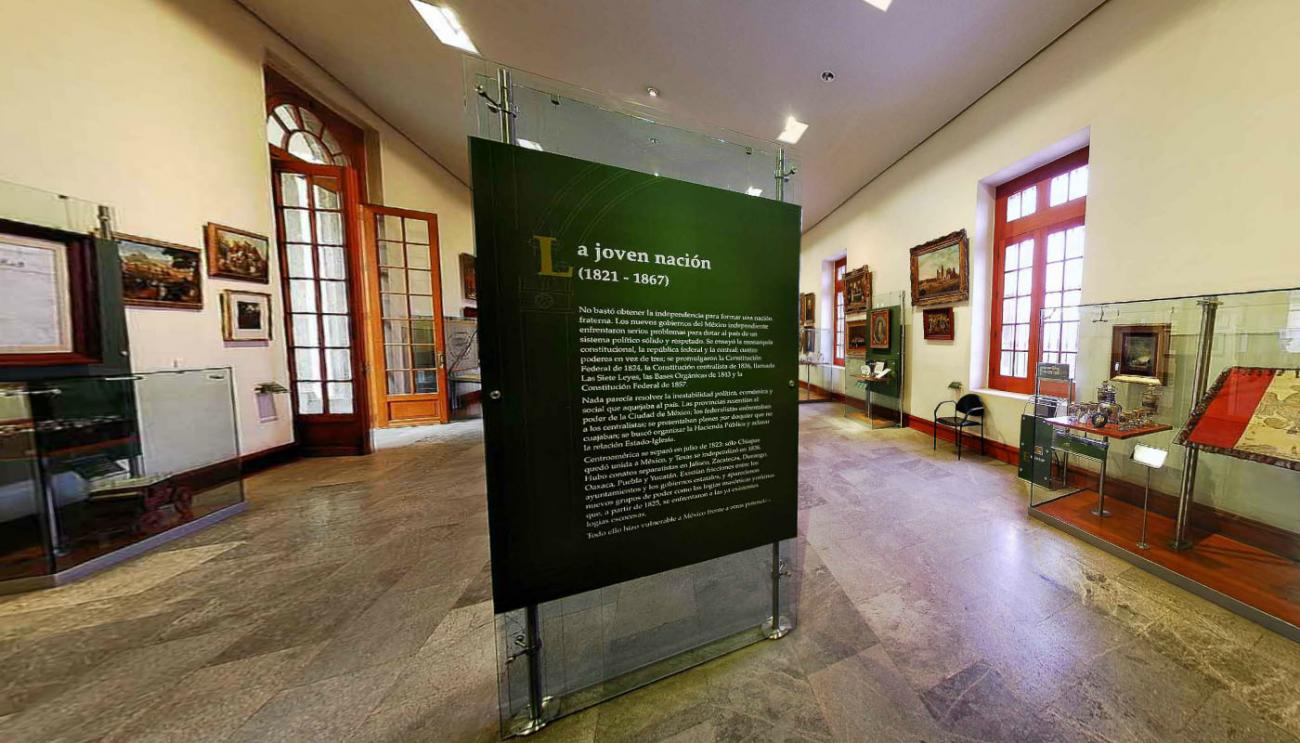

Gaining independence was not enough to forge a united nation. The early governments of independent Mexico faced deep challenges in building a stable and respected political system. The country experimented with forms of governance: a constitutional monarchy, federal and centralist republics, even four branches of government instead of the usual three. During this time, Mexico saw the creation of several constitutions—among them, the Federal Constitution of 1824, the Centralist Constitution of 1836 (known as the Seven Laws), the Organic Bases of 1843, and the Federal Constitution of 1857.
Despite these efforts, political, economic, and social instability persisted. Many provinces resented the power concentrated in Mexico City; federalists clashed with centralists; numerous reform plans failed to take hold. Meanwhile, the government attempted to organize public finances and define the relationship between church and state.
In July 1823, Central America broke away from Mexico—only Chiapas remained part of the nation. Texas declared its independence in 1836. Separatist movements emerged in regions such as Jalisco, Zacatecas, Durango, Oaxaca, Puebla, and Yucatán. Tensions flared between municipal councils and state governments, and new power groups appeared, like the York Rite Masonic lodges, which began challenging the established Scottish Rite lodges from 1825 onward.
All of this internal division left Mexico vulnerable to foreign powers.

Toward Modernity
The liberal republican project ultimately triumphed over the Second Empire and solidified its hold in the following decades, until it was seriously challenged again in 1910.
Toward Modernity
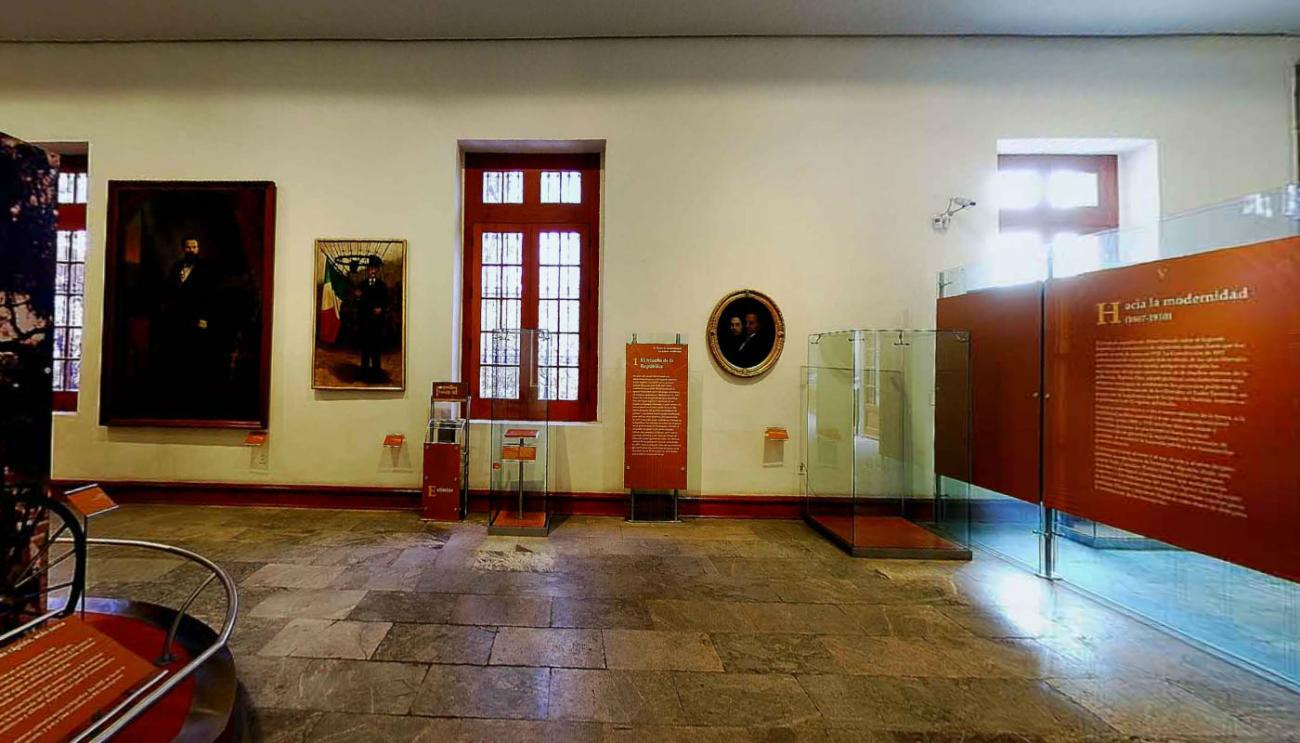

The liberal republican project ultimately triumphed over the Second Empire and solidified its hold in the following decades, until it was seriously challenged again in 1910. The Constitution of 1857 remained the most complete expression of the liberal ideals shaping the young Mexican nation, even if it failed to reflect the vision of conservatives and many segments of the population. Porfirio Díaz, who rose to power in this context, adopted a conciliatory approach toward his former opponents. Under his leadership, liberal and conservative projects began to converge. The Executive Branch, long in conflict with the Legislature since the time of Iturbide, emerged dominant over a weakened Congress.
Thanks to new laws, technological progress, political stability, and favorable international conditions, between 1890 and 1910 Mexico experienced an unprecedented period of economic growth. Factories, mines, and estates thrived. Investment was secured, public finances were reorganized, and the country’s first banks were established.
The railroad united Mexico’s north and south, east and west. It enabled the export of henequen, cotton, chicle, coffee, sugar, rubber, and metals. Díaz improved local roads and cracked down on banditry, making travel and rural work safer. He promoted immigration by inviting Italians and Germans to settle and develop underpopulated areas. Chinese and Japanese immigrants also arrived, contributing labor to the railroads and opening successful businesses.
Stairway of the Lions
In 1878, as the terrace of Chapultepec Castle was expanded to accommodate the National Astronomical, Meteorological, and Magnetic Observatory, a new access point to the upper floor was opened. This upper level would later house the institution's scientific instruments.
Stairway of the Lions
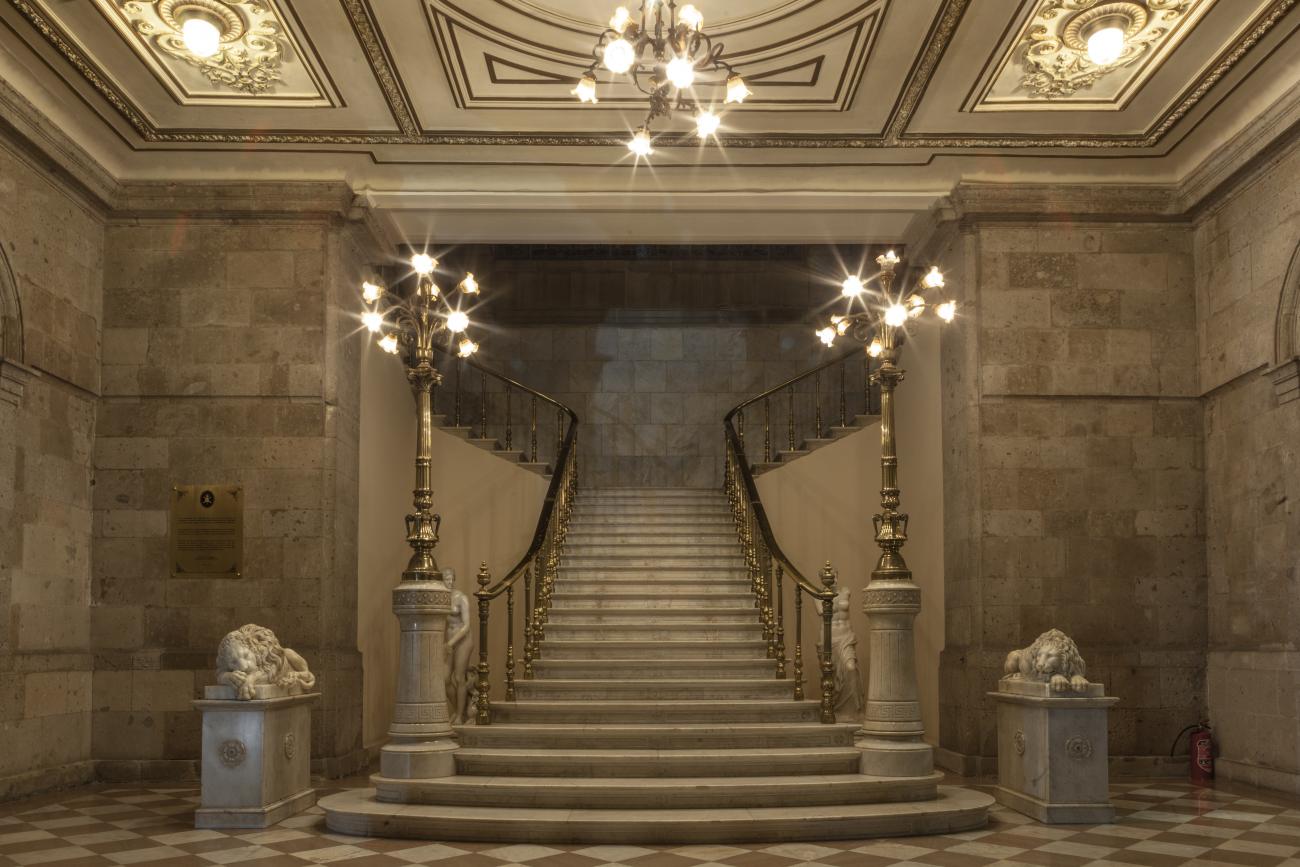
In 1878, as the terrace of Chapultepec Castle was expanded to accommodate the National Astronomical, Meteorological, and Magnetic Observatory, a new access point to the upper floor was opened. This upper level would later house the institution's scientific instruments.
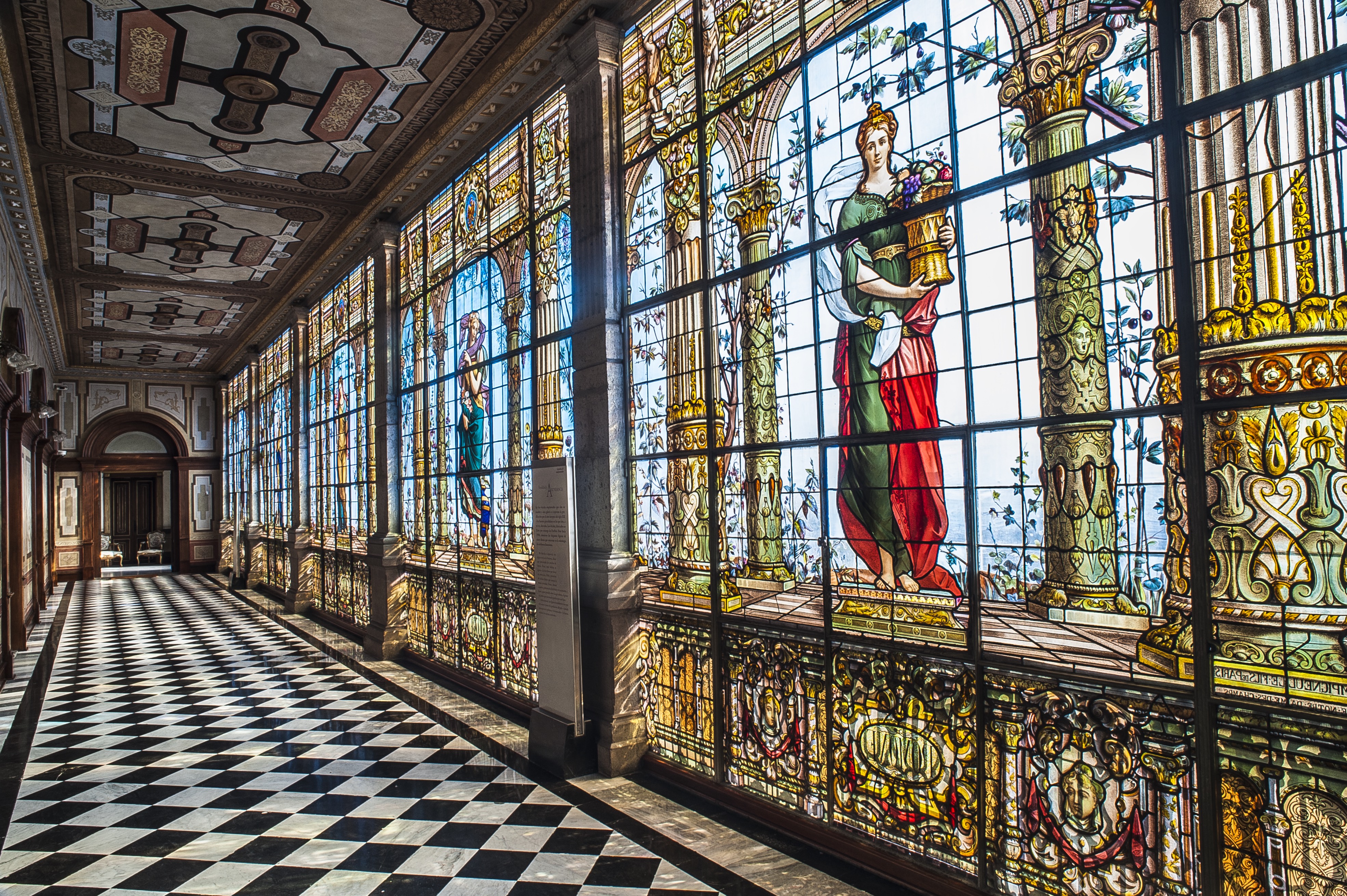
Not long after, under the initiative of President Porfirio Díaz, this access point was transformed to reflect the prestige of the presidential residence. A new staircase was built, made of white marble with brass handrails. Years later, around 1915, President Venustiano Carranza ordered a remodeling. Leaded stained glass windows by painter Saturnino Hernán were added to protect the garden entrance, and the central flight of stairs was flanked by two lion sculptures—features that would eventually give the stairway its current name.
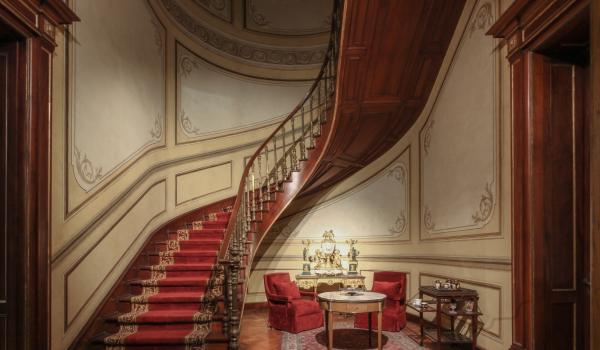
The Purple Staircase
"The comfort of home." Opened during the presidency of Manuel González (1880–1884), this staircase played a key role in turning the Alcázar into a more comfortable and accessible residence.
The Purple Staircase
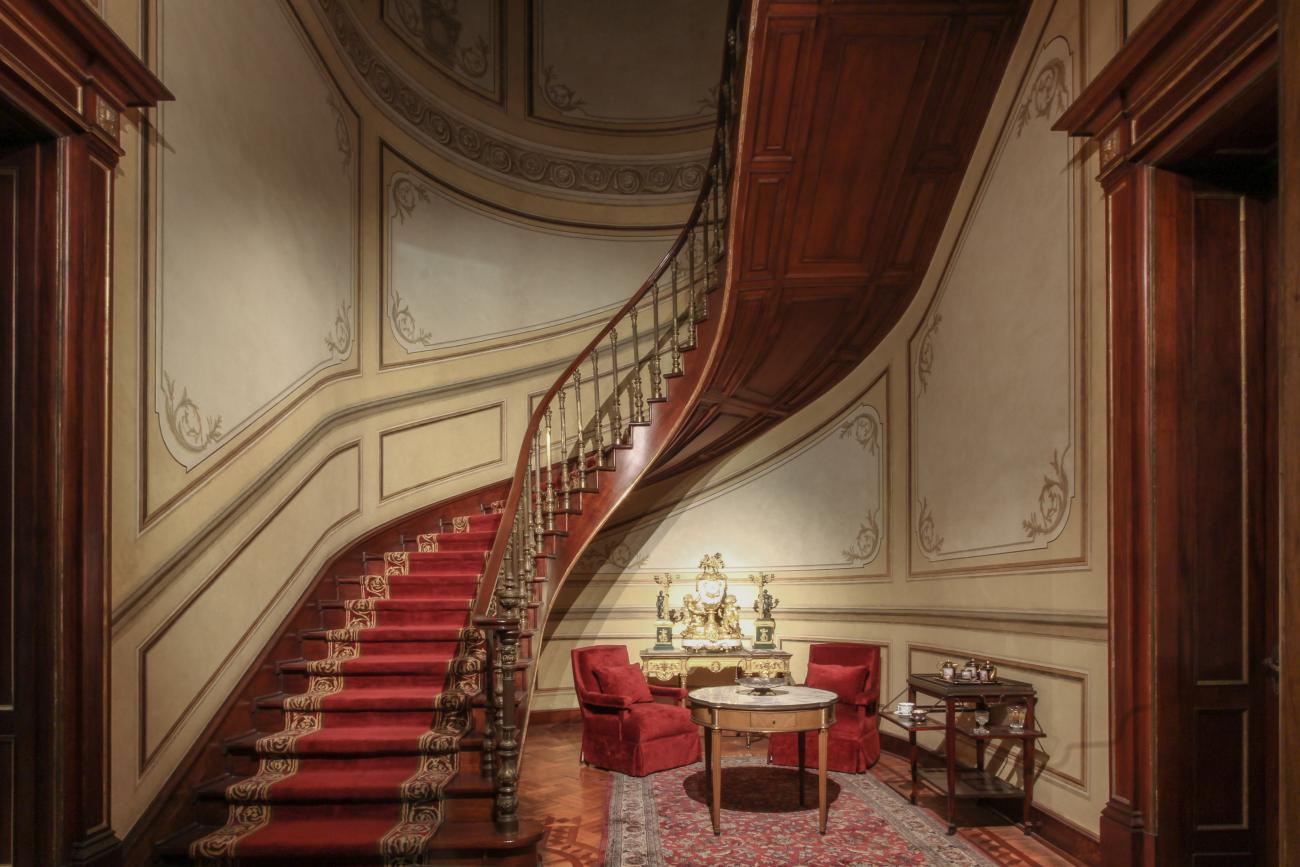
"The comfort of home." Opened during the presidency of Manuel González (1880–1884), this staircase played a key role in turning the Alcázar into a more comfortable and accessible residence. It connected the upstairs private quarters of the president and his wife with the reception halls and dining room below. The more formal Lions’ Staircase was reserved for receiving guests, while the slender southeast turret and the stairway behind the dining room were used by the household staff. Circulation between the two main floors and the basement was also facilitated by an electric elevator—exclusively for presidential use.
This space has served many roles over time...
• Residence of Emperor Maximilian – Partial billiard room – 1866
• Observatory – Meteorological Office – 1877
• Presidential Residence (Manuel González) – Staircase – 1882
• Presidential Residence (Porfirio Díaz) – Private Staircase – 1906

Document
Document
- DirecciónSalvador Miguel Rueda Smitherssalvador_rueda@inah.gob.mx+52 (55) 4040 5210AdministraciónAsgard Torres Esperanzaasgard_torres@inah.gob.mx+52 (55) 4040 5200, ext. 3113Subdirección TécnicaErandi Rubio Huertaserandi_rubio@inah.gob.mx+52 (55) 4040 5200, ext. 3162Protección y Resguardo de Bienes CulturalesEdmundo Crisóstomo Mendozaedmundo_crisostomo@inah.gob.mx+52 (55) 4040 5213