






Sala Introductoria a la Zona Arqueológica de Lagartero
It provides an overview of the historical and cultural development of this ancient Mayan settlement. Through interpretive elements, it offers insight into its architecture, social organization, and relationship with the landscape, thereby promoting appreciation and conservation of the archaeological heritage.
The exhibition narrative in this gallery provides an introduction to Mayan civilization, highlighting its political, economic, social, and religious characteristics, as well as the historical evolution of the groups that inhabited the border region between the Mayan Highlands and Lowlands. Through informational panels, maps, illustrations, photographs, and reproductions of archaeological artifacts, the exhibition explains the strategic location of Lagartero, a settlement built on a cluster of small islands and islets surrounded by lagoons and wetlands that provided natural resources essential for daily life. This location facilitated the establishment of trade and communication routes with other major Maya centers, promoting the settlement’s economic and political development during the Late Classic and Early Postclassic periods.
One of the most significant aspects explored in this gallery is the relationship between the ancient inhabitants and the natural environment. It explains how the lake system influenced urban planning, agricultural and fishing activities, as well as ceremonial practices. Visitors can learn about the region’s diverse flora and fauna and understand the importance of water resources for the development of Maya society. It also emphasizes the need to preserve both the archaeological heritage and the ecosystems surrounding the site, as both are part of the same cultural landscape.
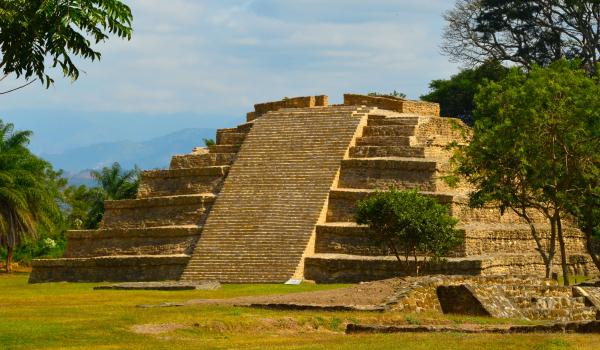
Another topic of great importance is the site’s architecture. The exhibit explains that the structures at Lagartero were built primarily of limestone and adapted to the conditions of the island terrain. It describes the main structures visible during the tour, their function within the ceremonial and administrative complex, and the construction techniques used by the ancient Maya. Maps are also provided to help visitors identify the different architectural groups distributed across the islands and understand the spatial organization of the settlement.
The museum exhibition devotes a section to the cultural and religious practices of Mayan society. It describes ceremonies related to the worship of the deities of rain, fertility, and water—elements that were fundamental to a community settled in a lakeside environment. It also addresses the importance of astronomy, the calendar, and public rituals as part of the site’s political and ceremonial organization. This information helps visitors understand that the architecture, open spaces, and plazas not only served administrative functions but also served as venues for collective ceremonies and civic-religious activities.
- Dirección del Centro INAHLeobardo Daniel Pacheco Ariasleobardo_pacheco@inah.gob.mx+52 (961) 612 2824