










Las Labradas
Archeological site
Las Labradas
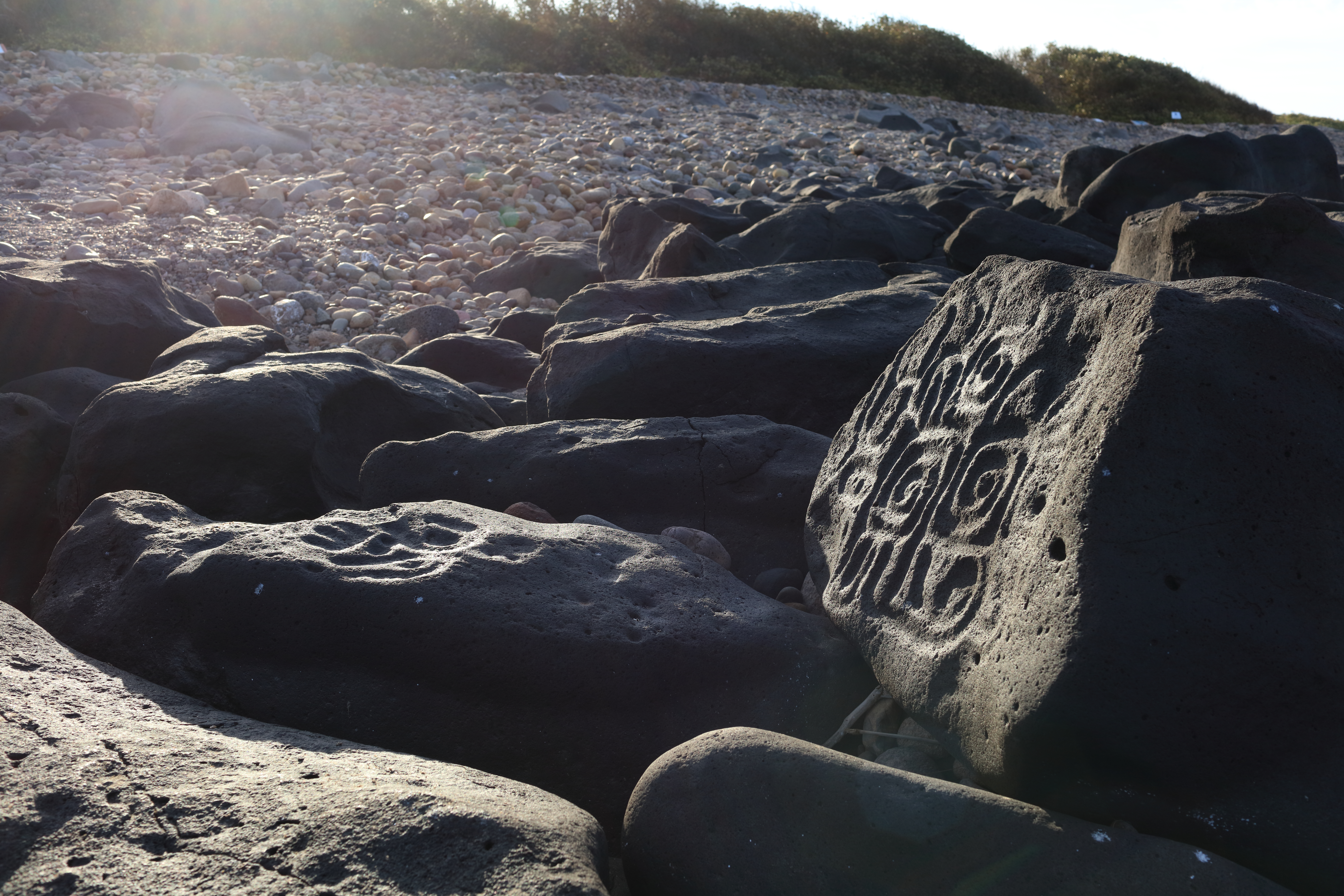
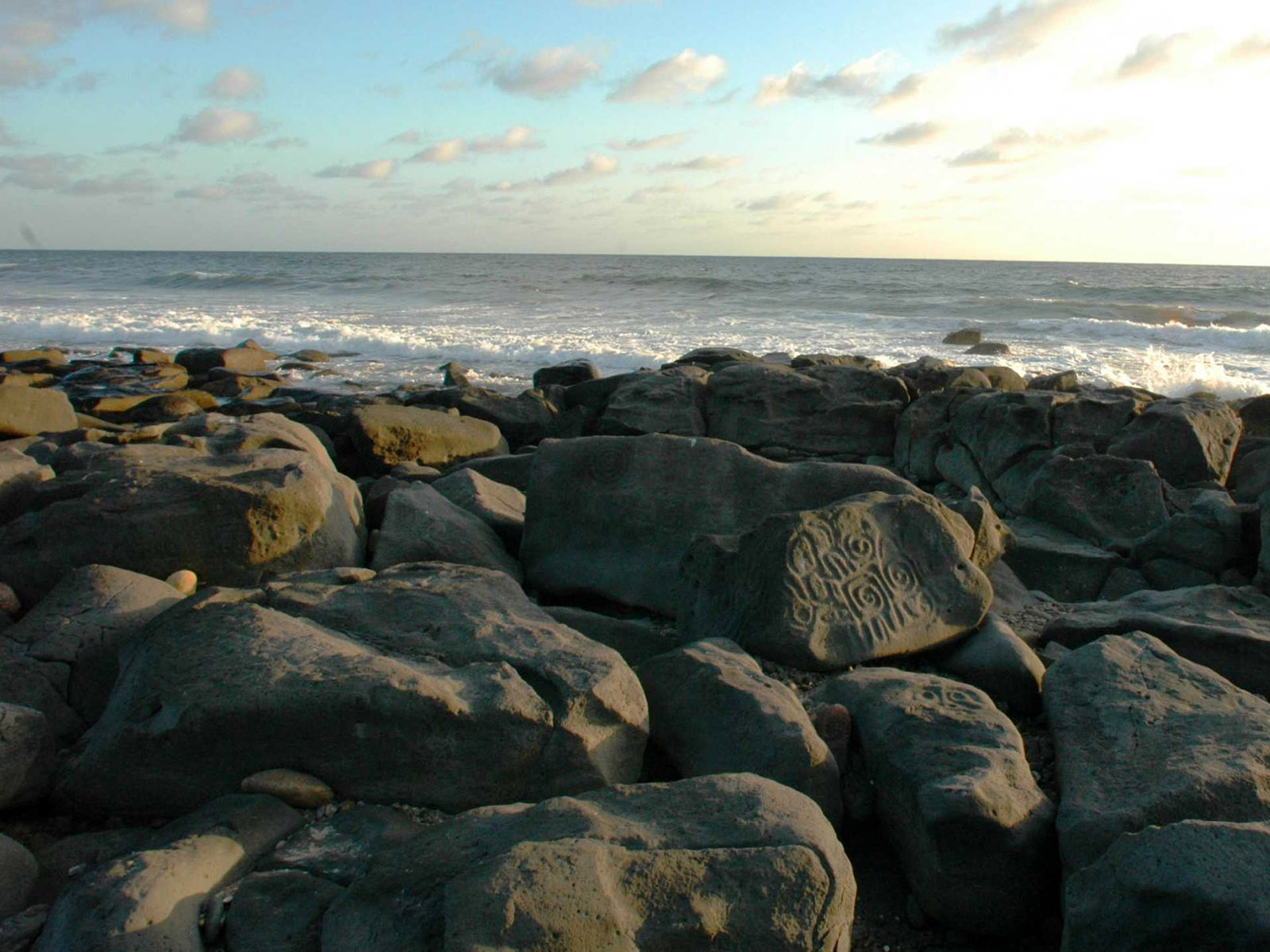
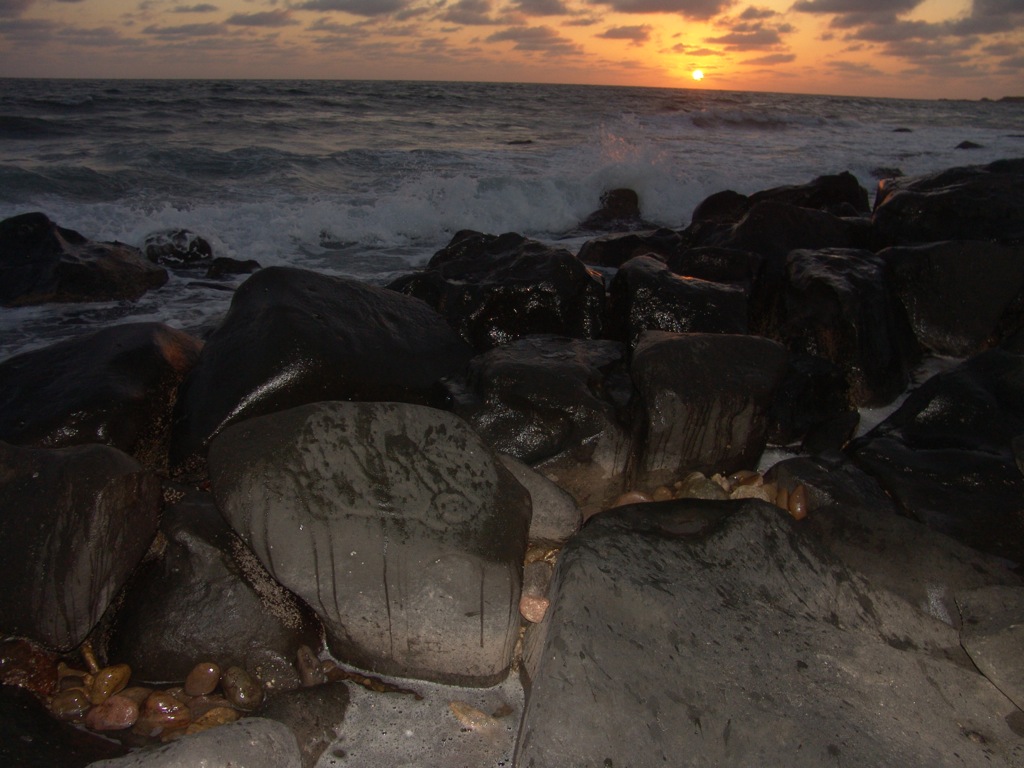
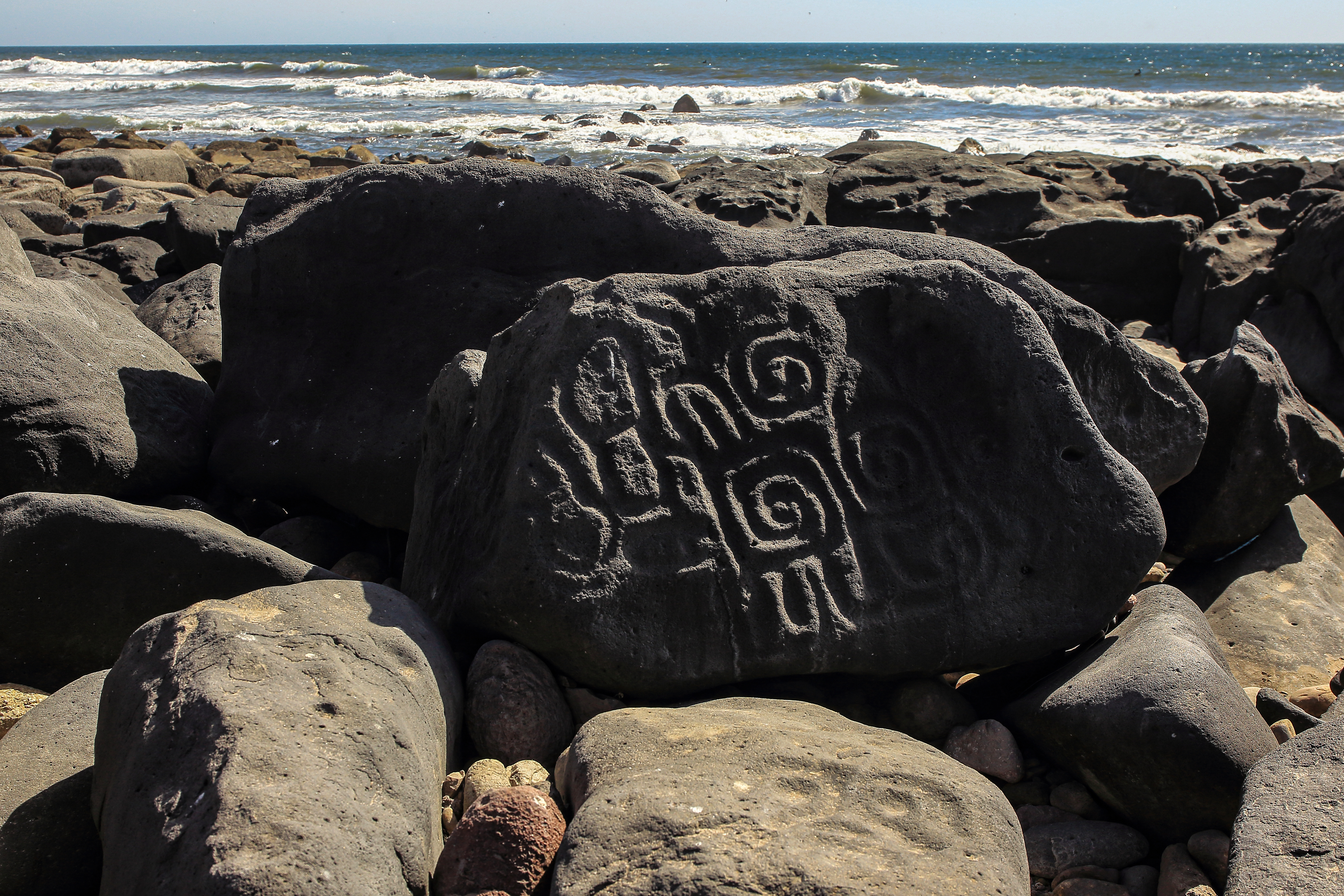
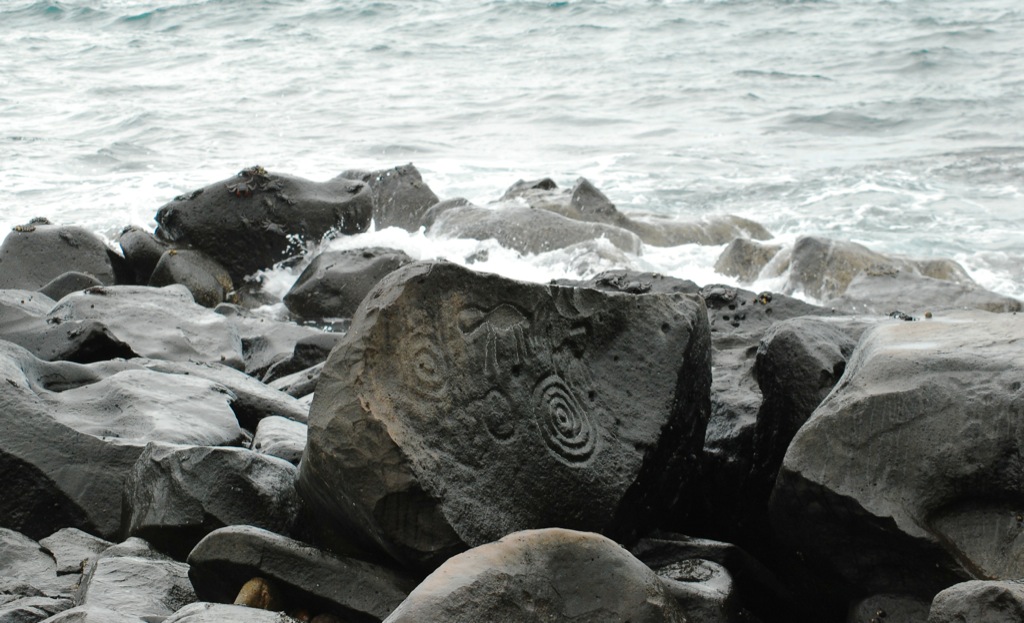
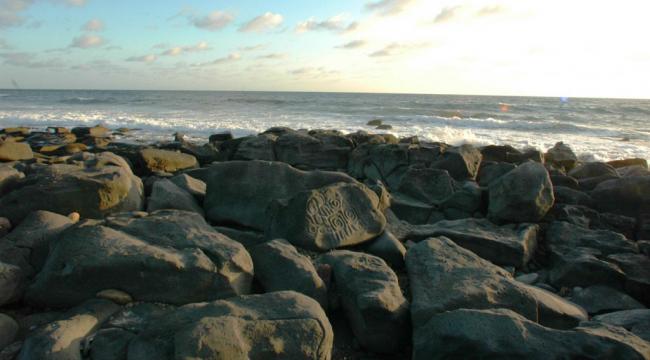
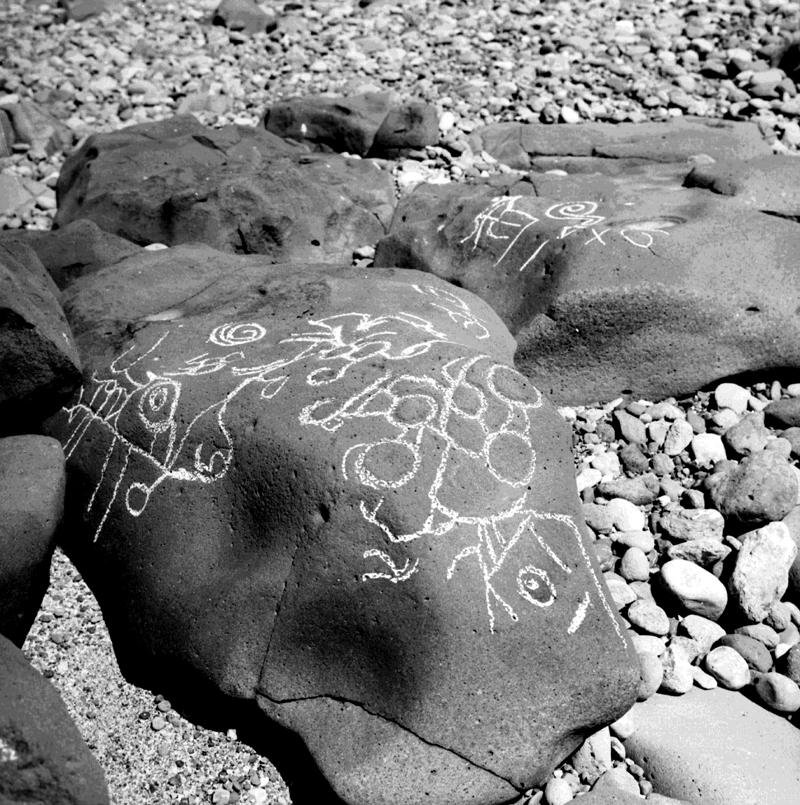
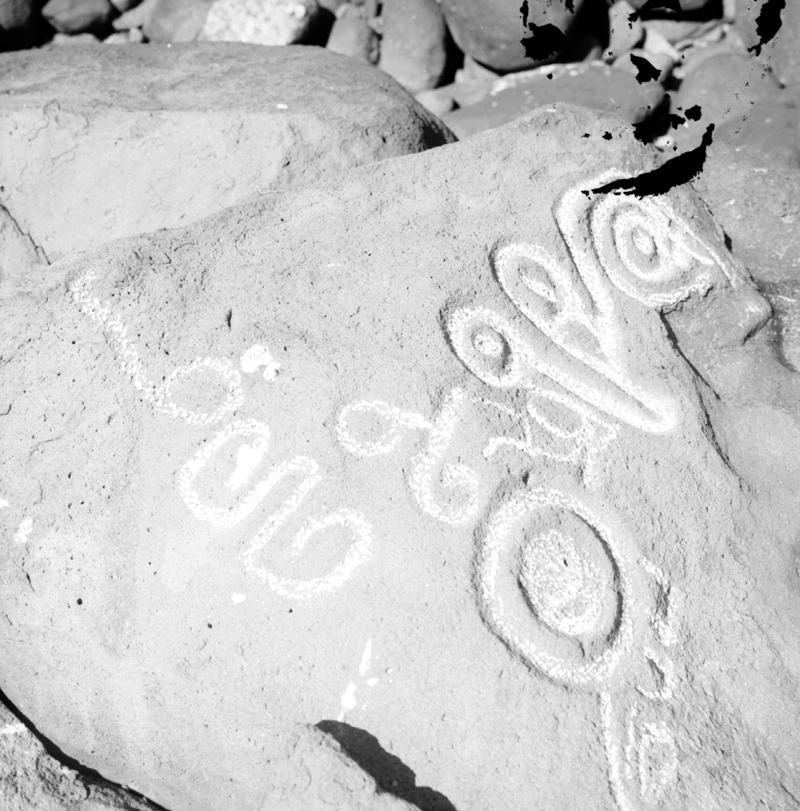
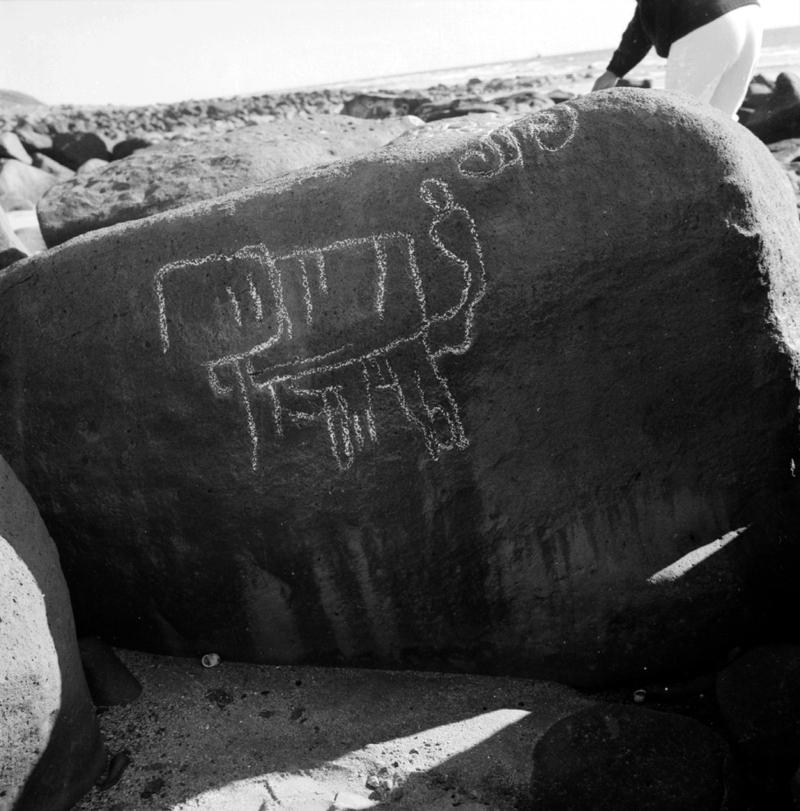
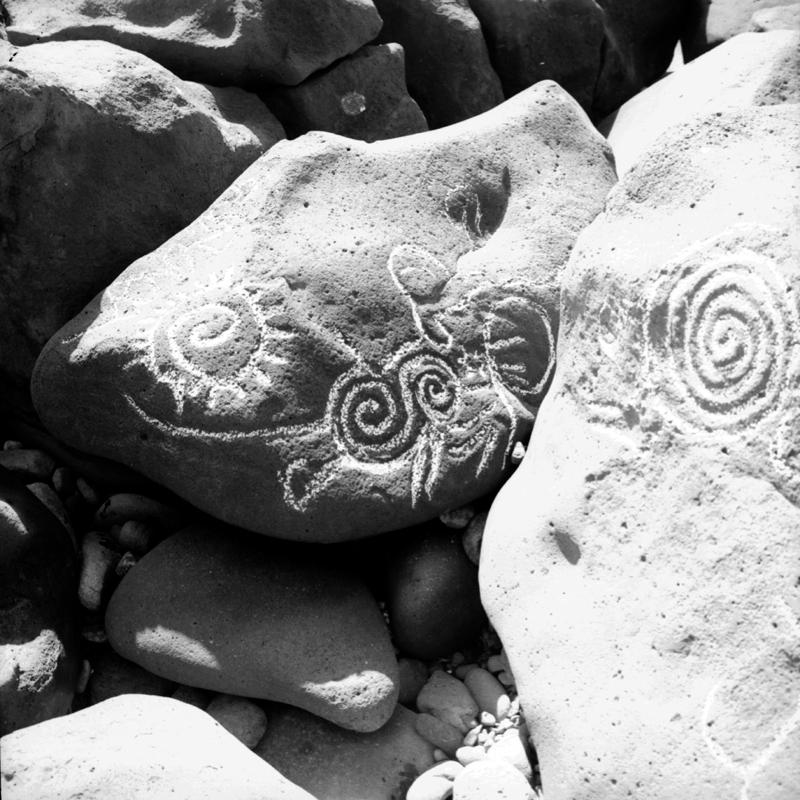
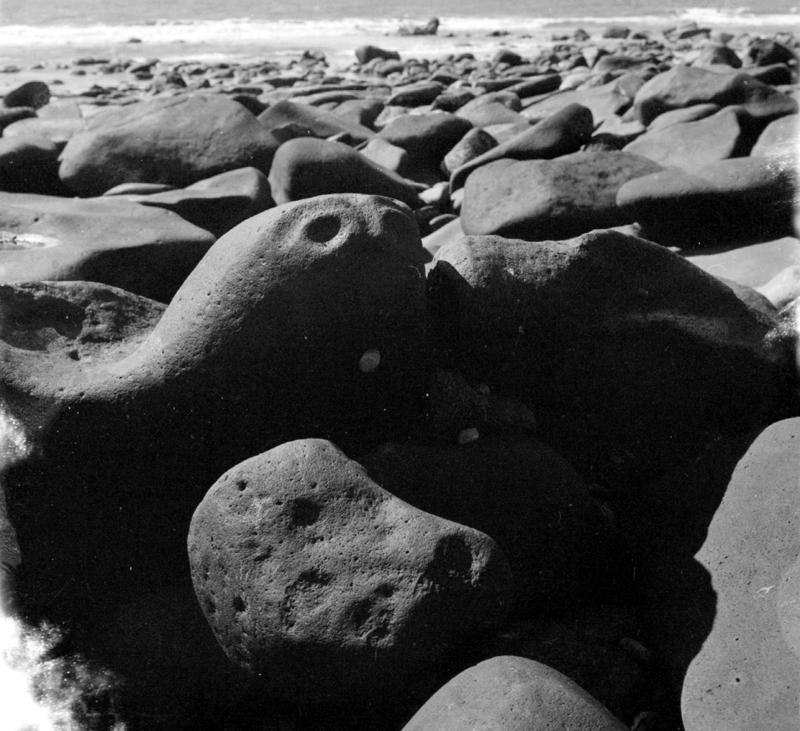
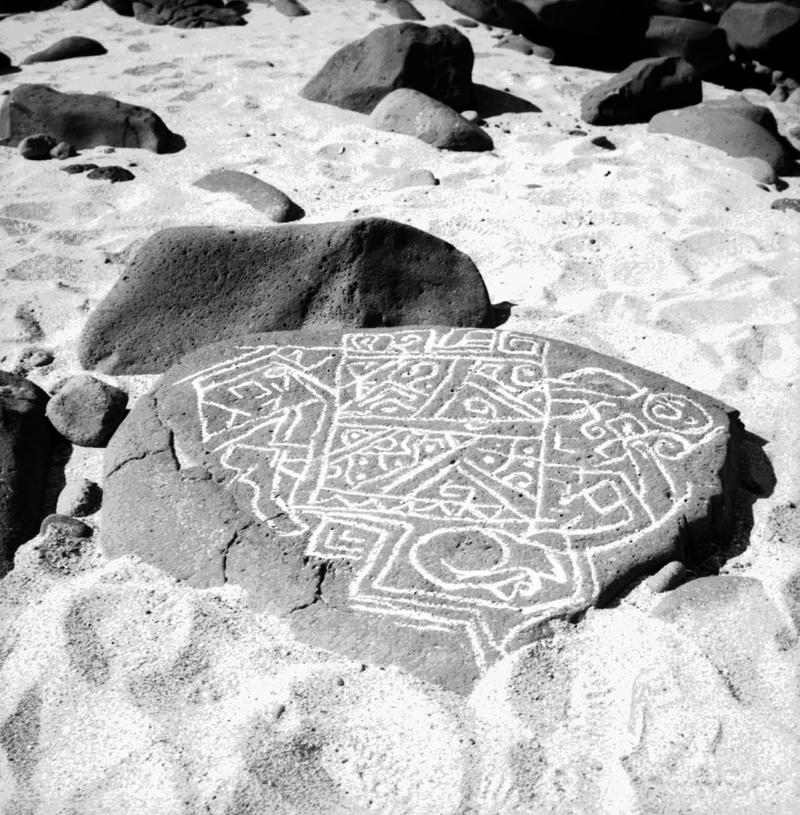
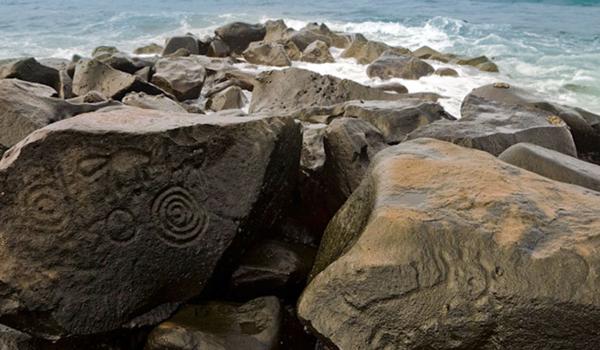
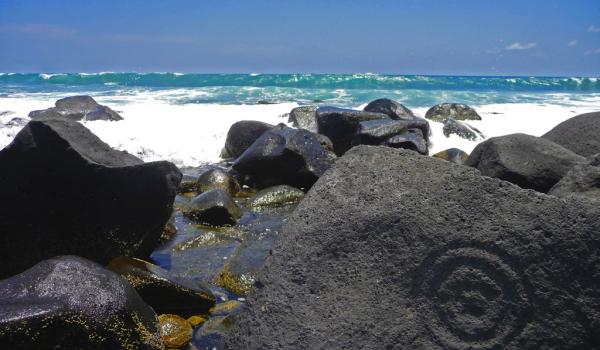
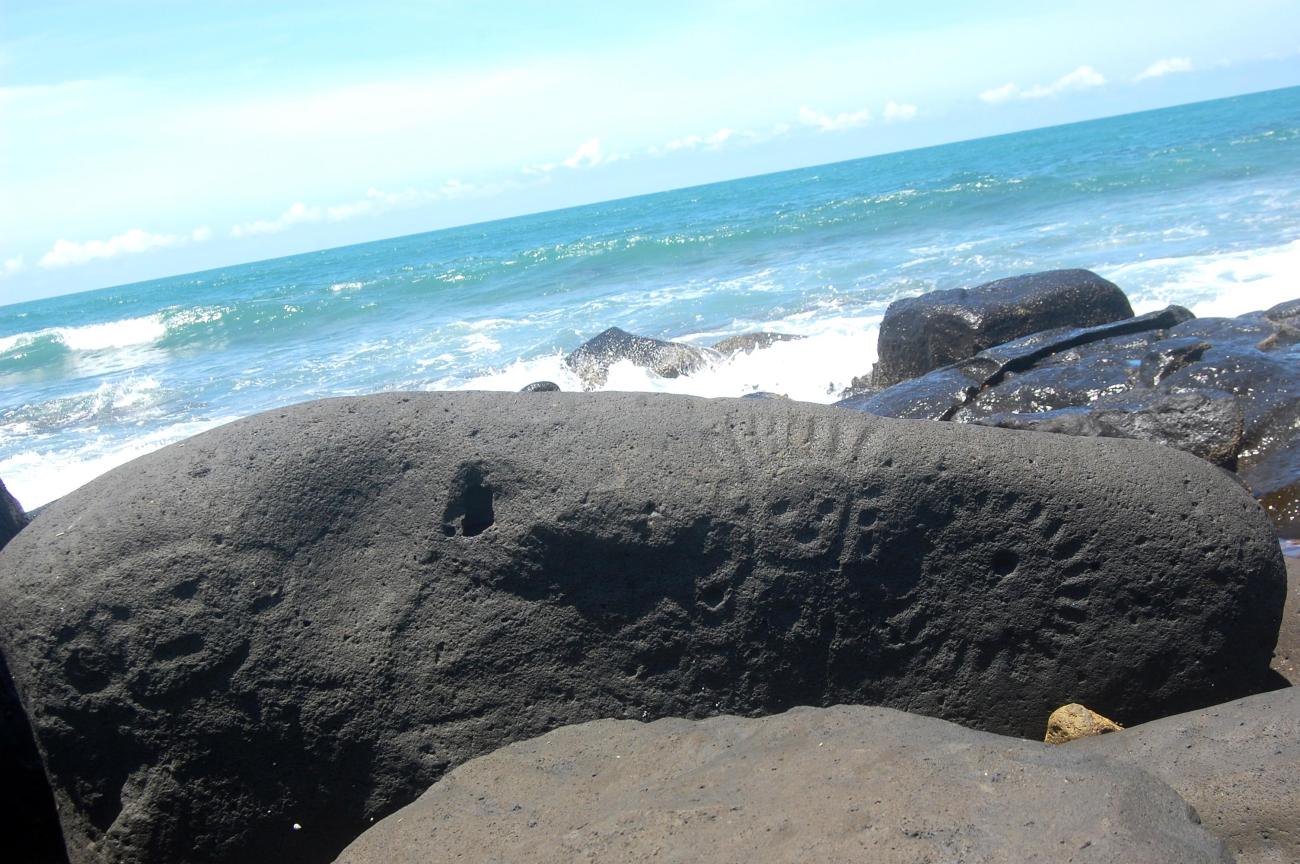
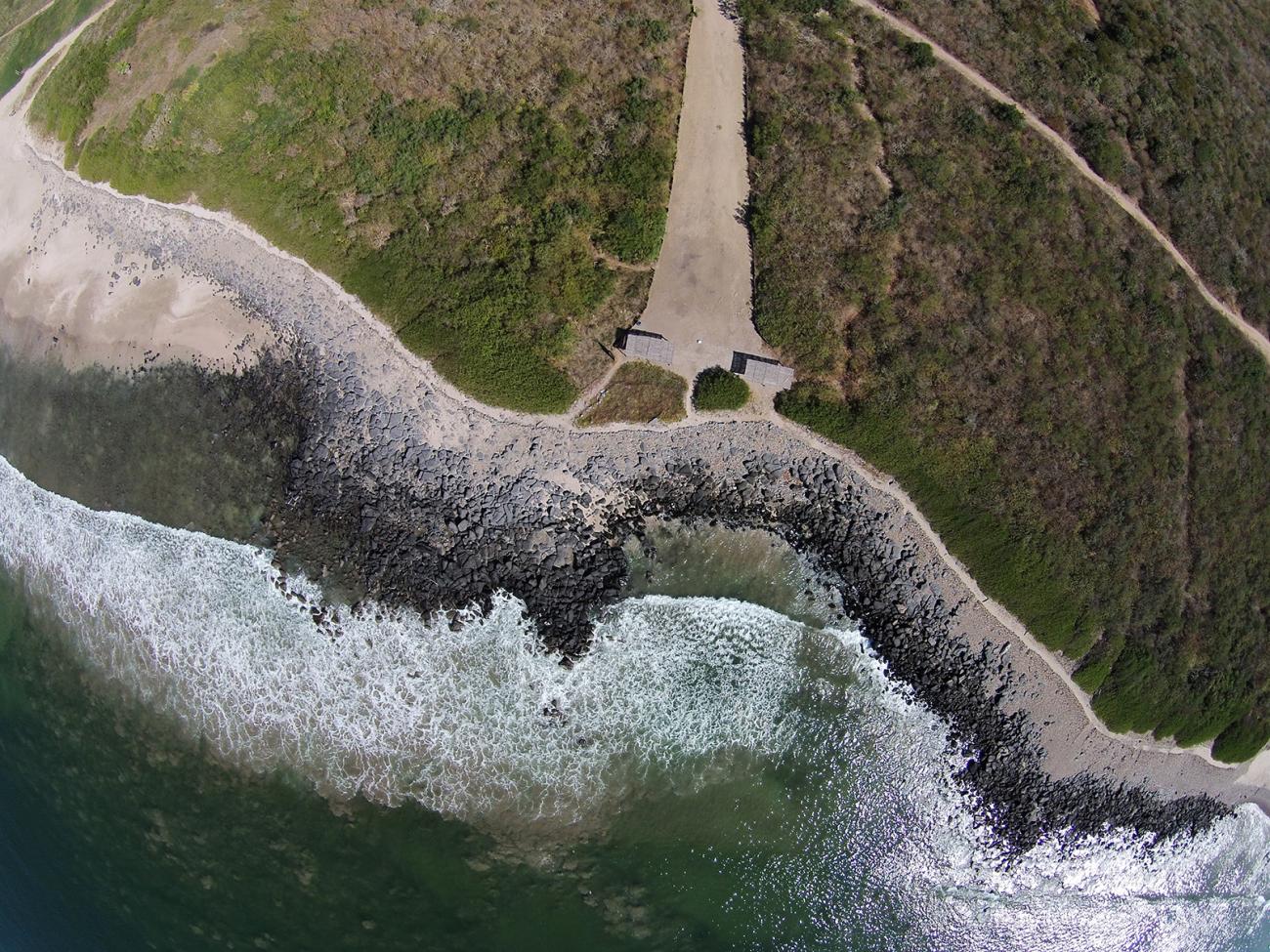
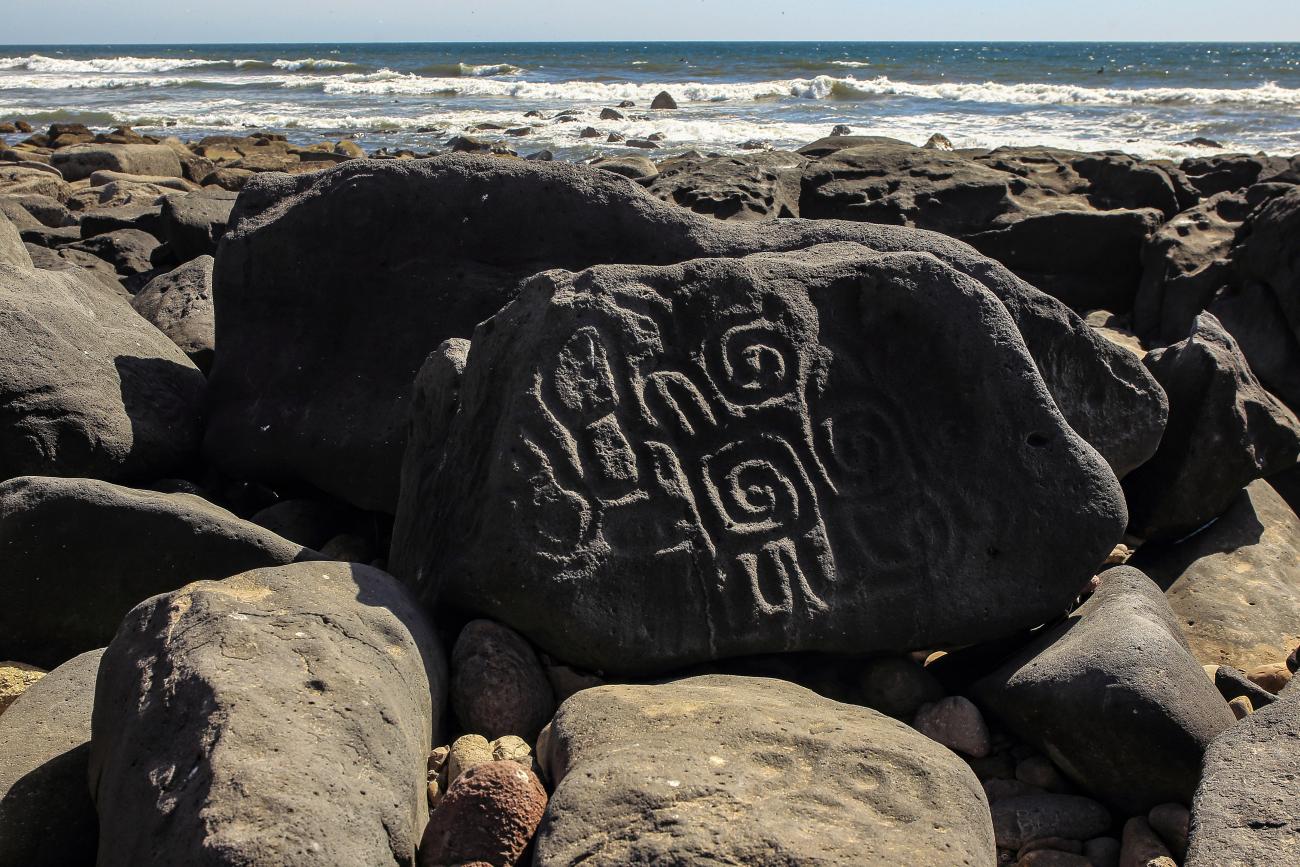
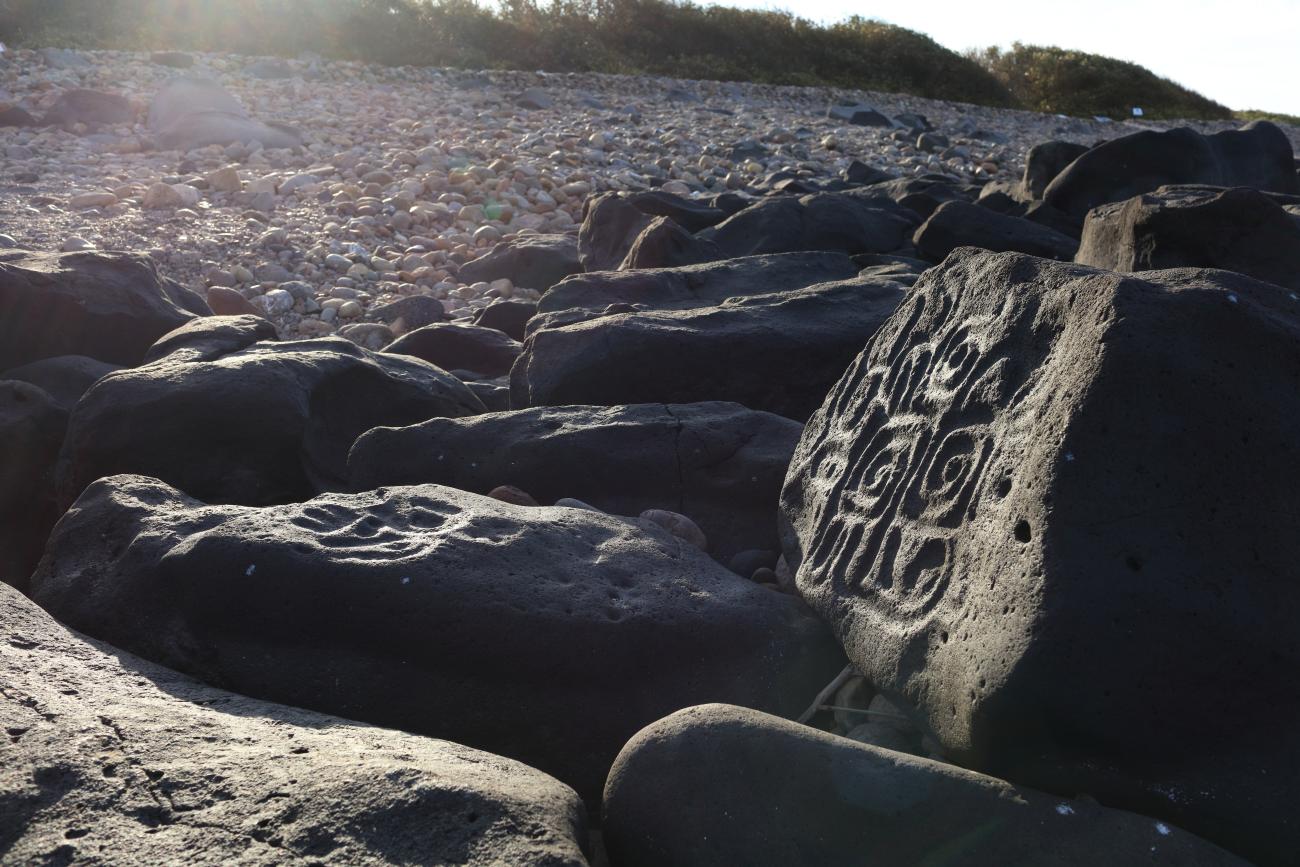
An extraordinary testimony to the ancient inhabitants, unique not only because of the beach location, but because of the more than 700 rock carvings on volcanic boulders. The motifs of plants, flowers, animals and geometric figures are undamaged by the sea.
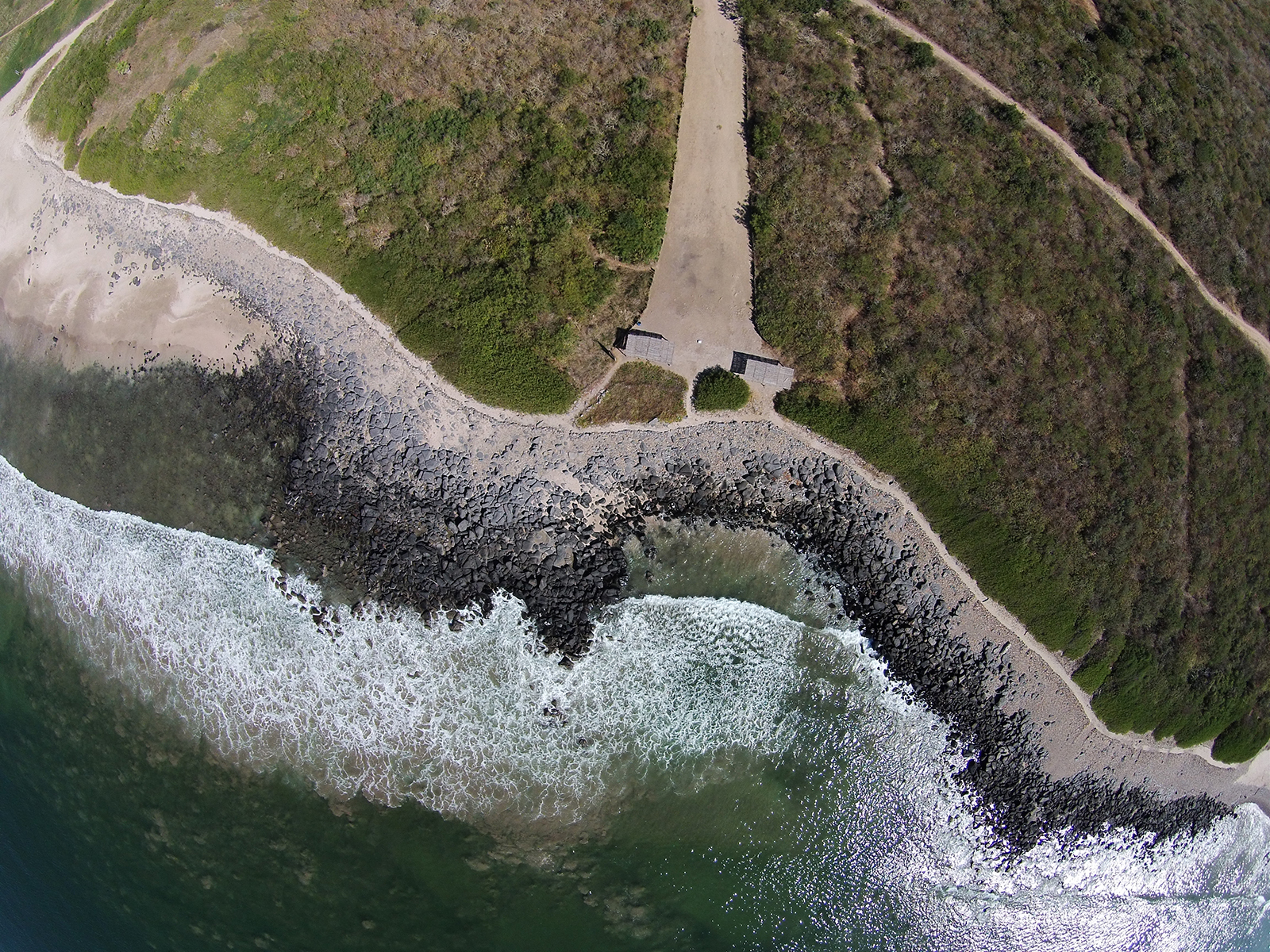
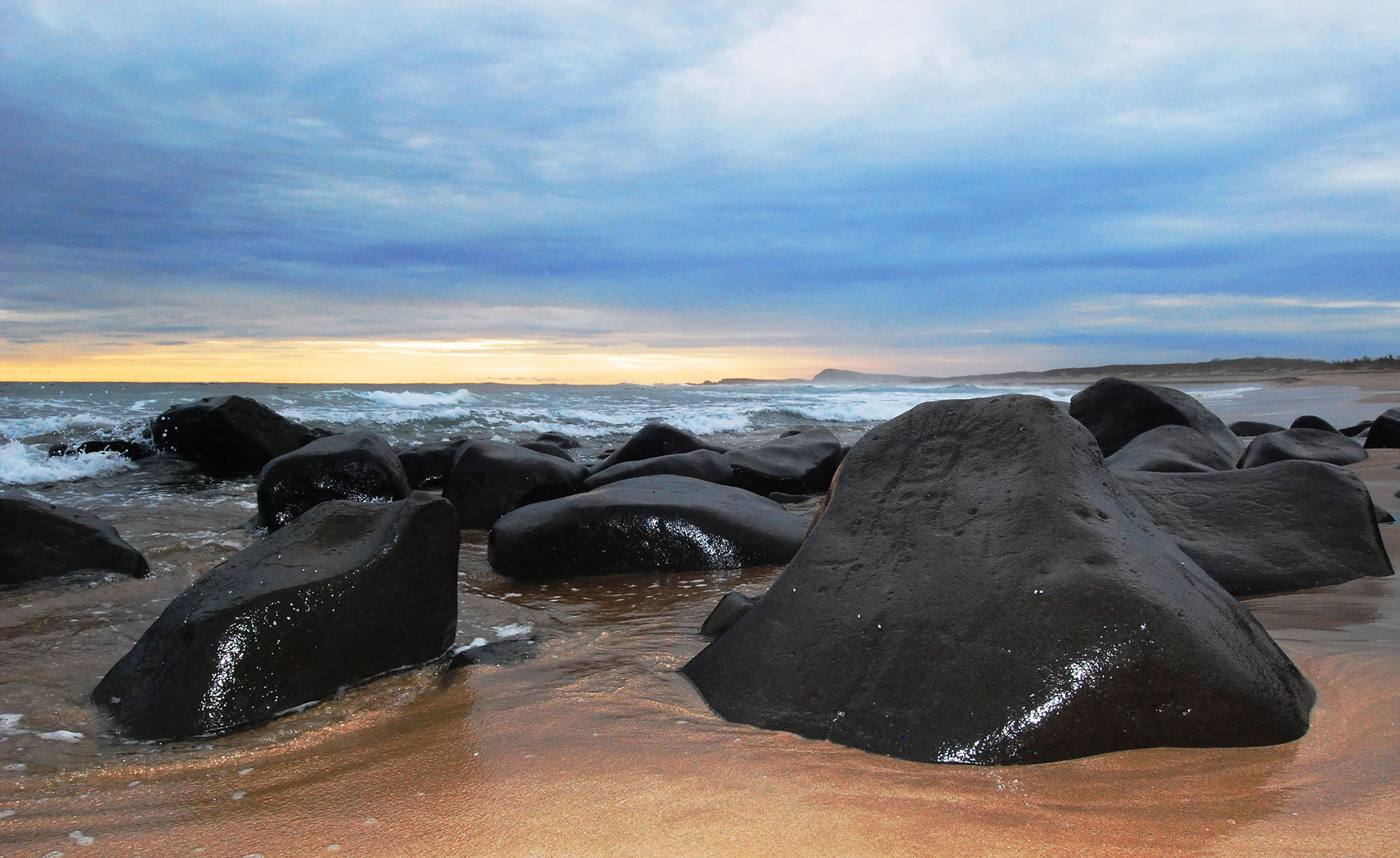
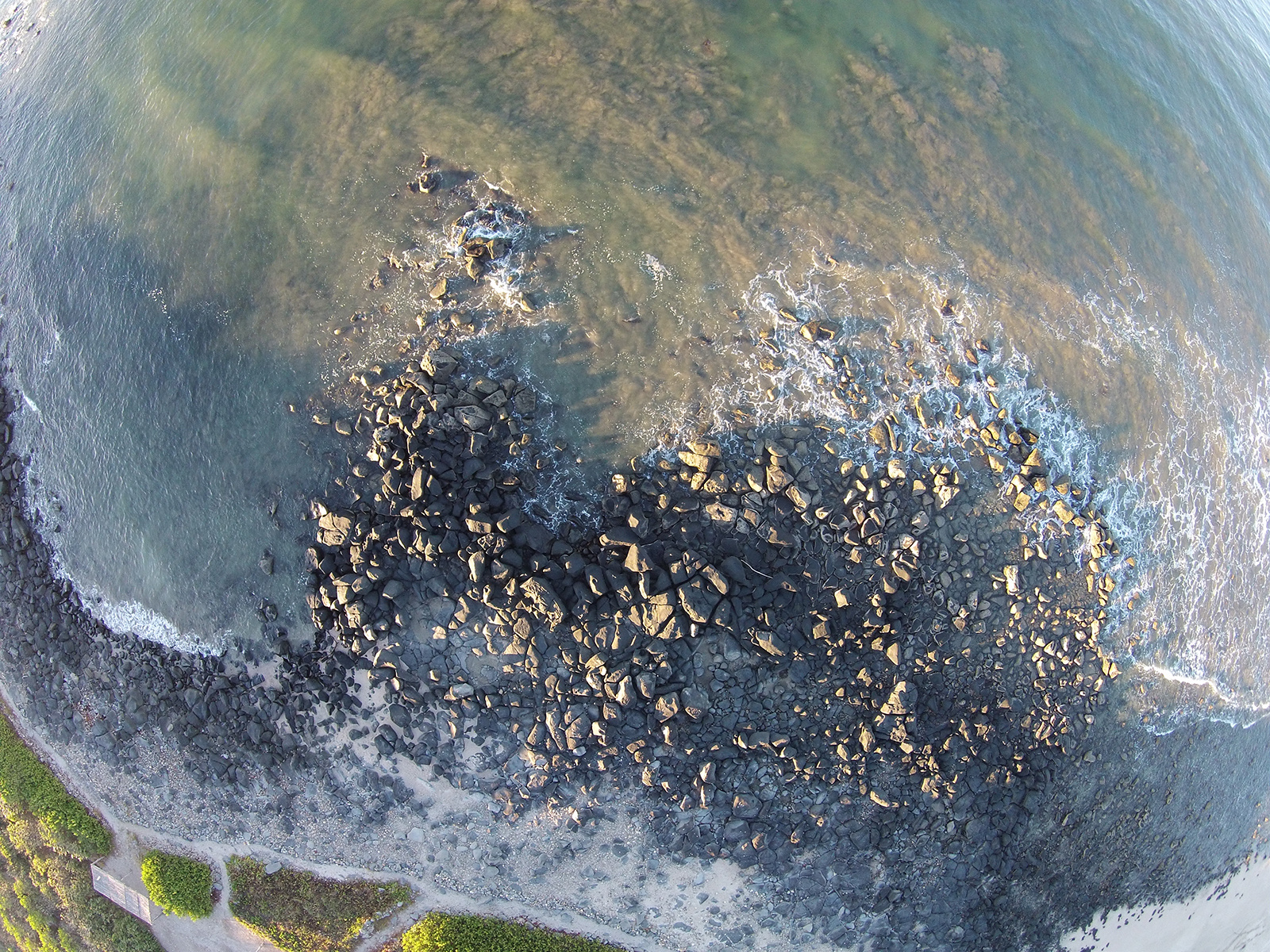
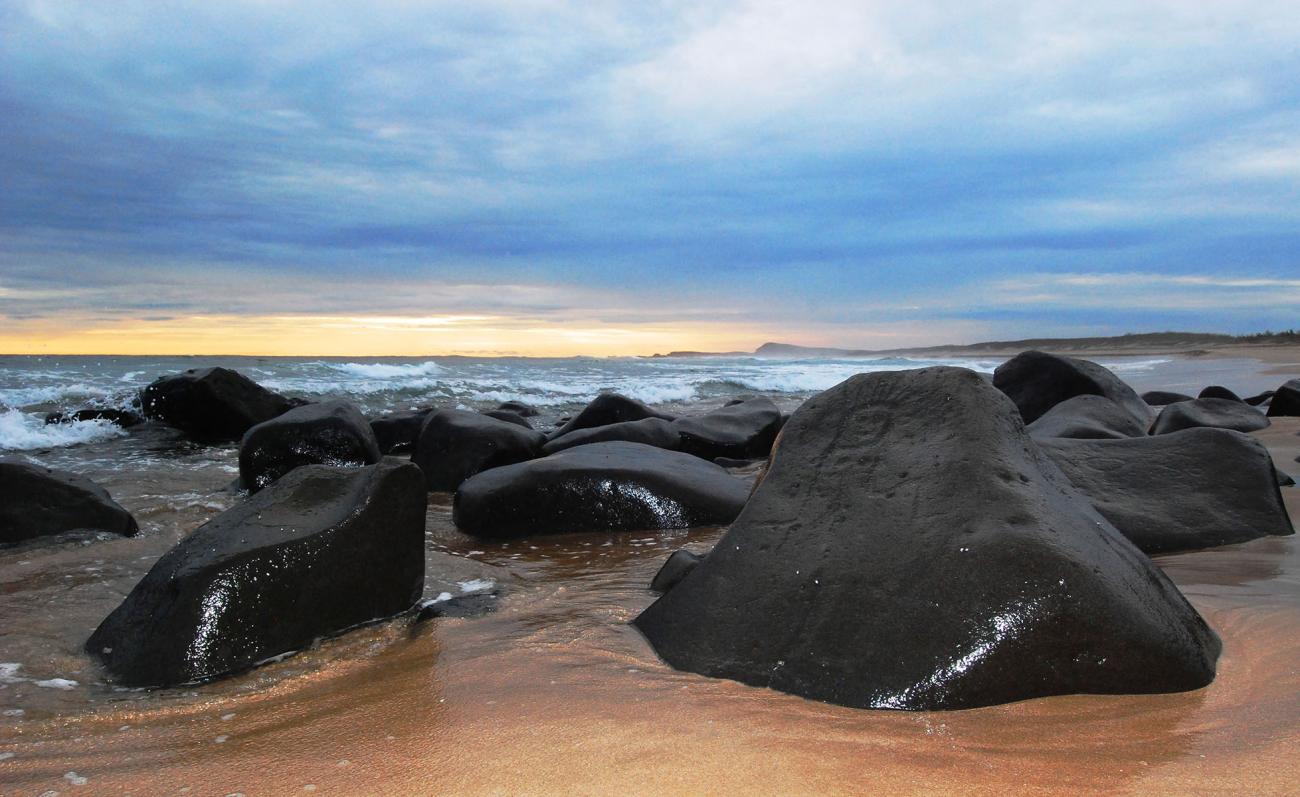
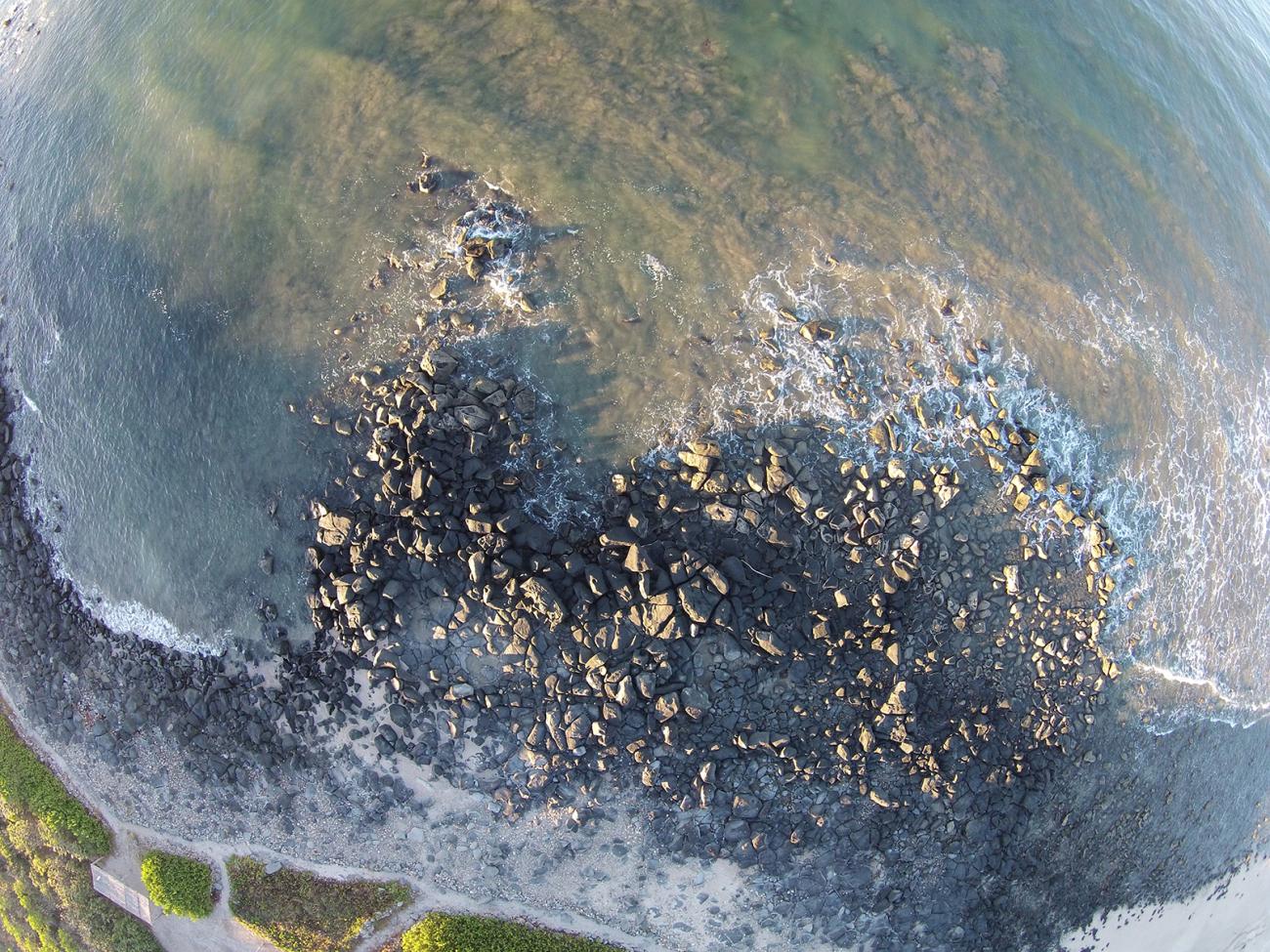
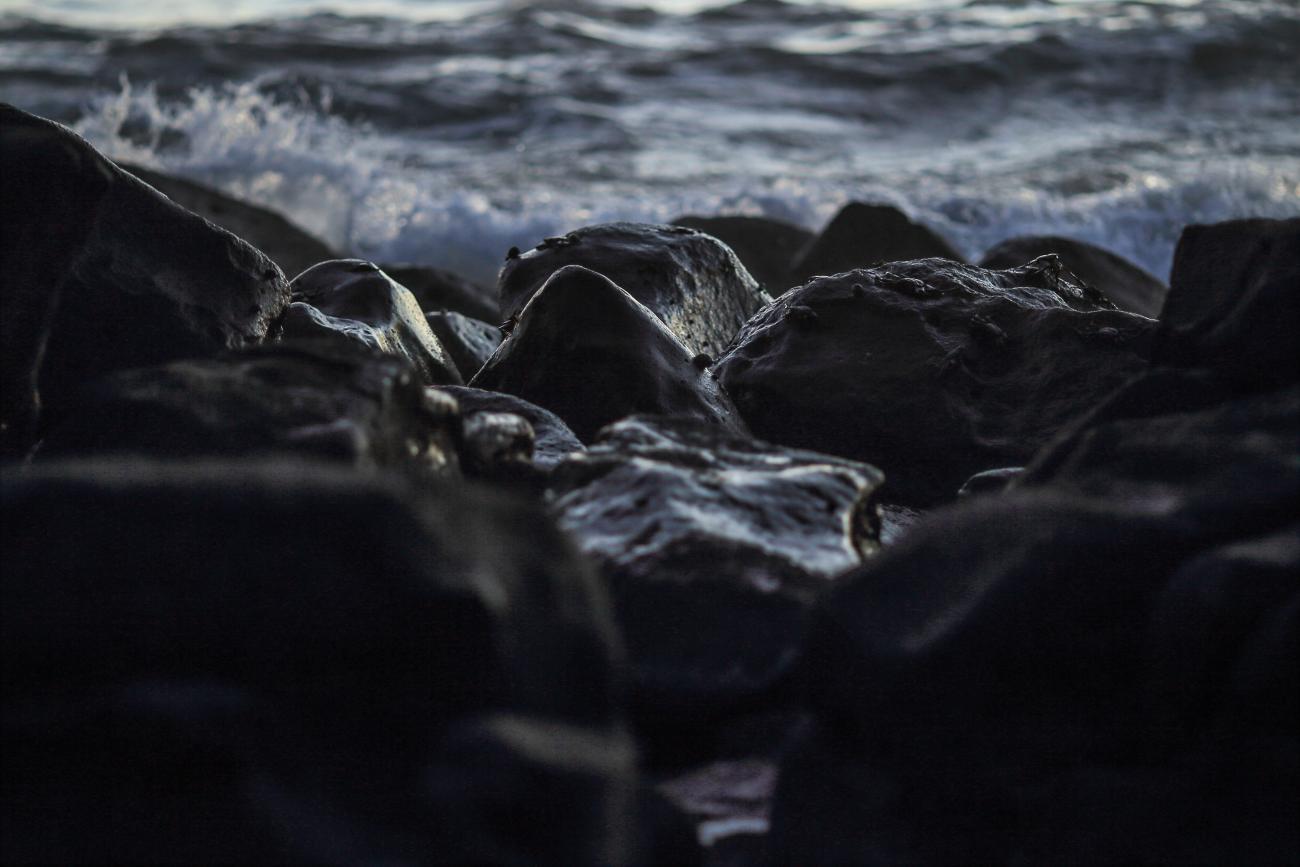
This archeological site, bordered by dense mangrove trees, is located on an area of the beach containing basaltic rocks of volcanic origin. More than 700 carvings have been made here, depicting humans, animals, plants and geometric figures.
Since 2009, the INAH has been carrying out continuous research into the engravings and the cultures which settled in the region during the pre-Hispanic era. More than 20 settlements have been identified thanks to the archeological studies carried out in the surrounding areas. In principle, the existence of a pre-ceramic occupation (7000-5500 BC) was discovered. This arose before farming began on the American continent and is characterized by a stoneworking industry in which leaf-shaped arrowheads are found (Lerma style). Another settlement was established much later, with the presence of ceramic and other archeological materials corresponding to a sedentary culture (Chicayota culture) linked to the Aztatlán tradition (750-1250).
Las Labradas is the first archeological settlement open to the public in Sinaloa. It was declared a zone of archeological monuments on November 30, 2012. Its engravings are found on the surface of the rocks as individual figures or as panels (of two or more figures). Furthermore, they are not distributed in a defined pattern. Some of them are concentrated in groups or sets and others are isolated, although the cause of this distribution is mostly due to the physical characteristics of this same grouping.
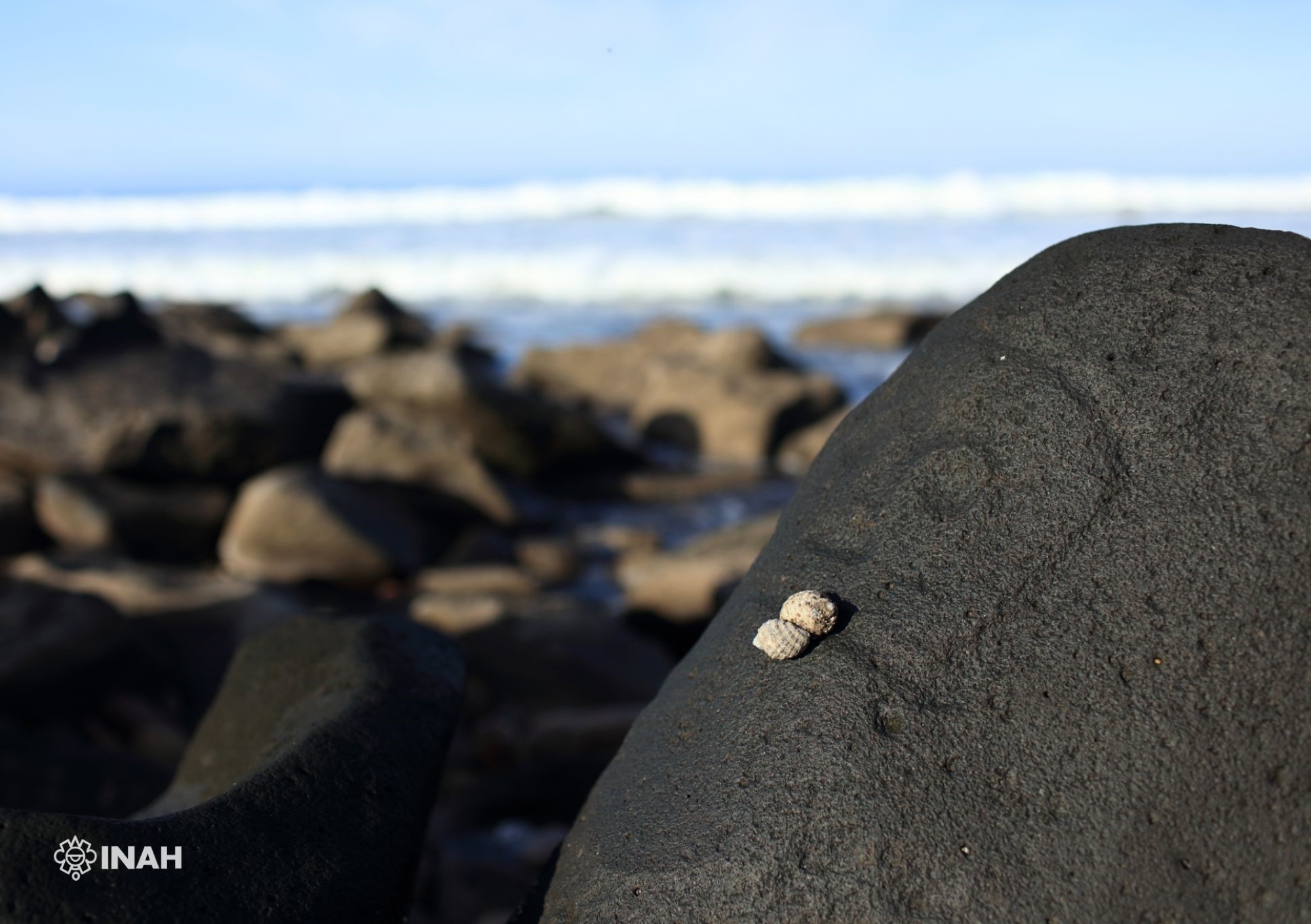
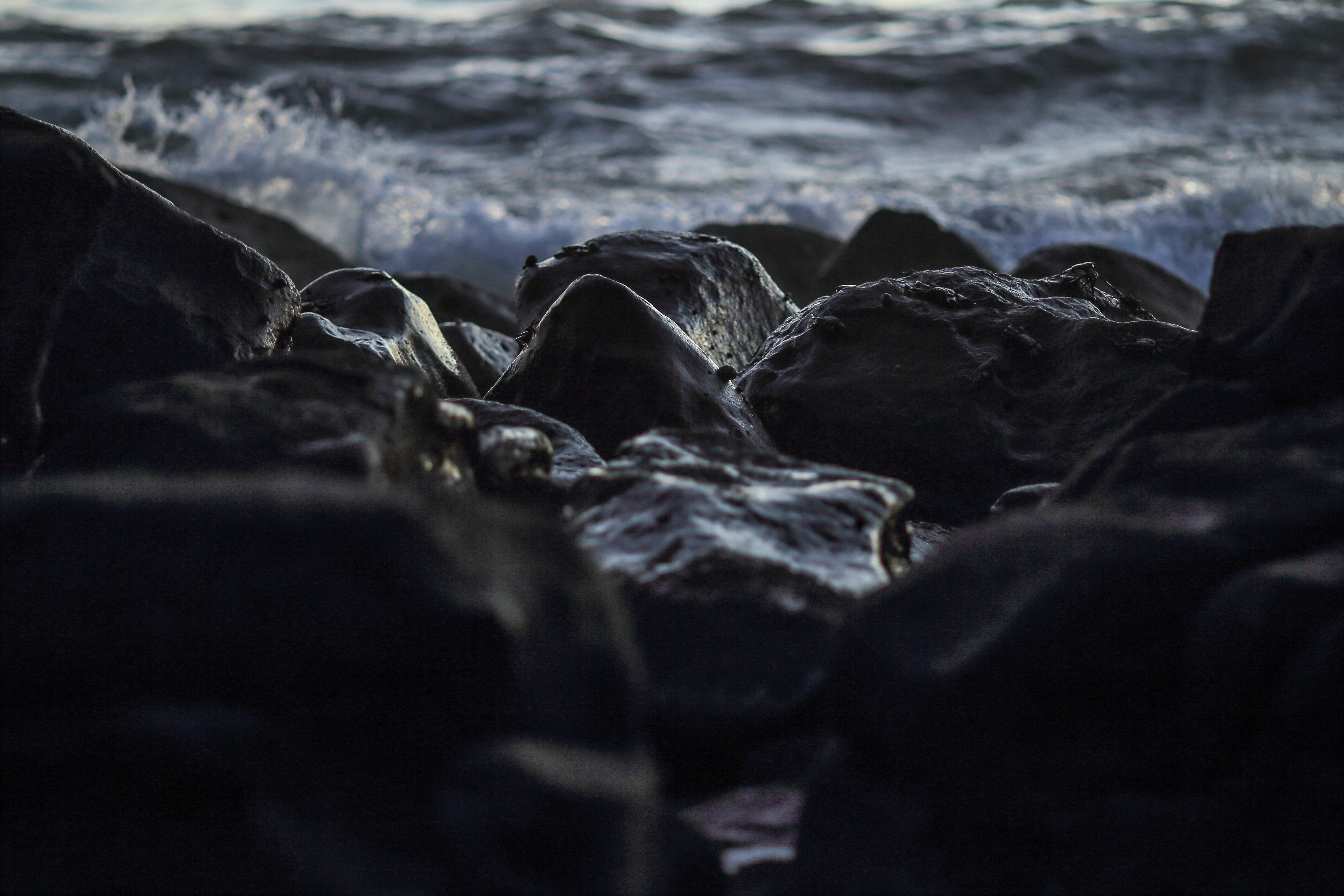
Manufacturing techniques include abrasion and percussion. Low-relief and high-relief motifs are frequent, together with the simple removal of the upper layer of the rocks. These are of many different sizes and are distinguished by their smooth and polished surface, rounded by the sea. They also have a dark and opaque color, presenting various different tones of grey over the course of the day. Additionally, large quantities of pebbles are present, the products of a geological event which took place thousands of years ago.
At least nine rock engravings exist which have some sort of spatial and, in some cases, numerical connection. These are related to the four cardinal points, the solar elements and the proximity to the imaginary line of the Tropic of Cancer. This is the case with one of the largest rocks at the start of the path from the entrance to the archeological site. A double contoured cross inside a rectangle can be seen on it, which represents the four directions or cardinal points.
Similarly, a celebration of the summer solstice seems to be symbolically represented in Las Labradas. The solar elements depicted in the geometric figures and in the majority of the human characters suggest the presence of an ancient pre-Hispanic world view. In the majority of the engravings, the sun is replicated as the center, origin and point of convergence (in its spatial and geometric aspect), as light, fire, heat and wave movement (in its natural aspect) and as an object of contemplation, worship, exaltation and transformation (in its metaphysical aspect).
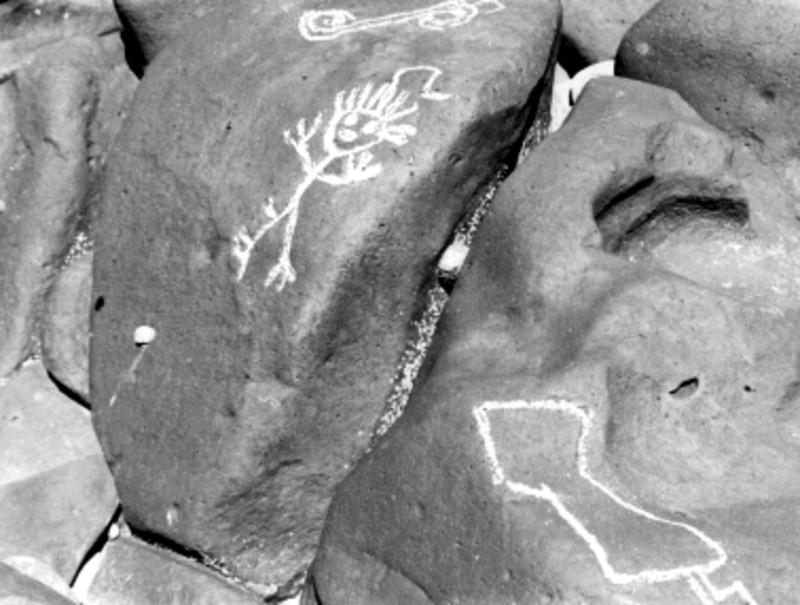
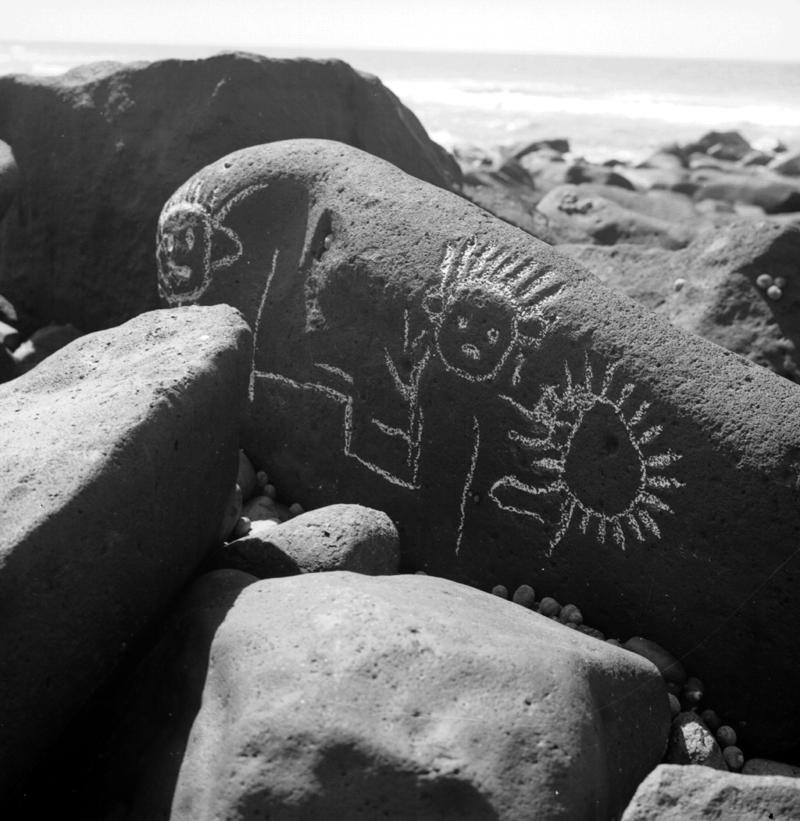
It is also possible to observe various petroglyphs along the route which represent characters with circular and triangular heads, open or raised arms and completed or half-completed bodies. There are also some showing only a face. Some figures have no hair and others have a range of spiked hairstyles. Sometimes, there is a small line for a mouth, while the nose is represented in only very few cases.
Los zorros
In the vicinity of the mouth of the beach, in the northwest sector of the archaeological zone, where the waves constantly break with the rocks, is one of the most significant groups. On the vertical surface of a rock, on some concentric circles, a scene is represented where two petroglyphs in the…
Los zorros
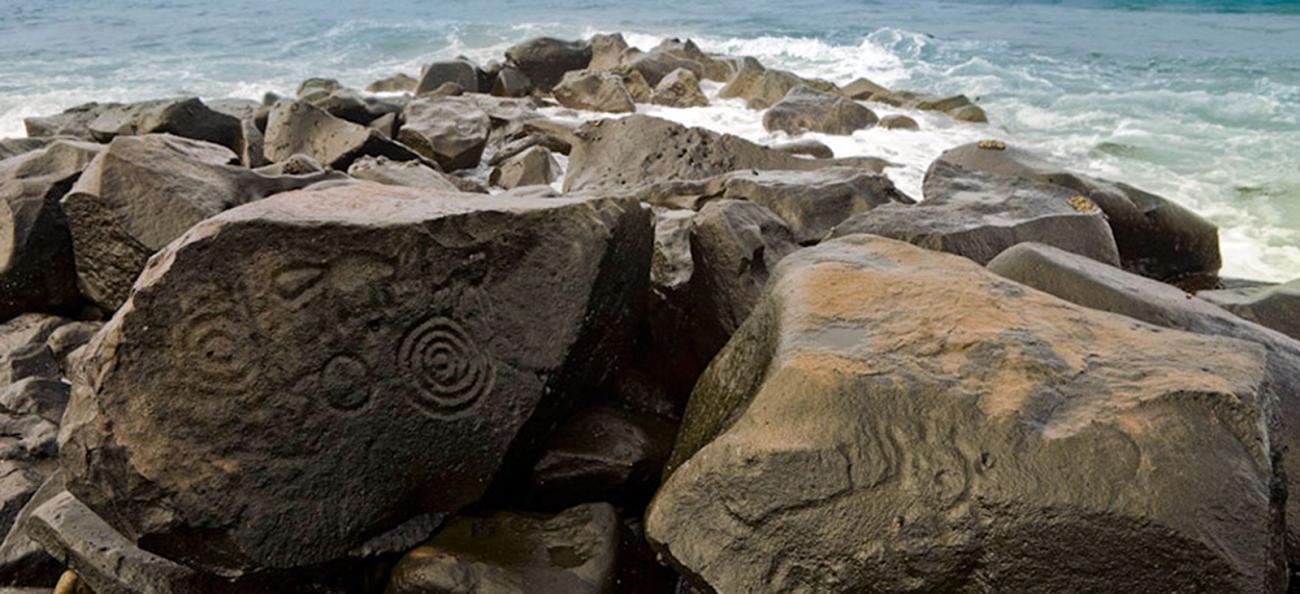
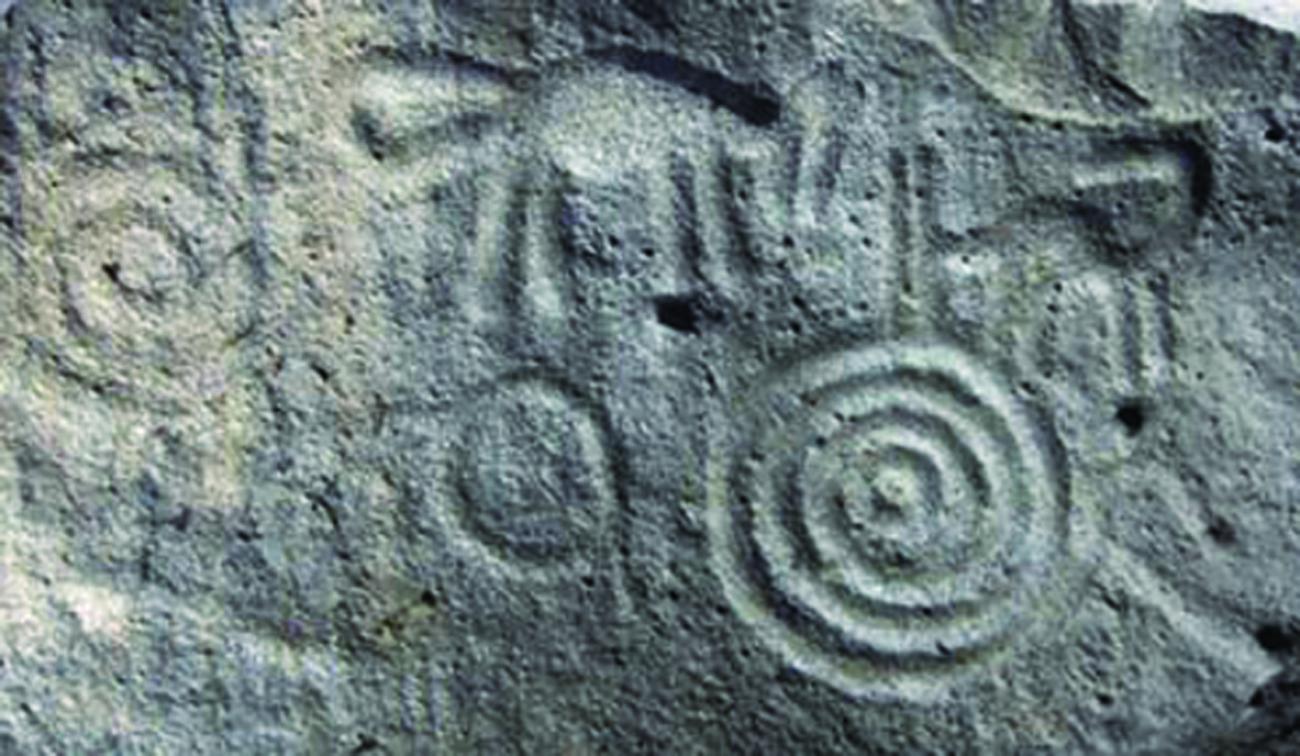
In the vicinity of the mouth of the beach, in the northwest sector of the archaeological zone, where the waves constantly break with the rocks, is one of the most significant groups. On the vertical surface of a rock, on some concentric circles, a scene is represented where two petroglyphs in the shape of mammals, apparently foxes, are represented. One of them is with the head bent down, the ears raised, the body humpbacked and the tail raised, at the same time that it touches with the muzzle the figure of concentric circles. The other fox, which is located in a slightly higher plane, seems to be observing the scene, remaining passive and with its tail apparently fluffed.
El felino solar
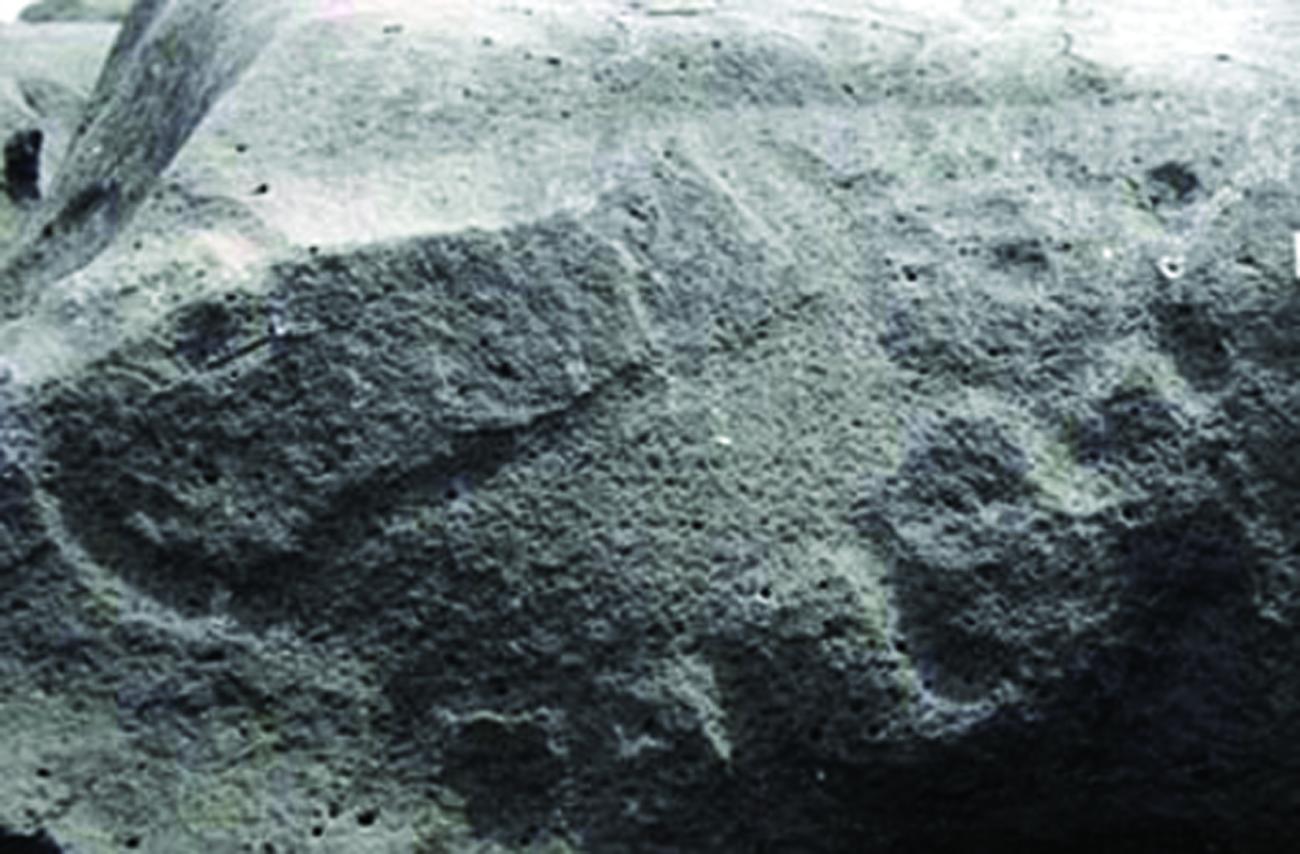
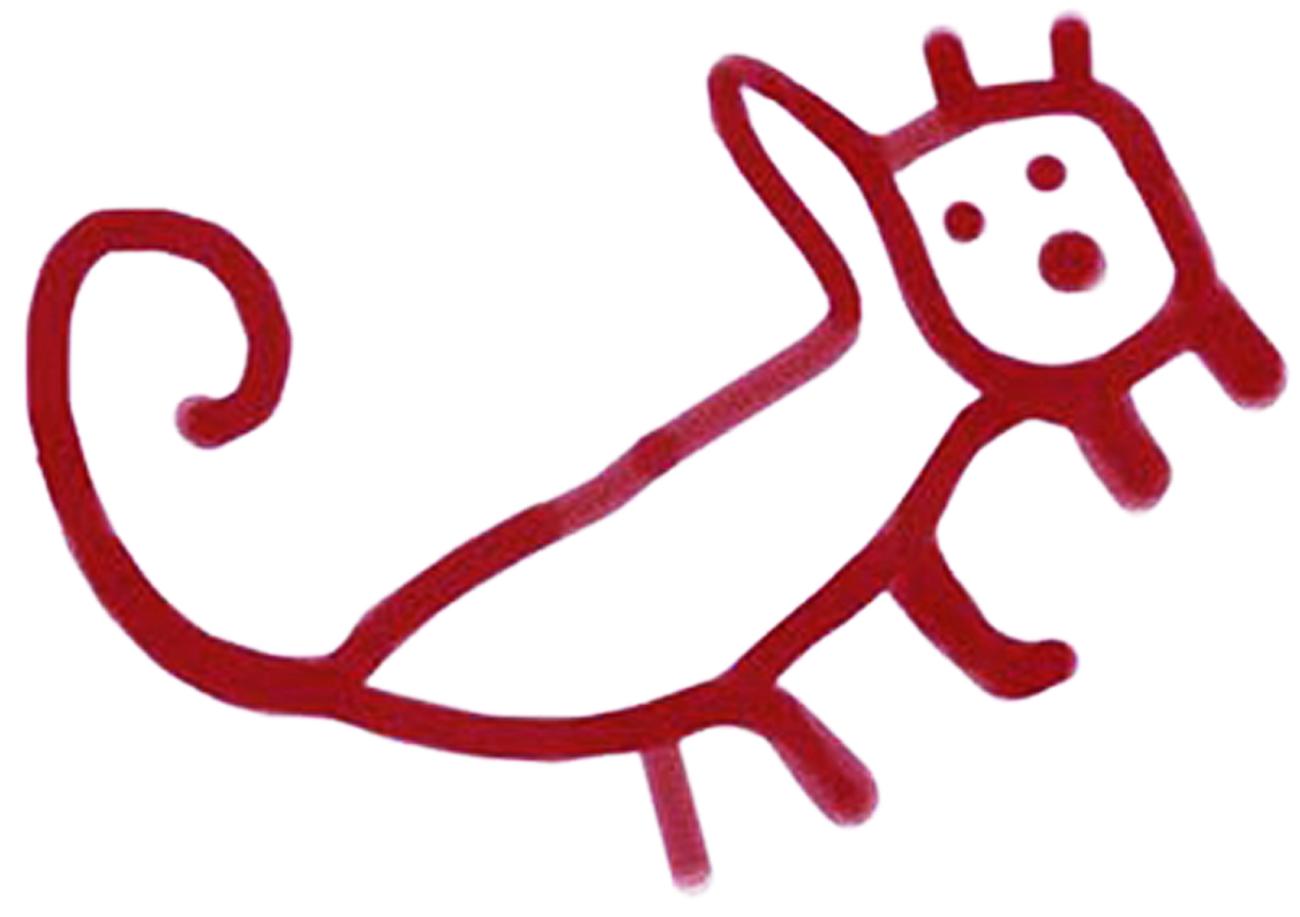
On a rock near the foxes, the figure of what appears to be a feline can be seen. Three lines protrude upward from its head, one of which is probably an ear, while the other two may represent sun rays.

El caracol y el personaje del brazo largo
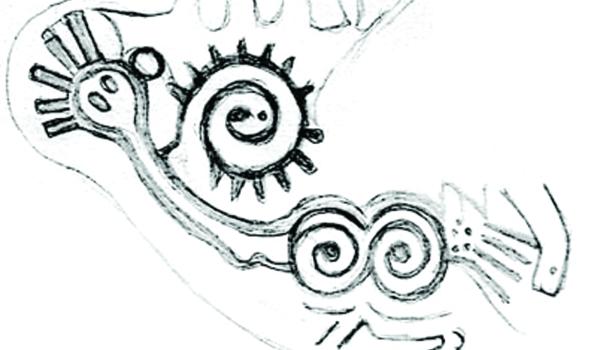
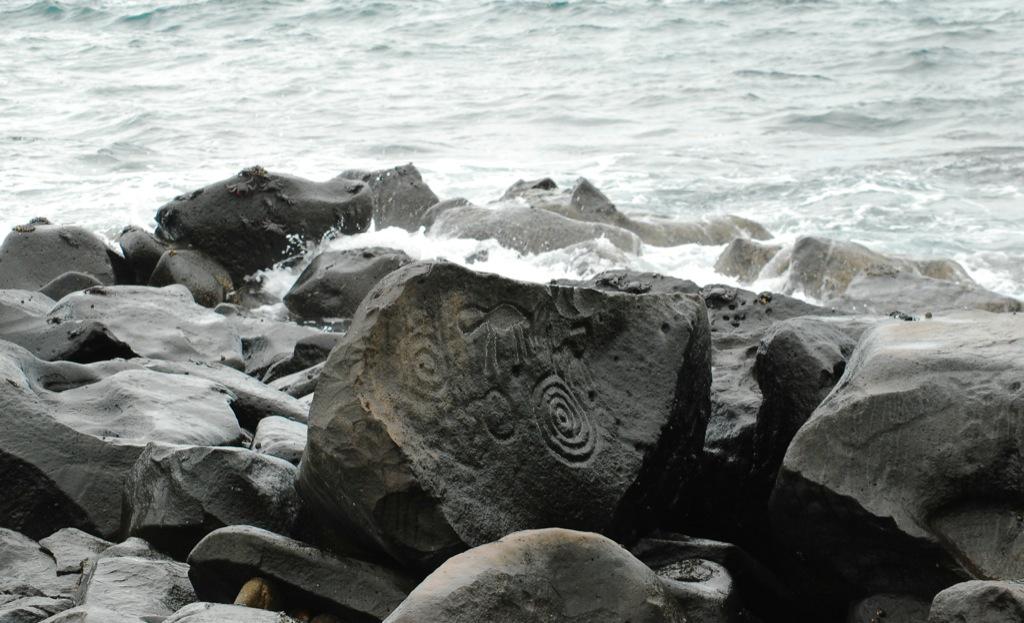
In a rock of difficult access, due to the breaking of the waves, there is a figure formed by concentric circles, which seems the image of a snail. Another engraving that also stands out is that of a large figure with the left arm bent upward in a square, but disproportionately long compared to the…
El caracol y el personaje del brazo largo
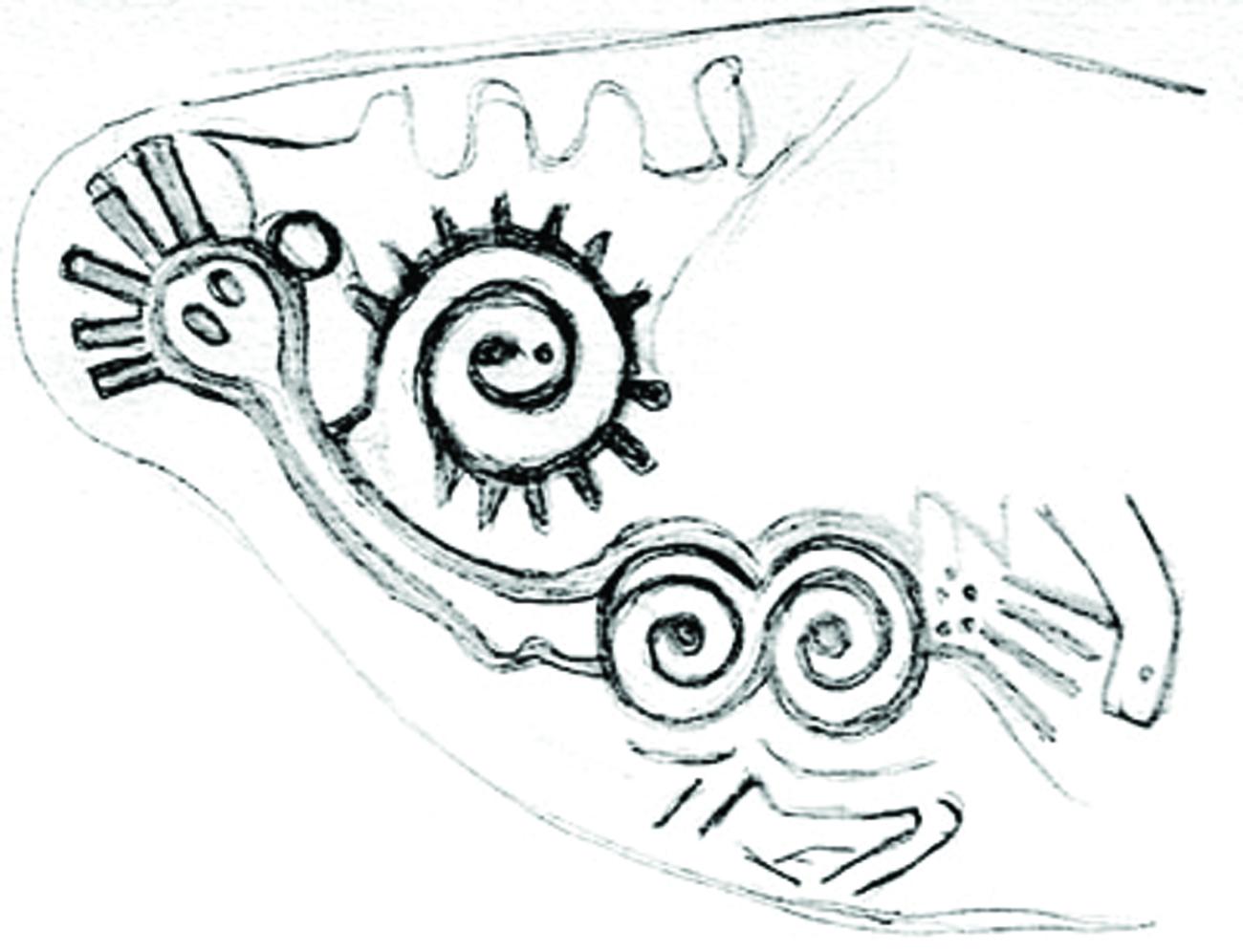
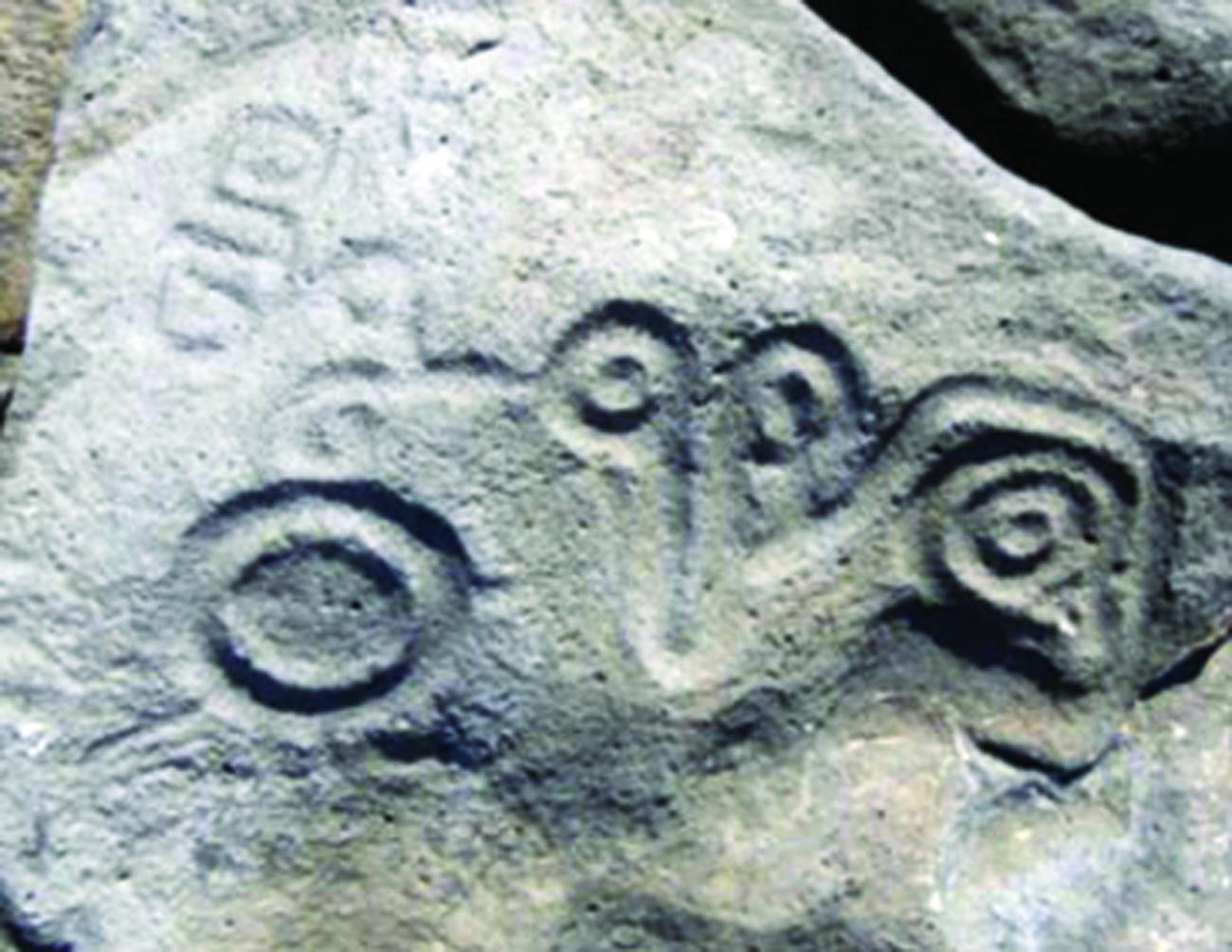
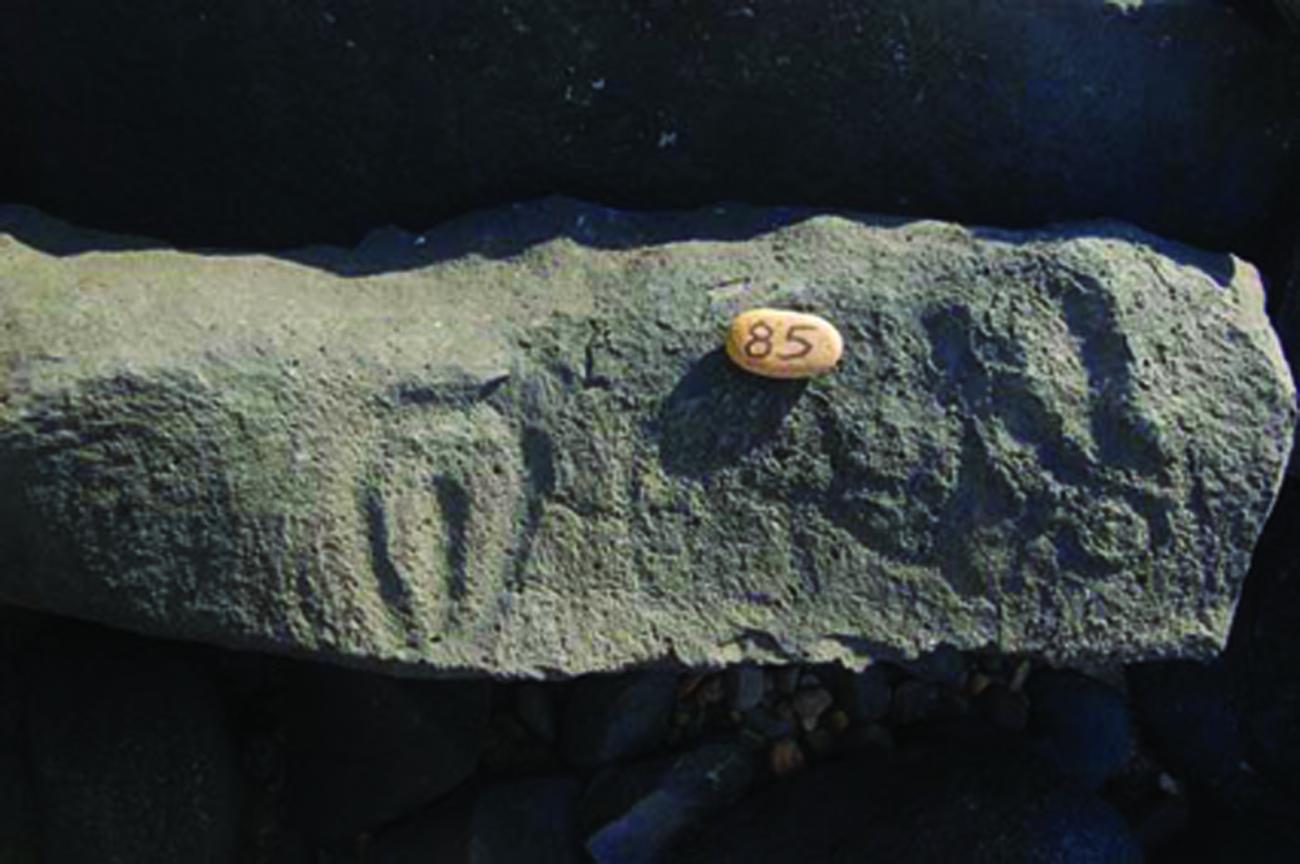
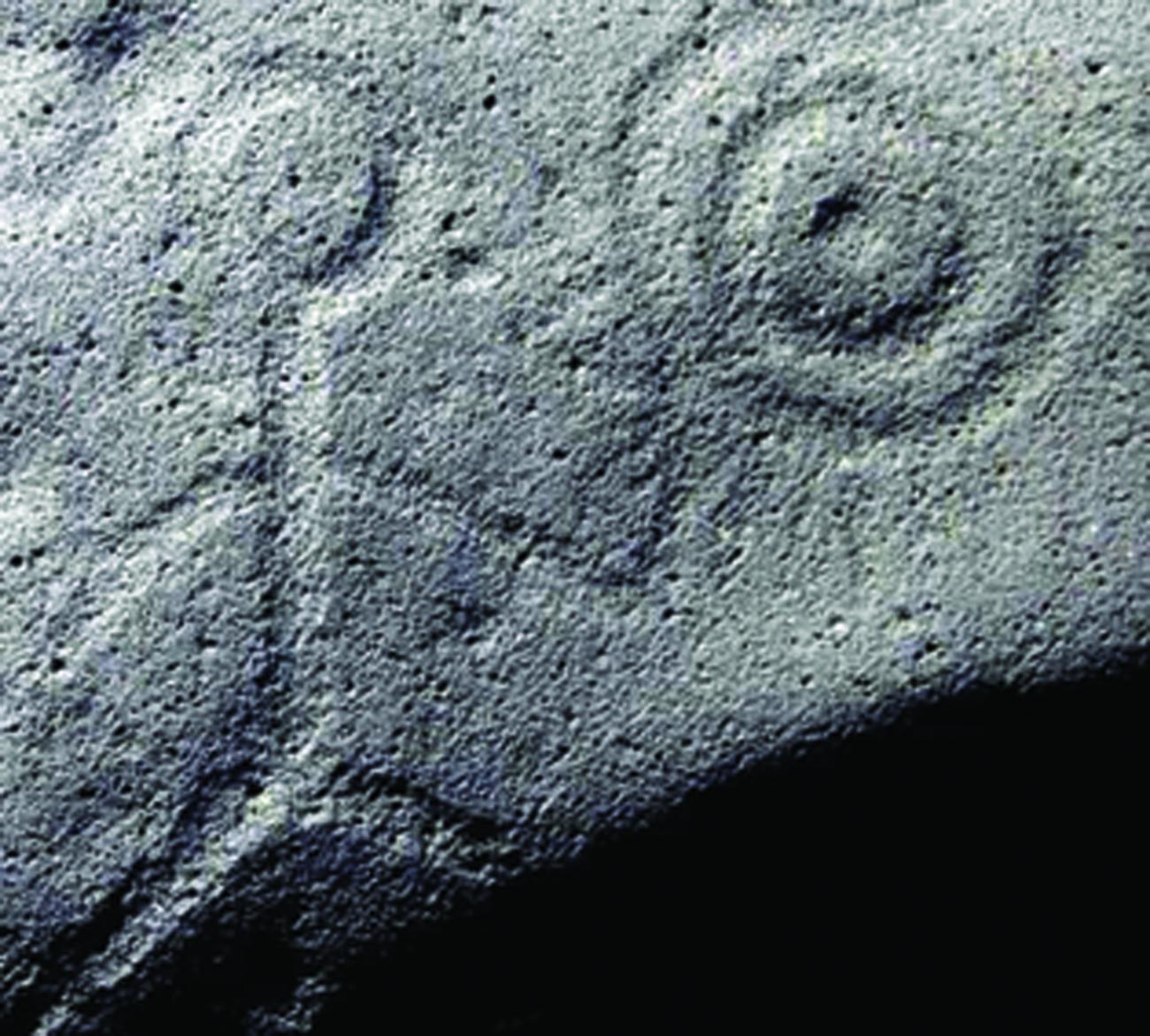

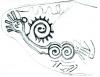
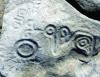
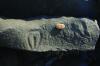
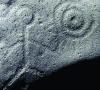

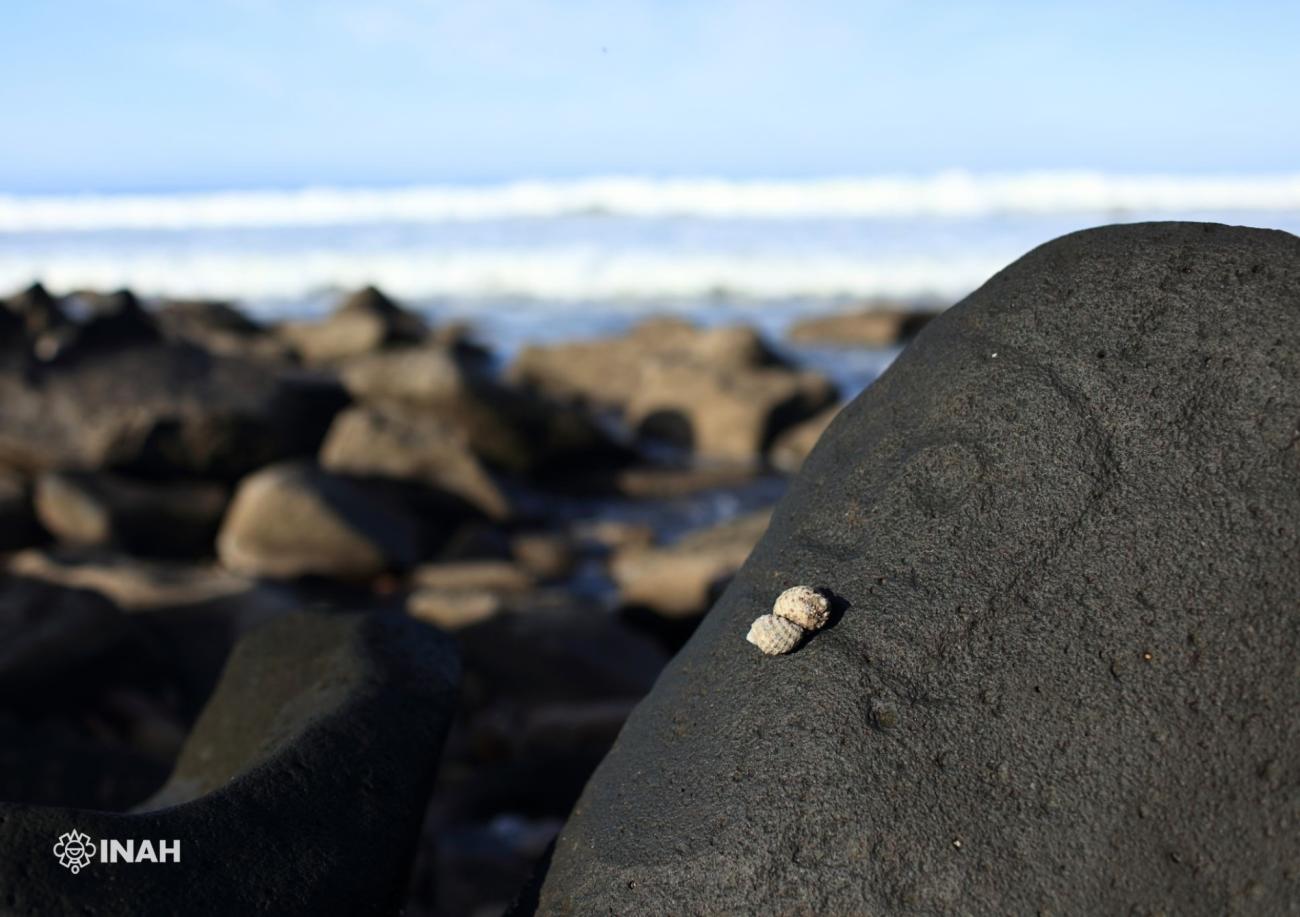
In a rock of difficult access, due to the breaking of the waves, there is a figure formed by concentric circles, which seems the image of a snail. Another engraving that also stands out is that of a large figure with the left arm bent upward in a square, but disproportionately long compared to the right arm.
El reptil antropomorfo
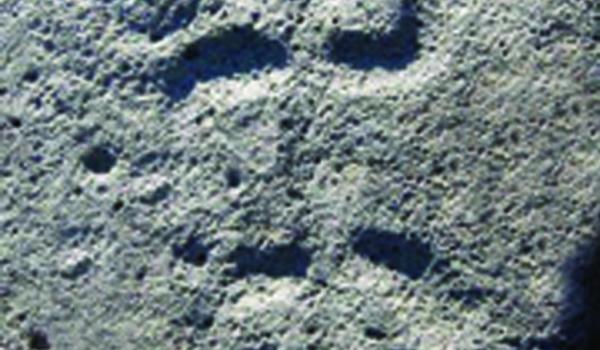
On the horizontal surface of a rock was found the representation of a reptile in human form. The figure, from the front, has the left arm upward in a square, while the right arm is downward. Between the shoulder and the head there is a circle, while the legs, although incomplete, are open. The…
El reptil antropomorfo
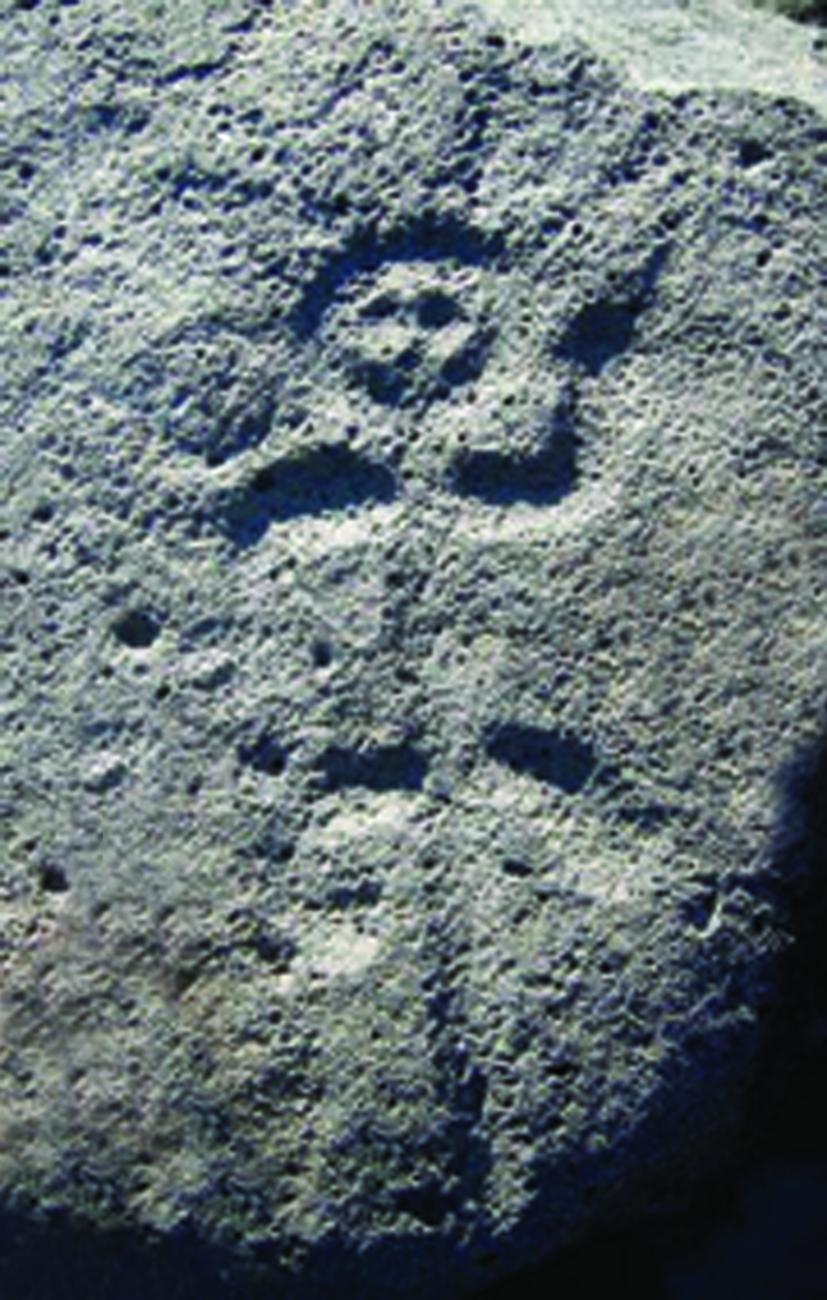
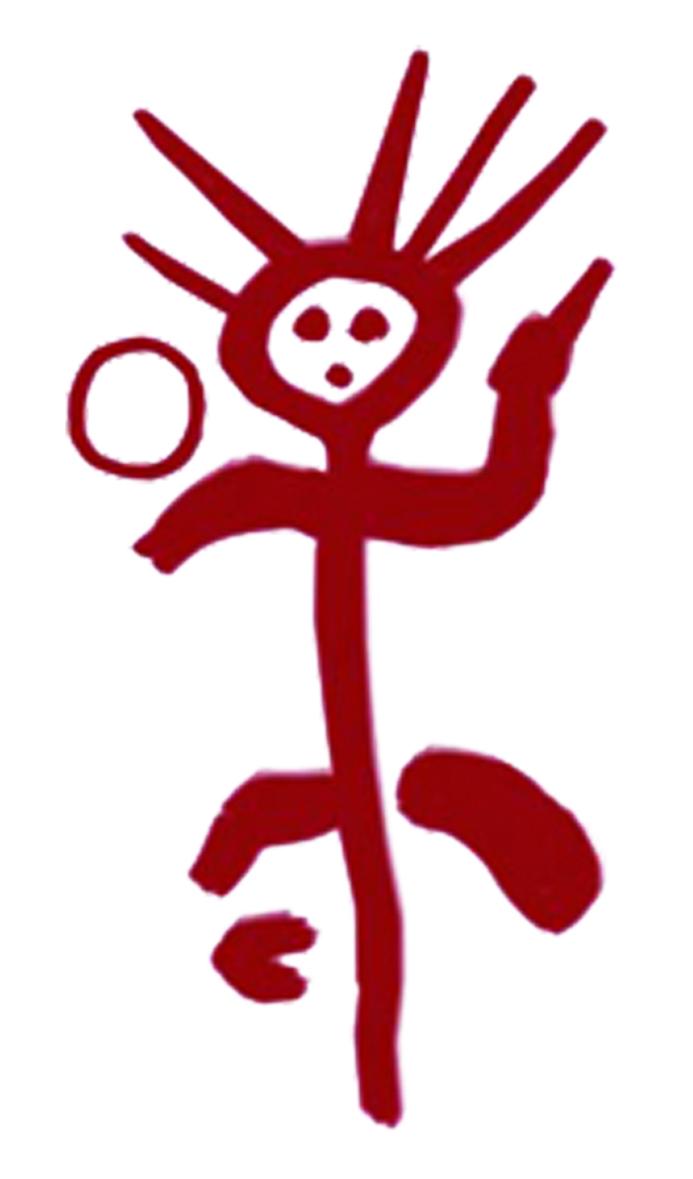
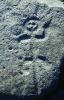

On the horizontal surface of a rock was found the representation of a reptile in human form. The figure, from the front, has the left arm upward in a square, while the right arm is downward. Between the shoulder and the head there is a circle, while the legs, although incomplete, are open. The anthropomorphic reptile has all the characteristics of other human designs from Las Labradas, except for the long line that extends between the legs precisely resembling the tail of a reptile.
Representación ideográfica
It consists of a panel with three engravings on the horizontal surface of a rock. If it is observed in detail, the main engraving corresponds to a figure conformed by three concentric circles with a triangular top in the superior part and seven lines in the form of fringe in the inferior part.…
Representación ideográfica
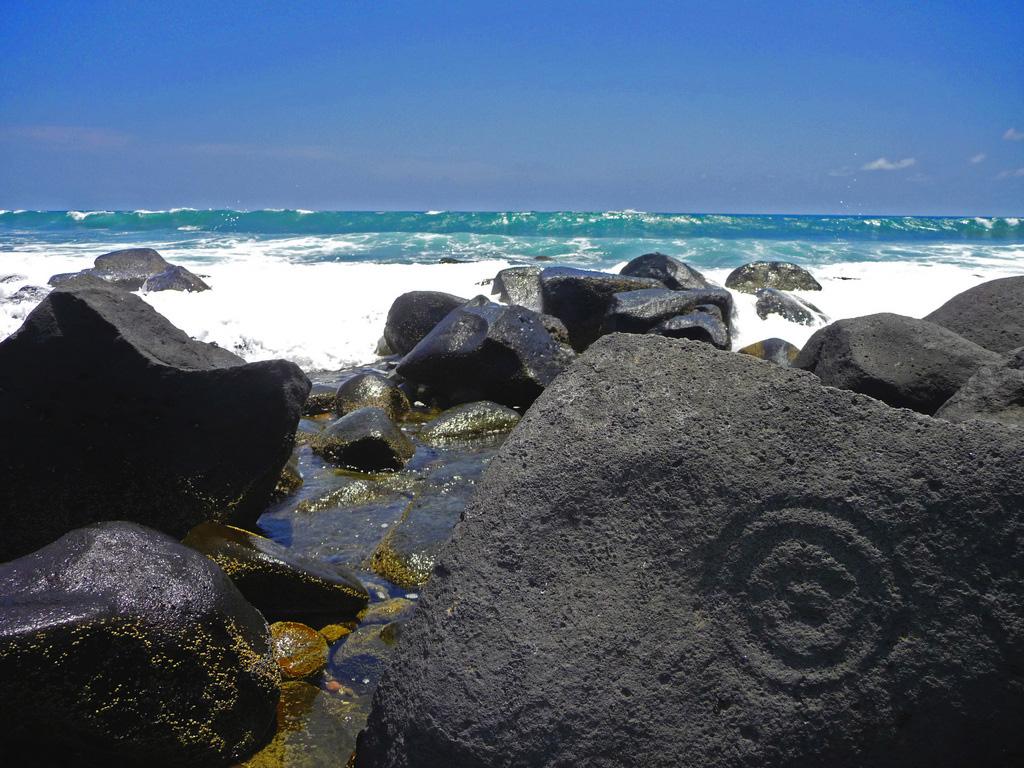
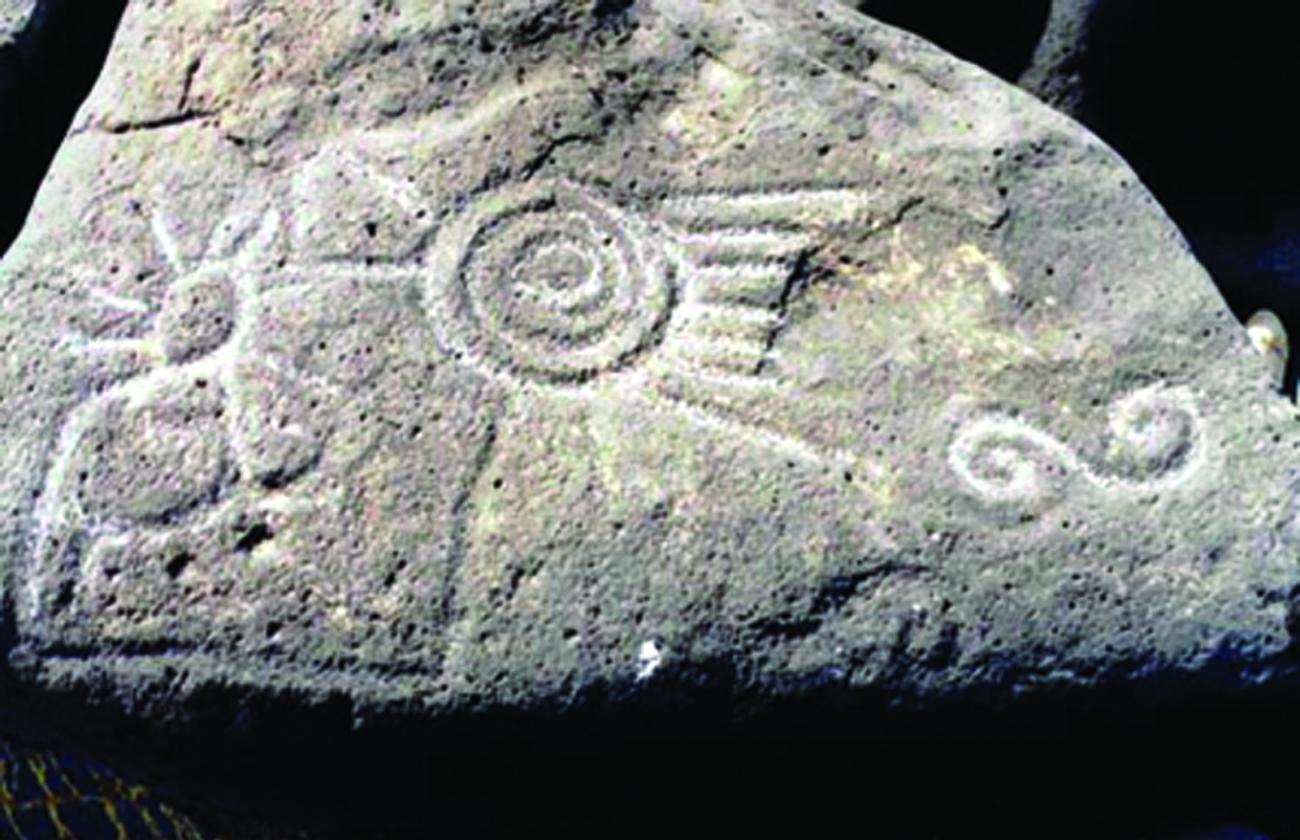

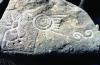
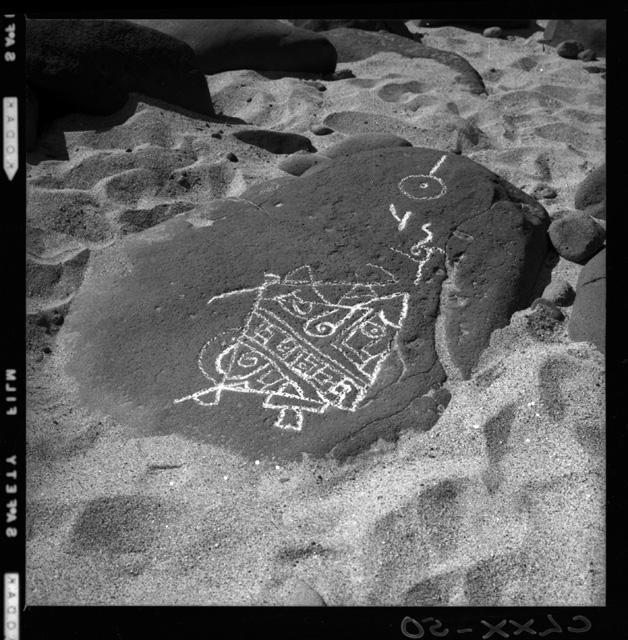
It consists of a panel with three engravings on the horizontal surface of a rock. If it is observed in detail, the main engraving corresponds to a figure conformed by three concentric circles with a triangular top in the superior part and seven lines in the form of fringe in the inferior part. Likewise, there is a representation of the sun: a simple circle from which emanate lines in the form of rays. Below the sun shield is a double spiral. This panel is one of the few in Las Labradas where it is evident that the figures are linked by an engraved line to represent an idea.
Los cazadores fugaces y el nadador
These are two petroglyphs of human figures that are not very large and barely visible. One of them seems to be in movement, while the other is rather static. Both are facing forward, with a kind of spear in the right hand. They were called fleeting hunters, because -due to the illumination of the…
Los cazadores fugaces y el nadador
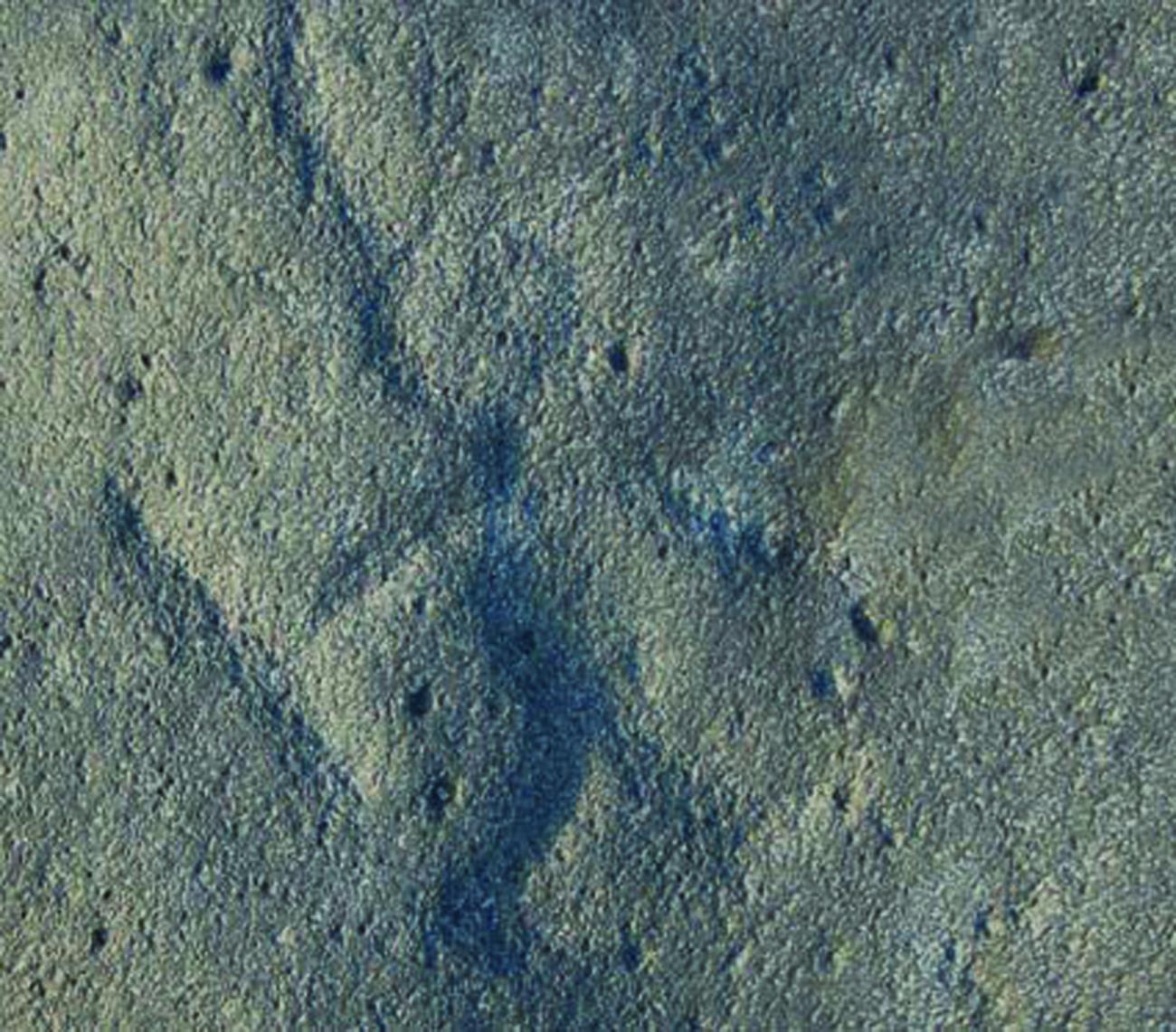
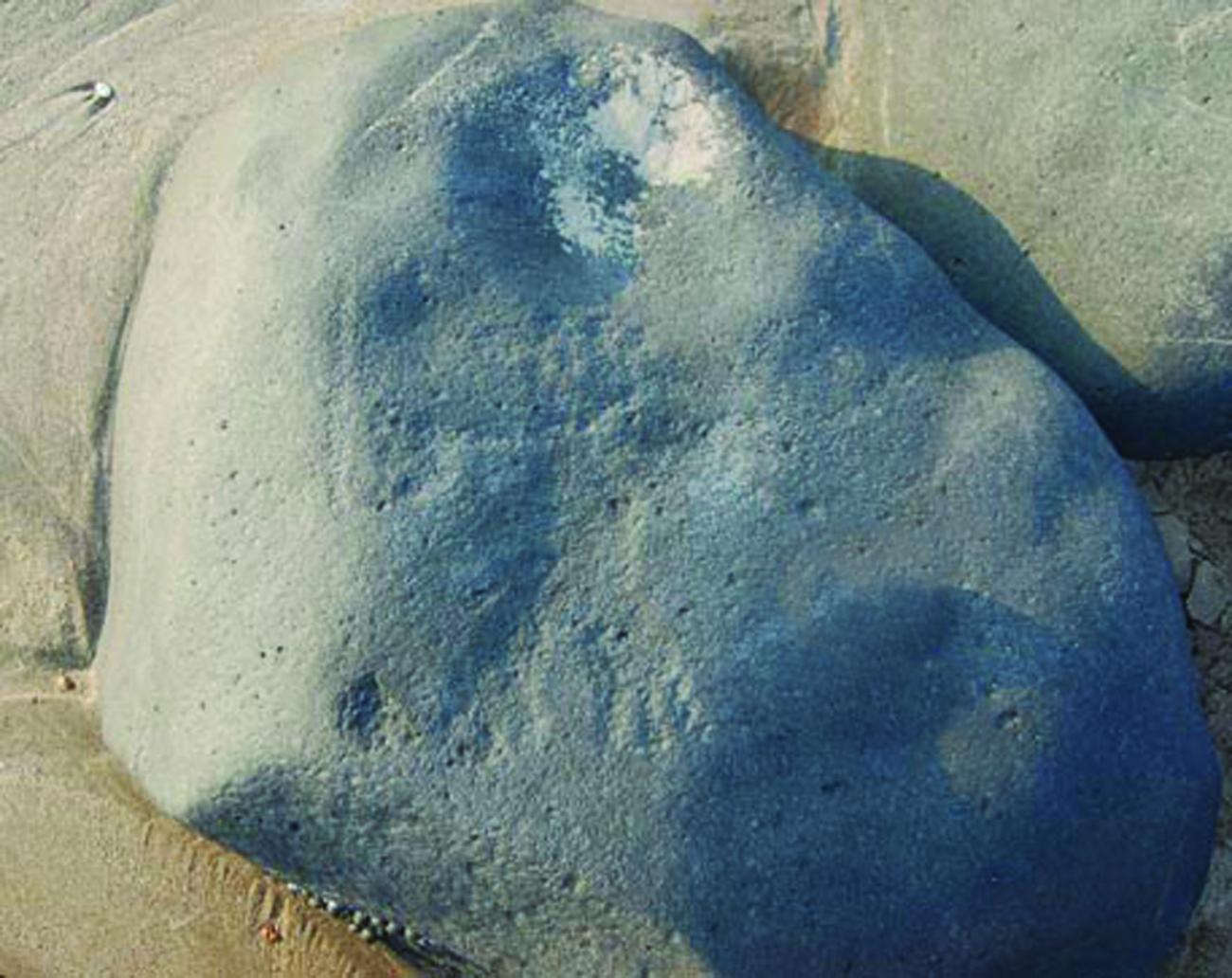
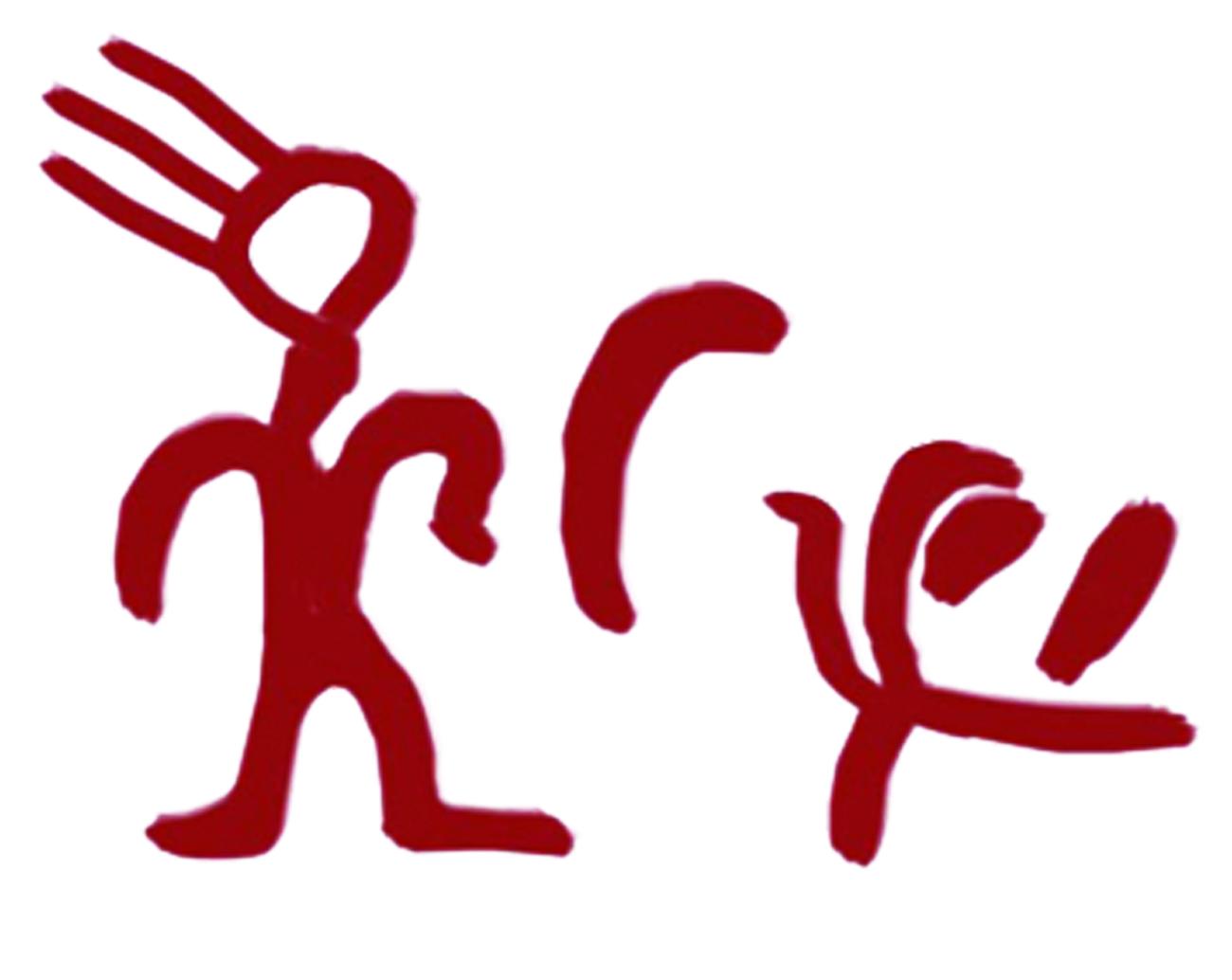



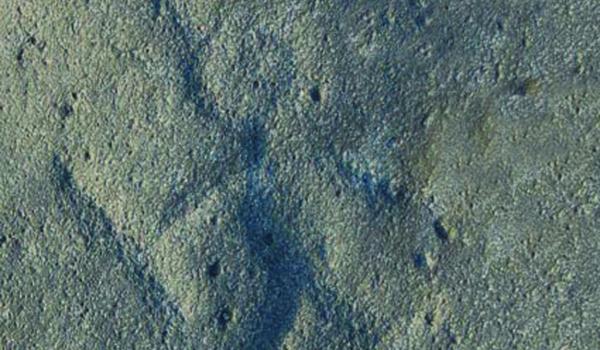
These are two petroglyphs of human figures that are not very large and barely visible. One of them seems to be in movement, while the other is rather static. Both are facing forward, with a kind of spear in the right hand. They were called fleeting hunters, because -due to the illumination of the sun- they are usually seen for brief minutes in the afternoon. Towards the southwest of the group, in the rocks that are almost all the time submerged in the sea, the petroglyph of a human figure known as the swimmer is noticed. In its round head the eyes and the mouth are represented. The erosion prevents observing the rest, with the exception of the right hand, which is downward.
La reina, los animales y las huellas
At the end of the northwest sector, where the rock extension ends, it is possible to see an engraving that represents a human figure with feminine characteristics. It is the only engraving in Las Labradas that seems to represent a woman. She is standing, with the outline of her body delineated and…
La reina, los animales y las huellas
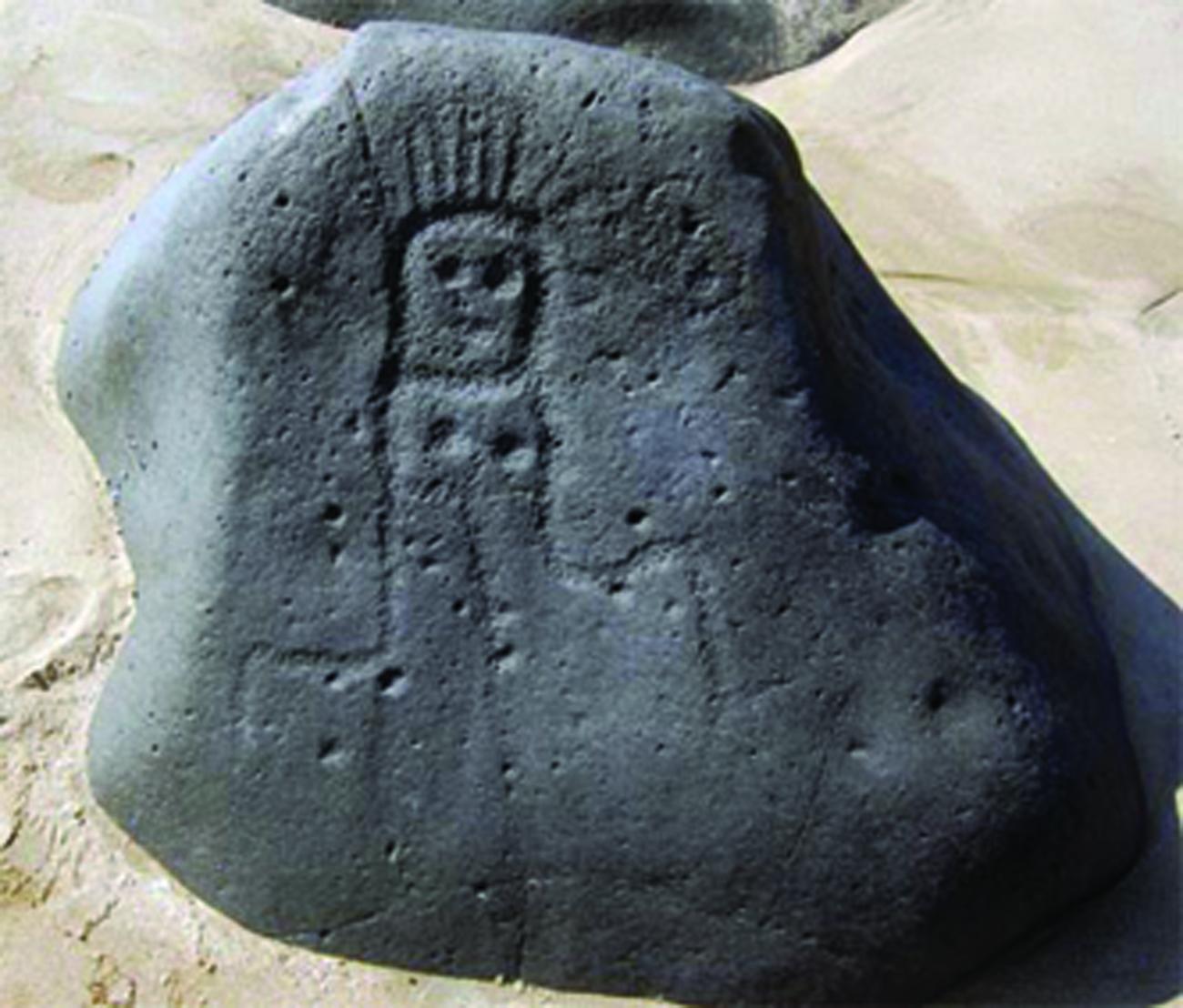
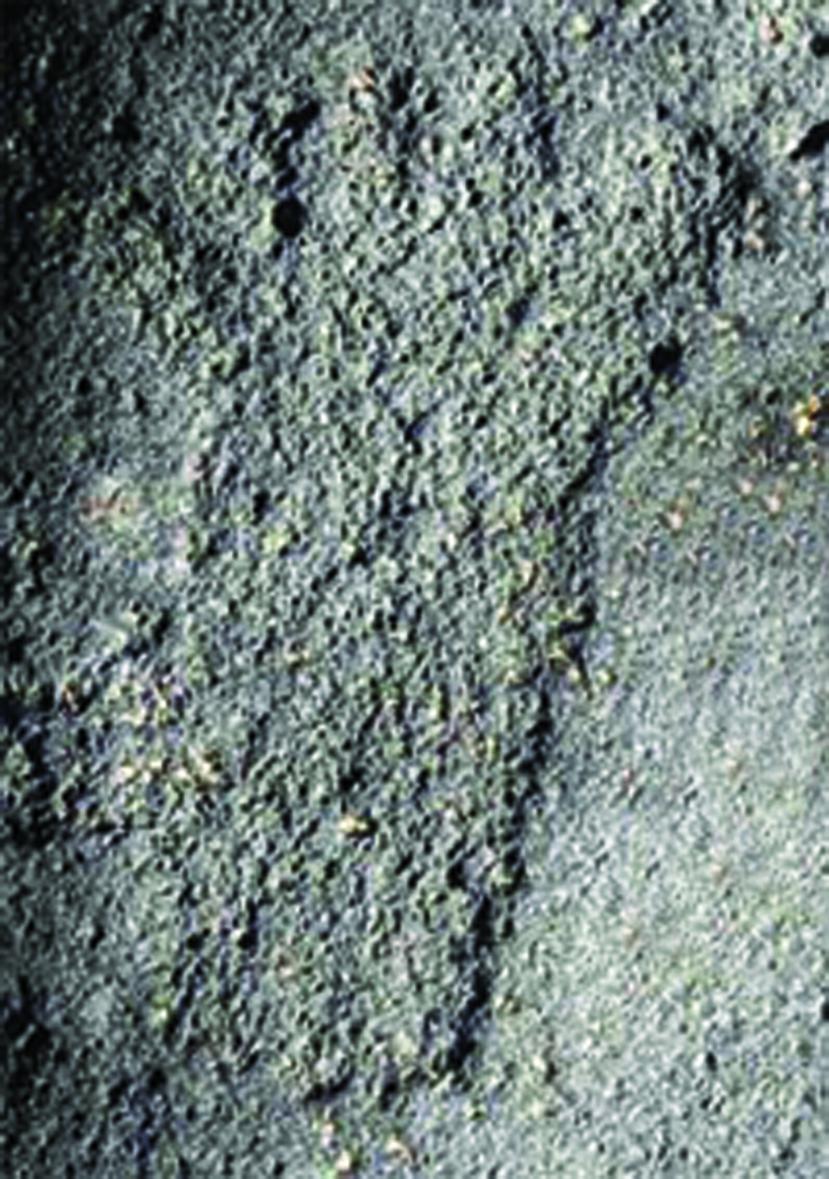
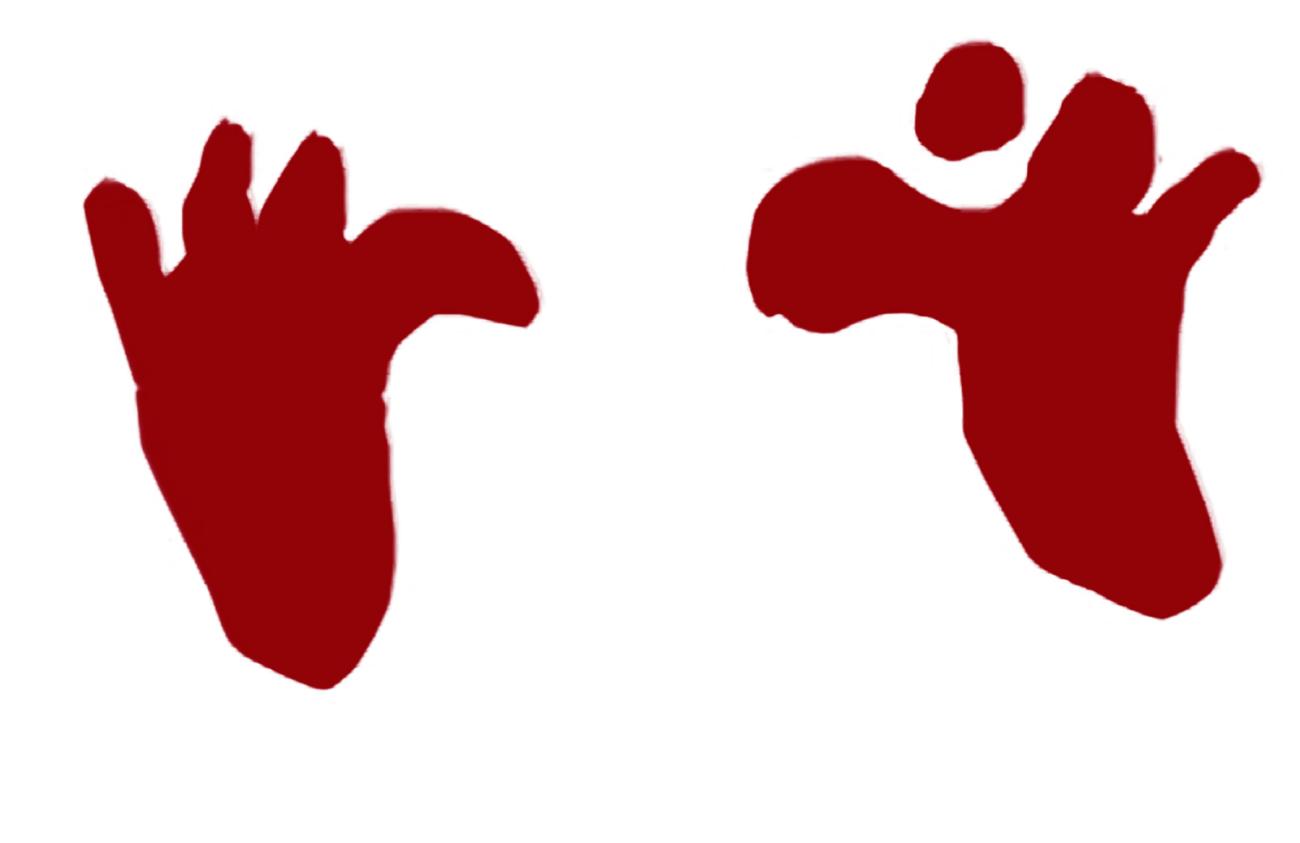
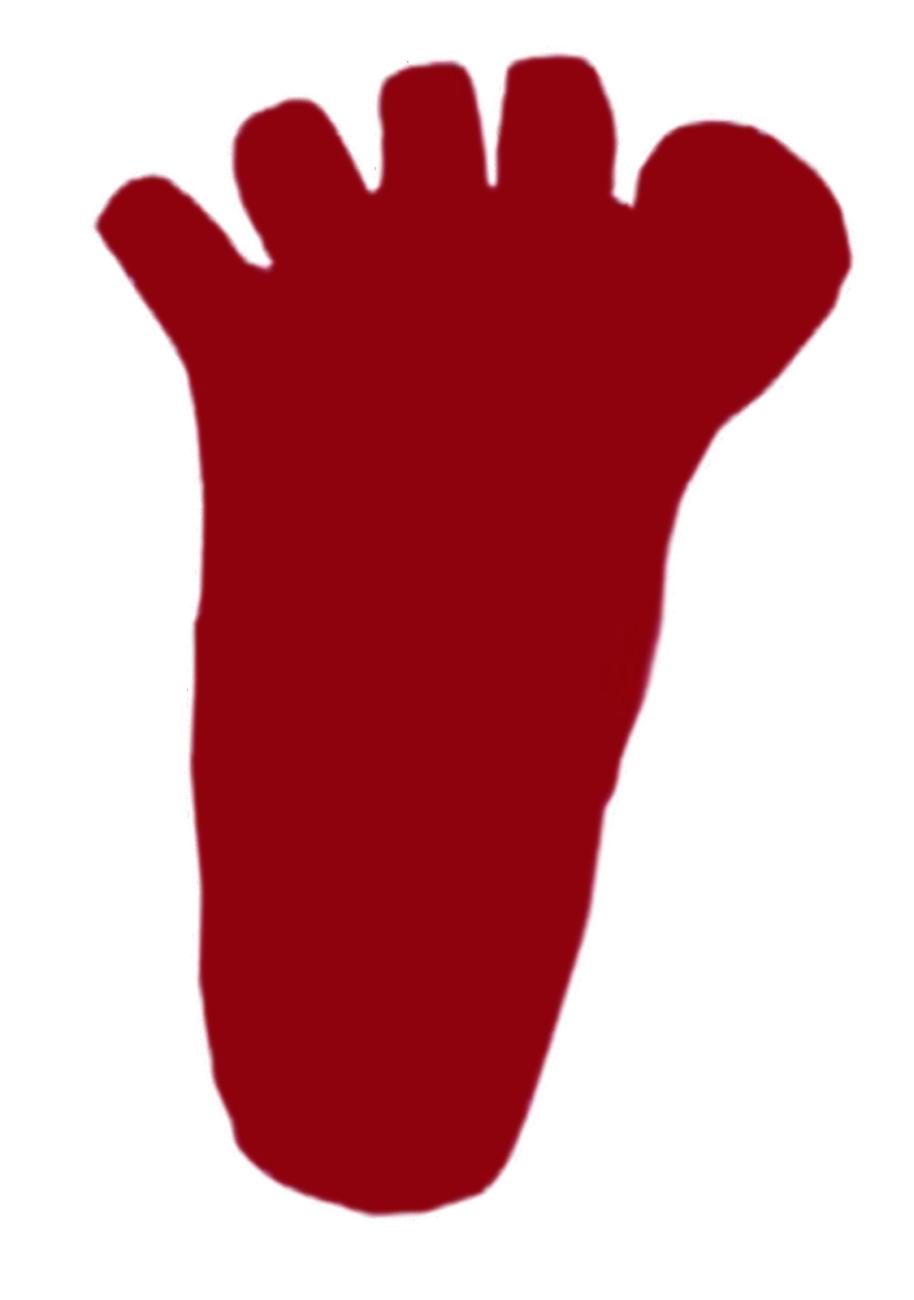
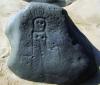

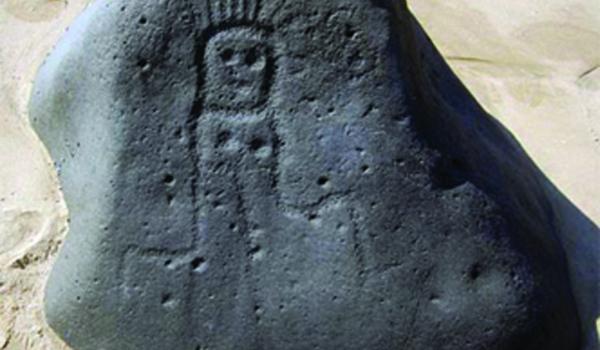
At the end of the northwest sector, where the rock extension ends, it is possible to see an engraving that represents a human figure with feminine characteristics. It is the only engraving in Las Labradas that seems to represent a woman. She is standing, with the outline of her body delineated and two cavities at the height of her chest, simulating breasts and her hair standing on end, as if she had a crown (hence its name). There is also one of the best represented zoomorphic figures in the site, as well as three of the five existing human footprints.
La piedra de los tres rostros
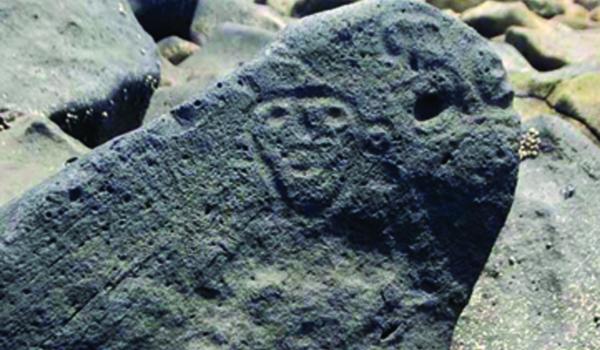
In the southeast sector of the archaeological zone there is a large rock whose point protrudes significantly. Three faces are represented on its sides, among which the one on the west side stands out. Its carving no longer corresponds to a bas-relief, but is close to a high relief; the shape of the…
La piedra de los tres rostros
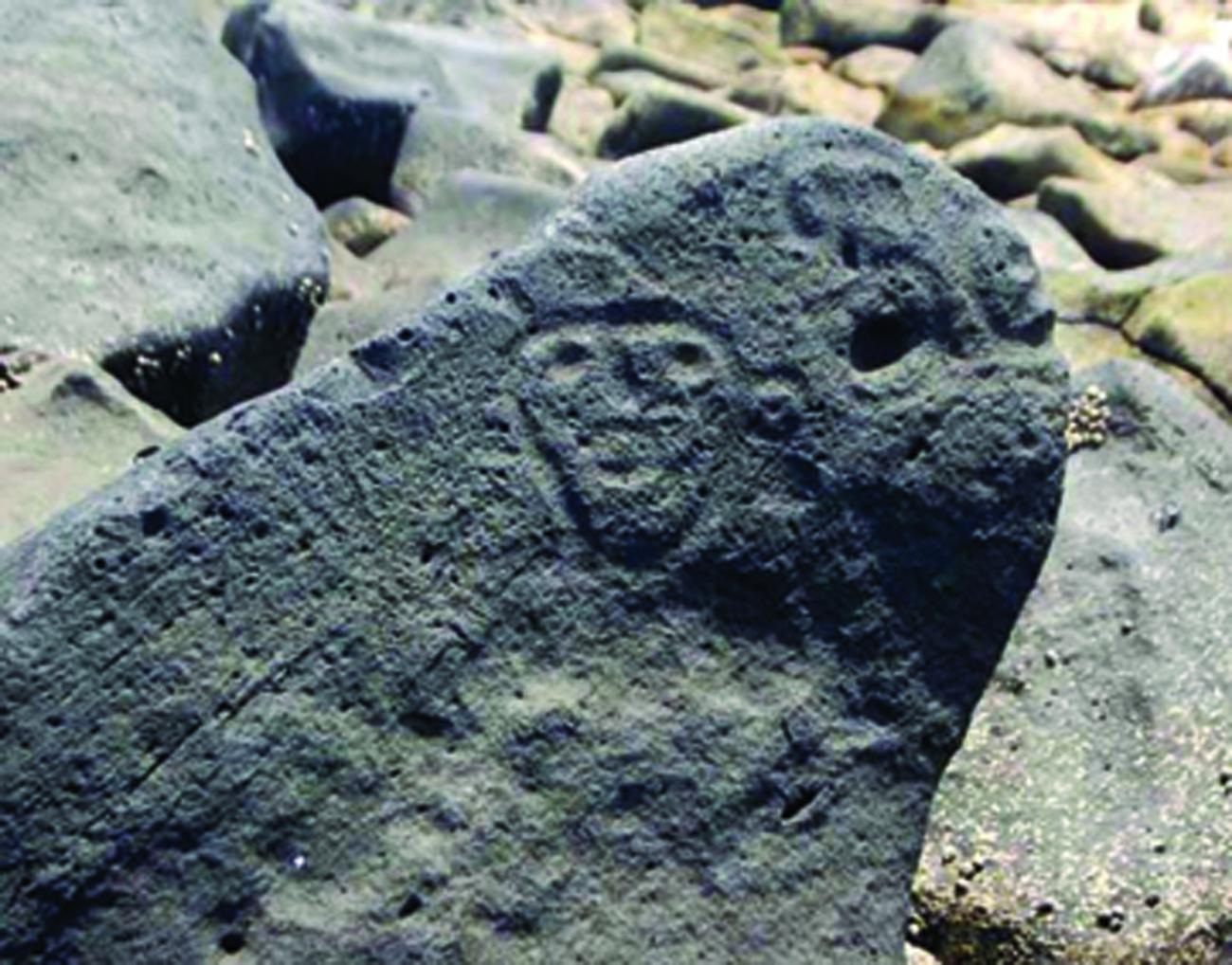
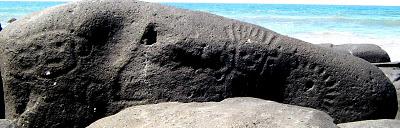
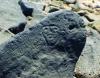
In the southeast sector of the archaeological zone there is a large rock whose point protrudes significantly. Three faces are represented on its sides, among which the one on the west side stands out. Its carving no longer corresponds to a bas-relief, but is close to a high relief; the shape of the corner of the rock makes it look like a sculpture and not a petroglyph.
La doble espiral flamígera y el rostro cenital
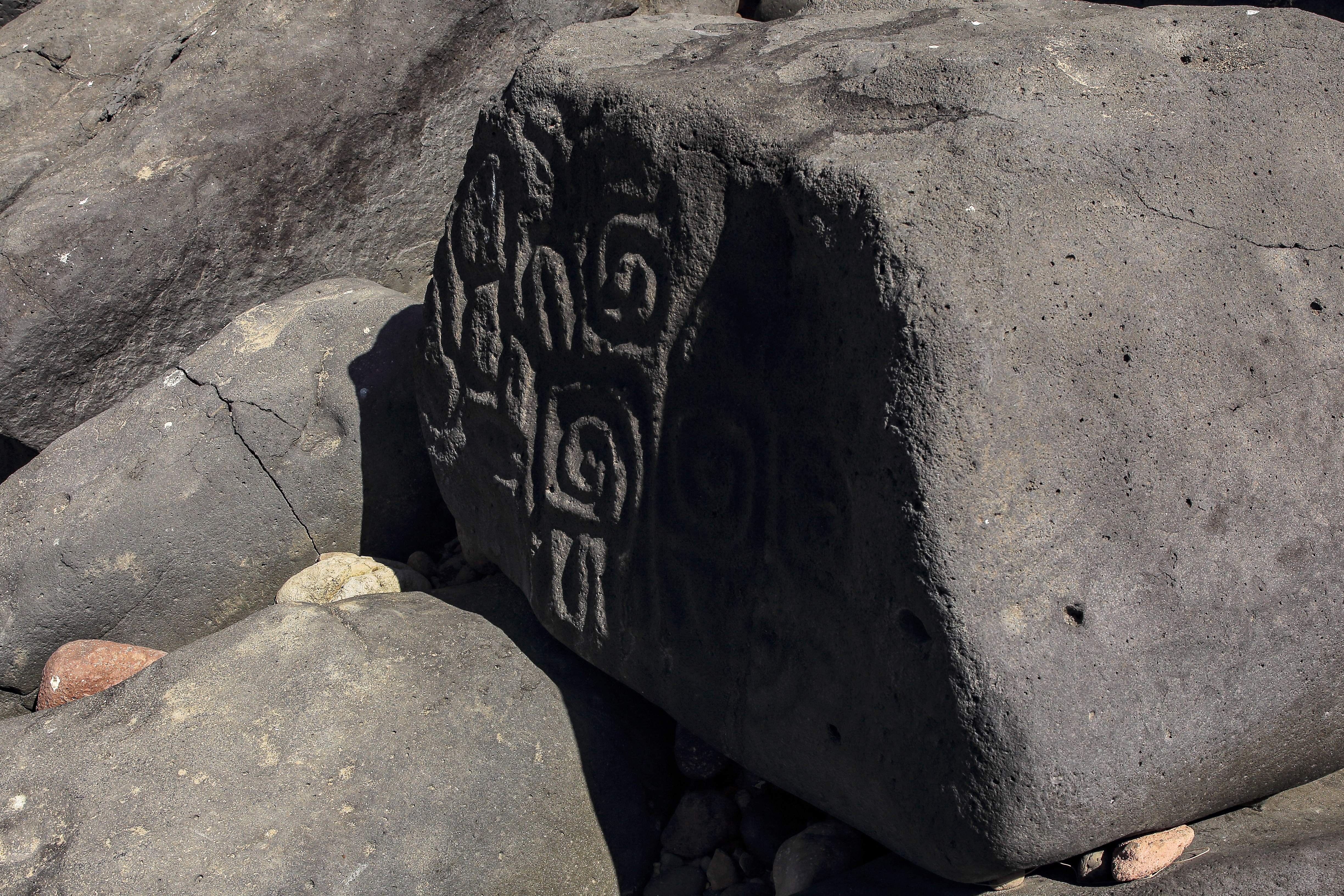
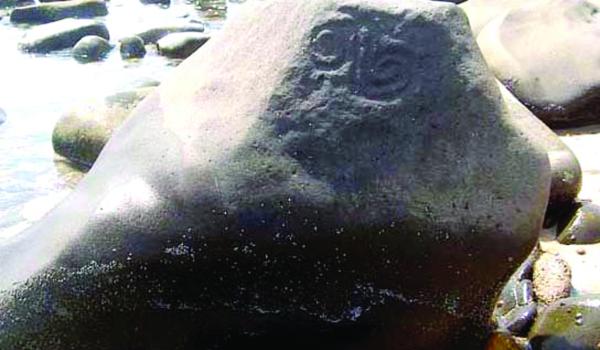
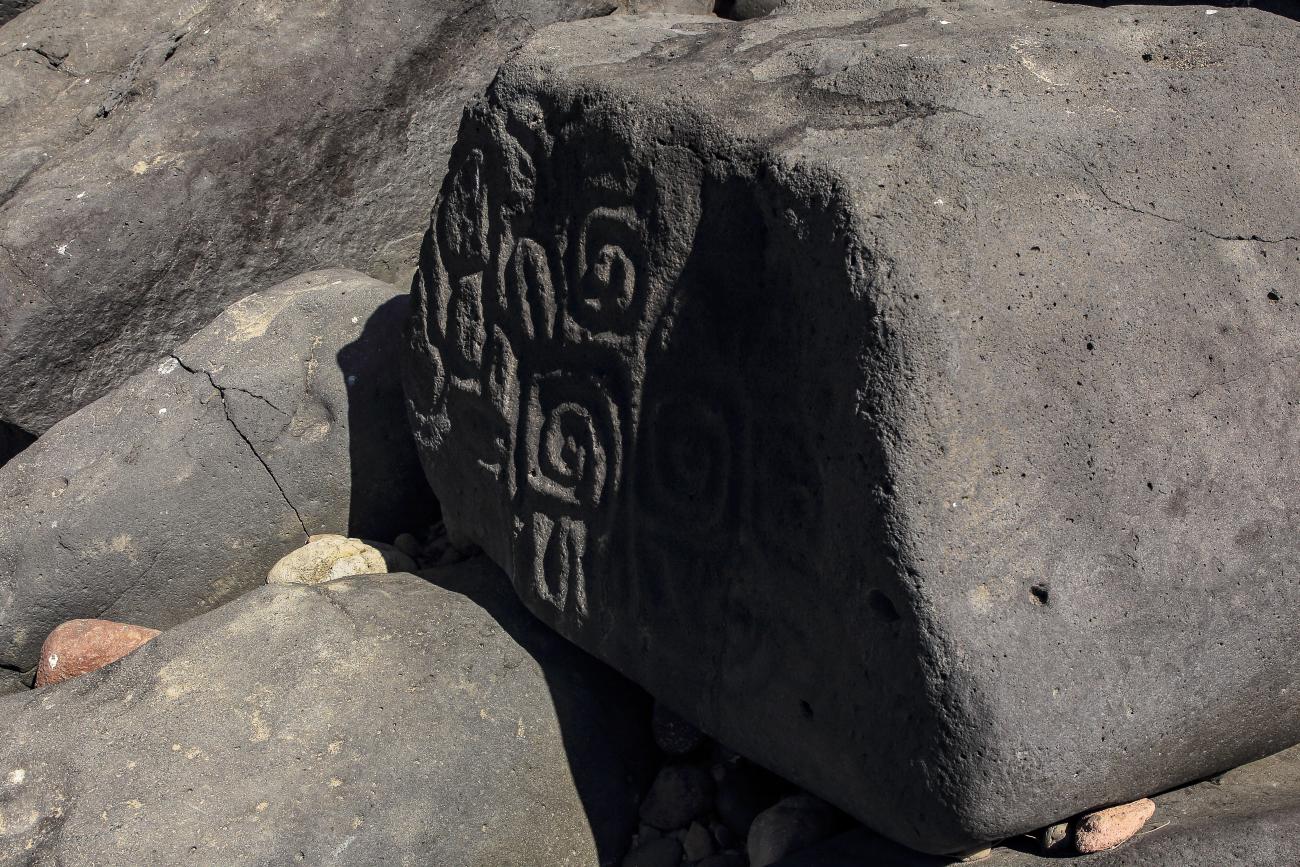
This rock engraving, located in the southeast sector, is one of the best made in technical and artistic terms. It covers the entire surface of the stone and has a double spiral as its main motif, from which other figures such as wavy lines and what looks like a feather emerge. In front of this…
La doble espiral flamígera y el rostro cenital
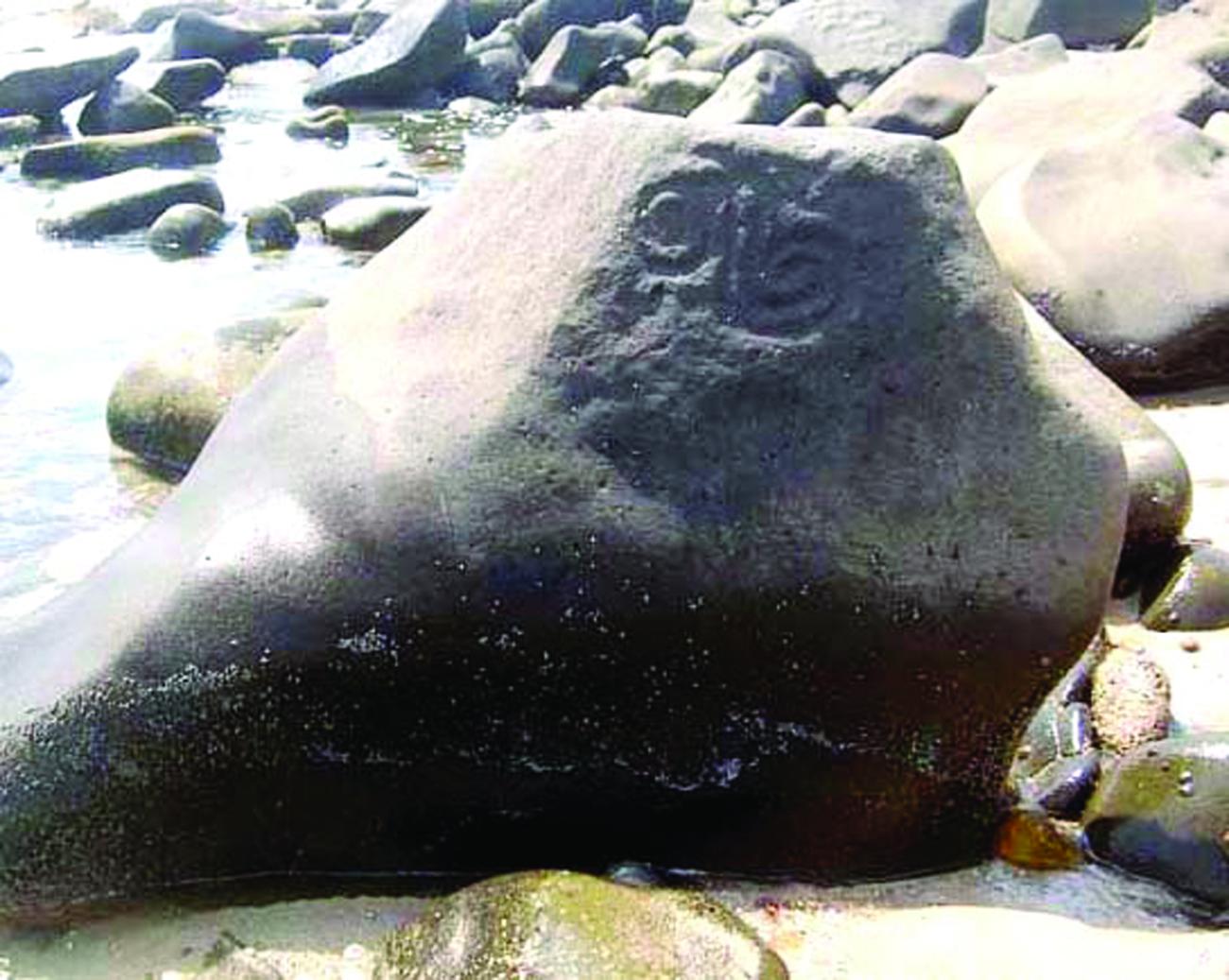
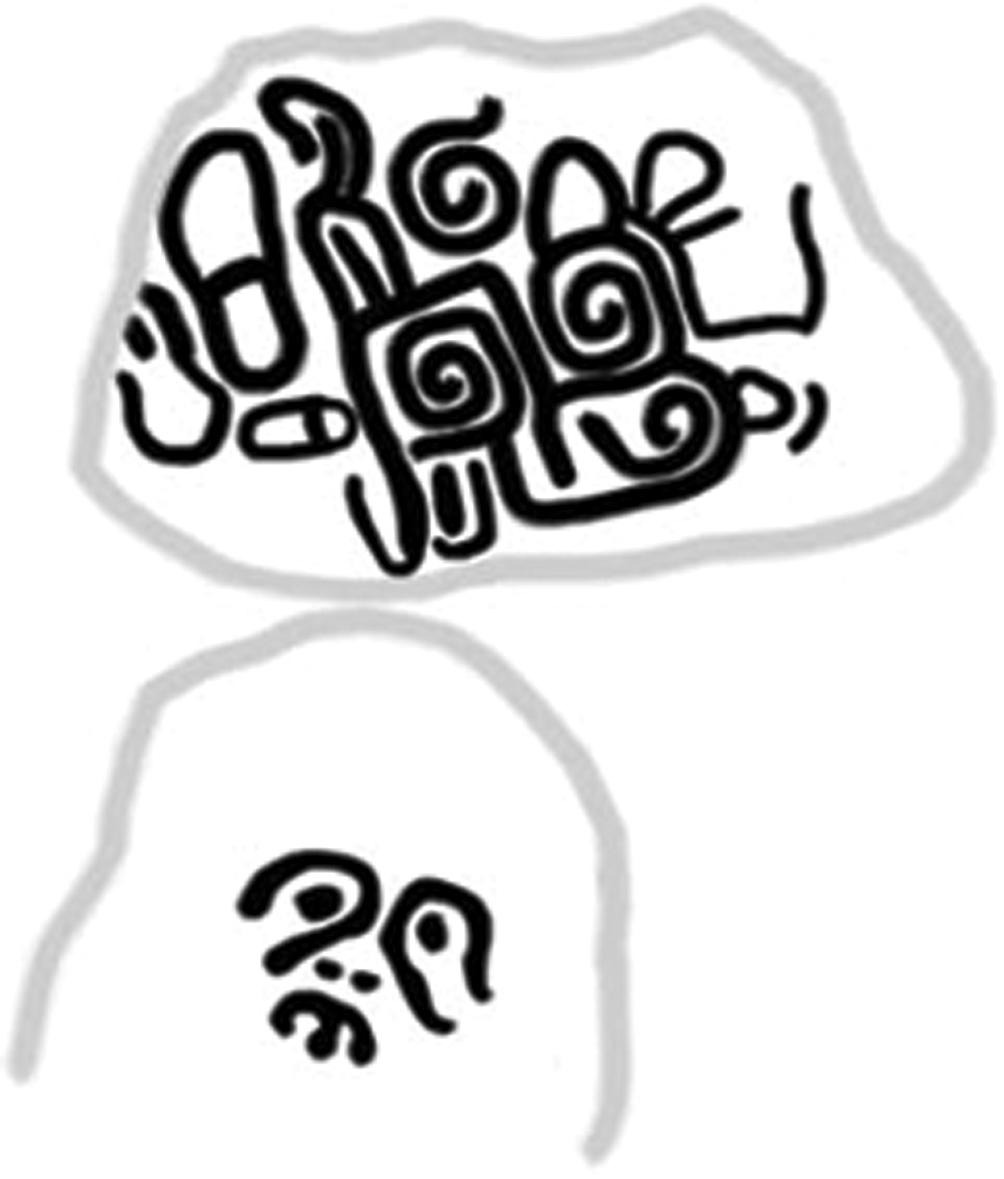
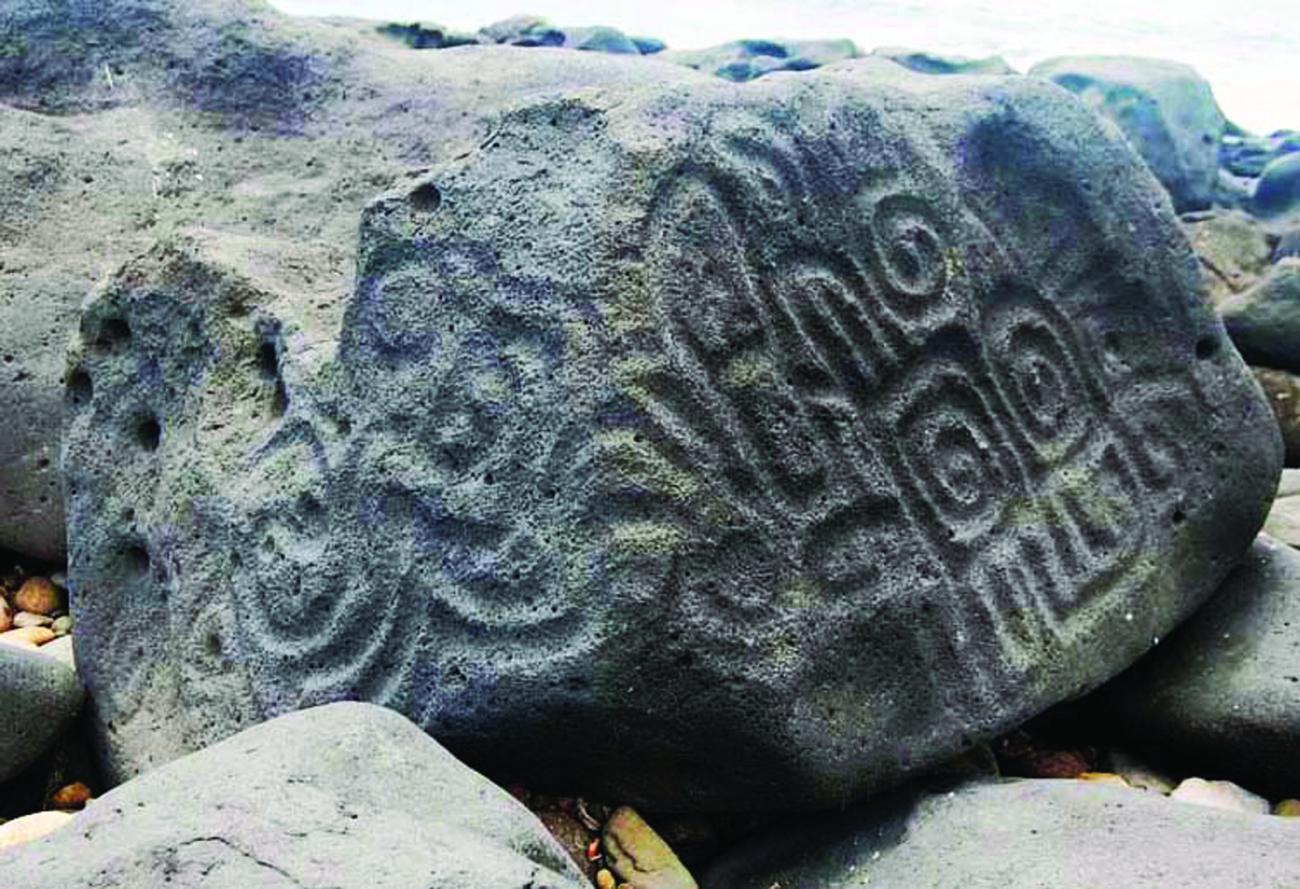
This rock engraving, located in the southeast sector, is one of the best made in technical and artistic terms. It covers the entire surface of the stone and has a double spiral as its main motif, from which other figures such as wavy lines and what looks like a feather emerge. In front of this petroglyph -at ground level- there is another one that represents a human face with marked eye sockets, a defined nose and an open mouth, characteristics that differentiate it from most of the faces in Las Labradas.
El personaje formado de espirales
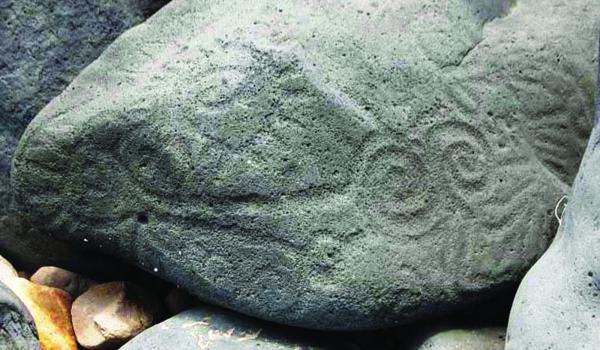
On the vertical surface of a rock, at ground level and semi-hidden, is the engraving of a human figure emerging from a double spiral; his body is elongated, has a round head and spiky hair, wearing earrings and in the place of the left arm emerges a toothed spiral.


El personaje doble
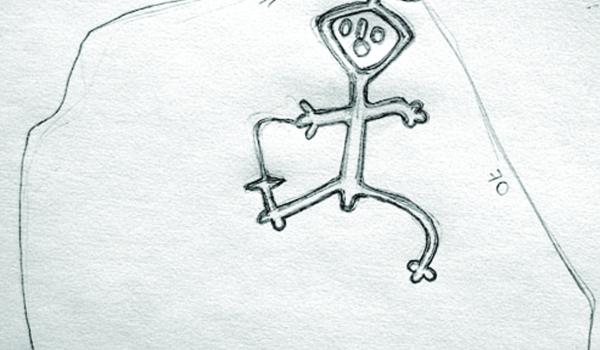
An interesting figure is formed by two figures united by the head, the first one is in horizontal position, of complete body, the triangular head, the arms and legs extended, with three fingers in each extremity; it is also observed the representation of the masculine genital. The other personage…
El personaje doble
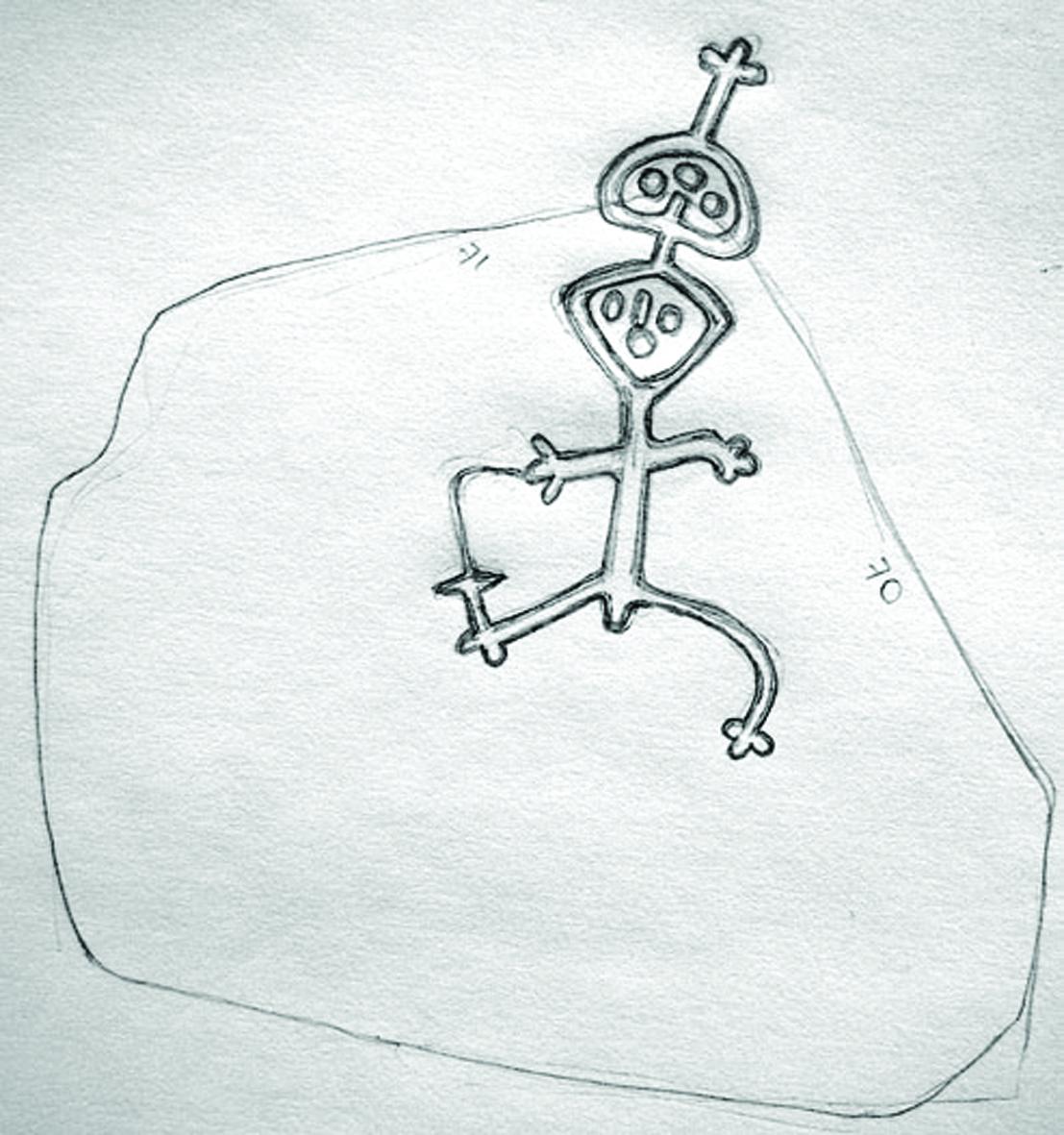
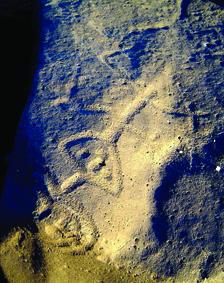
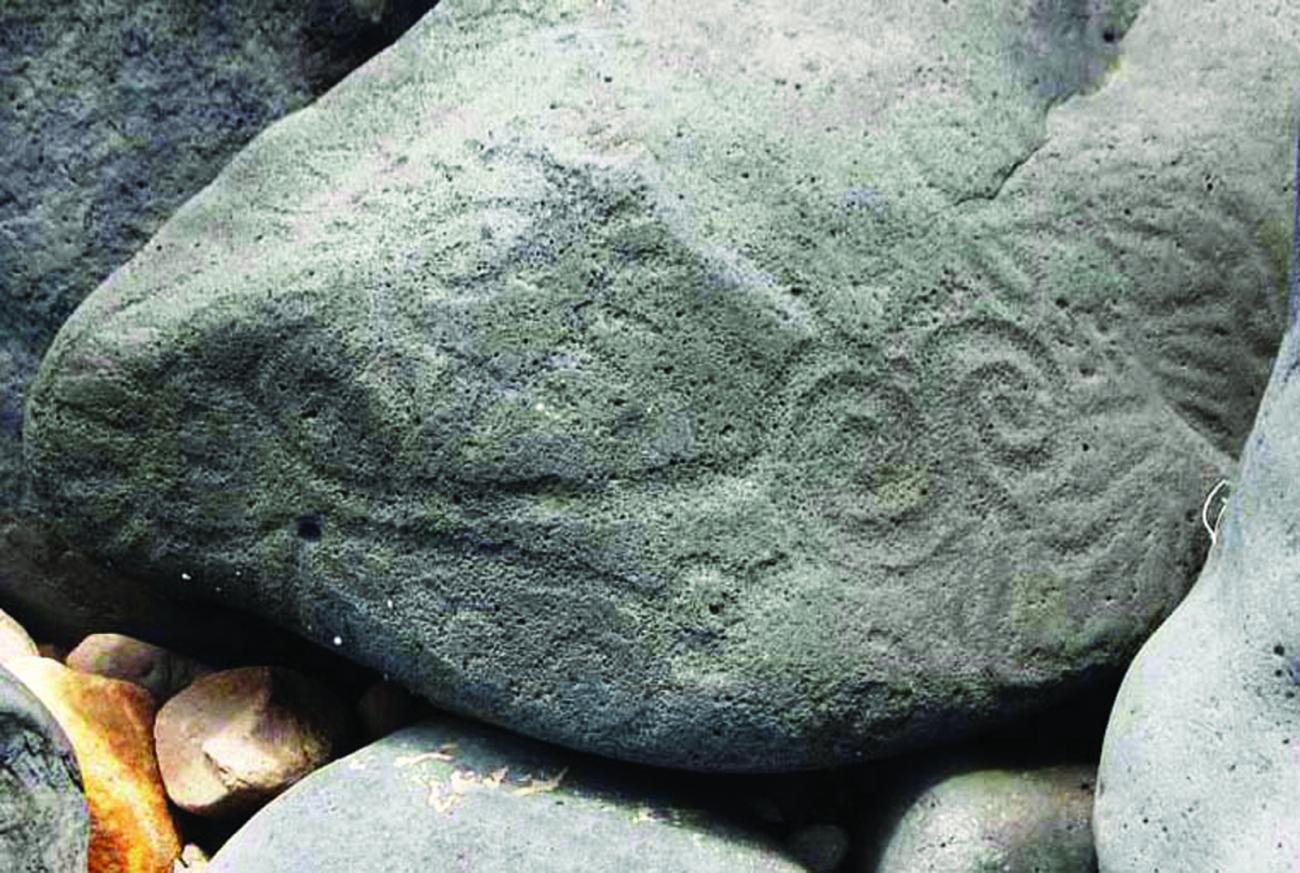
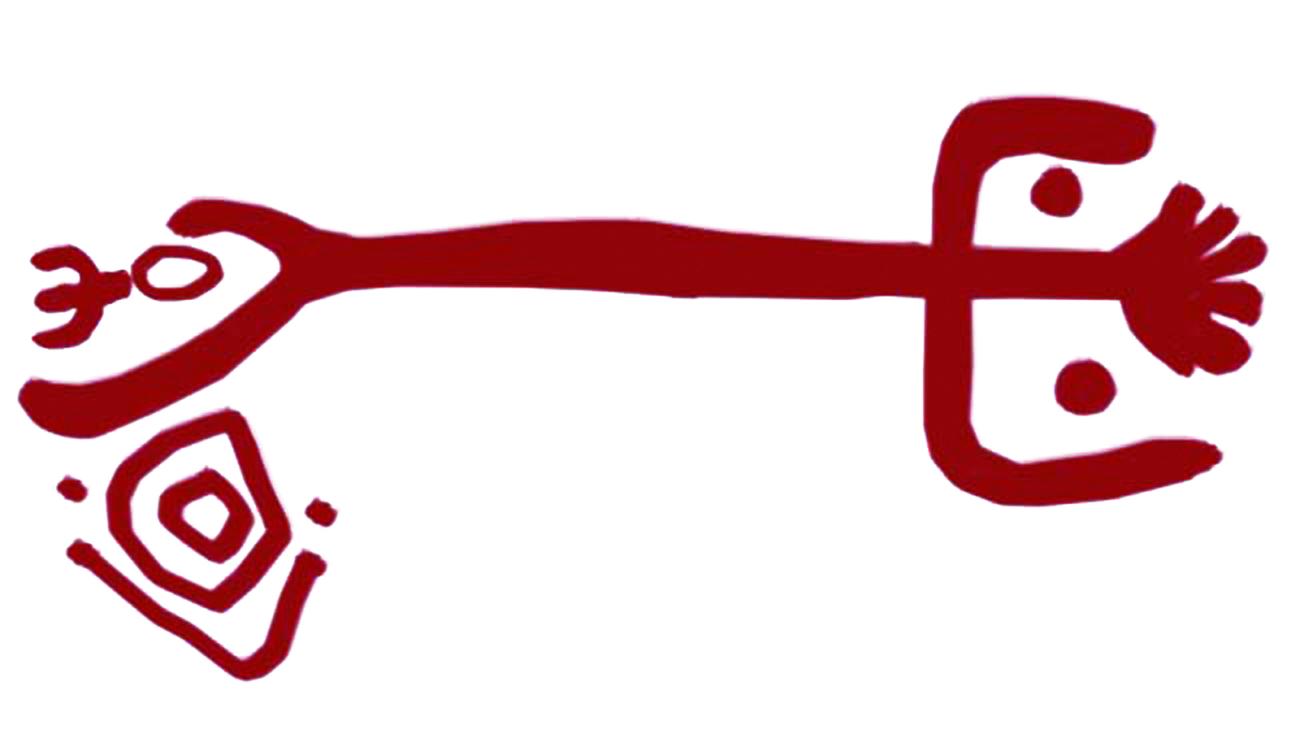
An interesting figure is formed by two figures united by the head, the first one is in horizontal position, of complete body, the triangular head, the arms and legs extended, with three fingers in each extremity; it is also observed the representation of the masculine genital. The other personage is united by a line that comes out of the head and his face is in the corner of the rock, the body of this personage is simpler and smaller.
El personaje extático del poniente
Very close to the set of the double flaming spiral and the zenithal face, there is a rock of great dimensions in which there are several engravings of singular interest: a human figure erect with the hair of tip, the left hand represented by three open fingers, with the arm raised in square holds…
El personaje extático del poniente
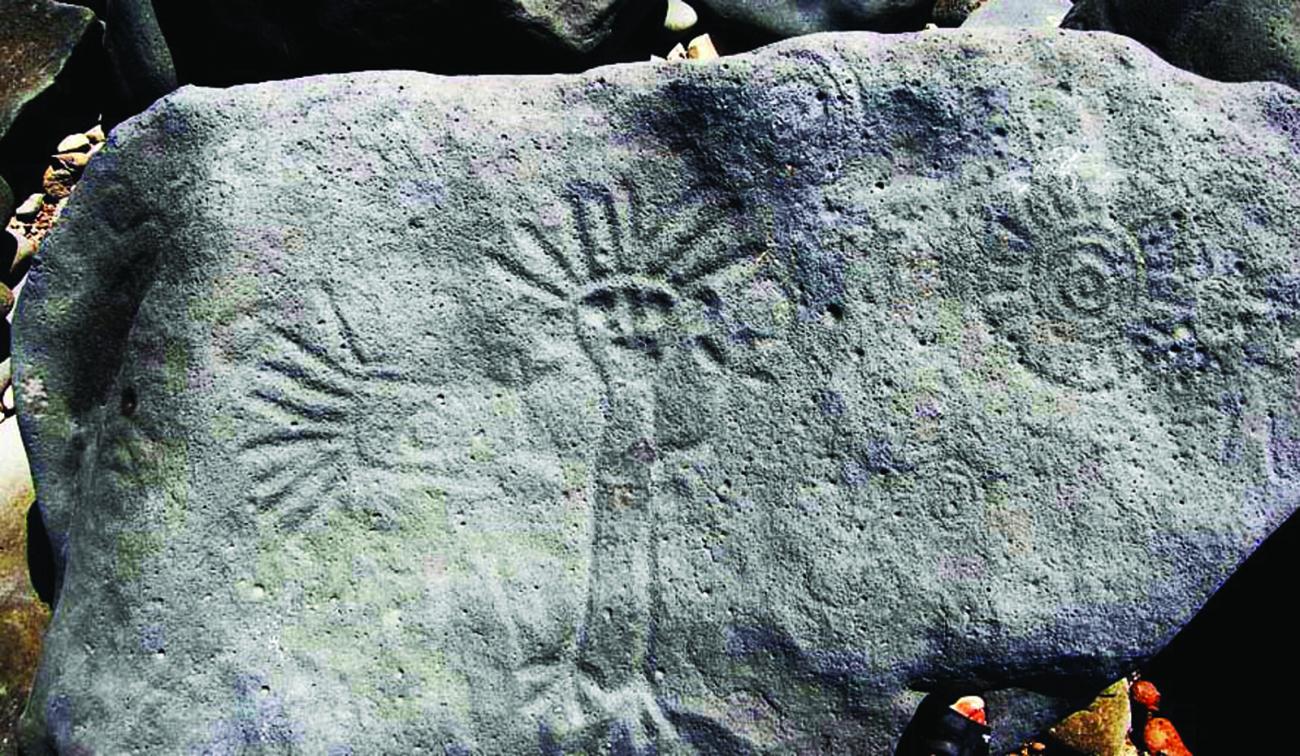

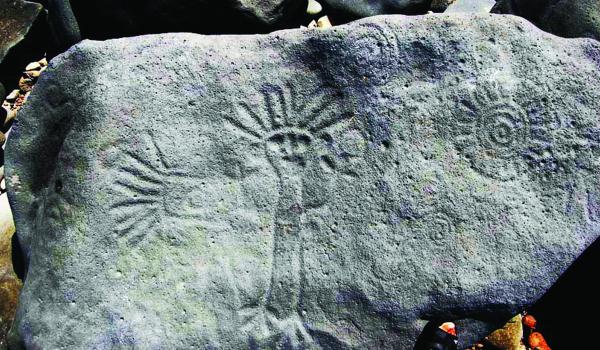
Very close to the set of the double flaming spiral and the zenithal face, there is a rock of great dimensions in which there are several engravings of singular interest: a human figure erect with the hair of tip, the left hand represented by three open fingers, with the arm raised in square holds the figure of a circle, the right hand in the same position; its legs are slightly separated and it has feet with three fingers, this character is the one of greater dimensions that is located in the whole area. In the same panel, next to the figure, there is a spiral or a rectangular shield, from which seven pointed lines sprout; to the left of the character is the representation of a solar disk, in the upper and central part, there are two barely perceptible spirals. The slight slope of the surface of the rock creates the impression that the personage is looking towards the west.







Contact
- Dirección del Centro INAHServando Rojo Quinteroservando_rojo@inah.gob.mx+52 (667) 752 1541ResponsableLeonardo Palazuelos Osoriosleonardo_palazuelos@inah.gob.mx+52 (667) 752 1541