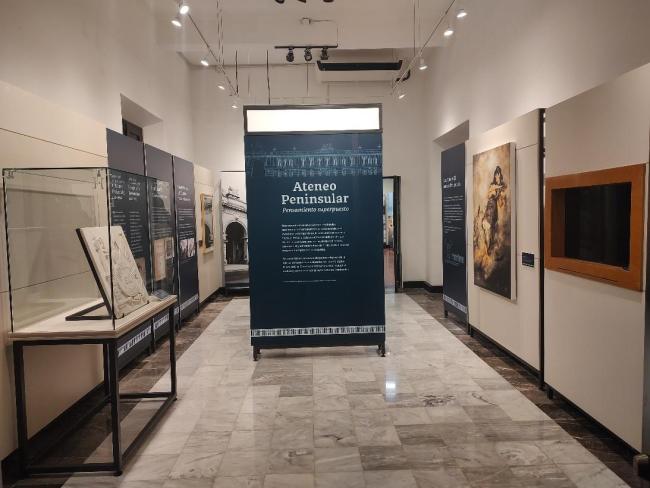
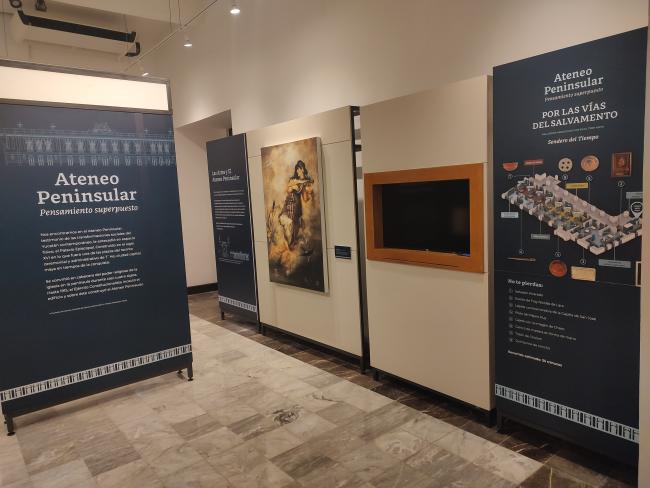
Ateneo Peninsular, pensamiento superpuesto
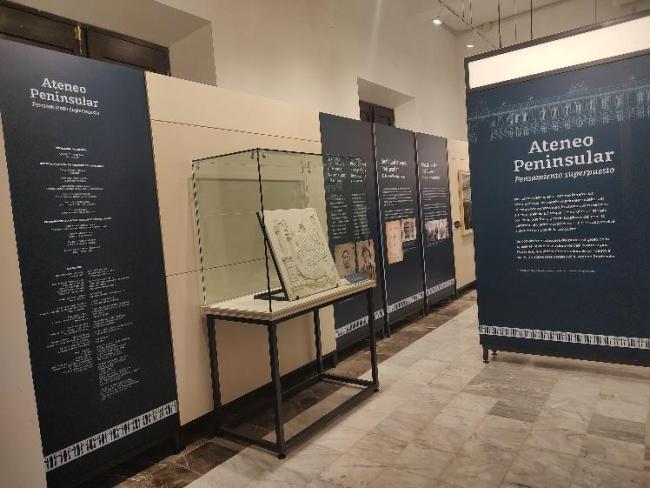
We are in the Ateneo Peninsular, a testament to the social transformations of contemporary Yucatán, which was preceded in physical space by the Episcopal Palace. Built in the 16th century in what was once one of the squares of the ceremonial and administrative enclosure of T'Ho, the Mayan capital city at the time of the conquest.
It became the seat of religious power for the church on the peninsula for almost four centuries. Until 1915, when the Constitutionalist Army seized the building and built the Ateneo Peninsular on top of it.
The remains of T'ho were used to build the city of Mérida. The interventions carried out in the first blocks of the city have brought to light fragments of that past which, when studied, recorded, and exhibited, allow us to glimpse traces of its original thinking.
Foundations of a new order
Francisco de Montejo, “El Mozo,” led the conquest of the peninsula on behalf of his father, “El Adelantado.” After several defeats at the hands of the Maya, he managed to pacify the northeastern region and founded Mérida on January 6, 1542, on the site of the Maya city.
The population consisted of seventy Spanish settlers accompanied by indigenous people from the center of the country whom the conquistador brought from his encomienda in what is now central Mexico, Mayans with whom they formed alliances, and fifty African slaves.
It belonged to the Convent of San Francisco de Mérida. From this enclosure, the Franciscan Province of San José de Yucatán directed the evangelizing work on the peninsula for three centuries, until its closure in compliance with the civil provisions of 1821. The Franciscans monopolized evangelization until the consolidation of the secular clergy led by the bishop.
2.3. Diego de Landa (1524-1579)
In 1562, he presided over the auto-da-fé of Maní, in which hundreds of Mayan idols were destroyed, acting beyond his authority with severity against the Indians. Investigated by the Council of the Indies, he was acquitted and returned to Yucatán as bishop in 1573 after Toral's death.