
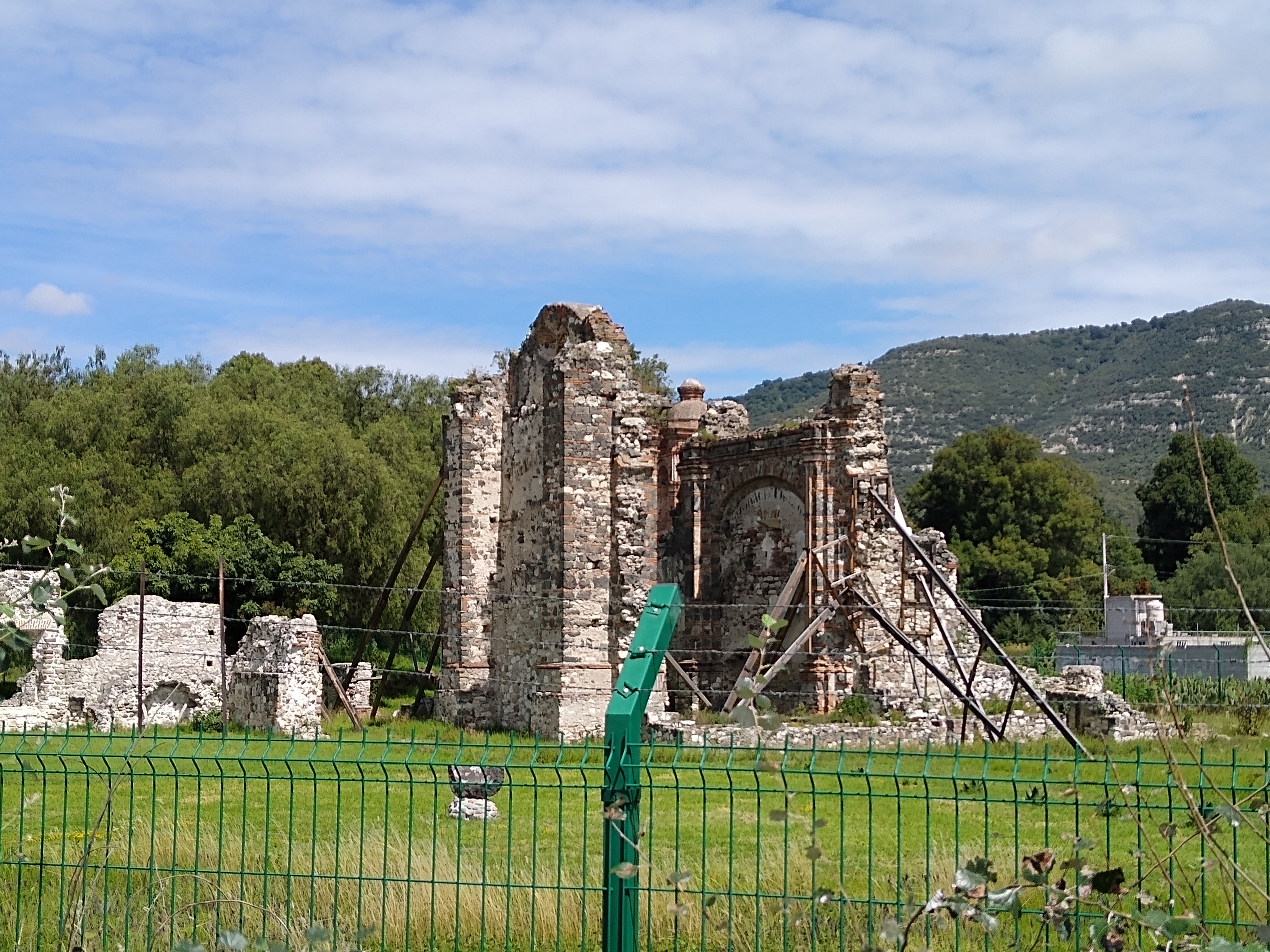
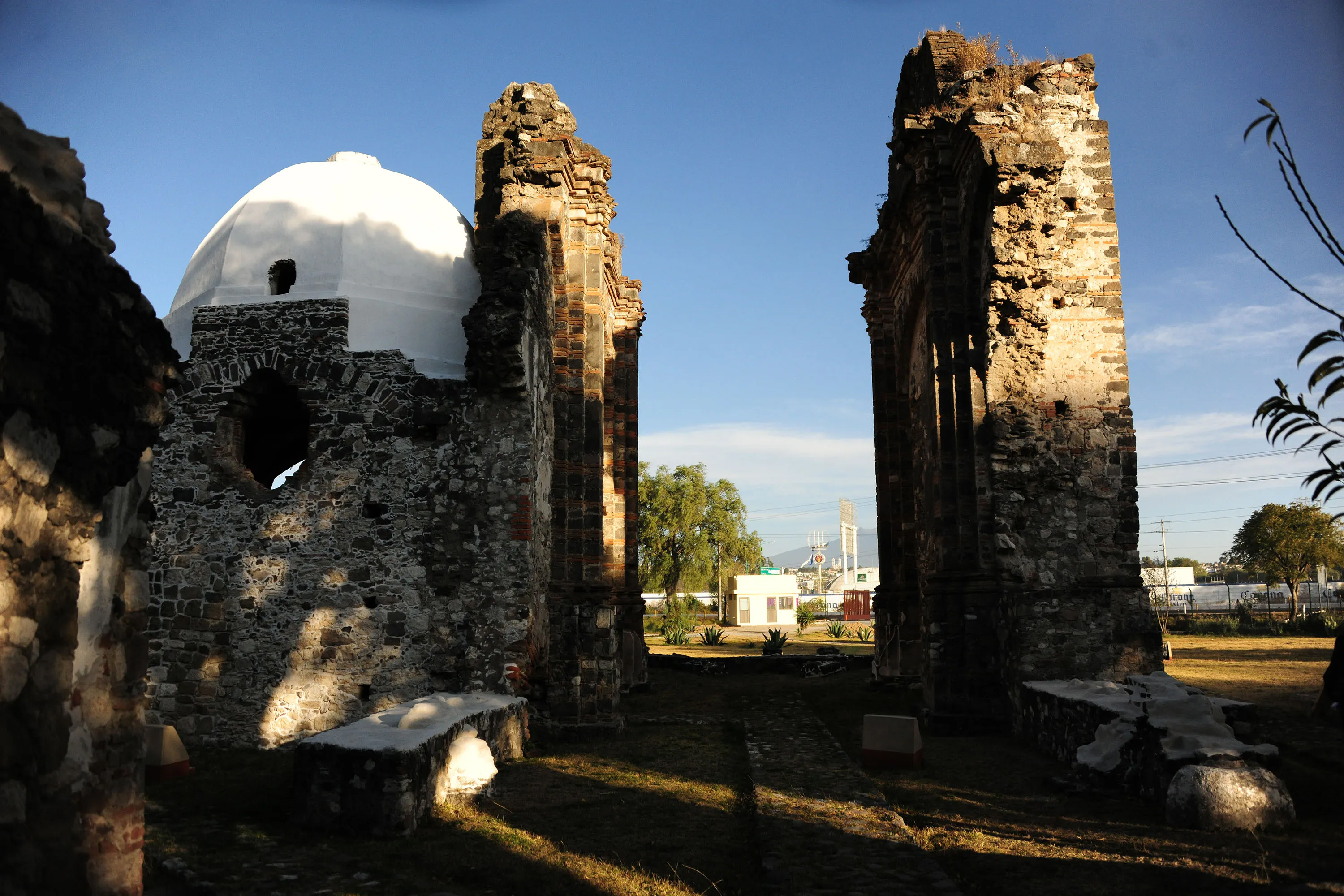
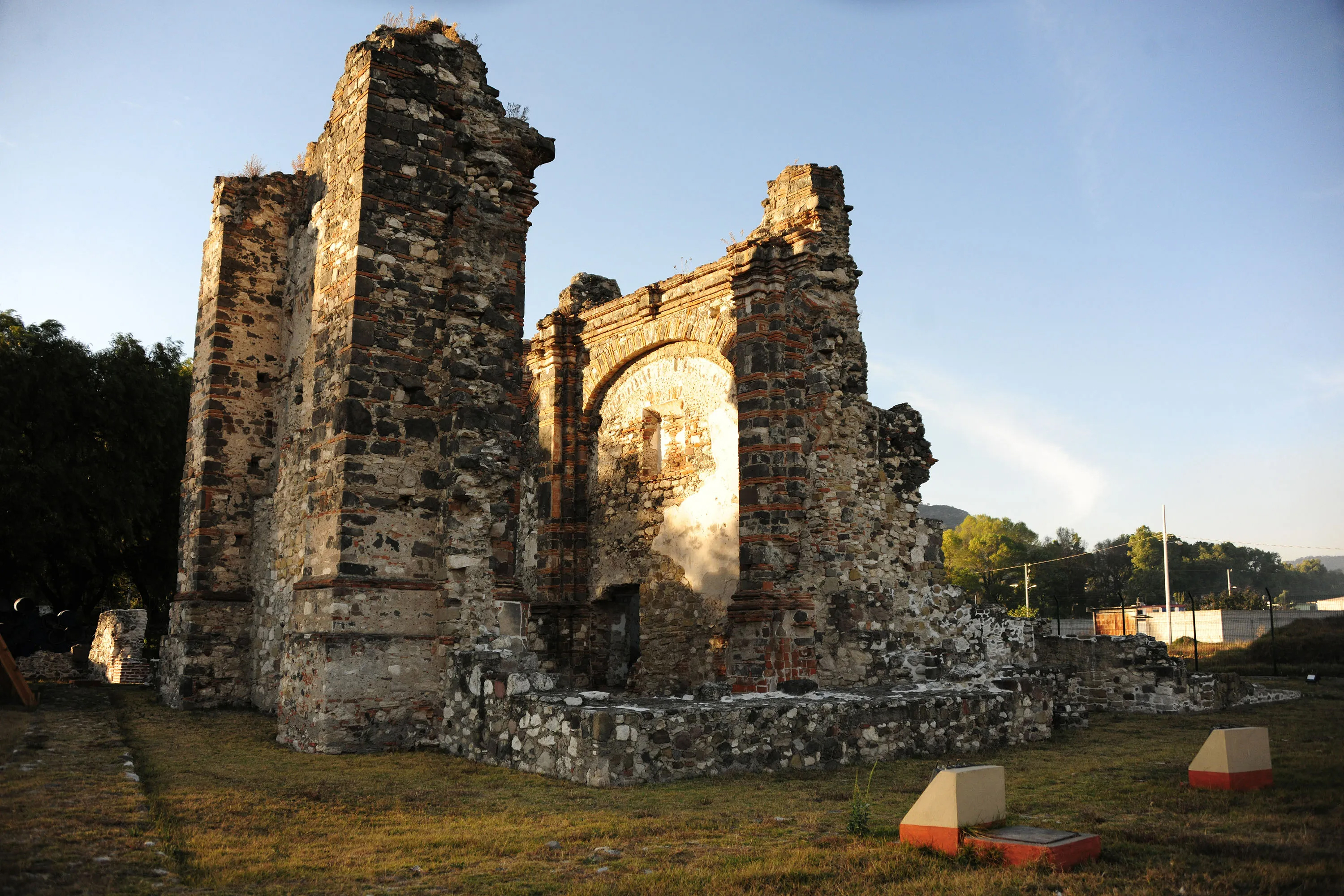






Ex Convento de Nuestra Señora de las Nieves
Built in the 16th century by the Order of Preachers, it served as a center for evangelization and the starting point for Tlaxcaltecan migrations northward in 1591. After suffering from flooding, it was abandoned and later used as a cemetery. Today, it stands as a testament to the colonial era in Mexico.
The former Convent of Our Lady of the Snows, located in Totolac, Tlaxcala, is an important remnant of Mexico’s early colonial period. Its origins date back to the 16th century, when friars of the Order of Preachers built it as part of their evangelization strategy following the Spanish conquest. In this context, Tlaxcala played a fundamental role as an ally of the conquistadors and as a key hub in the reorganization of indigenous communities under viceregal rule.
Beyond its religious function, this convent held significant historical importance in the territorial expansion of New Spain. In 1591, some 400 Tlaxcaltecan families set out from this site toward the northern part of the territory, with the aim of colonizing regions known as the Great Chichimeca. This process was part of a policy promoted by the Spanish Crown to establish sedentary populations, facilitate territorial control, and reduce conflicts with the nomadic groups in those areas. As a result, settlements were founded in regions that today correspond to states such as Coahuila, Nuevo León, Zacatecas, and San Luis Potosí.
Architecturally, the convent followed the characteristic model of the early religious complexes in New Spain. It featured a main chapel, cloisters, living quarters for the friars, and spaces dedicated to teaching and community life. Its style was simple and functional, adapted to the needs of mass evangelization, with the atrium playing a central role as a gathering place for large groups of the indigenous population.
However, the convent had a relatively short life. Constant flooding from nearby rivers damaged its structure and made it difficult for the monks to remain there, which ultimately led to its abandonment. Over time, the site was repurposed as a cemetery; today, the discovery of human remains attests to this later use during the colonial era.
The former Convent of Our Lady of the Snows is not only a prime example of 16th-century religious architecture, but also a symbol of the processes of evangelization, migration, and social transformation that shaped the early years of New Spain.
- Dirección del Centro INAHJosé Vicente de la Rosa Herrerajose_delarosa@inah.gob.mx+52 (246) 462 9375
