








Sala Introductoria a la Zona Arqueológica de Huandacareo
Through informational materials and visual resources, it presents key aspects of Purépecha culture, the function of the structures, and the findings of archaeological research, fostering a better understanding and appreciation of the region’s historical heritage.
Through an exhibition that combines informational panels, illustrations, maps, photographs, reproductions of archaeological artifacts, and audiovisual resources, the gallery presents the main findings of research conducted by specialists from the National Institute of Anthropology and History (INAH). The exhibits explain the evolution of human settlements in the region, the geographical features that facilitated their establishment, and the role Huandacareo played within the political, economic, and religious organization of the Purépecha people during the Late Postclassic period.
One of the most significant aspects of the exhibition is its explanation of the relationship between Huandacareo and other centers of power within the ancient Purépecha domain. Unlike other settlements that were primarily residential, this site functioned as an important administrative, ceremonial, and territorial control center. From this location, political, religious, and economic activities linked to the communities established around Lake Cuitzeo and other regions of northern Michoacán were coordinated. The gallery also describes the social organization of the Purépecha, their forms of government, their religious beliefs, and how they utilized the natural resources available in their environment.
The exhibition also devotes a section to the archaeological research conducted in the area, explaining the methods used for excavating, preserving, and studying the remains. The most significant findings are on display, including ceramic artifacts, stone objects, architectural remains, and evidence of ritual activities that have made it possible to reconstruct part of the settlement’s history. These elements help visitors understand the scientific work that underpins our current knowledge of the Purépecha culture and the importance of preserving archaeological heritage.
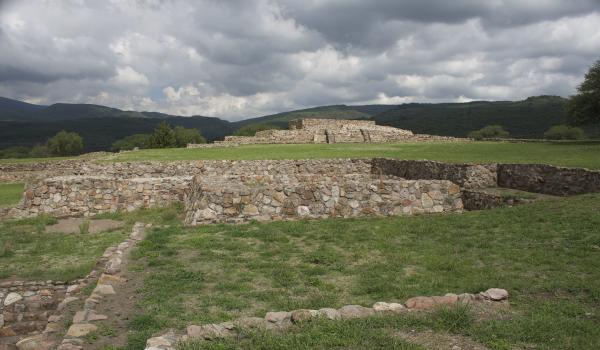
Another key topic addressed in the gallery is the site’s architecture. Through plans, illustrations, and hypothetical reconstructions, the layout of the plazas, platforms, pyramidal bases, courtyards, and ceremonial spaces that make up the archaeological site is explained. It also describes the construction techniques used by the ancient inhabitants and the functions that the various buildings served within the community’s political, religious, and ceremonial life.
The exhibition also contextualizes the process of transformation that Huandacareo underwent with the arrival of the Spanish in the 16th century. It explains how the conquest profoundly altered the political and social organization of the Purépecha domain, leading to the gradual abandonment of many of its ancient ceremonial and administrative centers. This section provides insight into the transition from the pre-Hispanic world to the colonial period, as well as the repercussions these events had on the region’s indigenous population.
- Dirección del Centro INAHMarco Antonio Rodríguez Espinosamarcoa_rodriguez@inah.gob.mx+52 (443) 313 2650