










Teotihuacán
Archeological site
Teotihuacán
Patrimonio mundial
The great Mesoamerican city was at the heart of politics, the economy, trade, religion and culture. Its influence reached such distant places as Tikal. The city of Teotihuacan was placed on the UNESCO World Heritage List in 1987, owing to the outstanding value of its monumental building complexes, mural paintings and living areas.
This was the largest city in ancient Mexico. It had a population of approximately 100,000 inhabitants at its height (350-450 AD) and has left us extraordinary monuments like the enormous pyramids, as well as its outstanding urban layout (it was the first geometrically designed city in this hemisphere), and its superb mural paintings. It has been on the UNESCO World Heritage List since 1987.
As capital of one of the first organized states, it maintained trade and political relations which stretched across great distances: the arid north of Mesoamerica (now Zacatecas), the Yucatan peninsula and the high Mayan lands of Petén (Campeche and Guatemala). It had a complex and hierarchical society, in which the priest class occupied the apex, followed by the warrior nobility. There followed the orders of artists and artisans (some living in districts for foreigners, such as the Zapotecs from the present-day state of Oaxaca), builders, miners and a vast number of farmers.
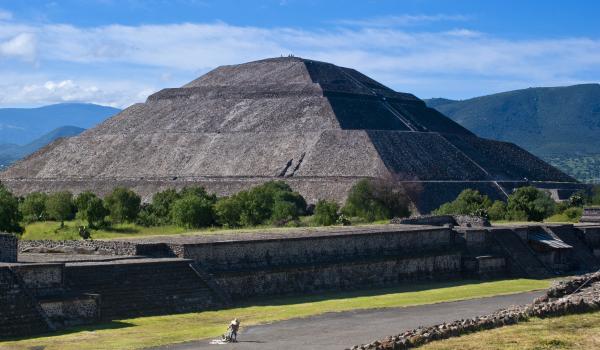
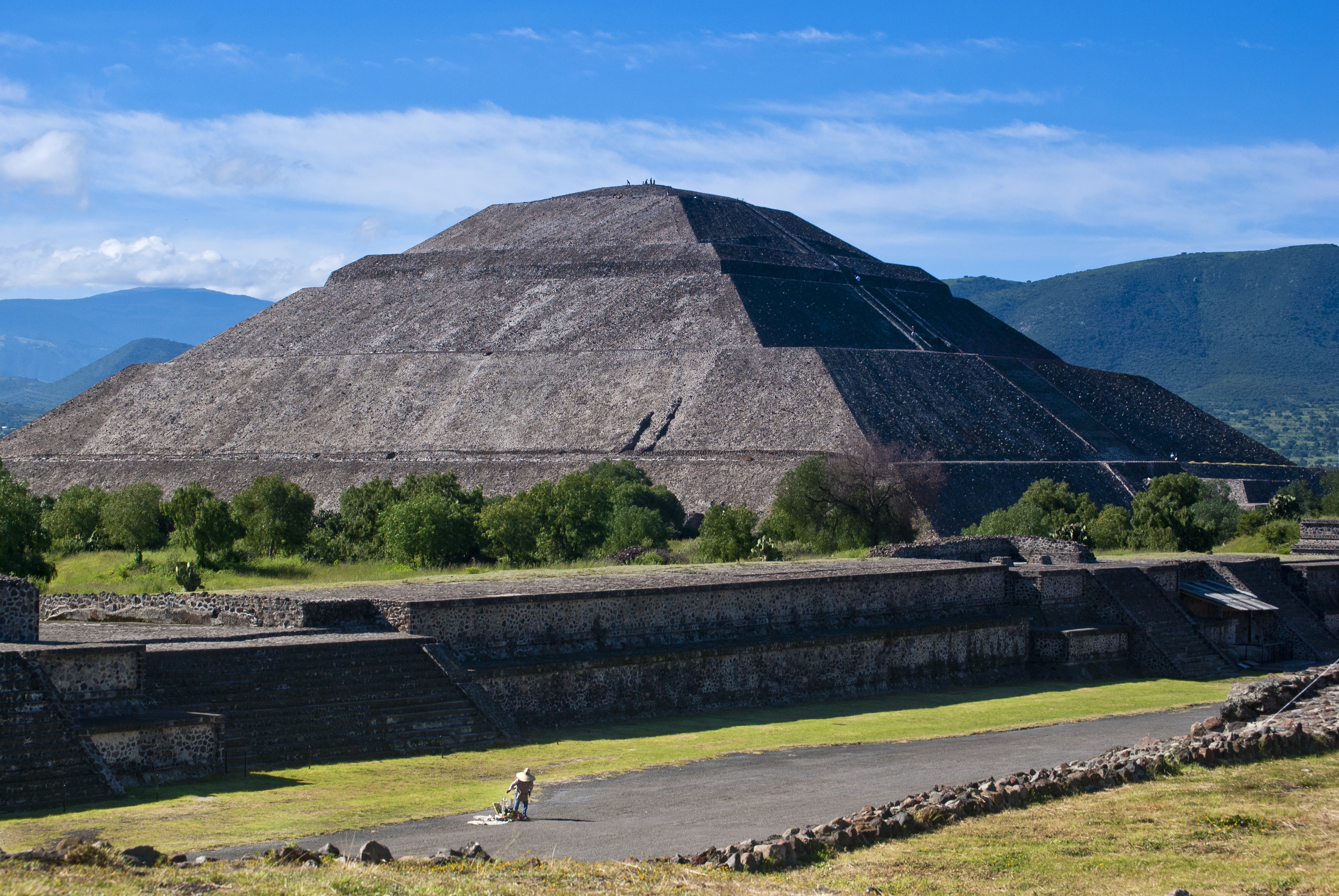
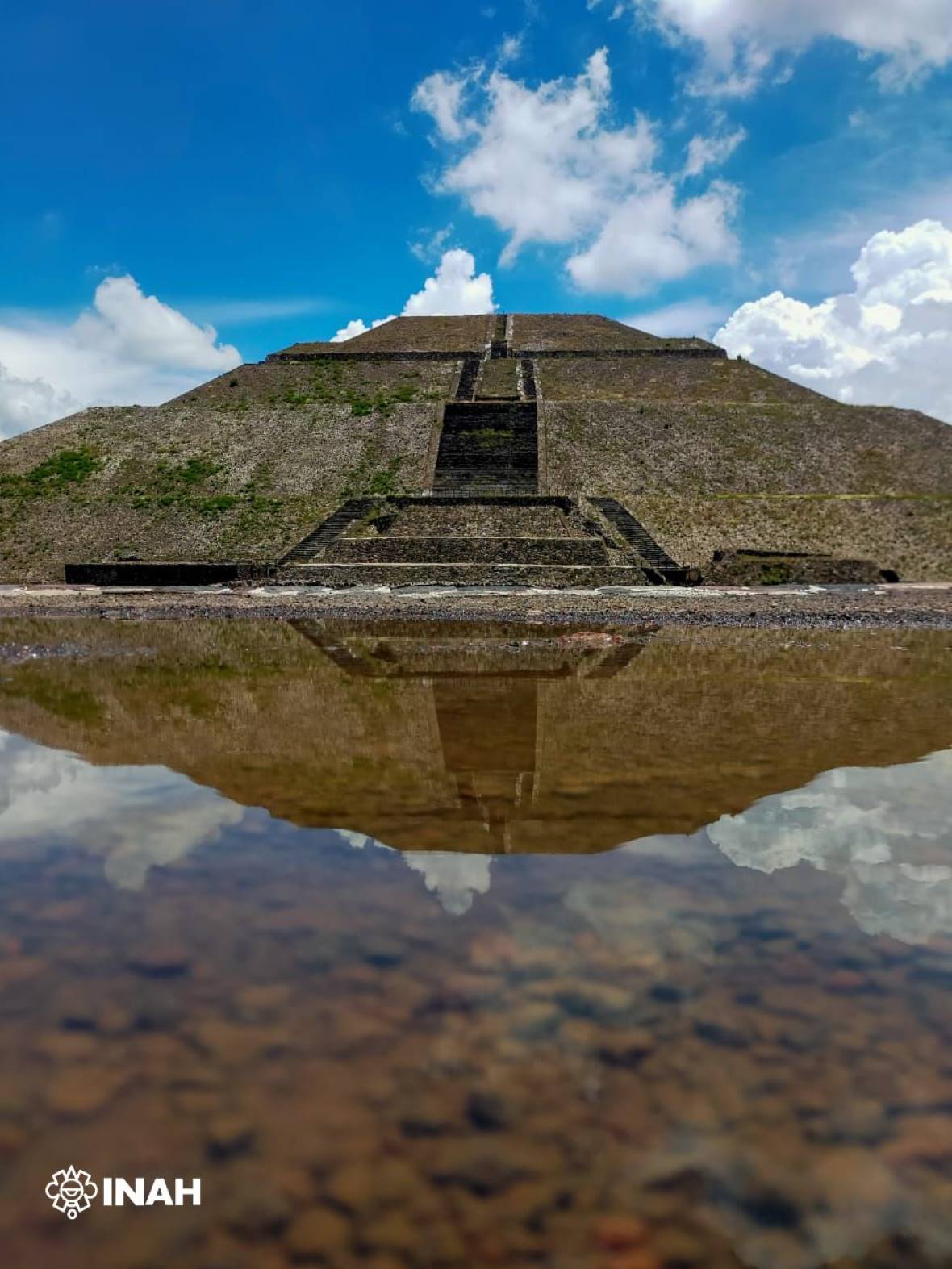
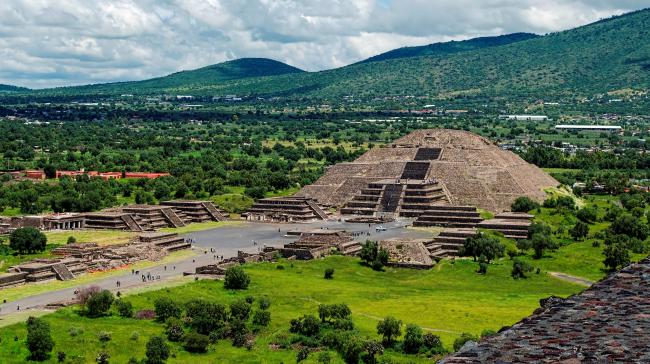
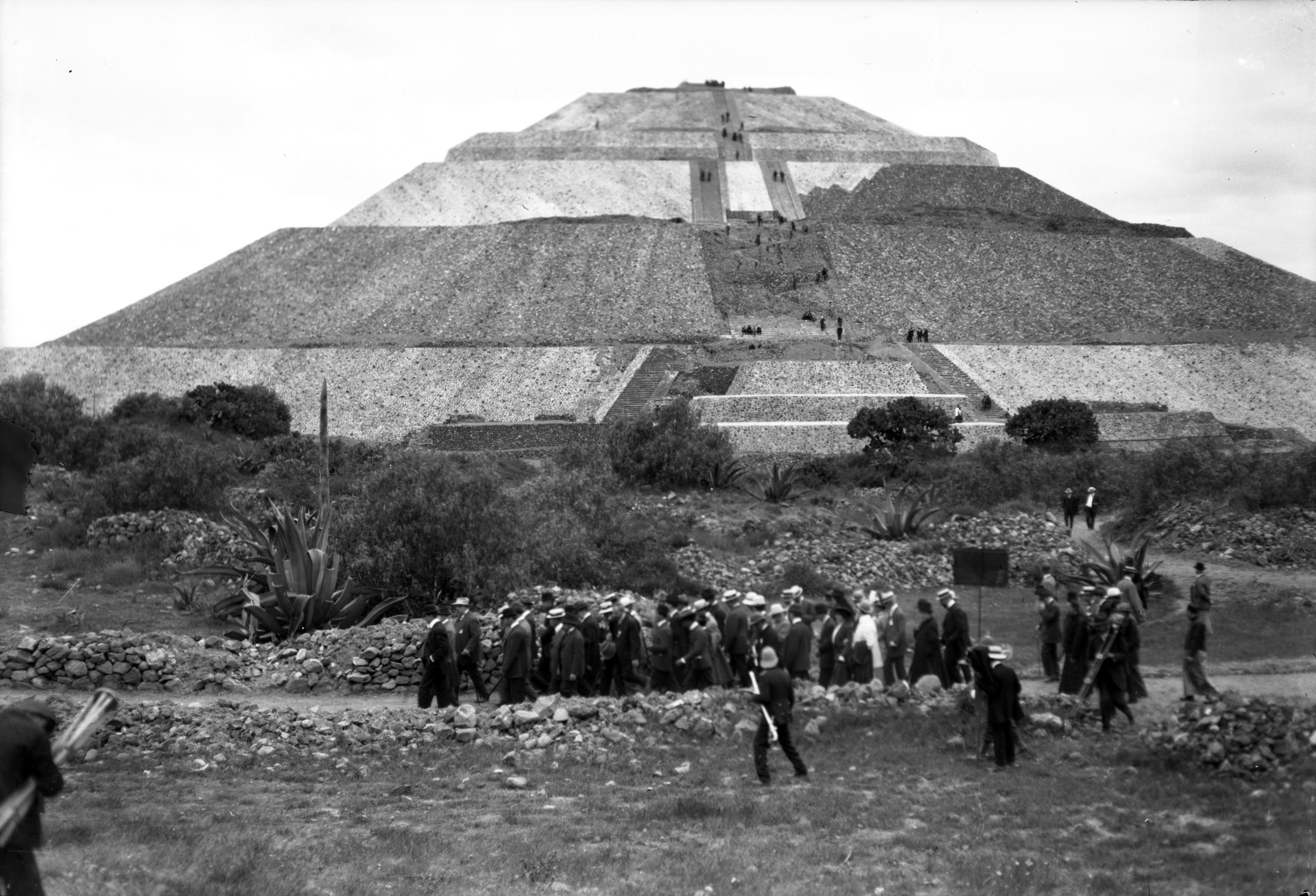
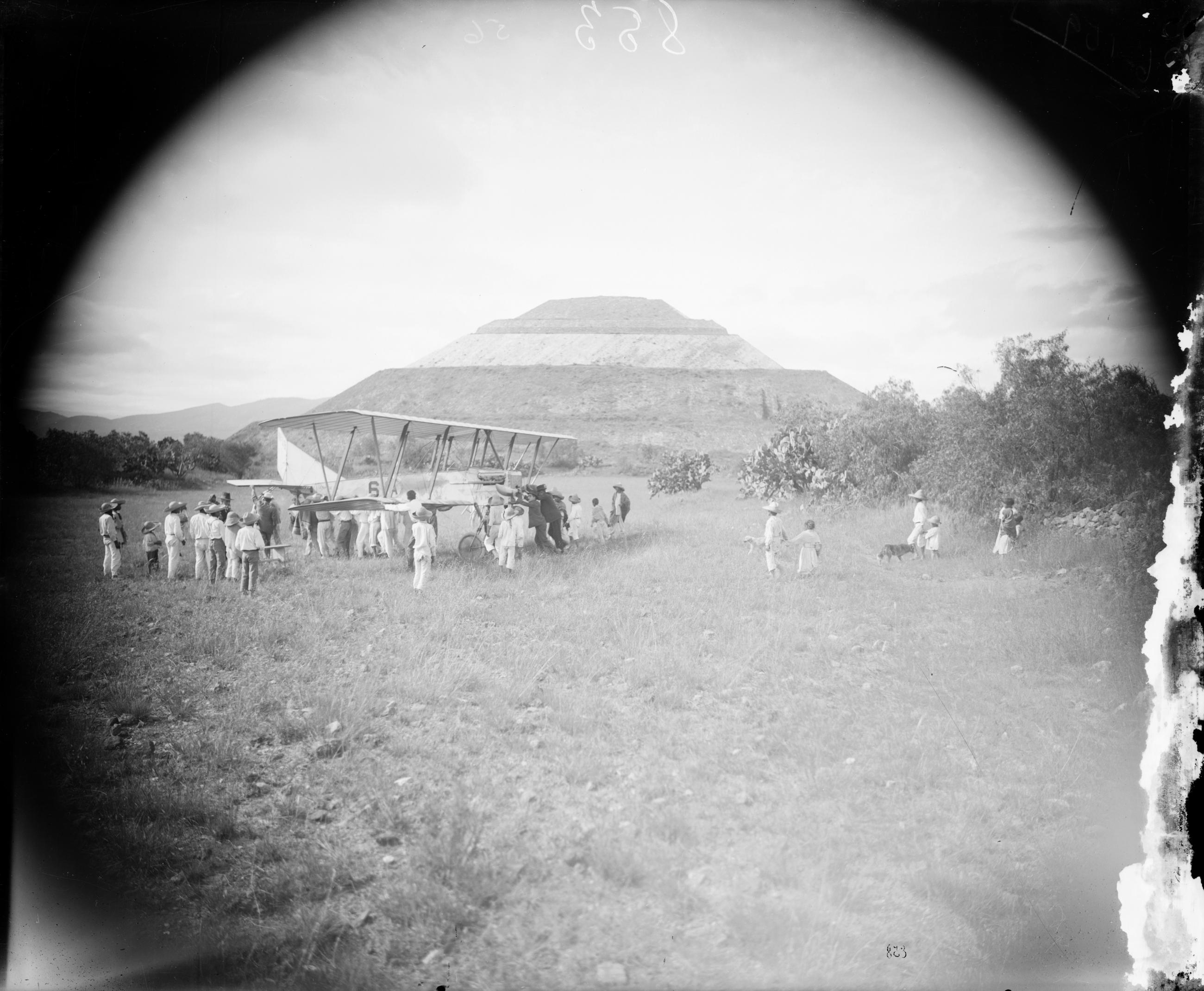
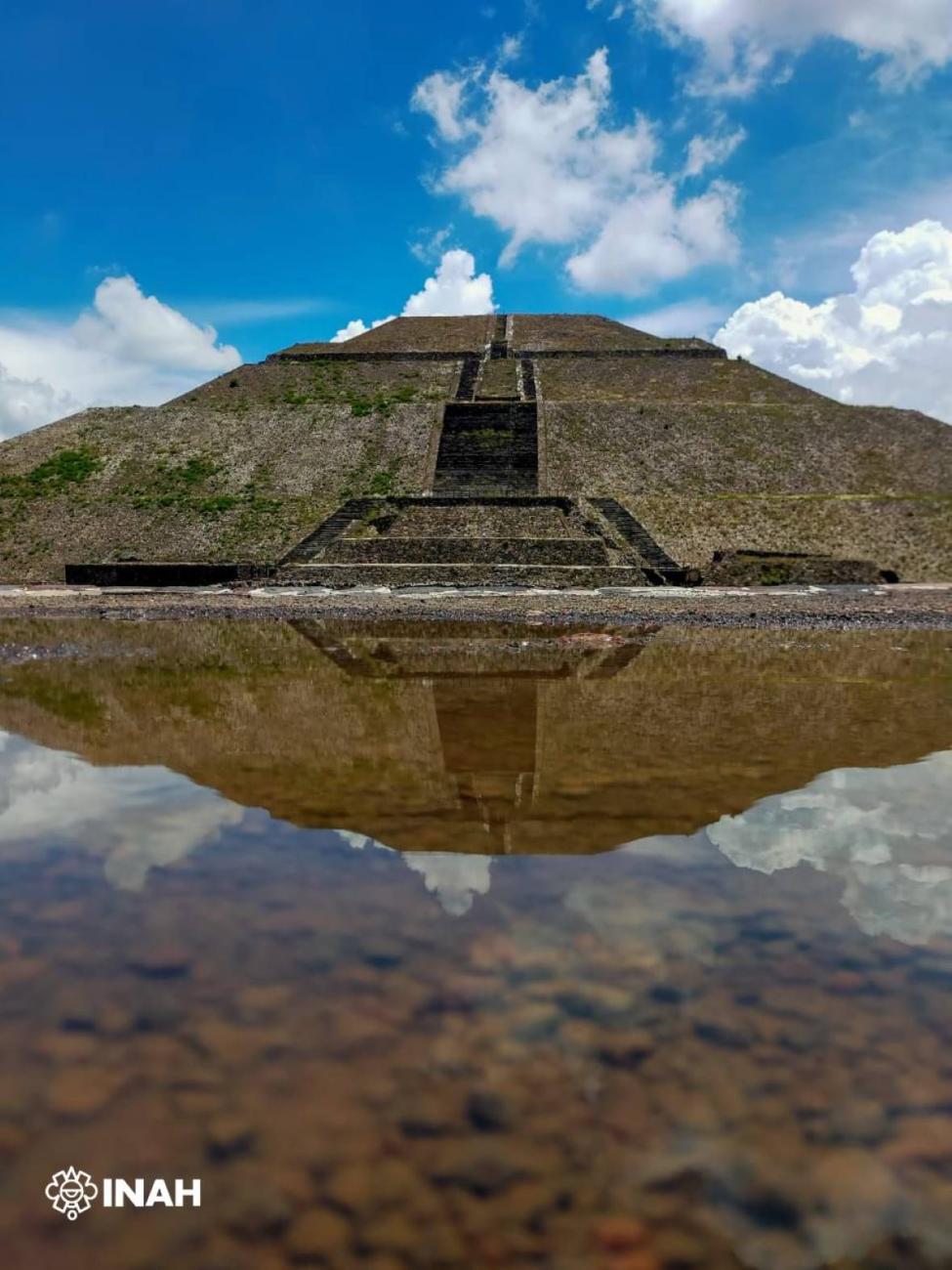
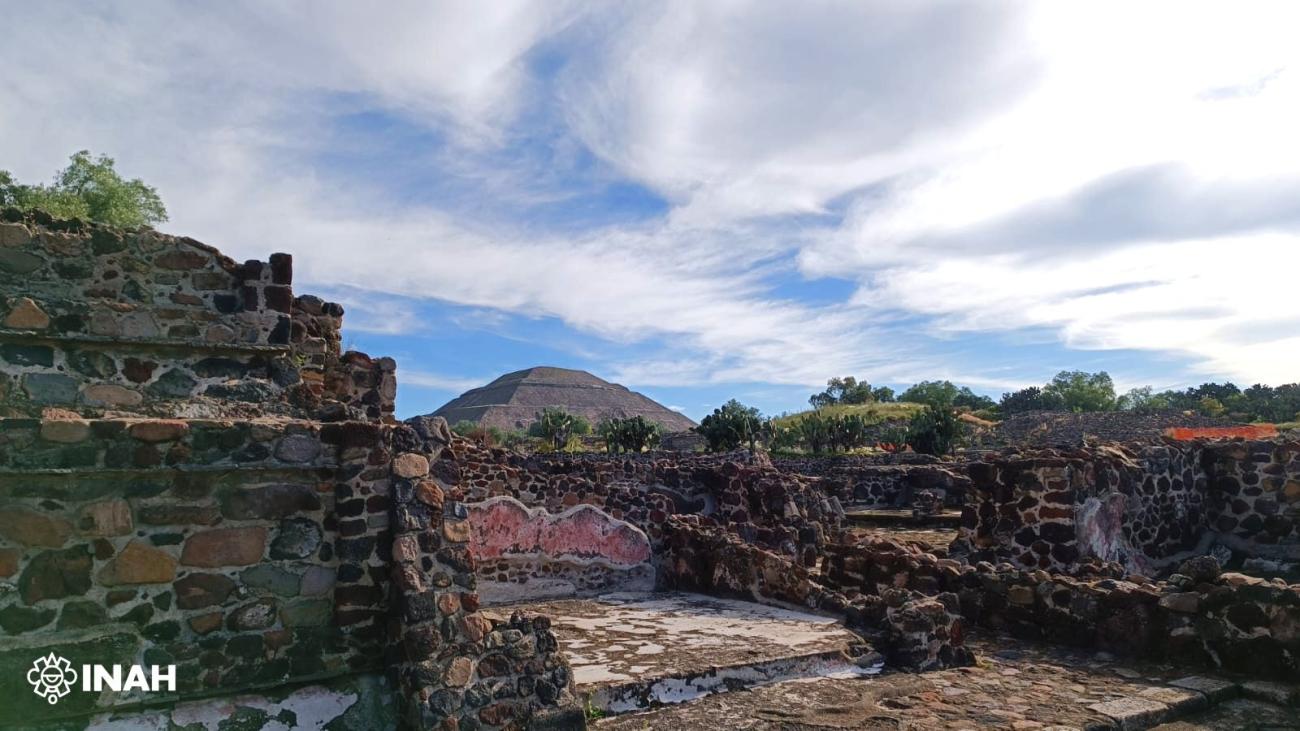
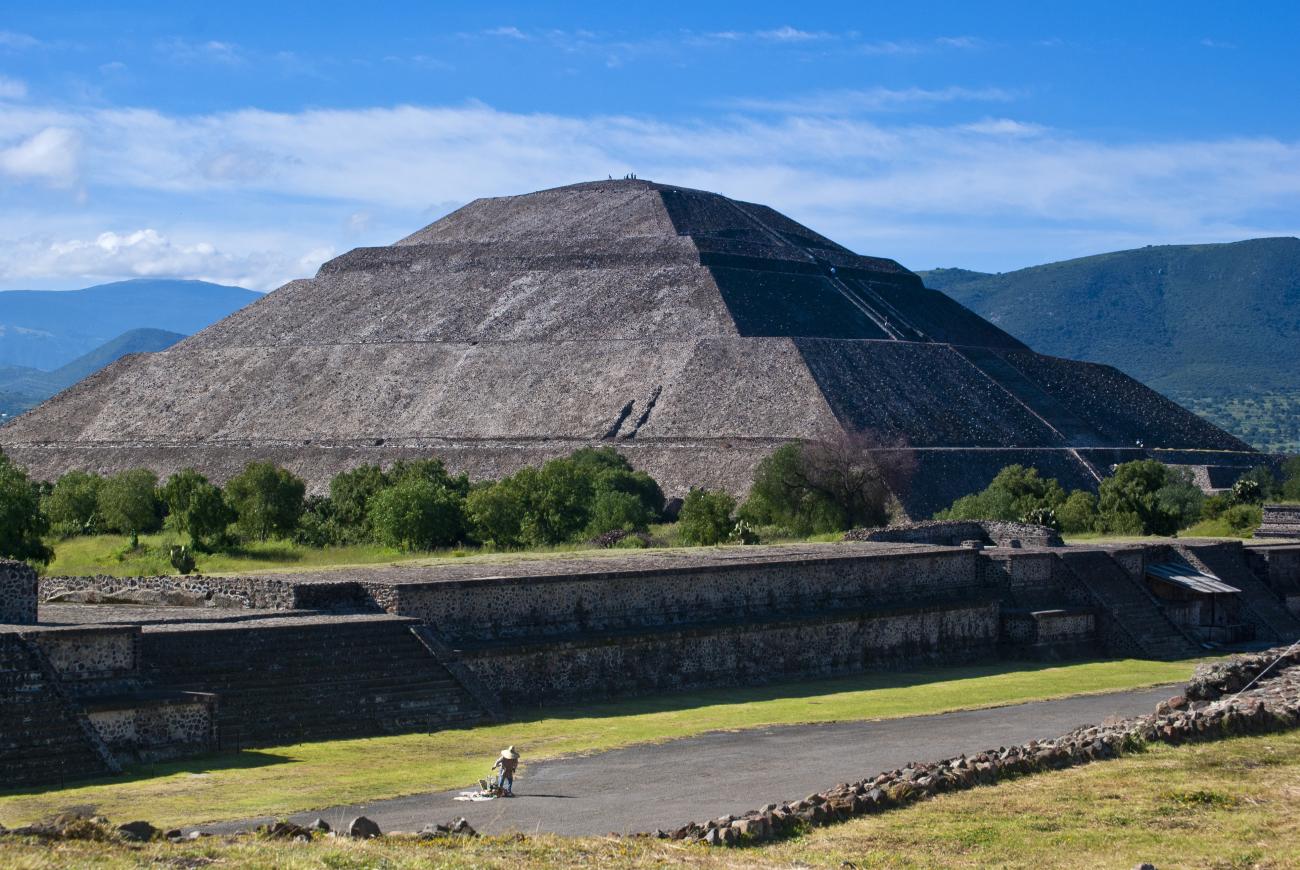
The community first emerged three centuries before the current era, established by villagers from the south of the five lakes in the Basin of Mexico. One characteristic of its architecture was the combination of “talud” (a sloping wall) and “tablero” (a vertical wall, frequently decorated with painted designs). By the third century AD, they had built the great Pyramid of the Sun, the beautiful Pyramid of the Moon and the Avenue of the Dead: their level of organization was already capable of this and more. The city occupied almost 8 square miles.
The city's trade routes soon reached the valleys that surround Monte Albán, Cholula and Matacapan (the latter in present-day Veracruz), as well as Kaminaljuyú and Tikal (both in what is now Guatemala), where the influence of Teotihuacan was made felt in different spheres such as the production of pottery and architecture. Cotton, precious feathers, fine blankets, sea and snail shell jewelry, chalchihuites (jade) and many fruits and vegetables arrived to the city from a multitude of markets, including very distant ones. Its apogee was reached in the fourth and fifth centuries AD.
However, violence erupted in the city in the mid-sixth century AD. Its central area was severely damaged, apparently by sectors of the population itself. The great city, sadly diminished, conserved a preeminent role in the region, but had to share it with others. Decline followed. In the thirteenth century, groups of people who spoke the Uto-Aztec language arrived from the north. As they passed through, they found it abandoned, surrounded by only a few hamlets. Its majestic, half-ruined constructions led them to call it admiringly in their language “place of the gods" or “place of deification”: Teotihuacan. Nobody knows what its inhabitants called it.
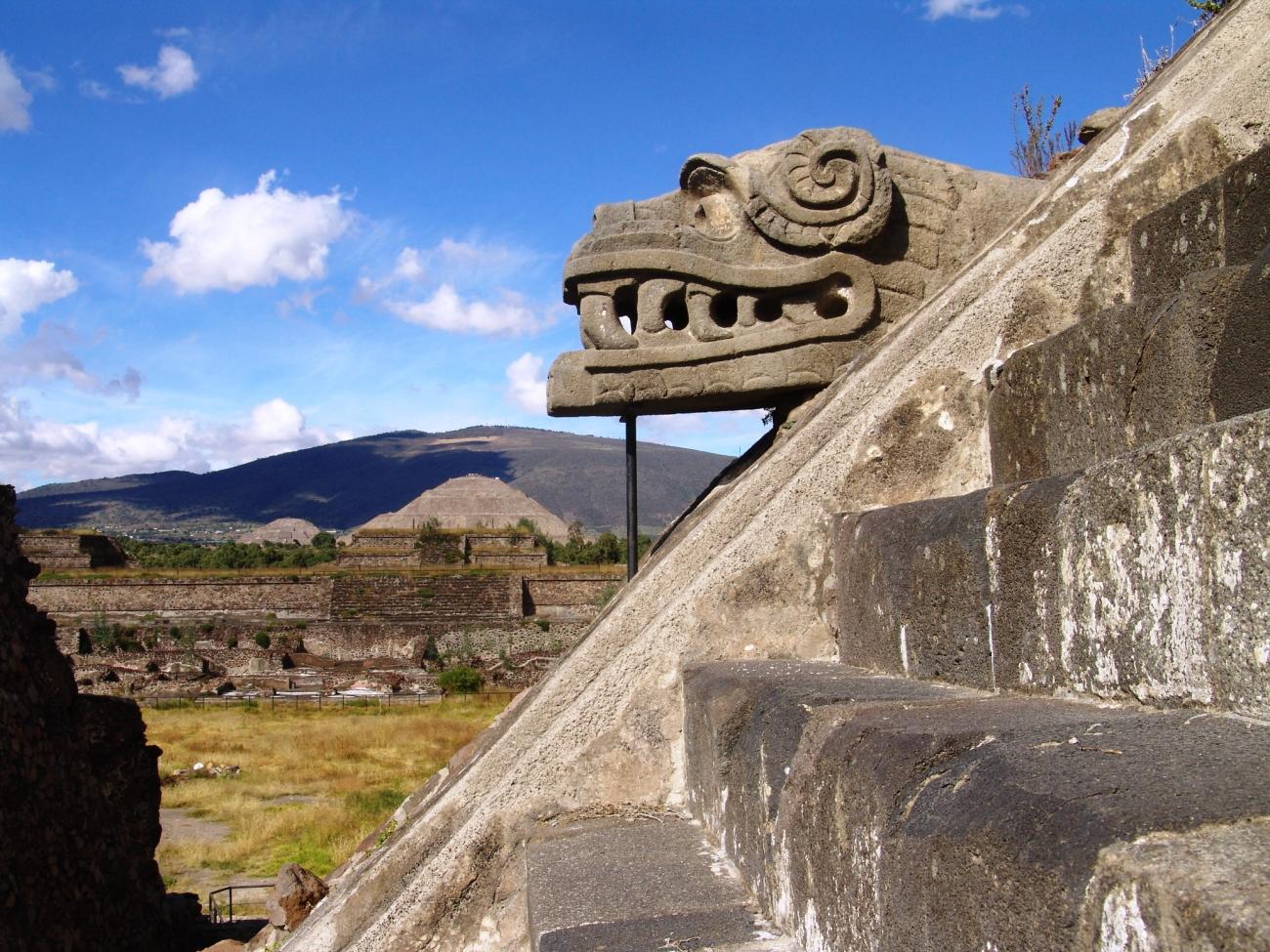
We do know that they worshipped Tlaloc for rain and agriculture, Huehueteotl for fire, Chalchiuhtlicue for running water, Quetzalcoatl for creative ability and the morning star, Quetzalpapalotl apparently for war and Xipe Totec for corn. They worshopped them all with names that have not survived, different to the Nahua names that prevailed. They believed that the dead lived on, and buried them as if for a journey, with offerings and formal attire. They thought they would last forever. However, these people, their city and their state only lasted from 50 to 650 AD.
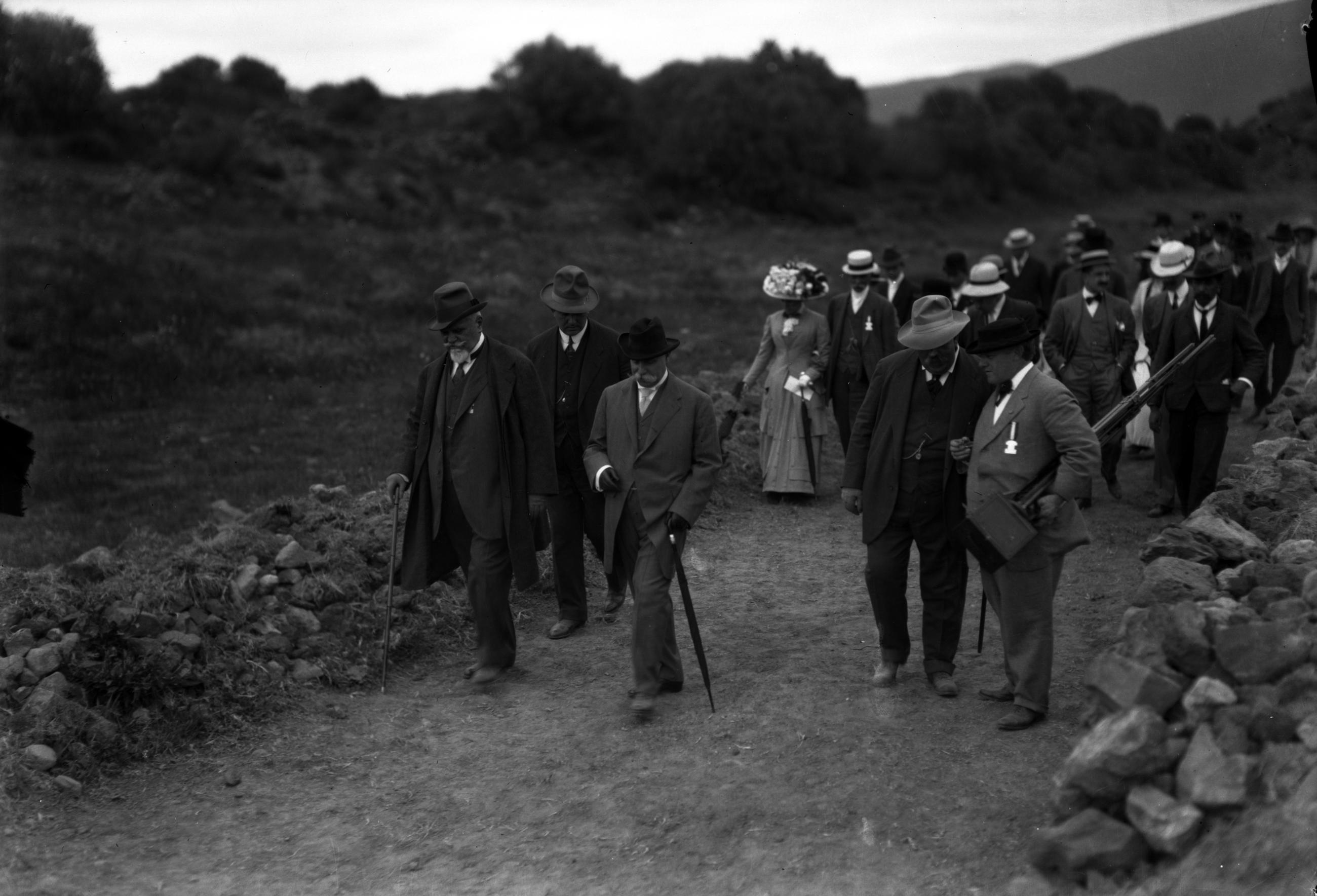
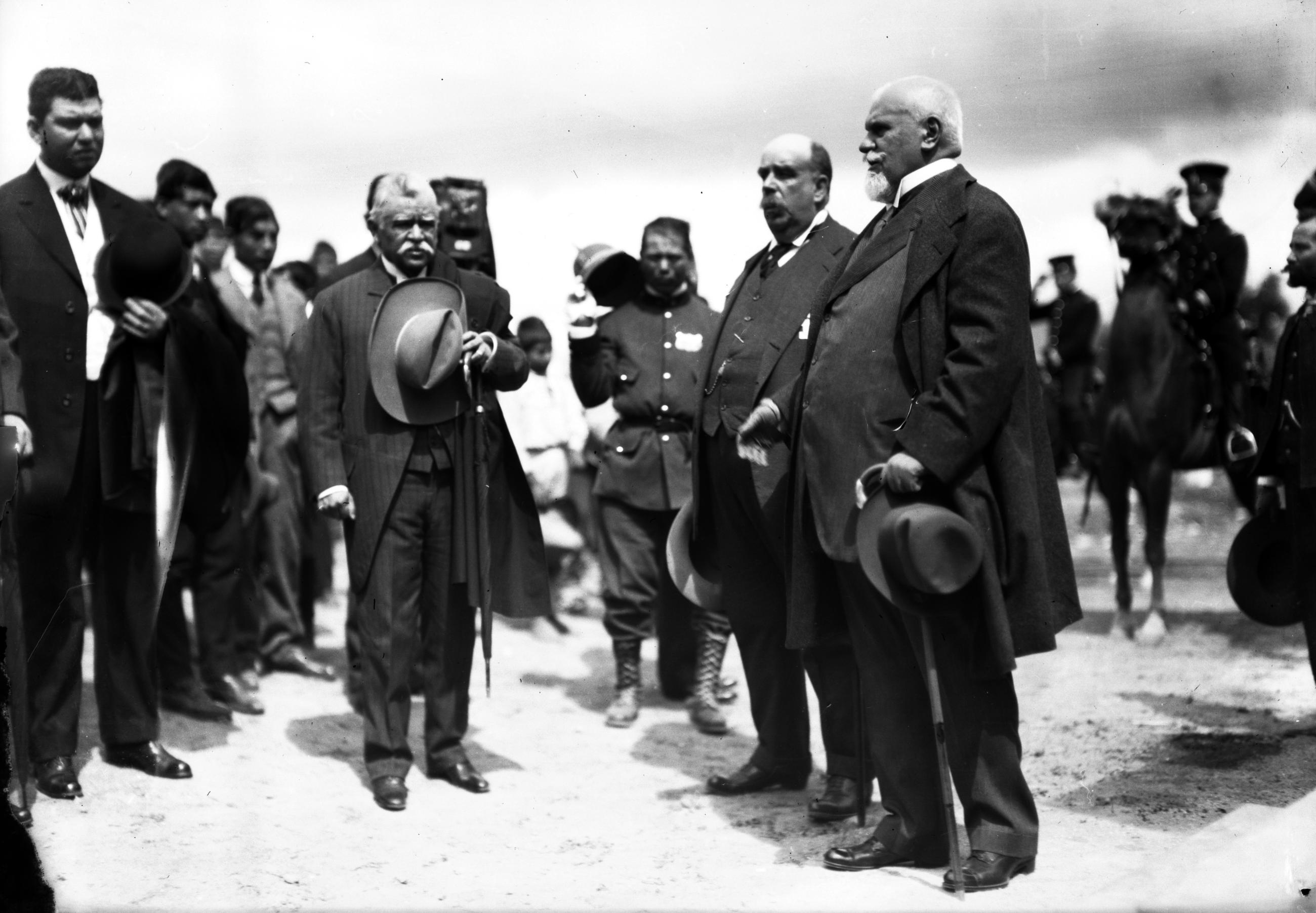
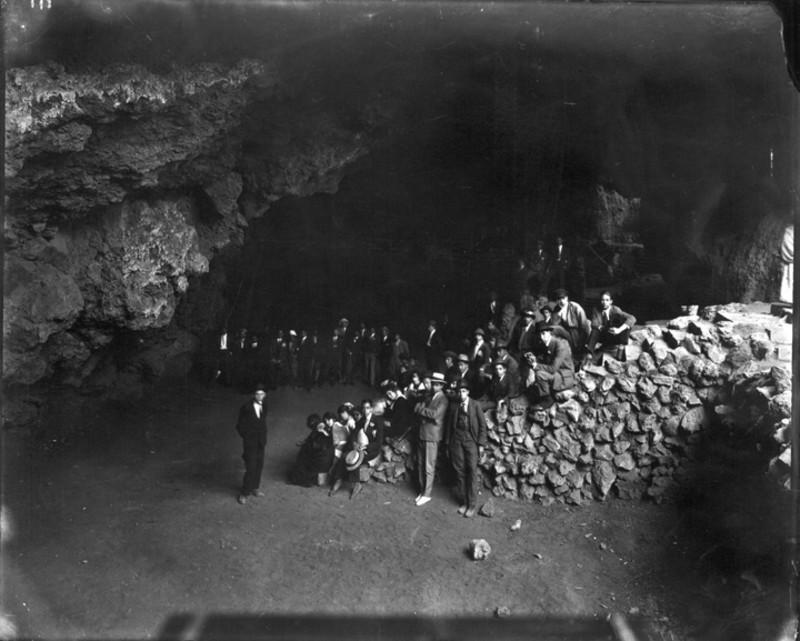
In 1675, the colonial-period scholar Carlos de Sigüenza y Góngora explored the square-based building at the foot of the staircase that climbs the Pyramid of the Moon. In the 1880s and in 1905, the anthropologist and archeologist Leopoldo Batres performed excavations and reconstructions near the Pyramid of the Moon and the Pyramid of the Sun on the instructions of President Porfirio Díaz. He also founded the first site museum. Three new projects of investigation, excavation and preservation (the largest in Mexico’s archeological history until then) were then performed in 1962-64 by the INAH. Others took place in 1980-82 and 1992-94. This interdisciplinary task continues.
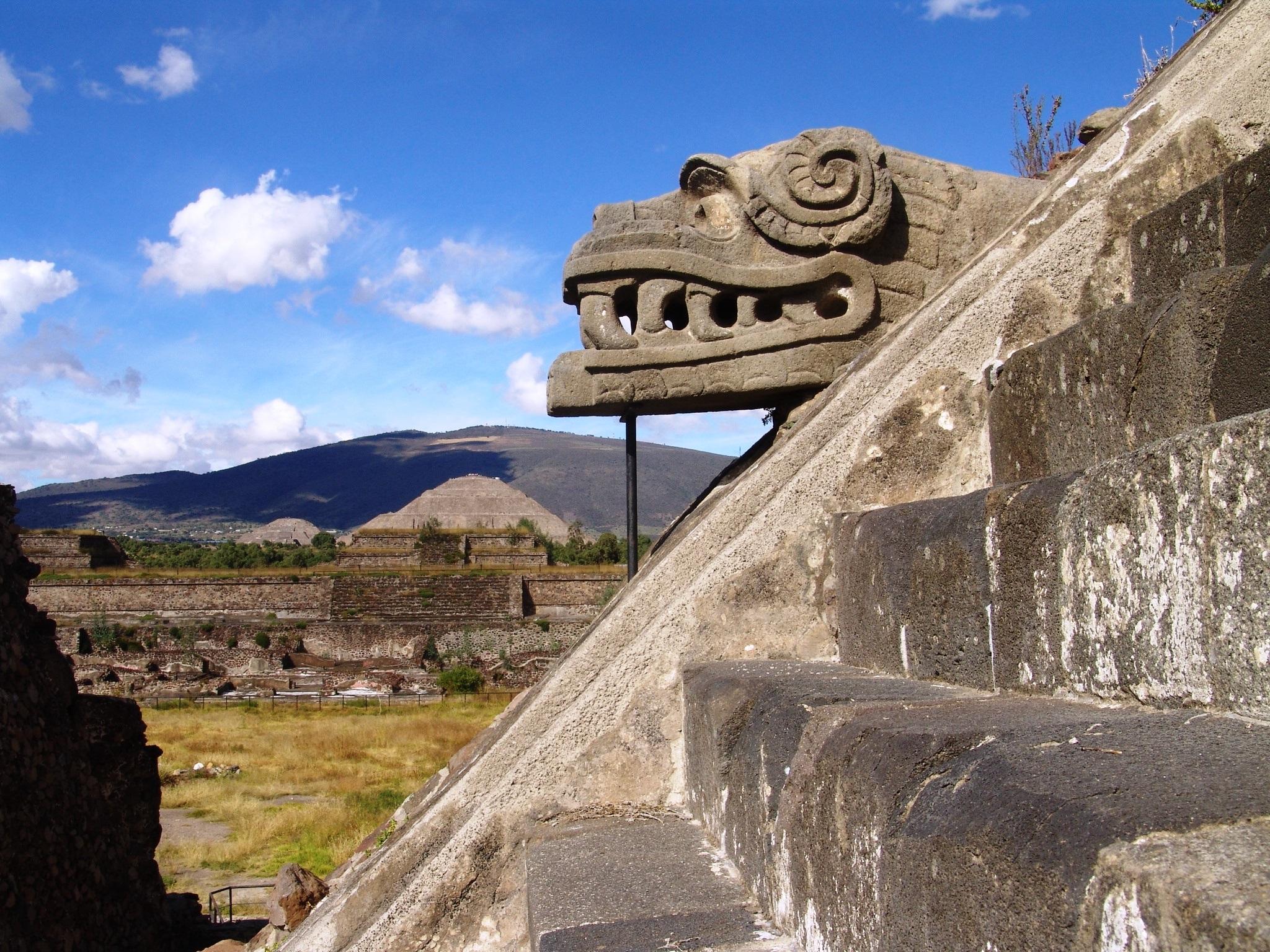
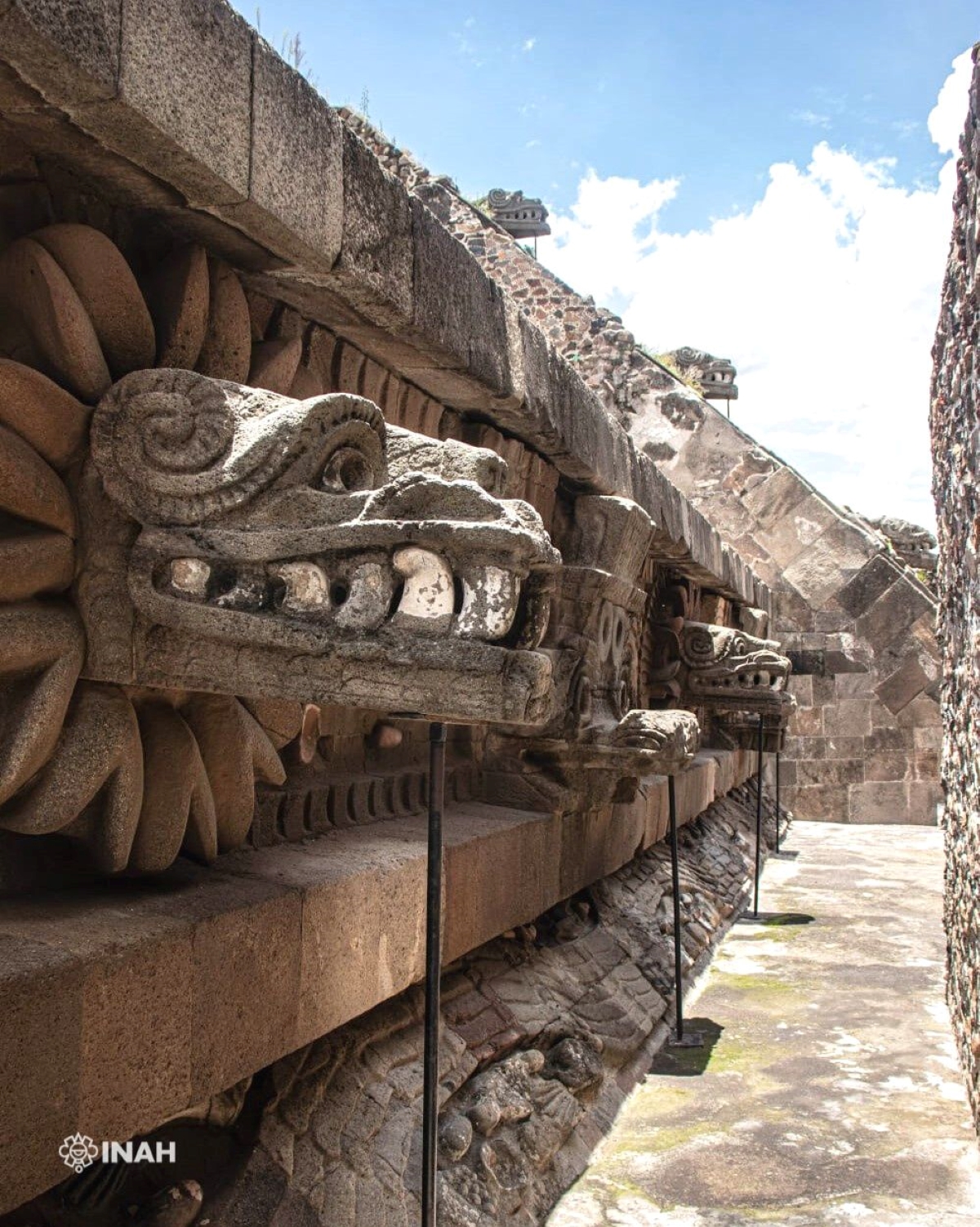
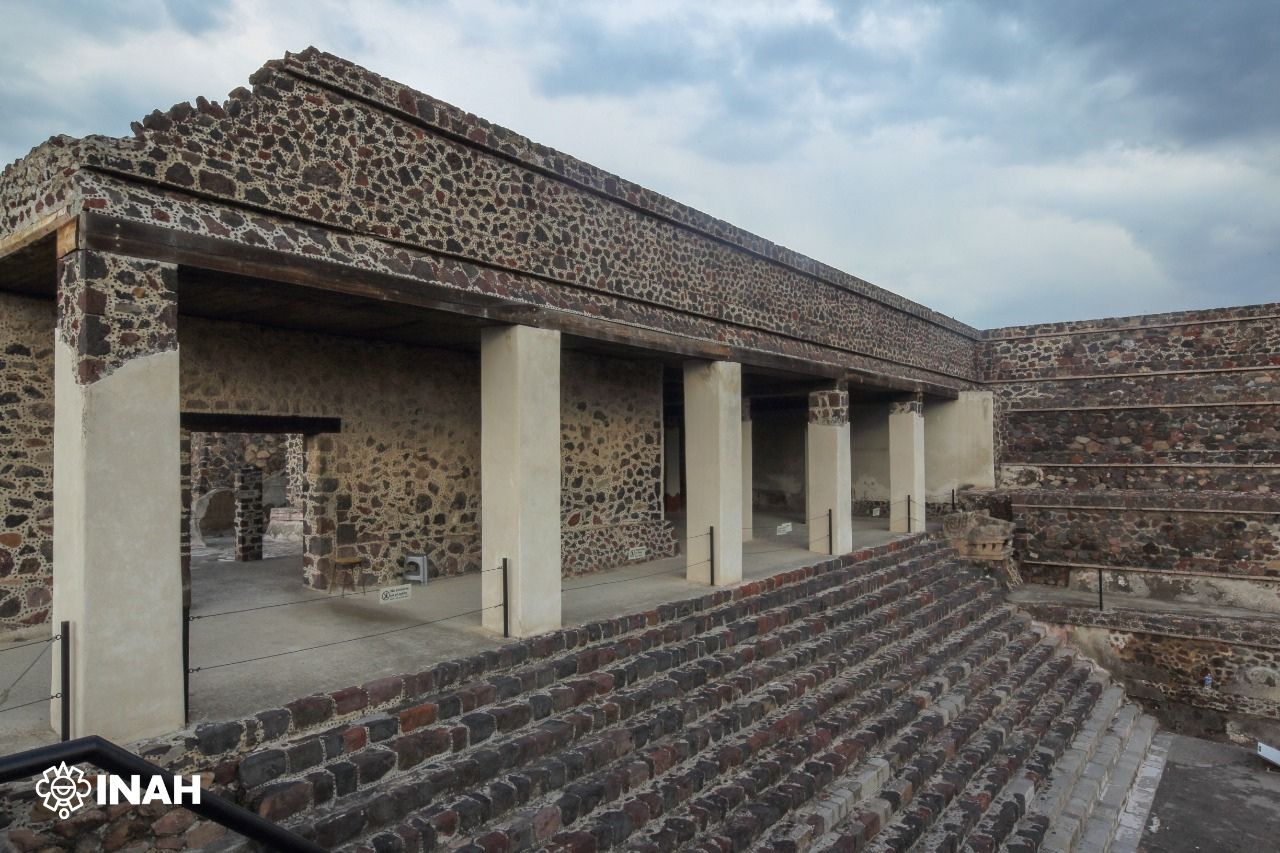
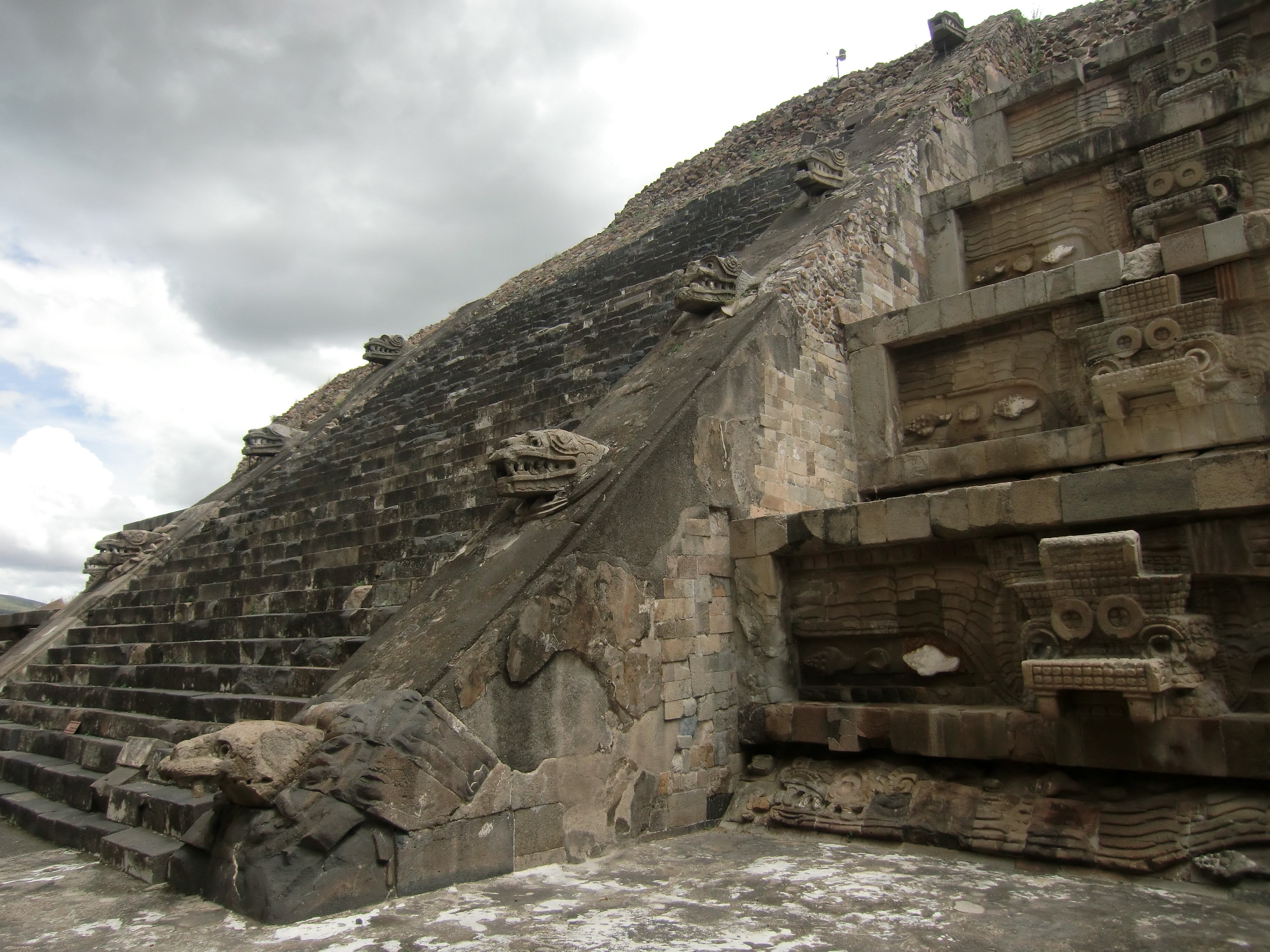
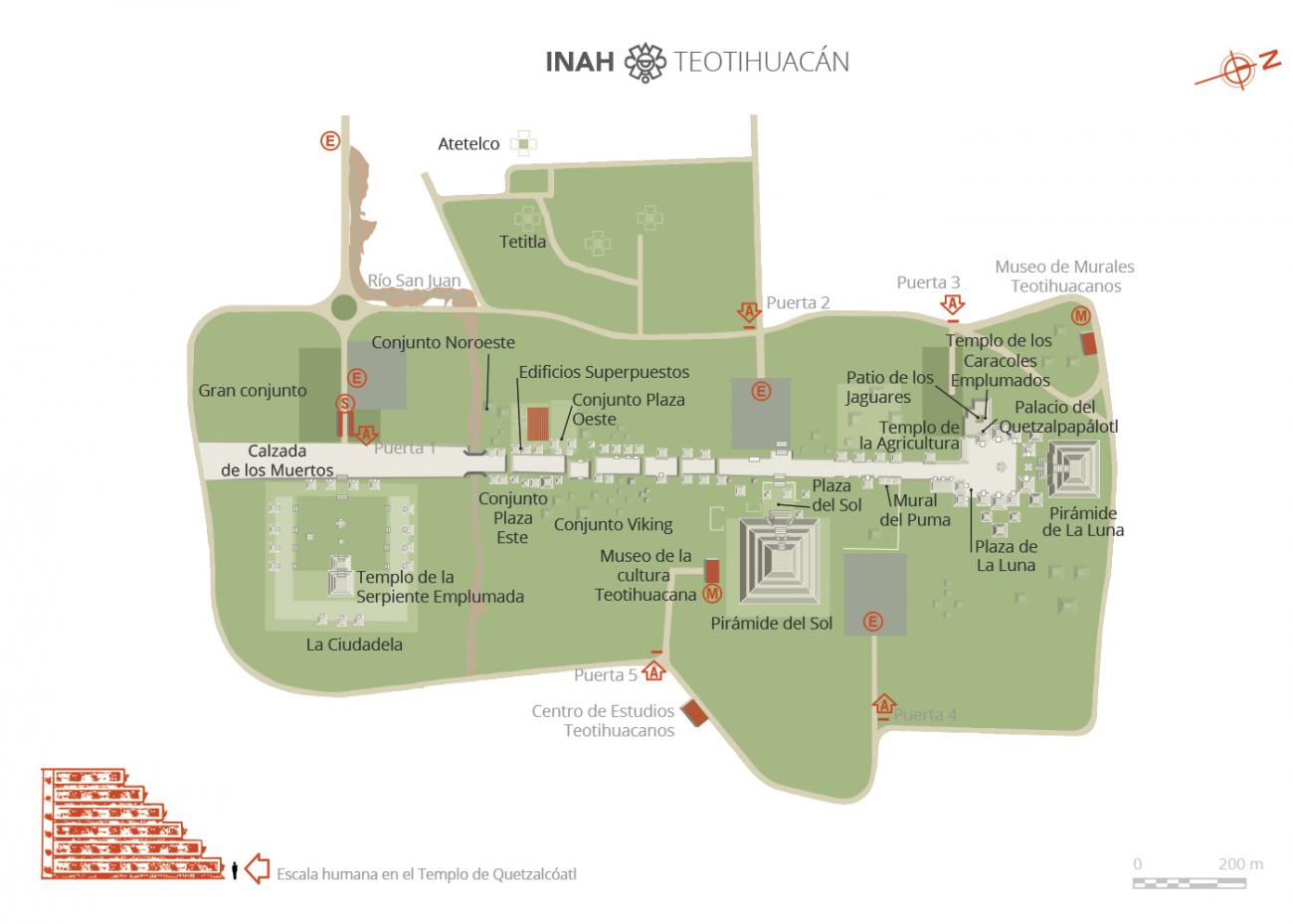
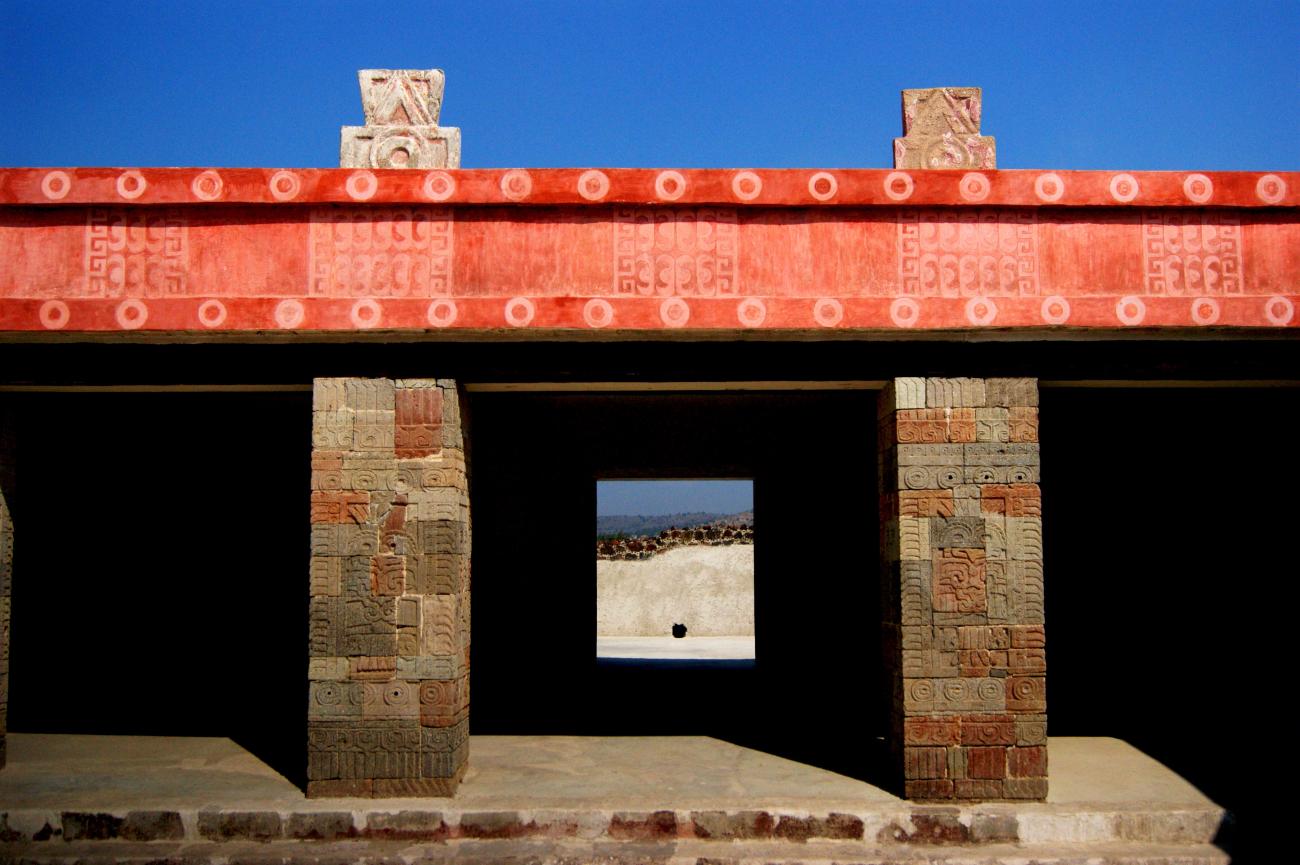
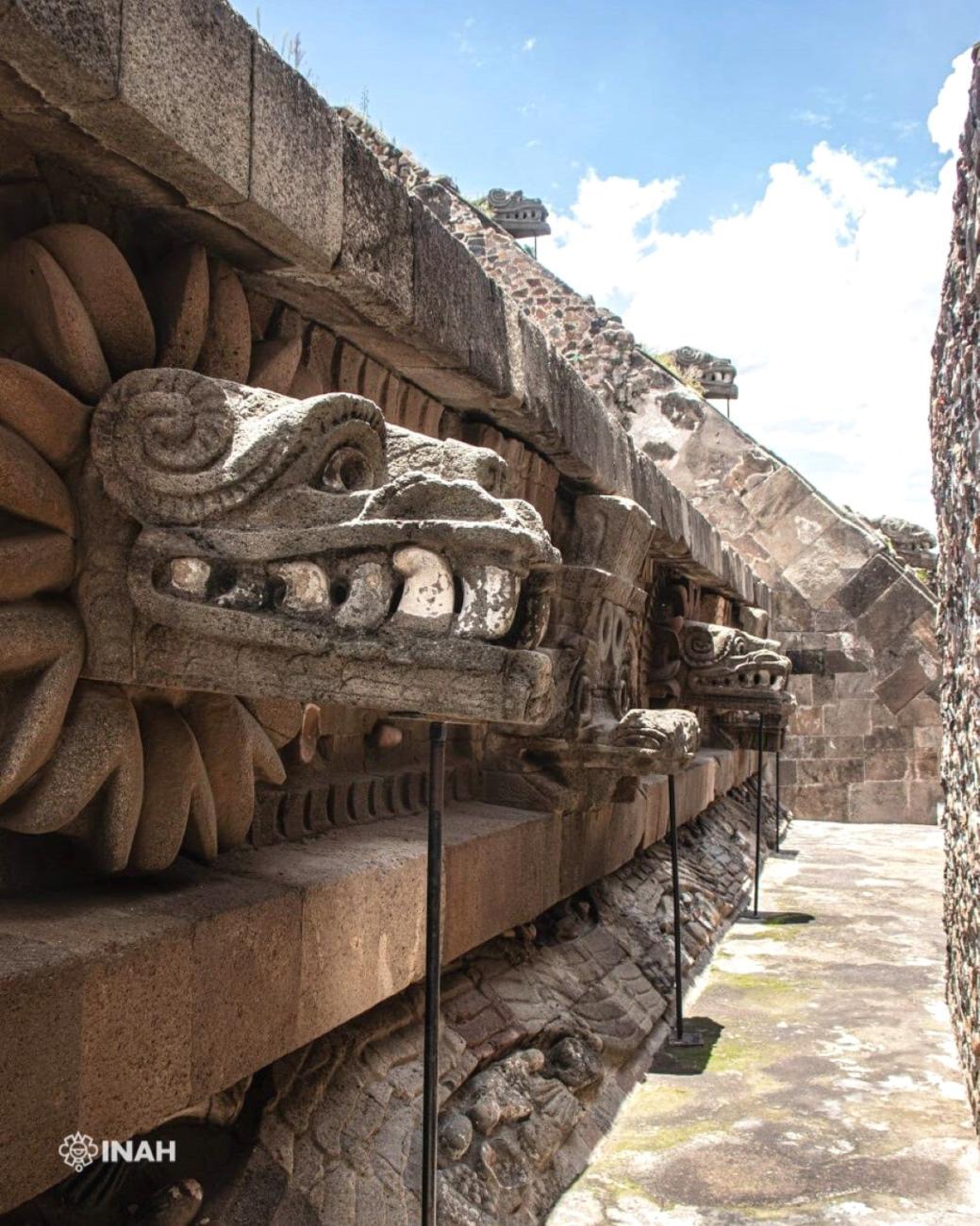
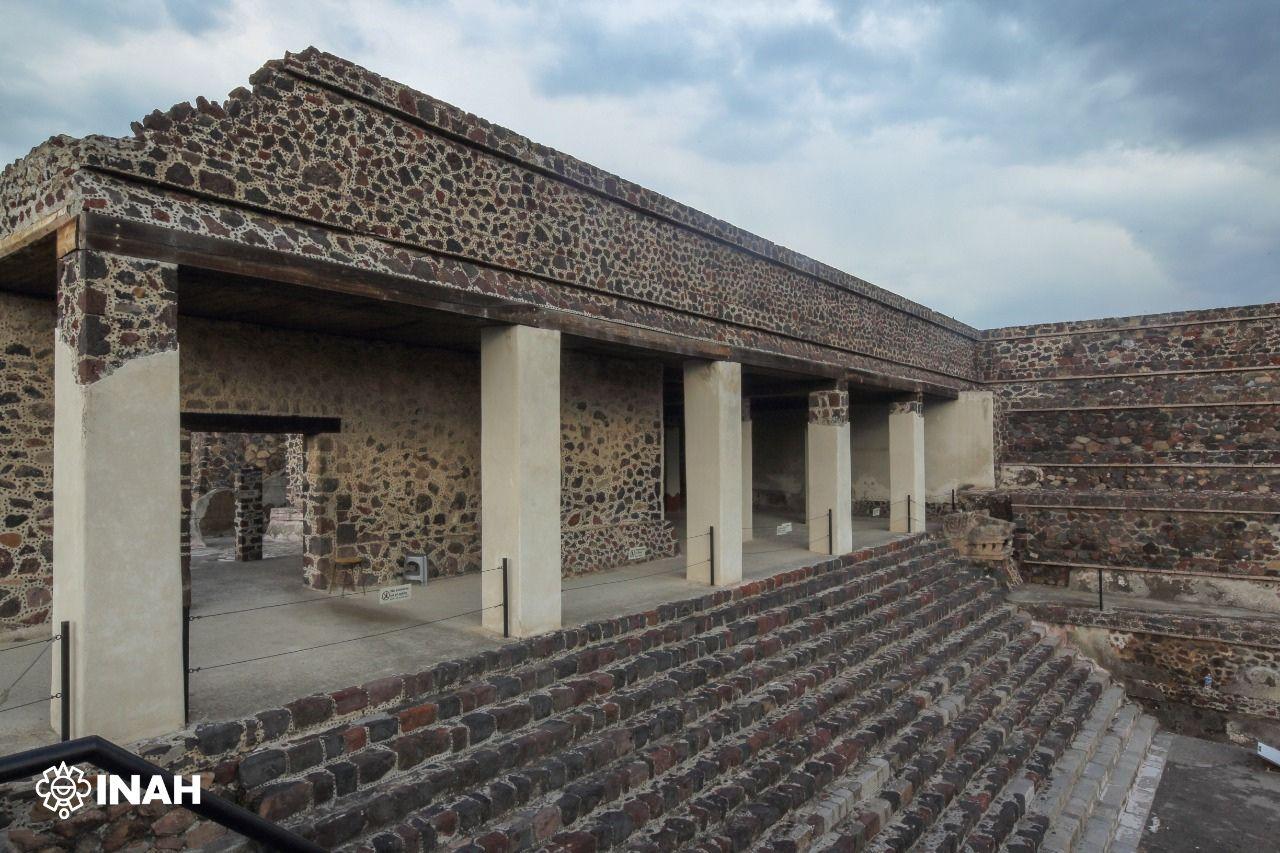
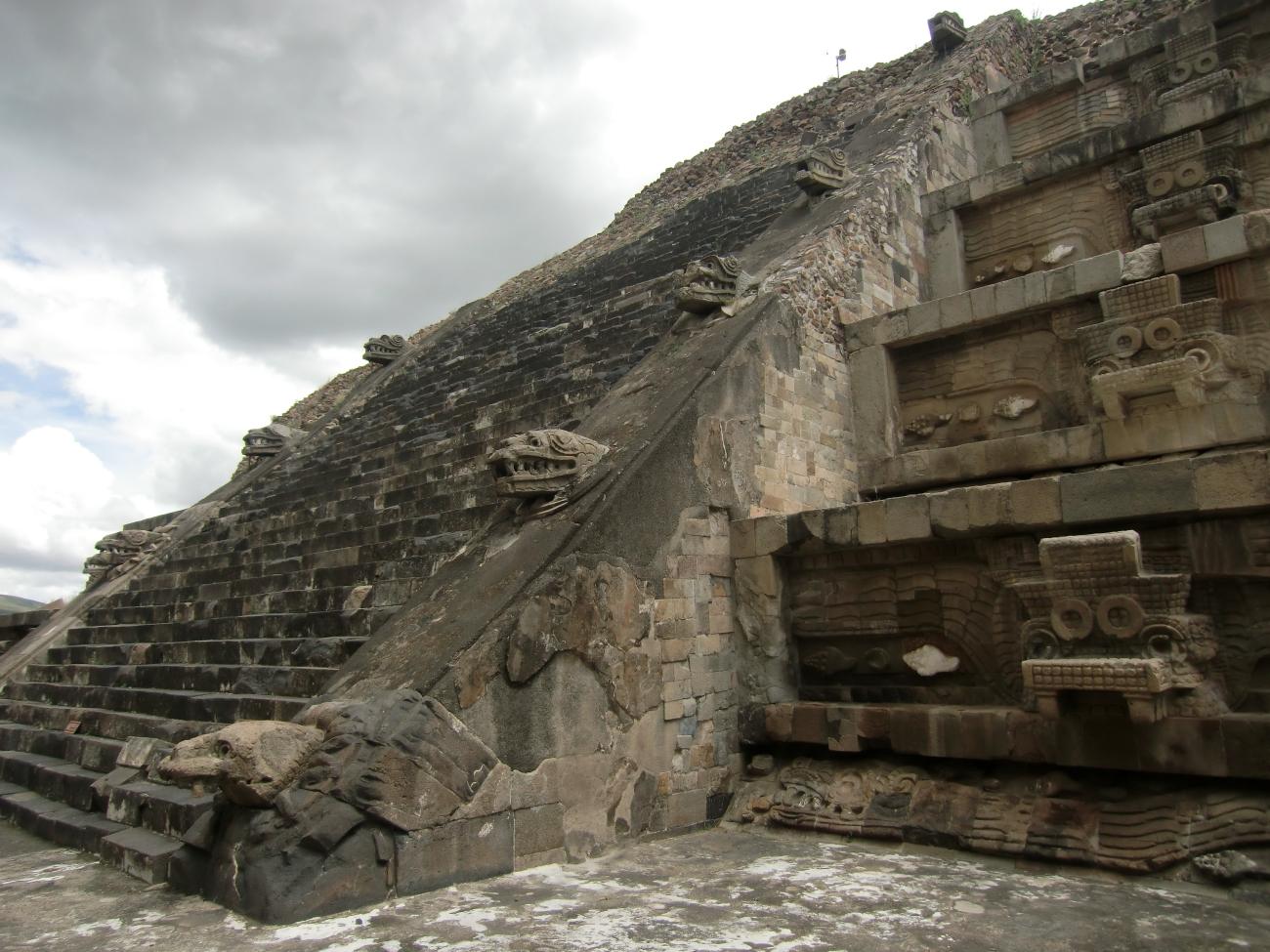
The archeological zone open to visitors covers 652 acres, within which the following main groups of structures and monuments can be found: the Citadel and the Temple of the Feathered Serpent, the Palace of Quetzalpapalotl and three apartment areas with noteworthy mural paintings (Tetitla, Atetelco and Tepantitla).
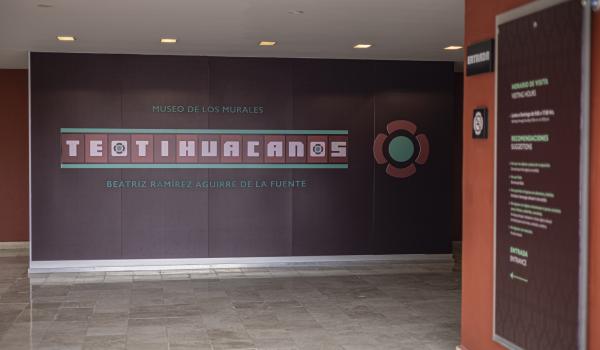
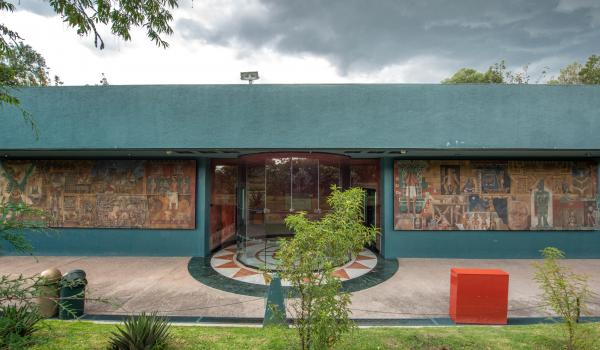
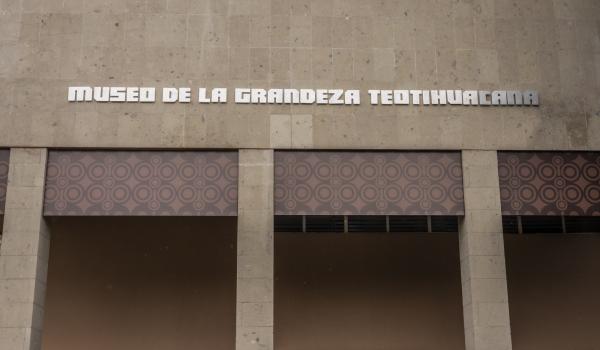
Two site museums round off the visit and guide our learning and curiosity: the Museum of Teotihuacan Culture and the Beatriz de la Fuente Museum of Teotihuacan Murals, in addition to which there is a temporary exhibition hall in the so-called “Former Museum.” Archeological pieces can also be admired in the Sculpture Garden. It is also well worth visiting the botanical garden adjacent to the Museum of Teotihuacan Murals.
Calzada de los Muertos
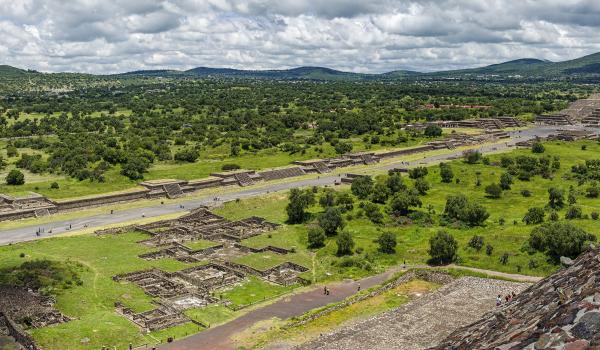
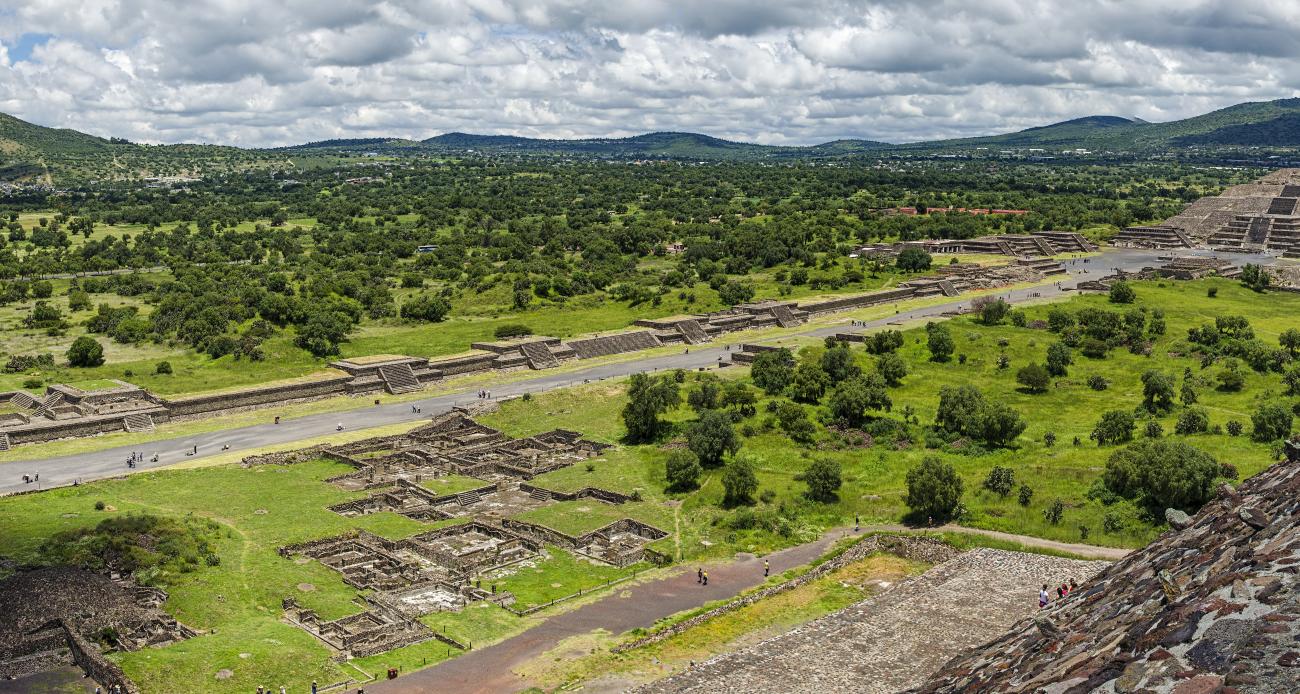
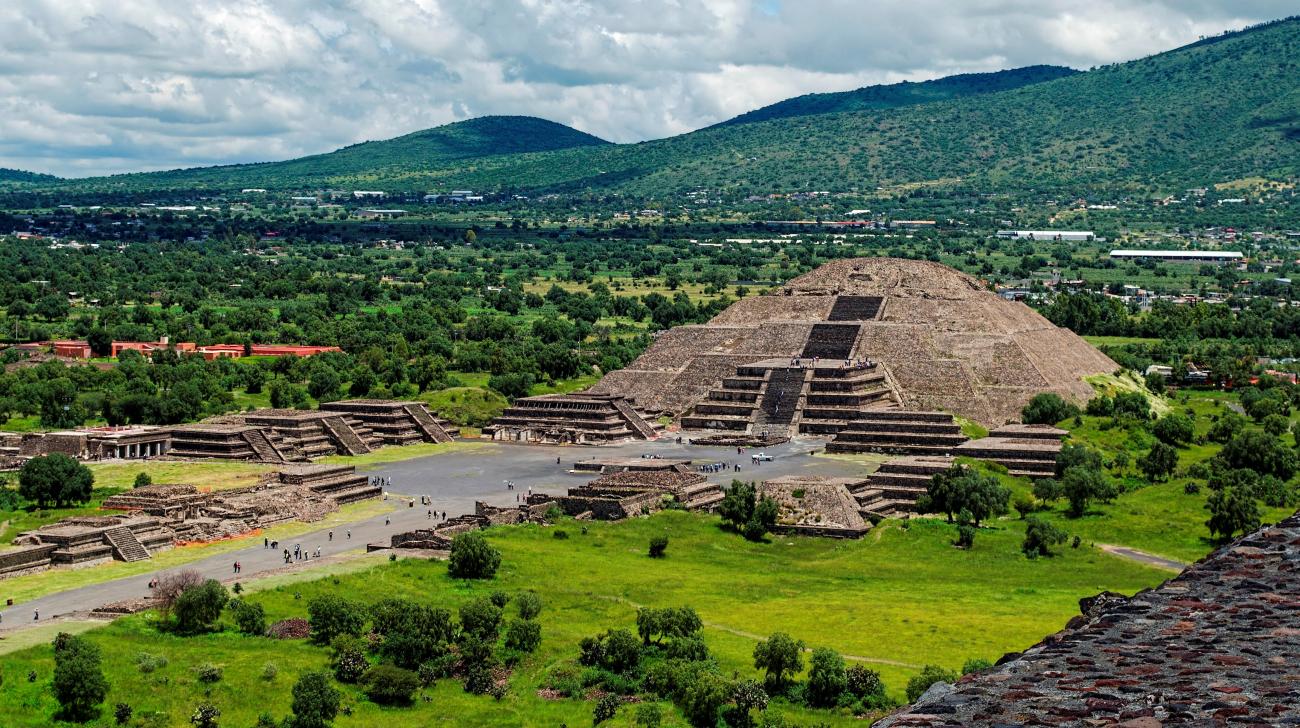
This enormous urban space is the axis of the city, measures about 4 km and is oriented at 15° 25" east of astronomical north. The ceremonial center, the great monuments, as well as majestic temples and palaces were built around this causeway, most of them in the same style and proportion.
Calzada de los Muertos
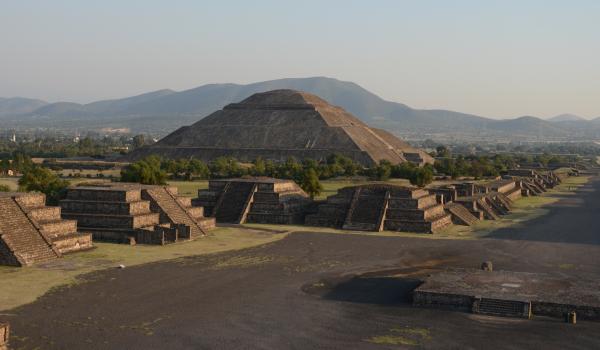
Plaza de la Luna
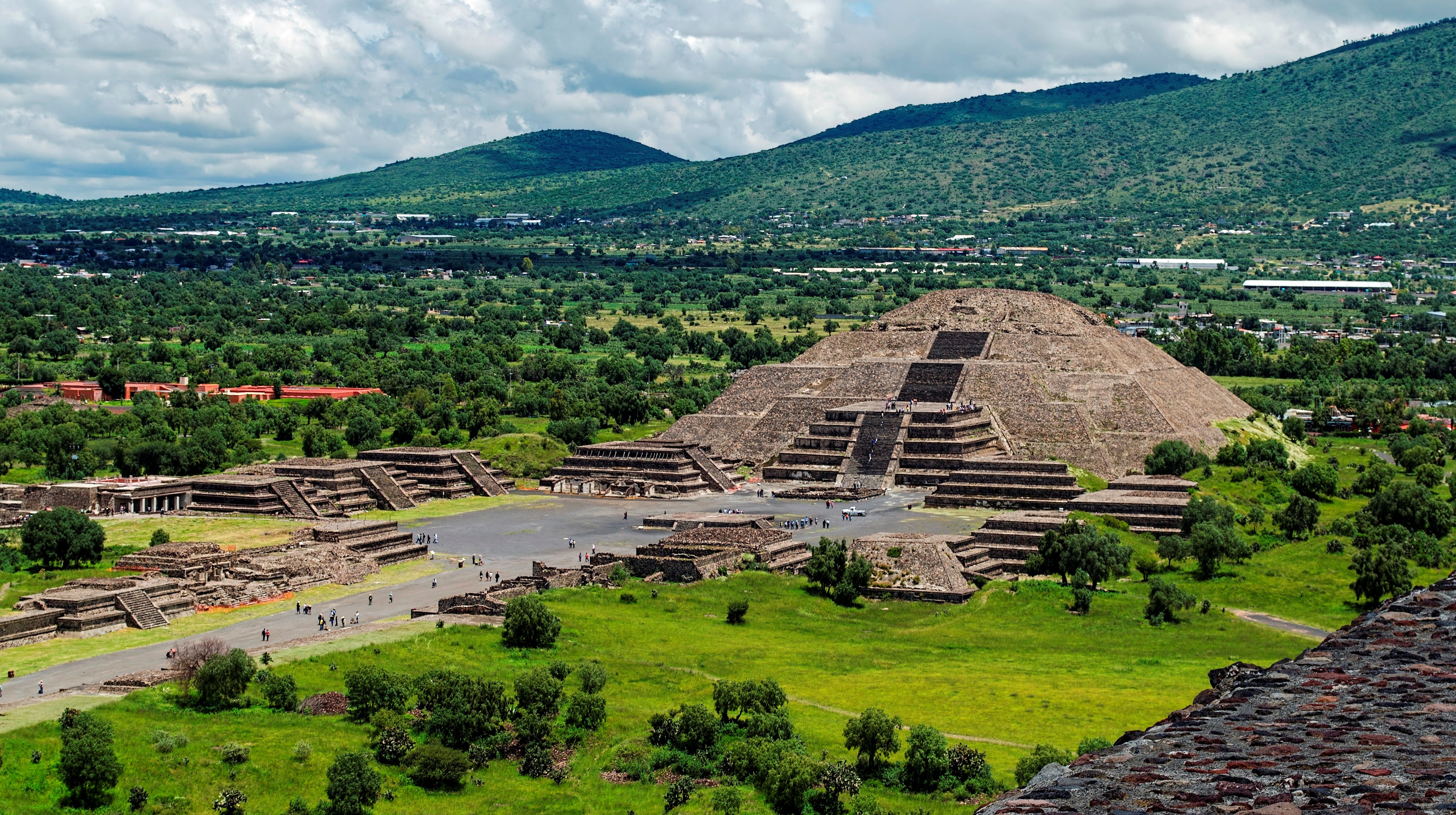
In addition to the emblematic Pyramid of the Moon, the plaza is integrated by 14 pyramidal bases with the typical Teotihuacan talud-tablero; in its center is located a rectangular altar.
Plaza de la Luna
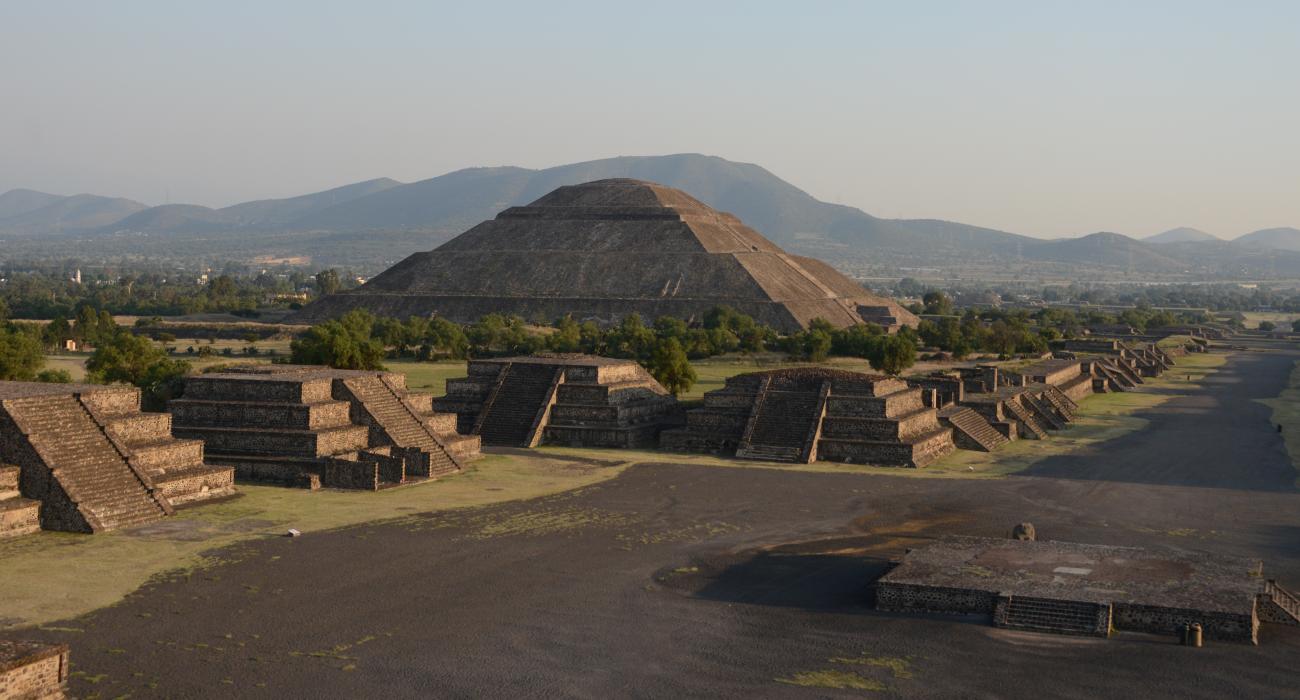
In addition to the emblematic Pyramid of the Moon, the plaza is integrated by 14 pyramidal bases with the typical Teotihuacan talud-tablero; in its center is located a rectangular altar. Almost at the foot of the pyramid stands a building containing ten small altars, nine on the walls and one in the center: a unique arrangement in Mesoamerican architecture. In this plaza were found the two largest sculptures known in Teotihuacan, both representing the female deity of water.
Atetelco
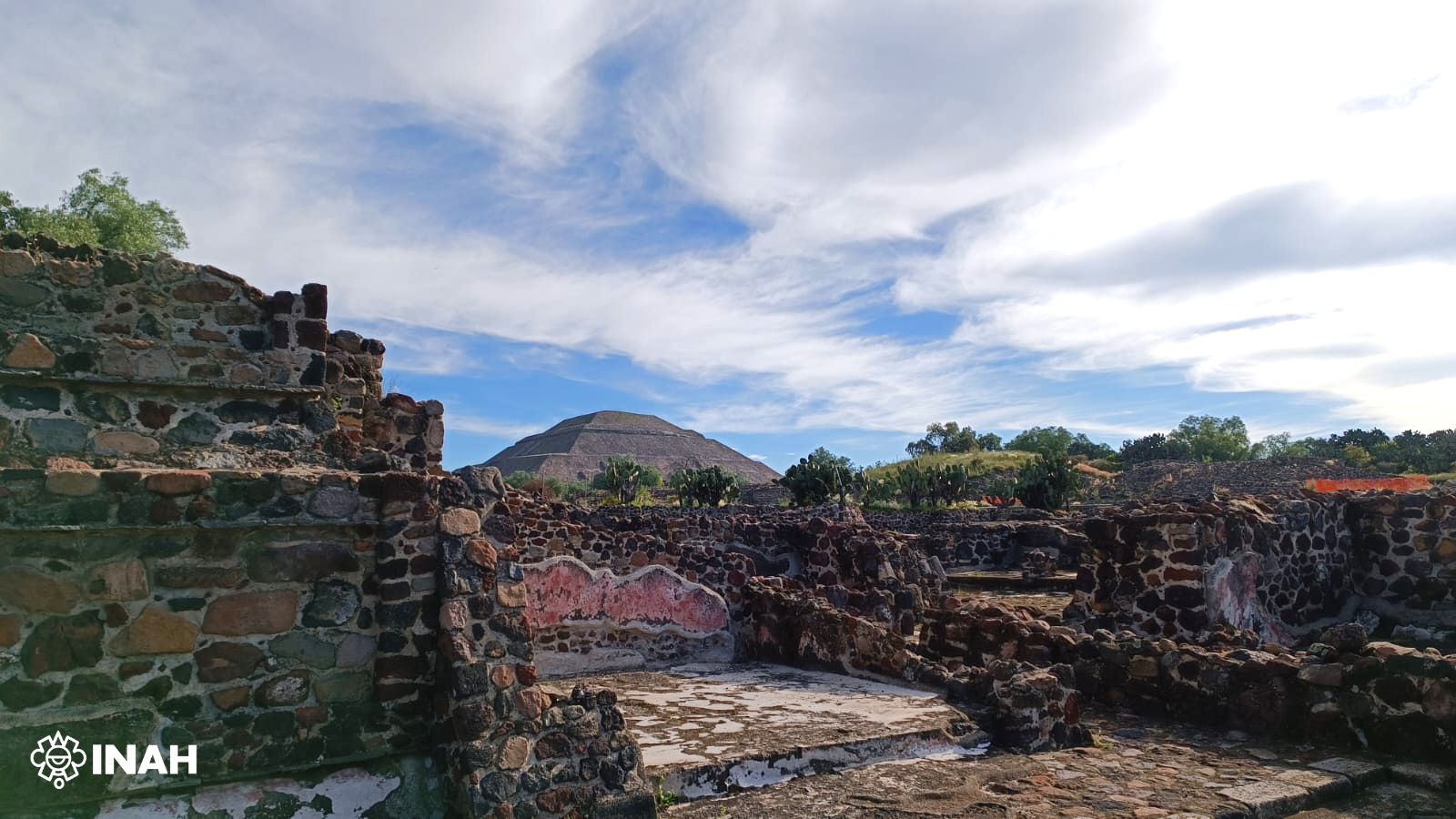
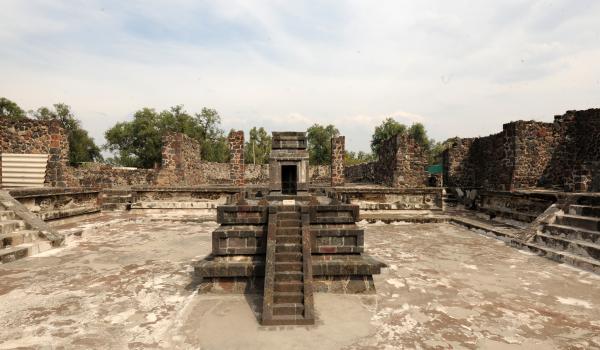
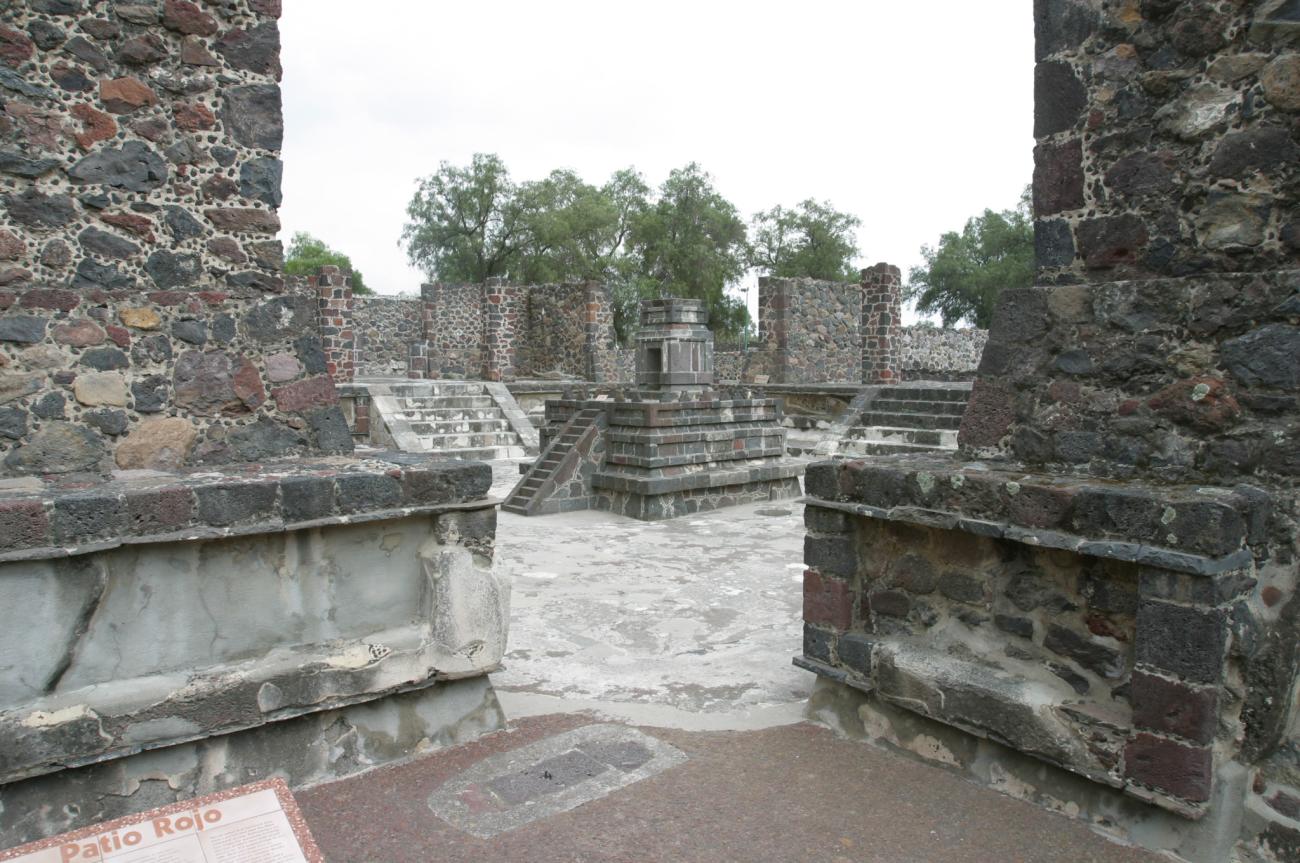
It is located northeast of Tetitla and its name means “in the stone wall by the water”. The explored part is made up of several levels: in one of them is the White Patio, formed by three temples dating from the early stages of the city, between 300 and 400 AD.
Atetelco
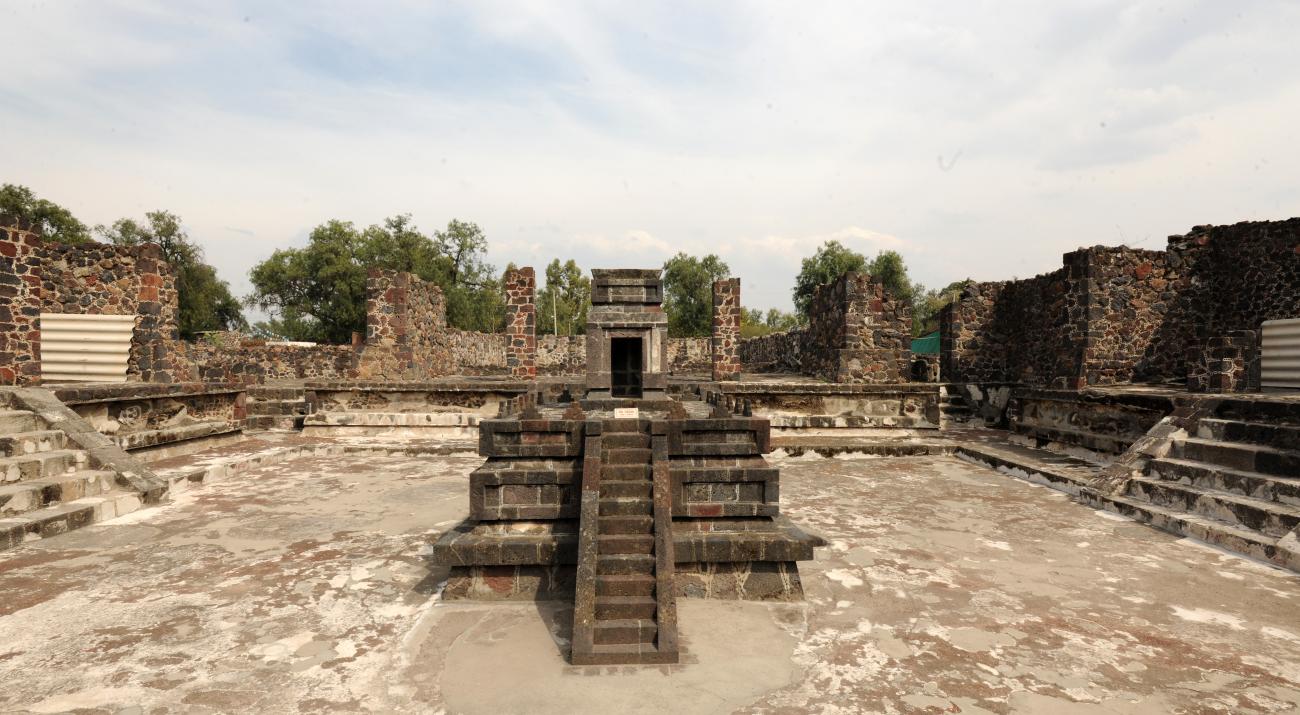
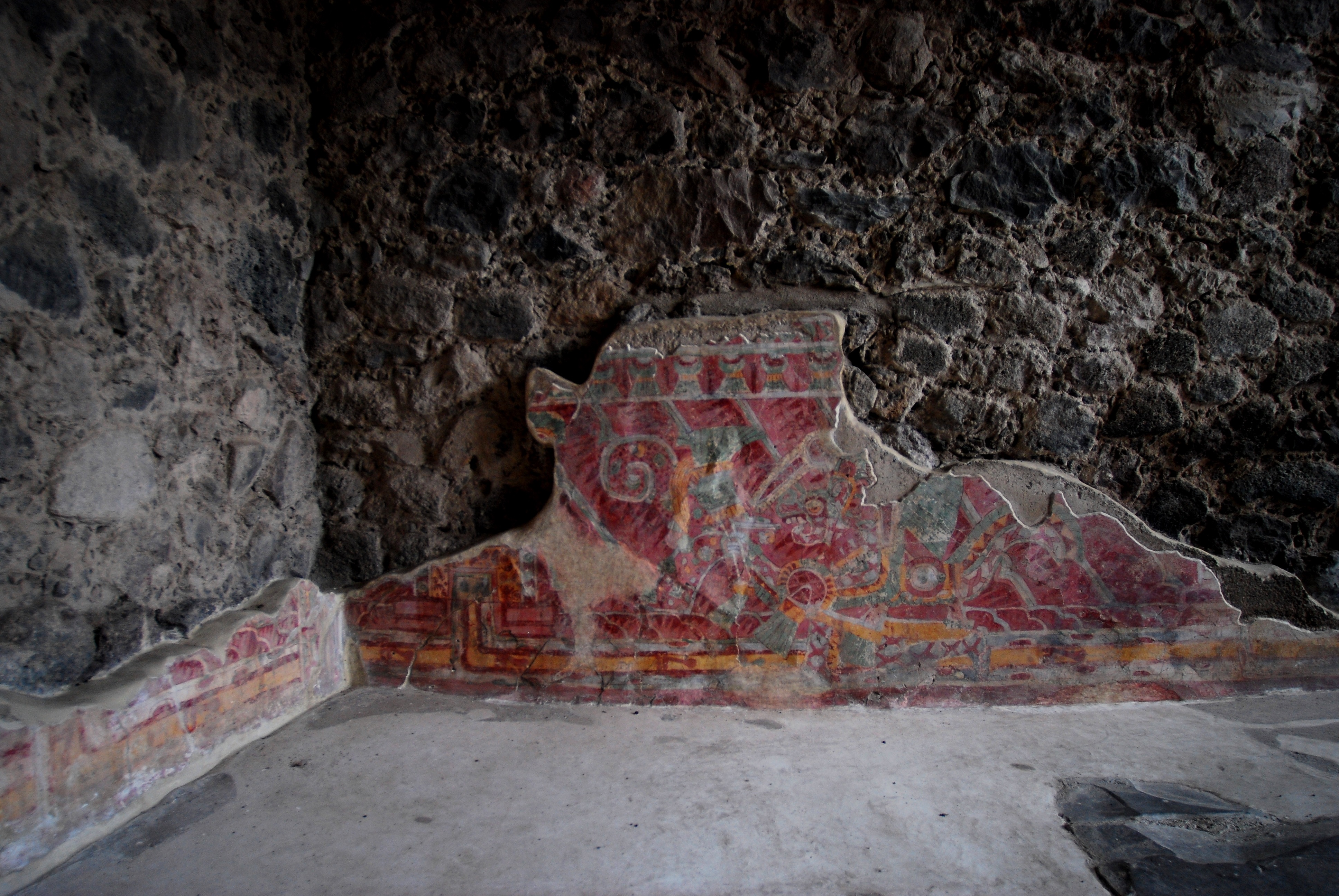
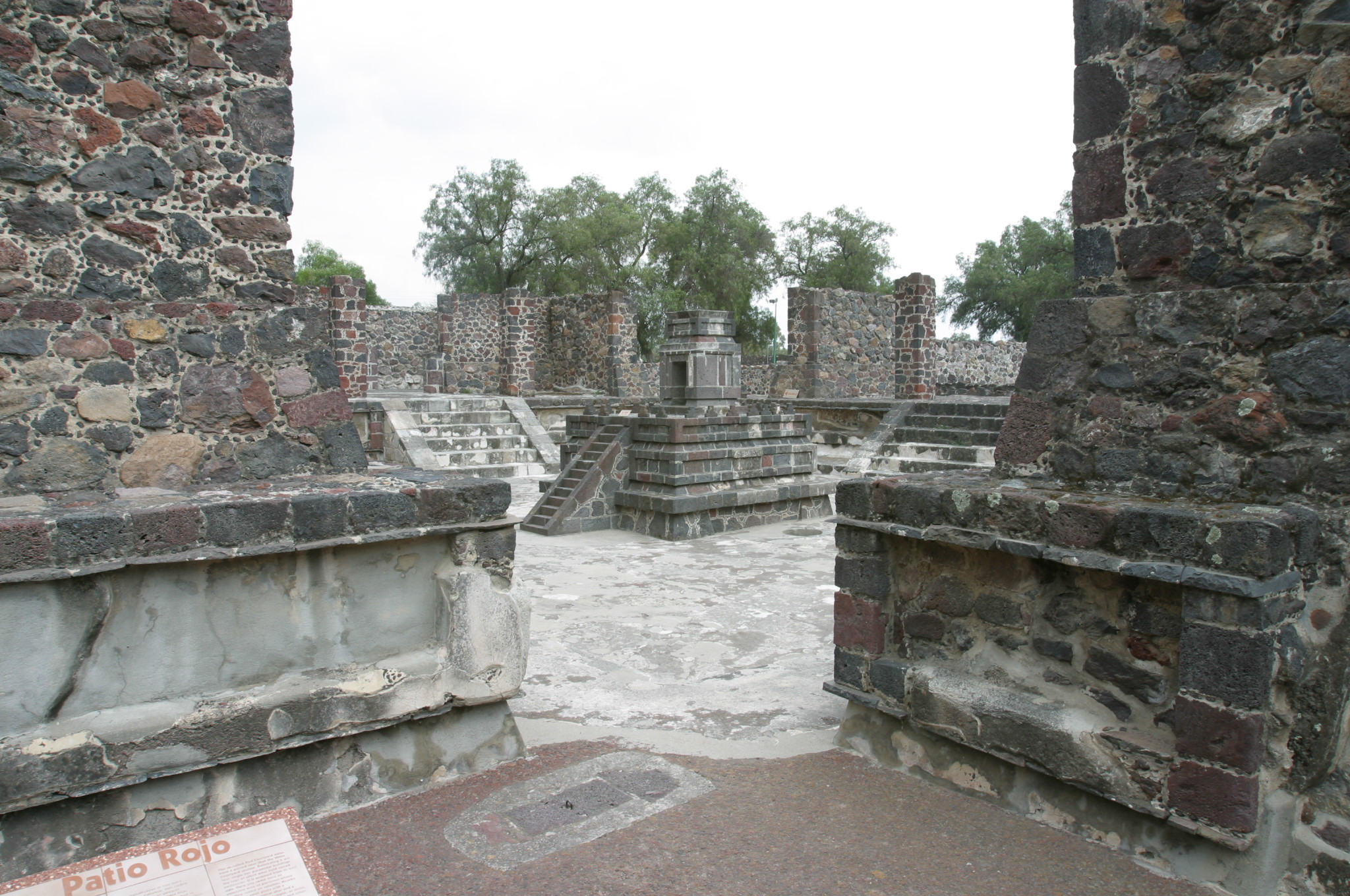
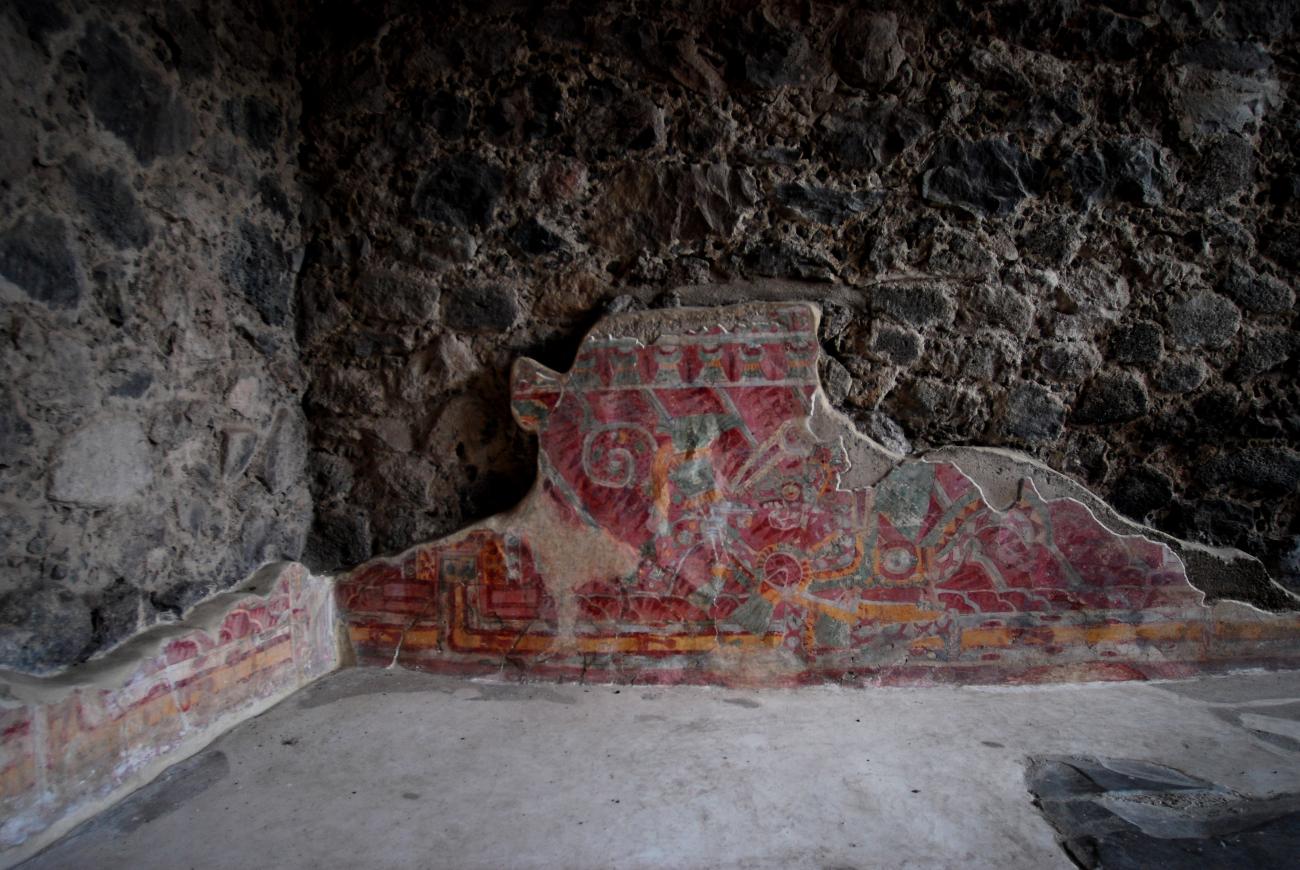
It is located northeast of Tetitla and its name means “in the stone wall by the water”. The explored part is made up of several levels: in one of them is the White Patio, formed by three temples dating from the early stages of the city, between 300 and 400 AD. In a superior constructive level is the Red Patio, integrated by rooms built on pyramidal bases and a colorful altar. The decoration of the bases and lateral walls of the patio is related to the military activity.
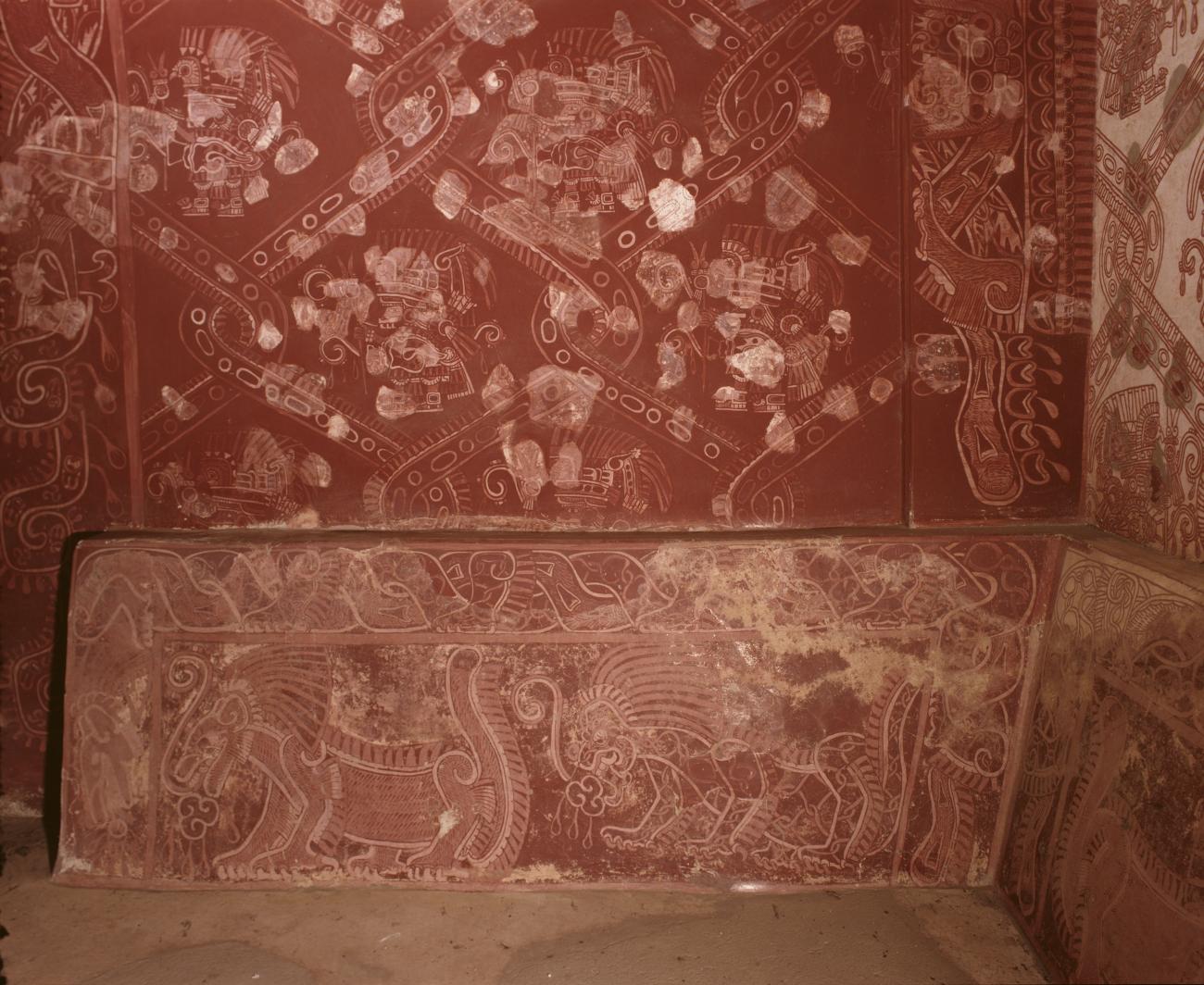
Procession of jaguars and coyotes: It was found in the walls of the Portico 2 of the East Temple, in the White Patio; the scene refers to a procession of coyotes and jaguars that walk one behind the other; in murals 1 and 4 a reticulated jaguar goes in front of a coyote, oriented outwards; in murals 2 and 3 the coyote is followed by the jaguar and they go towards the central door.
The coyotes are delineated by thin intense and clear red lines, on their body there are continuous short lines that simulate the animal's skin; on their elbows there are tufts of long hair and on the back, legs and tail there is a band of small triangular feathers; the headdress consists of a diadem with long and small feathers in the shape of a fan. The jaguars have a reticulated body including the legs and tail; the upper part of the tail, its back and the back profile of its legs have similar ornaments to those of the coyotes; the difference between both is the shape of its snout, nose and eyes: the coyote's snouts are elongated, these animals show a bulging nose and its teeth are small, while the jaguar's snout is shorter, its fangs are more curved and it has a forked tongue. Each mural is framed with a border delimited by thin parallel lines.
Fuente, Beatriz de la (coord.), 1995, La pintura mural prehispánica en México Teotihuacán, volume I, Mexico, UNAM/IIE.
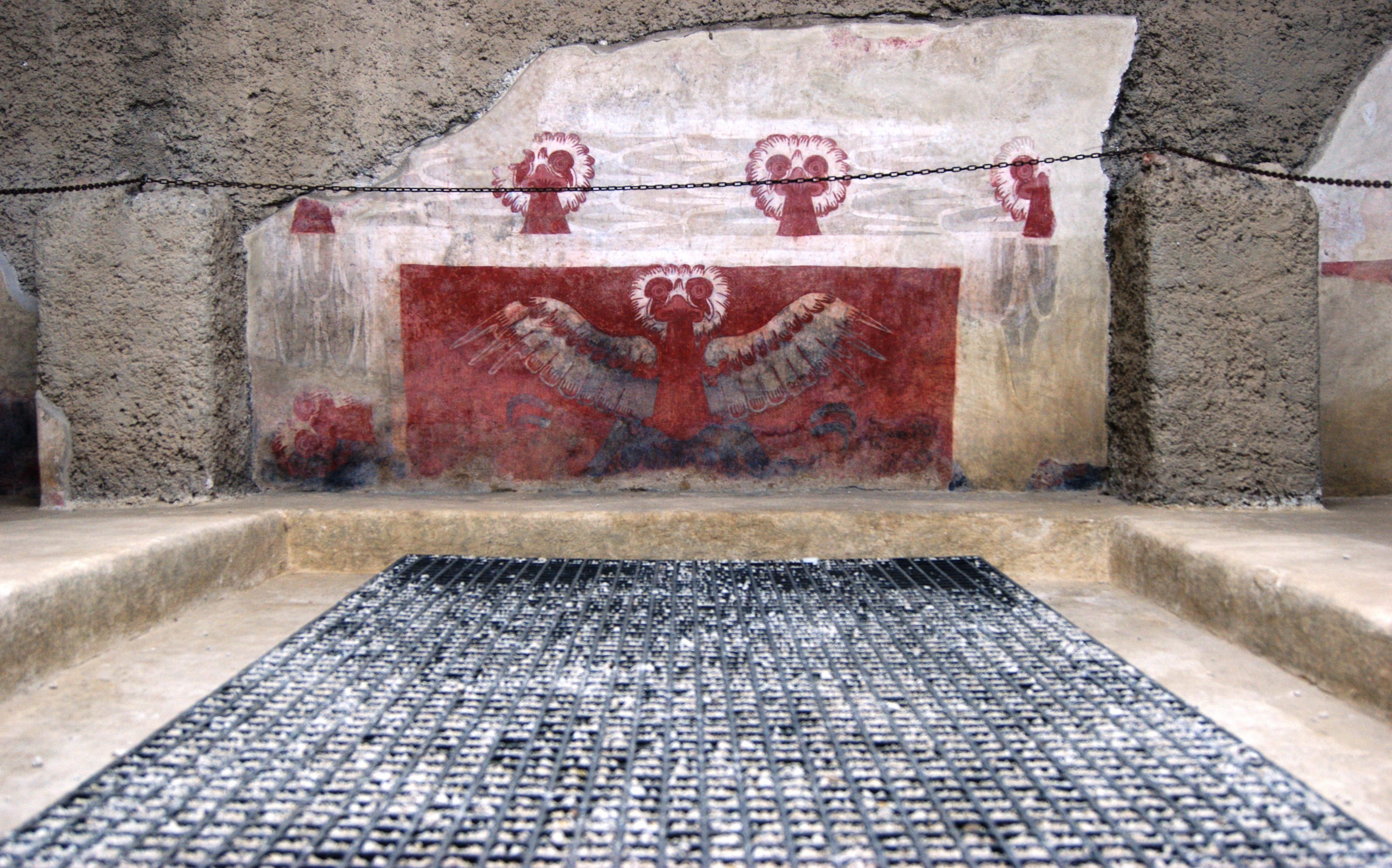
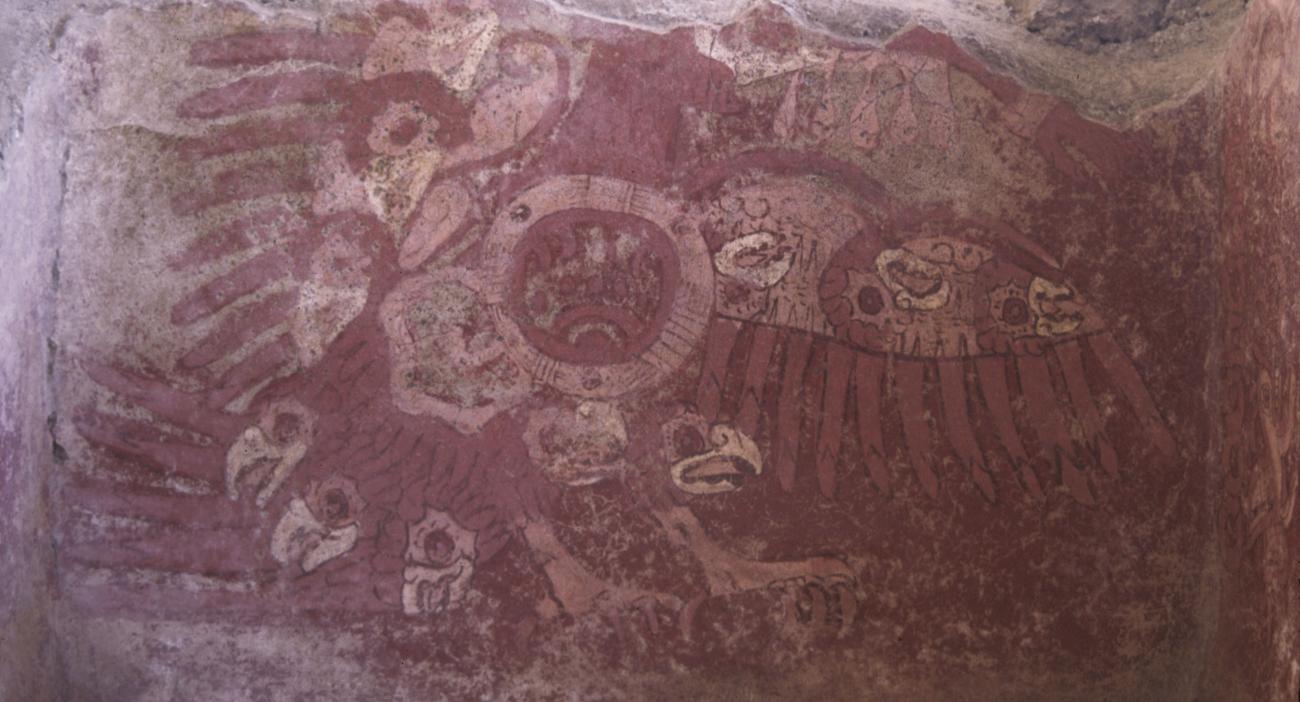
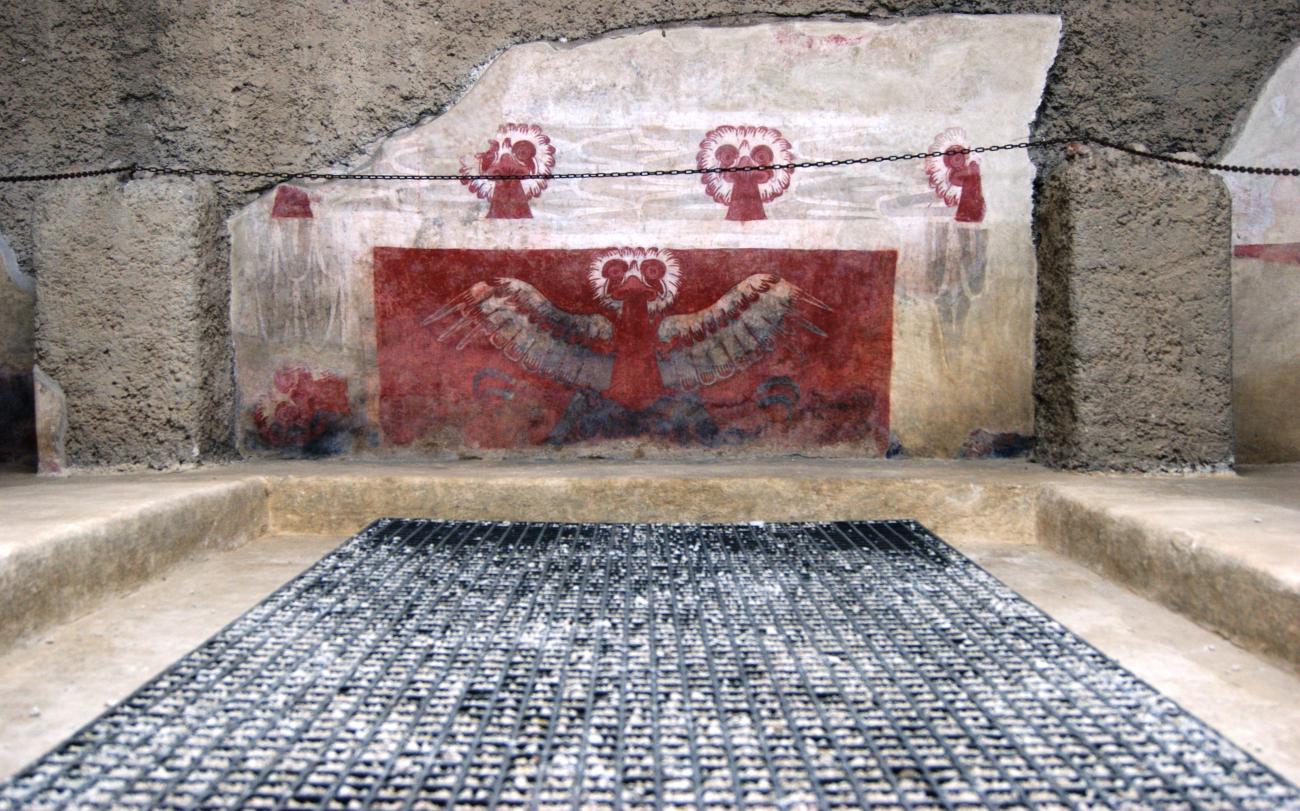
Bird with chicks: This mural was found on the southeast side of the complex during excavations in 1994. It consists of two red fragments representing birds with outstretched wings and chicks' heads around their bodies. It has been covered for future research.
Fuente, Beatriz de la (coord.), 1995, La pintura mural prehispánica en México Teotihuacán, volume I, Mexico, UNAM/IIE.
Tetitla
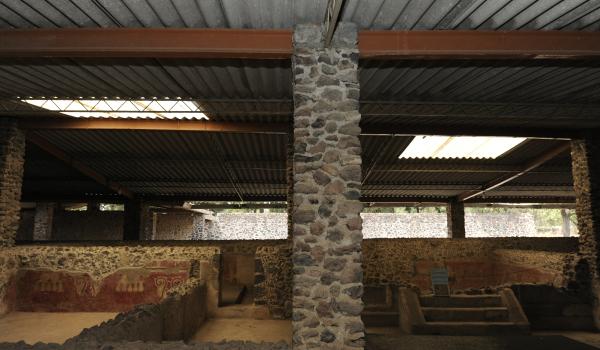
This complex is located in the western sector of the city, where you can observe a complex housing system and part of its development shown through several construction levels.
Tetitla
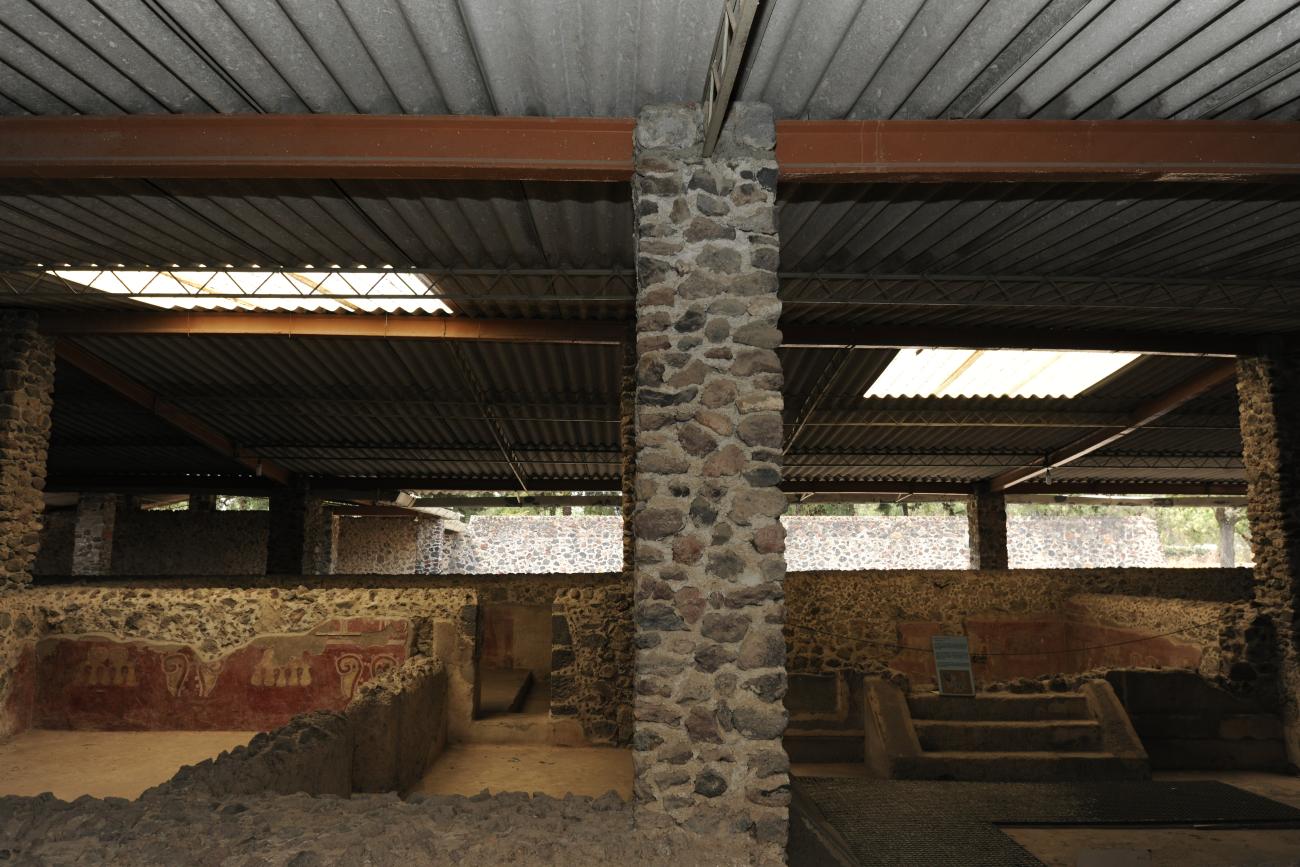
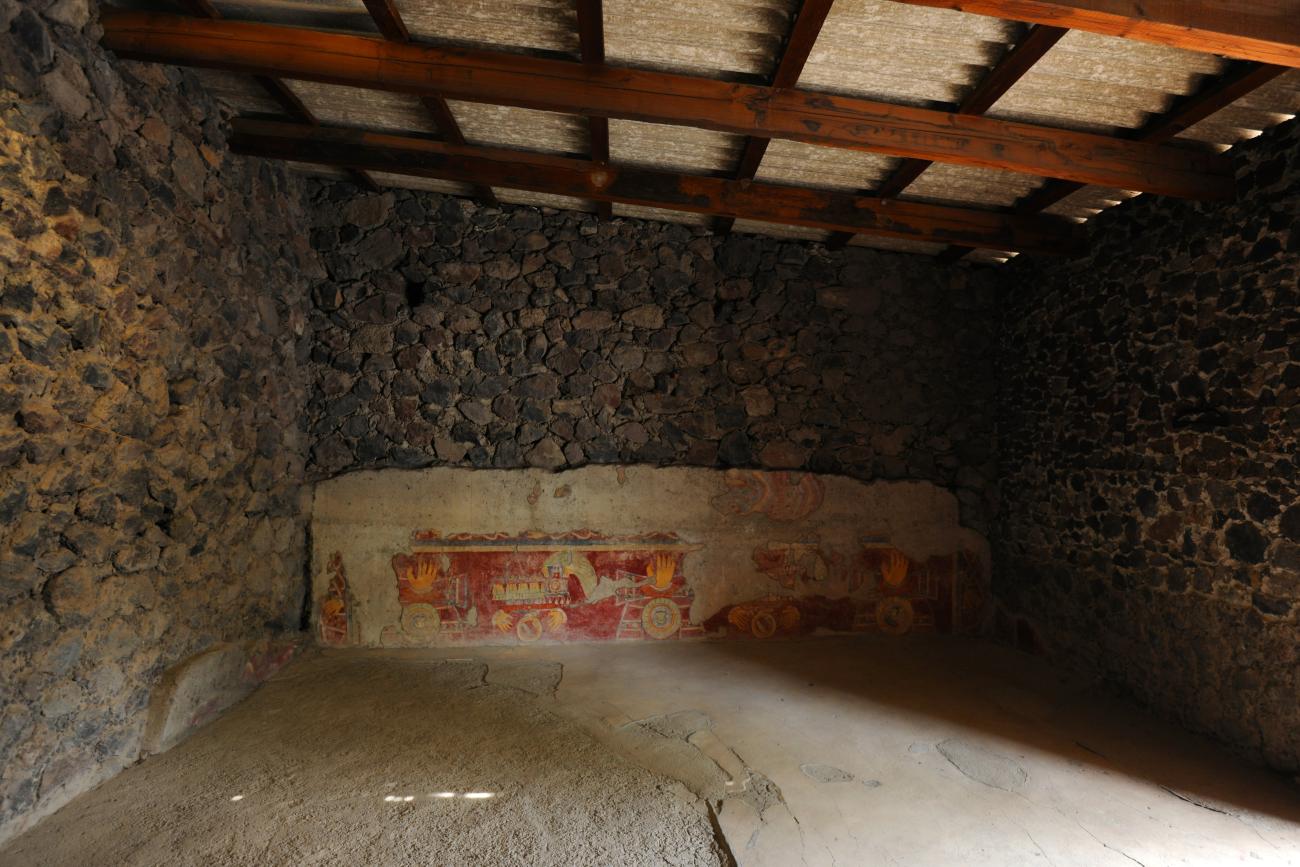
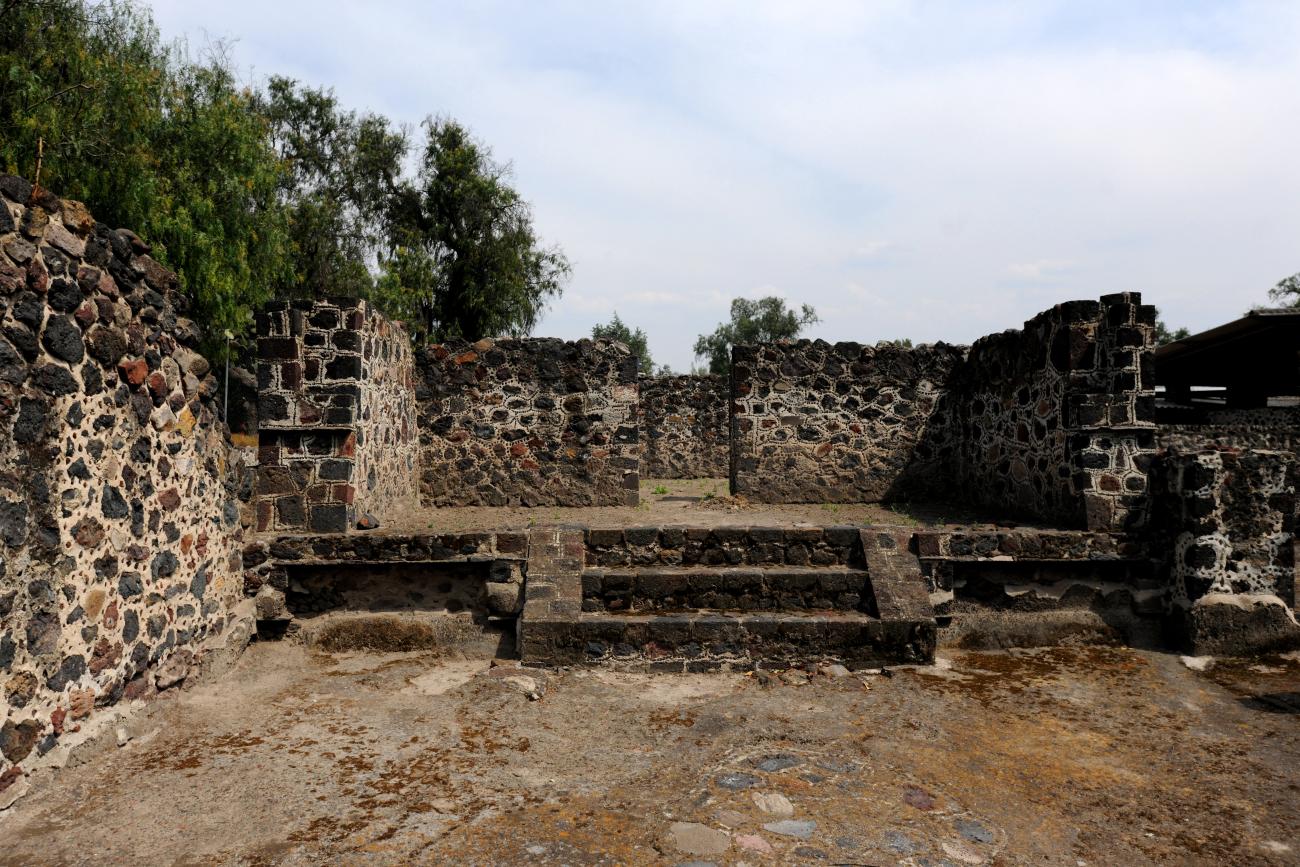


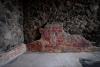
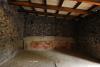
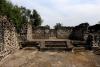
This complex is located in the western sector of the city, where you can observe a complex housing system and part of its development shown through several construction levels.
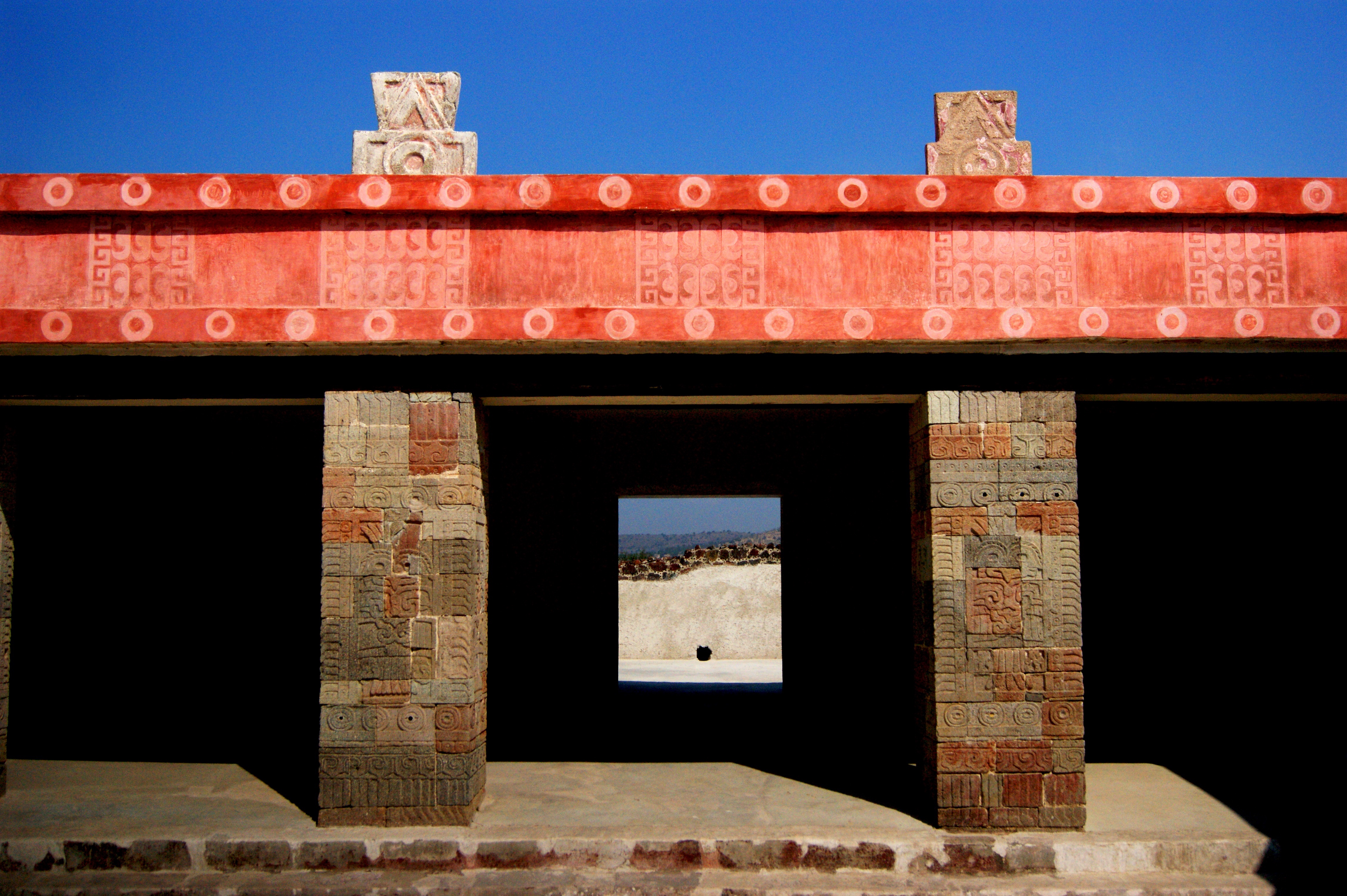
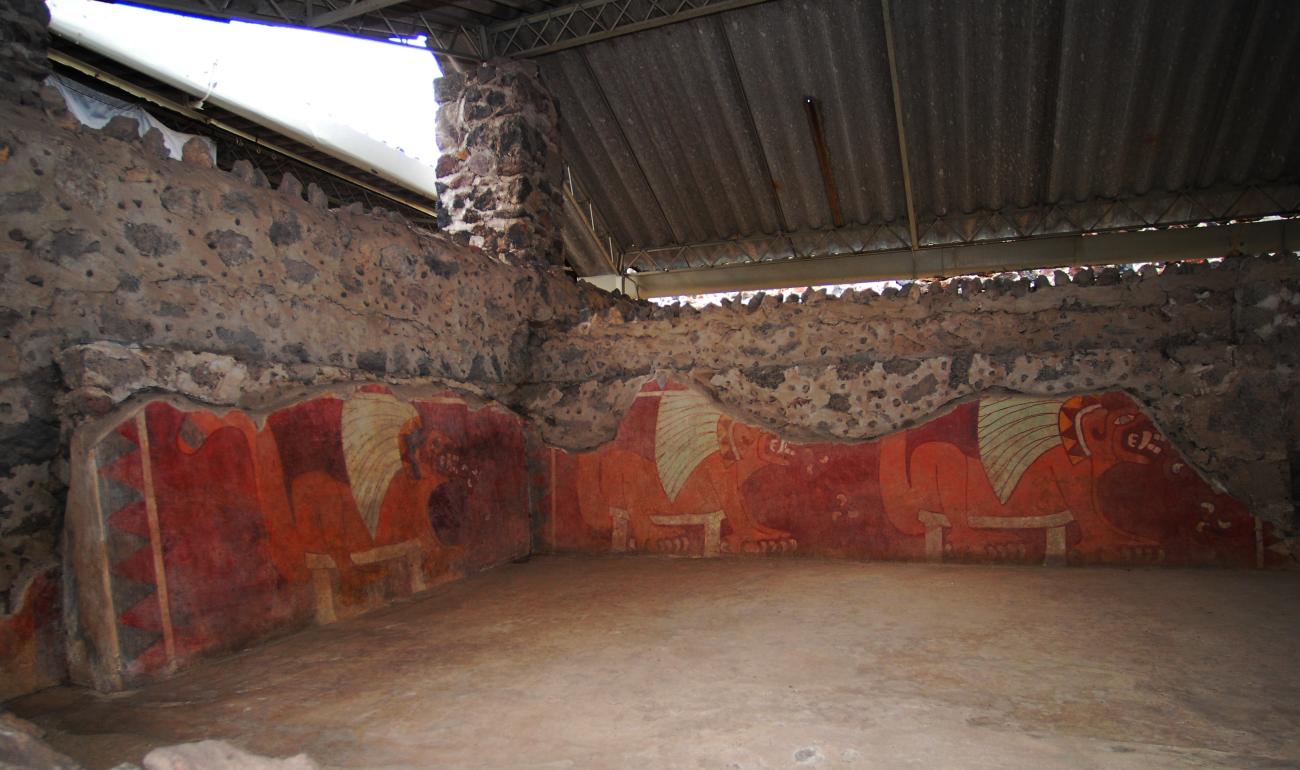
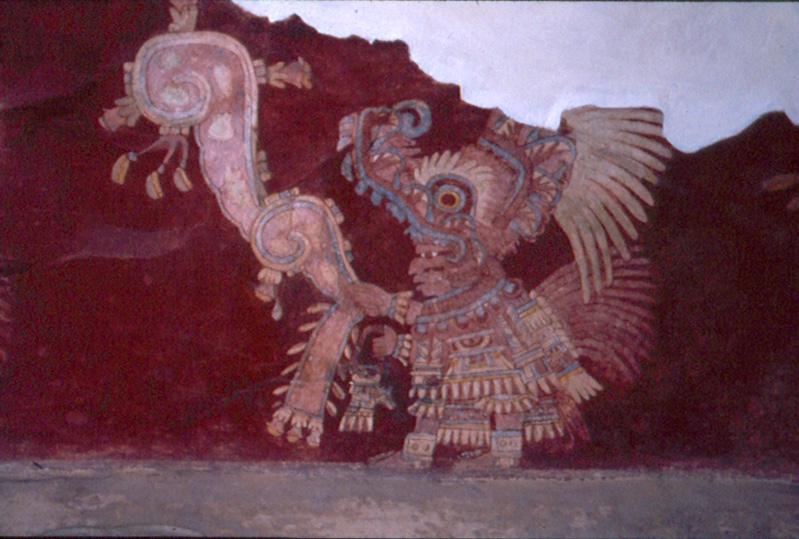
In some of its rooms are exposed extraordinary murals with diverse themes, among which stand out, for their composition, color and symbolism, the murals of Tlaloc, god of lightning, large eagles with wings spread, pumas with large plumes placed in profile in a kind of throne, priests with jaguar costumes associated with temples and streams of water.
In one of the main patios of this complex the stylistic evolution of the mural painting can be observed, since three sets of paintings corresponding to three different constructive levels are exposed.
Orange felines: This is a series of felines seen in profile that rest their belly on a stool, the claws of two of their paws reach the ground, and their tail curves upwards at the tip. The head is large and with vigorous features; the forehead is small, the muzzle very open and with thick lips reveals its teeth and large fangs. Its headdress is composed of a diadem of green and yellow triangles, and an elaborate plume of green feathers; there are two trilobed forms that seem to descend from the snout, one aligned to the teeth and the other in the direction of the legs. The slope is framed by a border, in which red and black triangles alternate above a narrow yellow band, above these triangles there are footprints that give the impression of roads.
Fuente, Beatriz de la (coord.), 1995, La pintura mural prehispánica en México Teotihuacán, volume I, Mexico, UNAM/IIE.
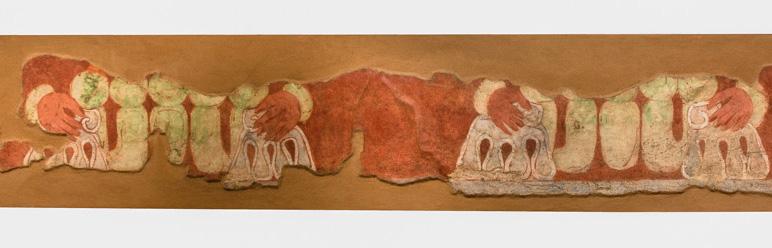
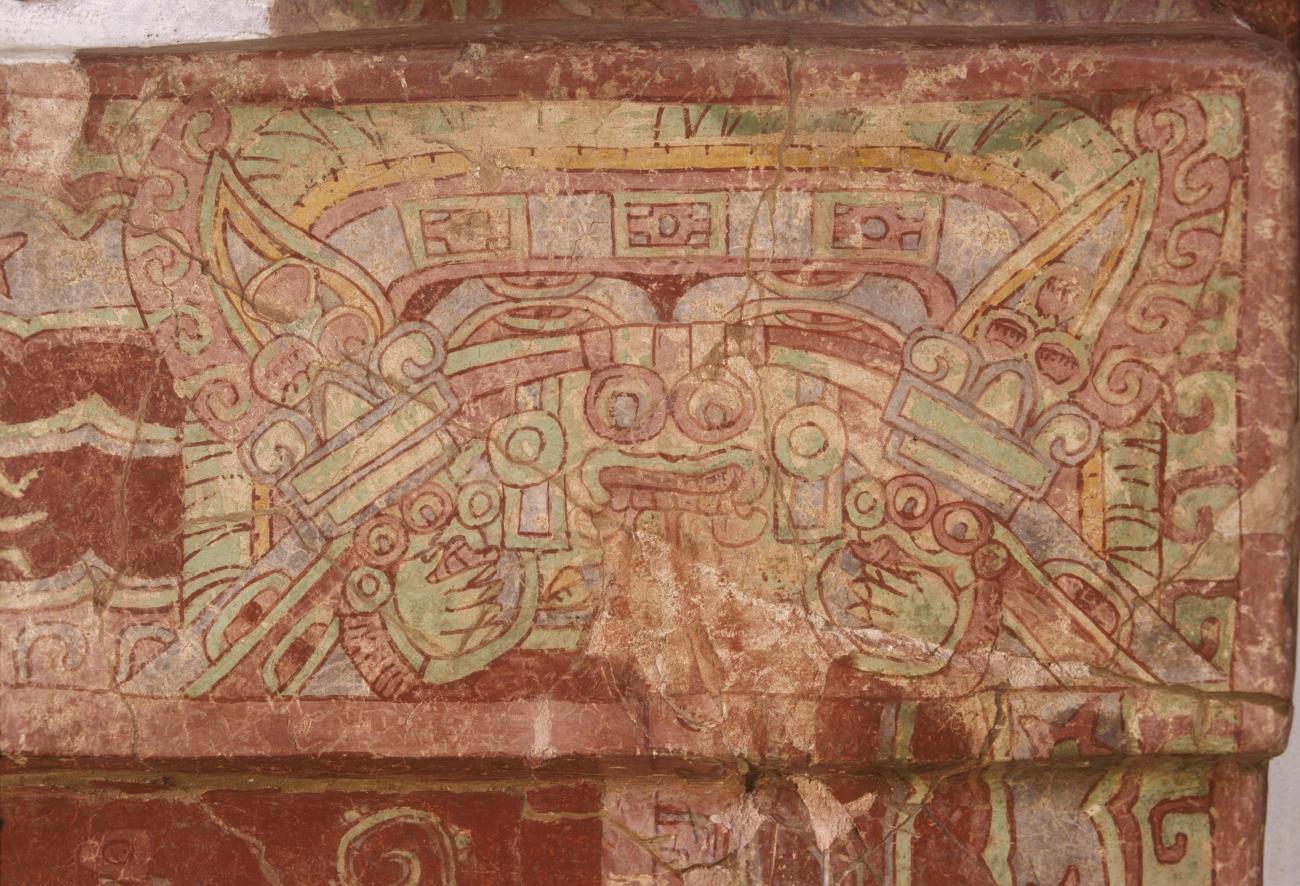
Hands with drops: Two hands are observed flanking huge fangs and taking drops coming down from scrolls.
Fuente, Beatriz de la (coord.), 1995, La pintura mural prehispánica en México Teotihuacán, volume I, Mexico, UNAM/IIE.
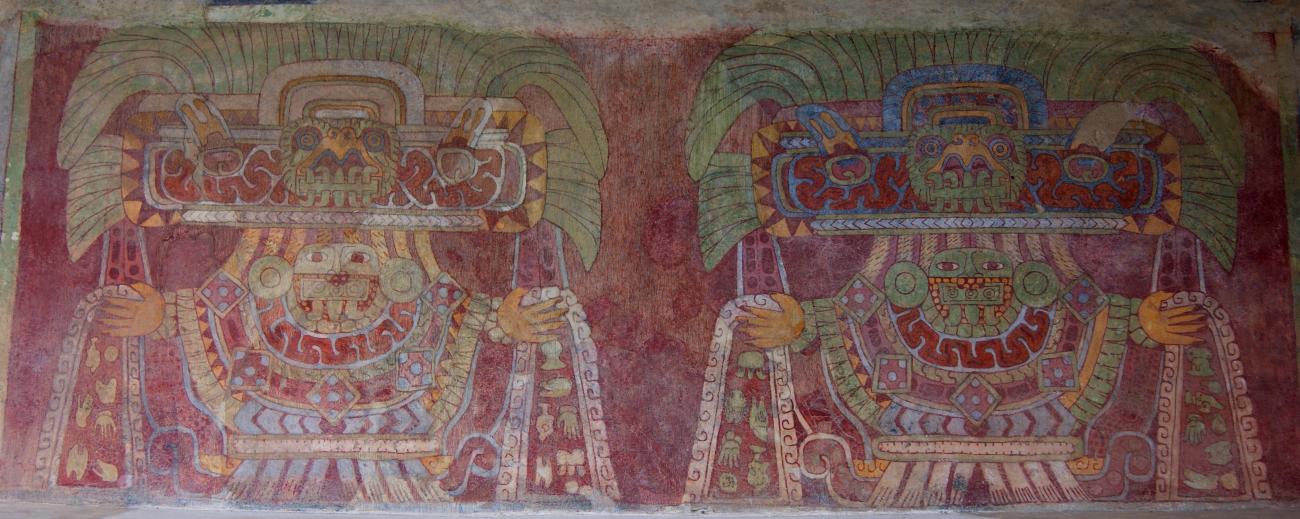
Jade goddess or green Tlaloc: The main image is seen from the front, and although her body or limbs are not visible, she seems to be seated on a stool with her arms crossed; her neck is covered by necklaces and her yellow hands extended, with fingers spread apart and thumbs up indicate that she is a female or bisexual deity of corn, earth and vegetation. The figures wear a green mask that gives them a human appearance, the mouth plate, below the wings of the nose, is a strip with three rings - horizontally arranged - in its center; the teeth are a central piece and two fangs that curve outward. The green earmuffs are formed by a disk and a concentric ring; the collars are six uninterrupted semicircular bands that surround, descend and widen below the mask; below the bands that embrace the quadrets and above the cape, the pectoral is seen in the center of the image with a diamond design that continues through angles, pointing in the opposite direction a horizontal bar with blue elements and, below it, blue and white diagonal bands descend.
The headdress occupies less than the total height and width of the image, the importance given to it in the pictorial space indicates its quality to detonate the identity of the image; it is made up of two sections: the lower one, composed of overlapping horizontal bands, which together give the appearance of a rectangle with rounded corners, and the upper one, tucked in on the sides, which is composed of other bands and feathers. In the center is placed an eagle's face, seen from the front, with round eyes bordered by a semicircular band, the flat nose shows the nostrils and the beak points towards the center; below it there is a transversal bar with appendages -similar to teeth and/or fangs- that are directed symmetrically up and down; on each side of the bird's face there are two spiral designs, from which a yellow and curved shape spirals upwards, ending in three blue drops.
The border is made up of two intertwined bands, like snake bodies, which are suspended at the corners with tied designs; one of the bands is dark red and has geometric designs of rectangles and quads inside; the other has a blue background with a design of feathered bivalve shells; the shells are red and the feathers are green.
Fuente, Beatriz de la (coord.), 1995, La pintura mural prehispánica en México Teotihuacán, volume I, Mexico, UNAM/IIE.
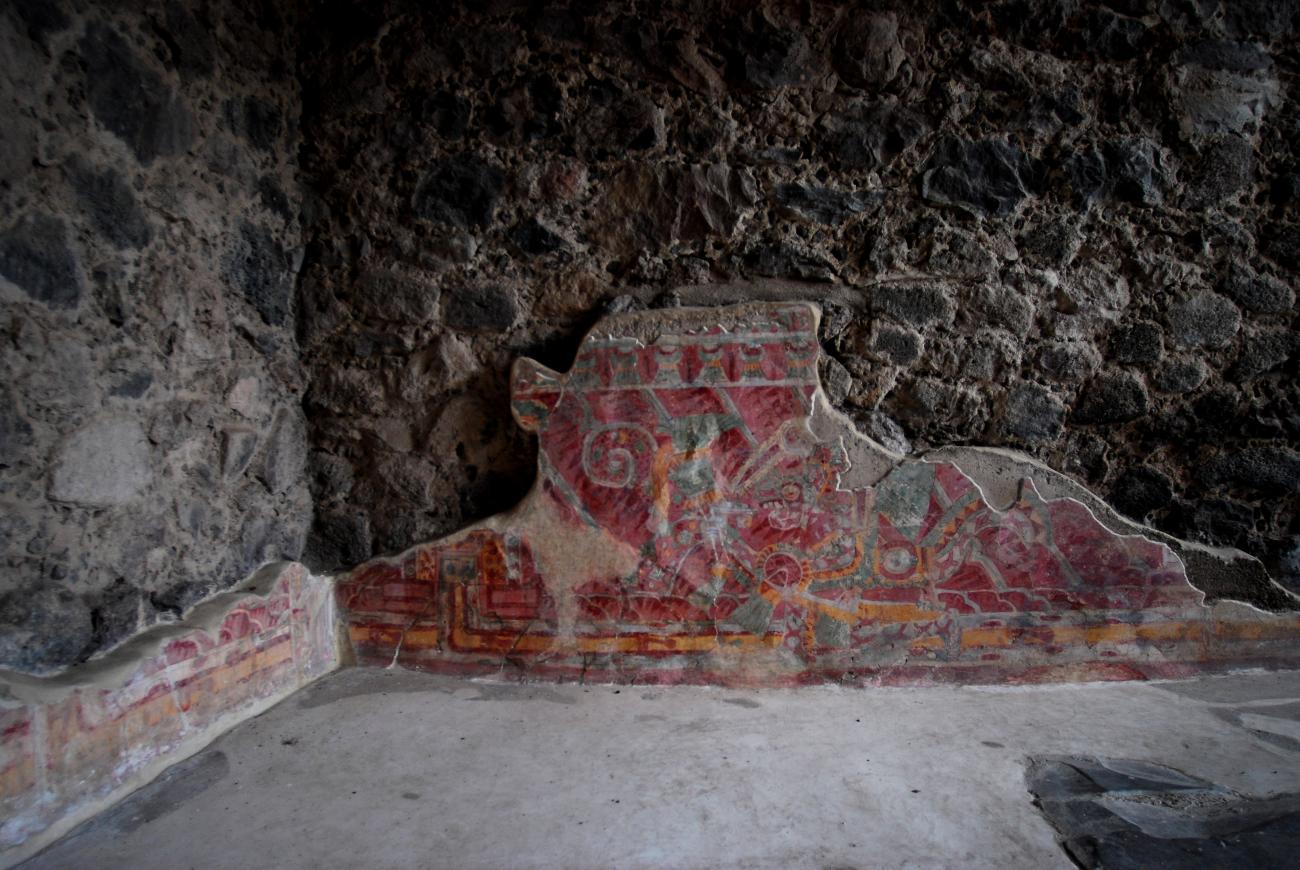
Jaguar man kneeling in front of temple: Two main images constitute the scene: a human figure disguised as a jaguar and a temple towards which he is heading; the latter is richly decorated with jaguar skin, tassels and chalchihuites; both form a symbolic scenic unit; other images -objects, ornaments, designs, border- reinforce the meaning of the primordials. The man disguised as a jaguar, with the body, face, ears and extremities of blue color, covered with designs of red interlaces that simulate a net, sinks the left knee on the water way that arrives to the temple; he raises the arm of the same side to hold a staff, and bends the right one to take a shield; the posture identifies him as human. On a platform of slope and board the temple rises whose walls are decorated with designs of flowers -yellow and red- of the skin of the feline; in the ends, which two pilasters, designs of concentric disks of green color are noticed. The temple is accessed through a blue square that produces a mirror of water to which three paths lead: two with “water eyes” and the one in the middle with footprints; the ceiling is formed from bottom to top, by double bands -red and blue-, above, is repeated seven times in horizontal row the element “tassel with feathers”, composed of circles and bundles of feathers downwards; above a board whose frame is constituted by concentric discs of green color, the lower and upper moldings, and by petalillo design -red and green- on the sides.
The two images man-jaguar and temple stand out, like cut paper figures, on the background composed of inclined bands: some are thin -blue green and white- and the others are wide segments with peaks in two shades of red; the design of diagonal bands is interrupted in the lower part by three extensive horizontal strips superimposed: they are the water and dirt roads that lead to the temple. The bottom one and the third one upwards are similar: on a blue background they carry alternating, and in opposite directions, “water eyes”; the second one shows alternating red and green human footprints; these three bands bend and end at the water mirror below the temple.
Fuente, Beatriz de la (coord.), 1995, La pintura mural prehispánica en México Teotihuacán, volume I, Mexico, UNAM/IIE.
Tepantitla
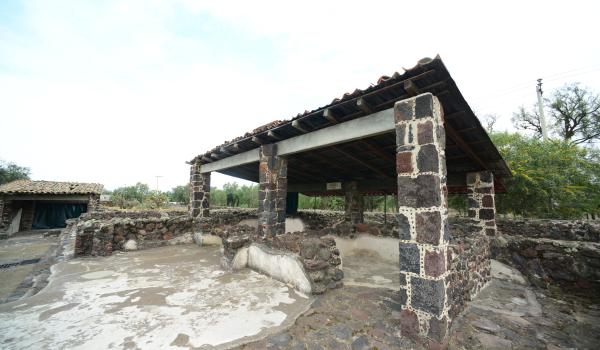
This complex, located on the east side of the Teotihuacan ceremonial center, was inhabited by a priestly house or by a family of high social hierarchy. Although it is not fully explored, it has a mural alluding to the cosmovision of the Teotihuacan society.
Tepantitla
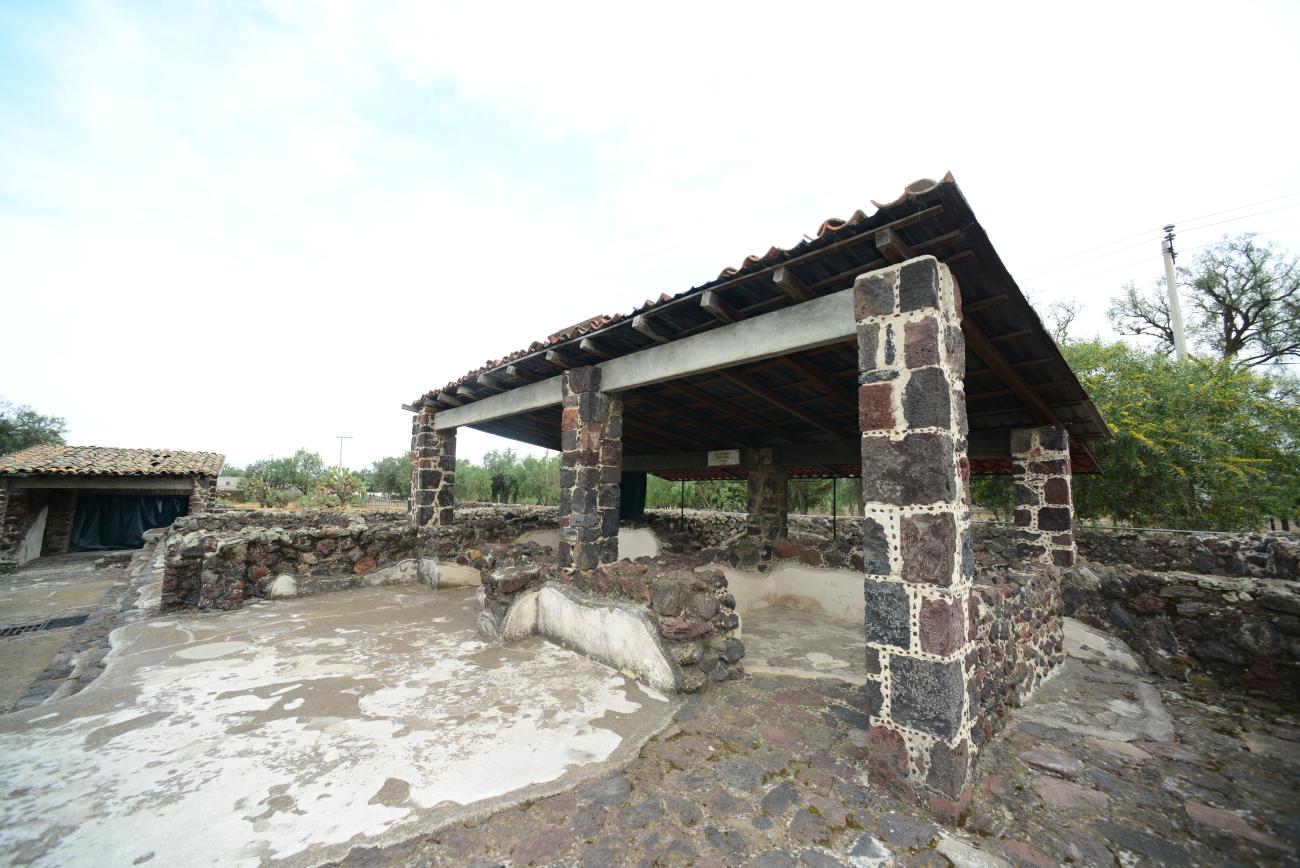
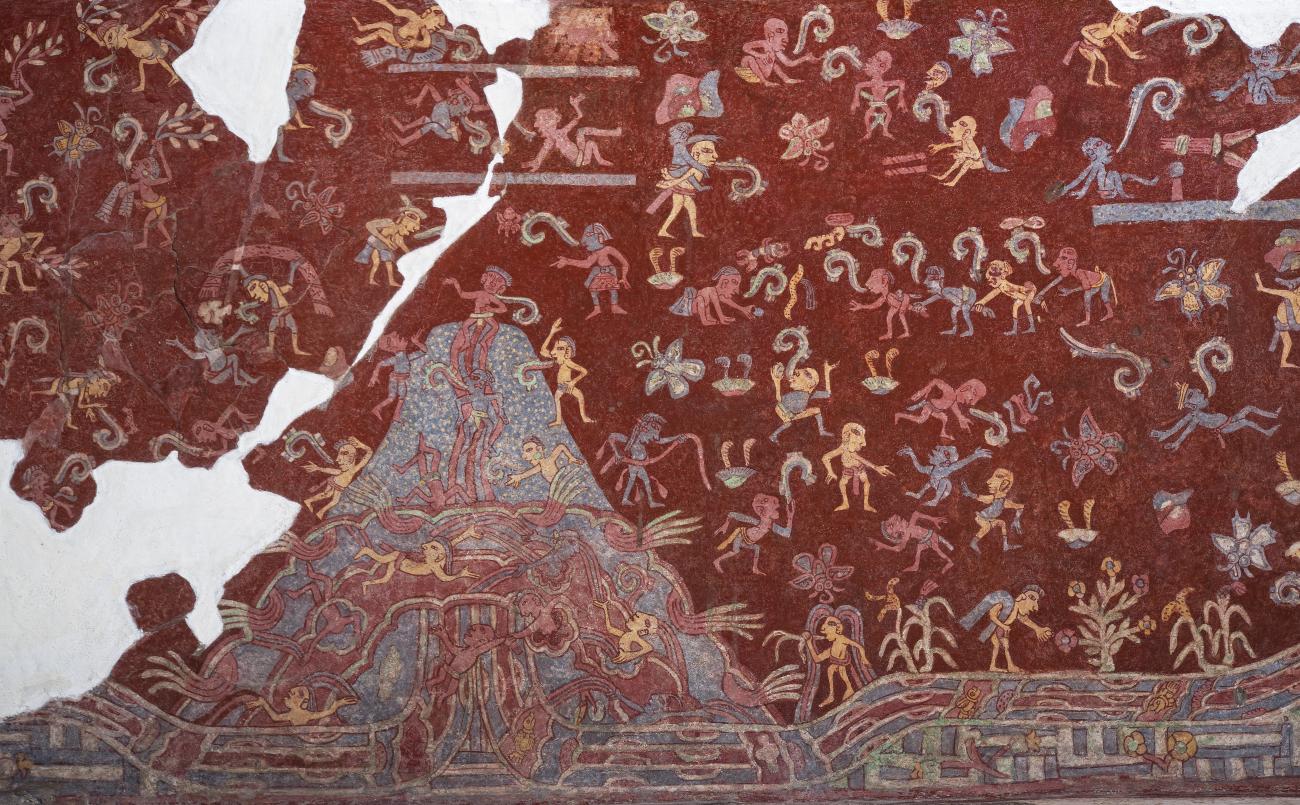
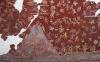
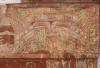
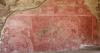
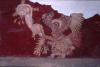
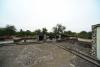
This complex, located on the east side of the Teotihuacan ceremonial center, was inhabited by a priestly house or by a family of high social hierarchy. Although it is not fully explored, it has a mural alluding to the cosmovision of the Teotihuacan society. The murals of the Red Tlalocan, the Tlalocan or paradise of Tlalocan and a procession of warrior-priests stand out.
Tlalocan: This slope is the one that has given its explanation to the whole chamber, called Tlalocan by Alfonso Caso; symbols associated to the ball game and sacrifice proliferate, it is the only one where butterflies appear. It is the visual axis of the composition, the mountain from which water descends and is located exactly below the ball game; from its sides and upwards, it can be seen that all the human figures are paired. The importance of the finding of this wall lies in the confirmation of the practice of the ball game in Teotihuacan, in spite of not having found any court.
In the painting it is very clear the delimitation of the space for the celebration of the encounter, the markers are placed facing each other and with their bases towards the center; the event takes place in what could be two different teams that are identified because they wear different headdresses and clothing. The headdress of one looks like a thick band across the forehead with a projection projecting upward at the back; the other is a thinner band that is knotted at the forehead. Those who wear the thick band wear a kind of skirt with geometric designs and fringe; those with the thinner band wear only a maxtlatl.
Fuente, Beatriz de la (coord.), 1995, La pintura mural prehispánica en México Teotihuacán, volume I, Mexico, UNAM/IIE.
Mask of Tlaloc: The headdress is formed by three overlapping parallel stripes, from bottom to top; in the foreground is the widest and is decorated with three rectangular medallions that have a red inscribed cross, surrounded by green, with a blue center. Towards the top, the headdress is bordered by a border formed by yellow feathers and, surrounding it, another border of feathers, now green.
Between the base of the headdress and the head, as if it were his hair, sprout some jets of liquid, one red and one blue, separated by a thin white stripe, and they have eyes; his earflaps are formed by a circle and a trapezoid, the nose is delineated with red; in the mouth he carries a water lily of red stem; the green leaf, a yellow button and some like feathers in blue, red, green and yellow; the teeth and fangs are red. The masks lack body, only the hands are seen that are embracing what could be two vessels that duplicate the image, but with a different headdress, formed by a kind of conical cap bordered by a green list, a yellow one and the blue center, outlined all with red.
The center of the cone is decorated with three circles, perhaps shells, red, bordered in green, that are arranged like a pyramid, two below and one above; downwards another central element in form of cone is seen, and they finish it to the sides two volutes, that rest on a green rectangle delineated in blue; the hands are green, the red nails, and they have a fist of feathers that leave a green edge; later what could be their arm is in blue. The masks in profile have a headdress of green feathers that come out of a runner formed with concentric circles: the first one resembles green feathers, then a red one, a yellow one and the green center.
Fuente, Beatriz de la (coord.), 1995, La pintura mural prehispánica en México Teotihuacán, volume I, Mexico, UNAM/IIE.
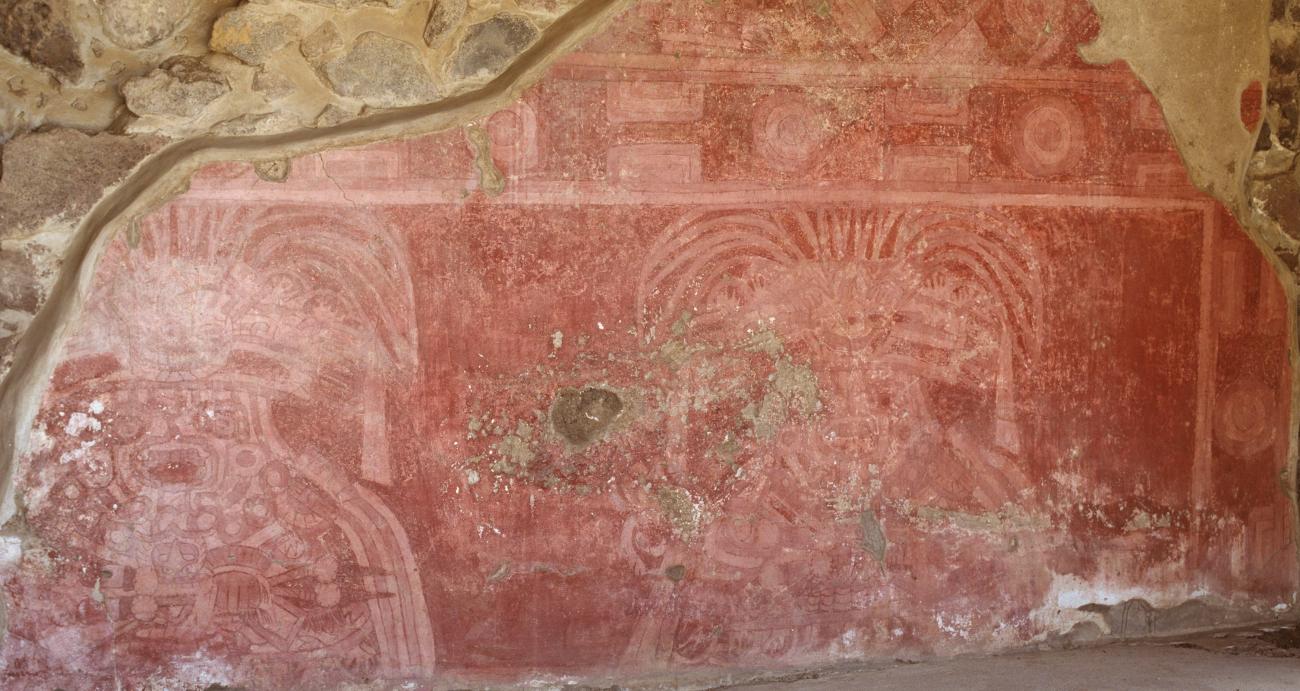
Red Tlalocs: The red Tlaloc is a deity associated with war, which like many Teotihuacan figures is composed of various elements: some parts of the human body, others of animals and some more symbolic elements that make up an icon of difficult reading and interpretation.
Fuente, Beatriz de la (coord.), 1995, La pintura mural prehispánica en México Teotihuacán, volume I, Mexico, UNAM/IIE.
Sower priests: These are priests who form a procession that leaves from the southeast side, and continues on the south wall towards the east. They wear a helmet with the figure of a saurian, possibly a lizard or alligator; the headdress is topped with long feathers that fall toward the back of the individual; the feathers are held by a series of hooks from which a drop falls; they emerge from a strip that is yellow in the first one and blue in the others; this fringe frames another wider, red one, and at the same time these wrap another row of green feathers that surround the eye of the saurian; only the upper jaw of the animal is seen, which has the nose formed by a hook, and what would be its scales are similar to the hooks of the upper part of the headdress; from these also falls a drop; the fangs, teeth and molars are placed under a blue stripe; the last molar is seen on the fringe of the characters, whose eyes are decorated with a very tan red stripe, which is repeated on the cheek; also on the cheek a T-shaped design is observed, of lighter color; they have the mouth half open and part of the neck can be seen; a part of the red earflare with white is distinguished on the edge of the headdress.
The costume is finished off at the neck with a blue ribbon, and squares bordered by another blue stripe that is finished off with blue feathers or shells surrounded by two red inks; it is adorned with a kind of braids that end in a trapeze, as well as a breastplate integrated by a rectangle, in whose interior there is a figure similar to an eye, finished off by white and yellow blue designs; both the braids and the breastplate end with feathers; in the back it has a piece similar to the breastplate, only more elongated and from whose center come out red feathers.
The sandals are conformed with a rectangle with two inscribed circles, blue, a stripe of the same color and another square, also decorated with light blue circles; towards the foot it has some strips of the same color; from the right hand flow two currents: one upward in the form of scrolls, decorated with shells, animal heads, hands and chalchihuites; flowers and the step typical of the virgules alternate; the last scroll ends with a flower from which buds of Nymphaea mex emerge; and another straight stream downward; ovals are observed that have been interpreted as seeds and hence the name of the chamber; the flowers that ornament this stream are the same as those of the upper part. In the left hand he carries the bag decorated with different geometric designs and the animals seem to be felines and canids.
Fuente, Beatriz de la (coord.), 1995, La pintura mural prehispánica en México Teotihuacán, volume I, Mexico, UNAM/IIE.
Totometla
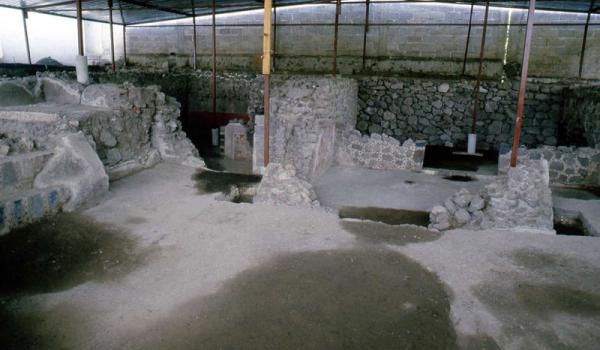
Totometla, whose name means “The magueyera of birds”, was inhabited by an extended family of priestly lineage, so that it constitutes a neighborhood of high hierarchy which was used by the Teotihuacan State as a means of ideological control of the population by them the possessors of specialized
Totometla
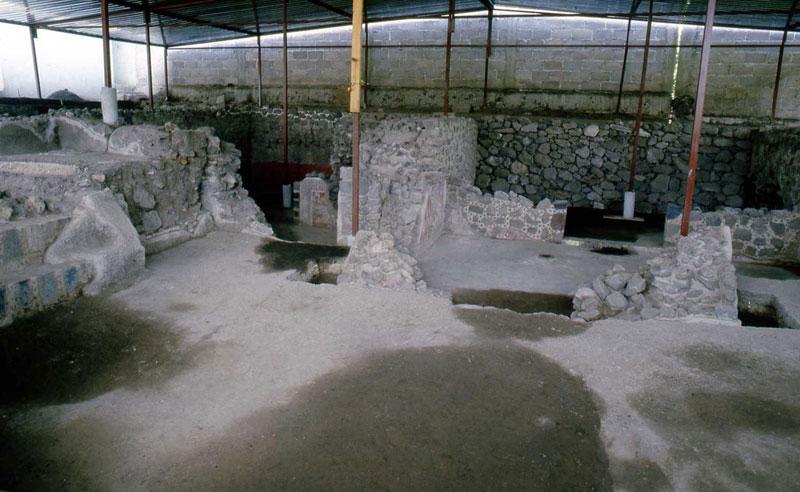
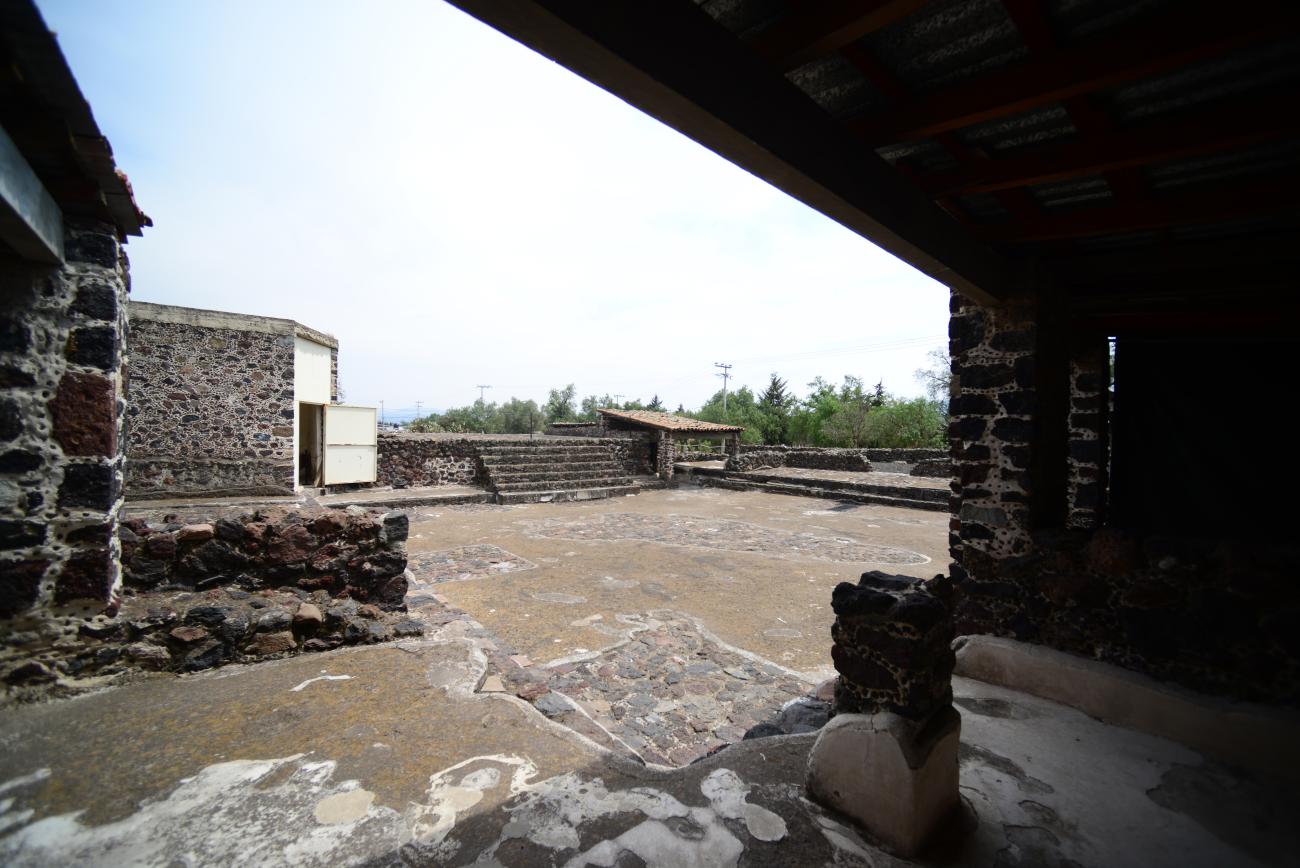
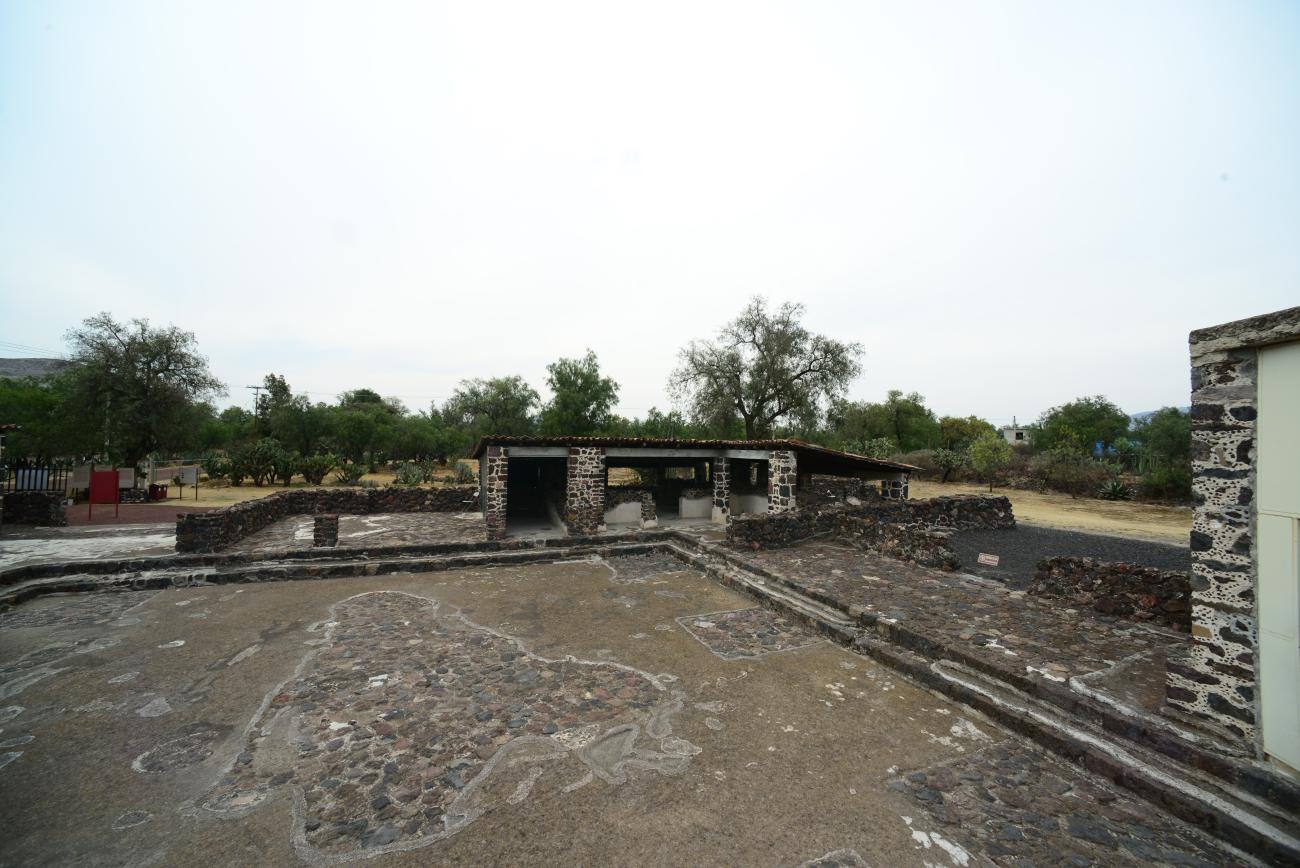
Totometla, whose name means “The magueyera of birds”, was inhabited by an extended family of priestly lineage, so that it constitutes a neighborhood of high hierarchy which was used by the Teotihuacan State as a means of ideological control of the population by them the possessors of specialized knowledge.
The spaces where the mural paintings are represented determine the function of this complex: buildings destined to the ideological and political specialization by means of priests in charge of determined cults, such as fertility, rain and the hills, which can be inferred by the iconography that shows tlaloques, snails cut in a transversal way and pairs of immature birds and others already adults, symbols of the political power or the calendar.

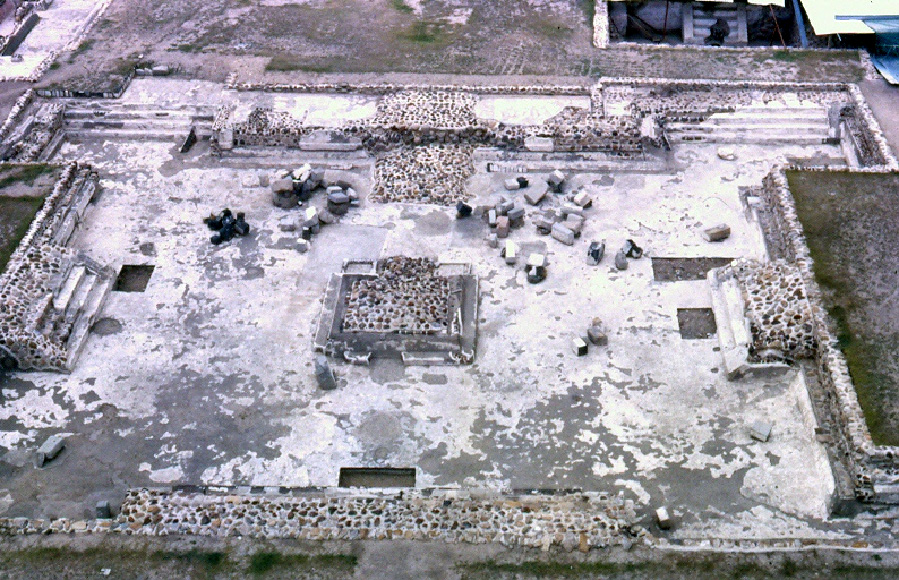
Investigation and preservation of Structure A, Plaza of the Pyramid of the Moon, Teotihuacan

Contact
- Dirección de la Zona Arqueológica y Museo de SitioRogelio Rivero Chongrogelio_rivero@inah.gob.com+52 (594) 956 0276, ext. 19850