






Tzintzuntzan
Archeological site
Tzintzuntzan
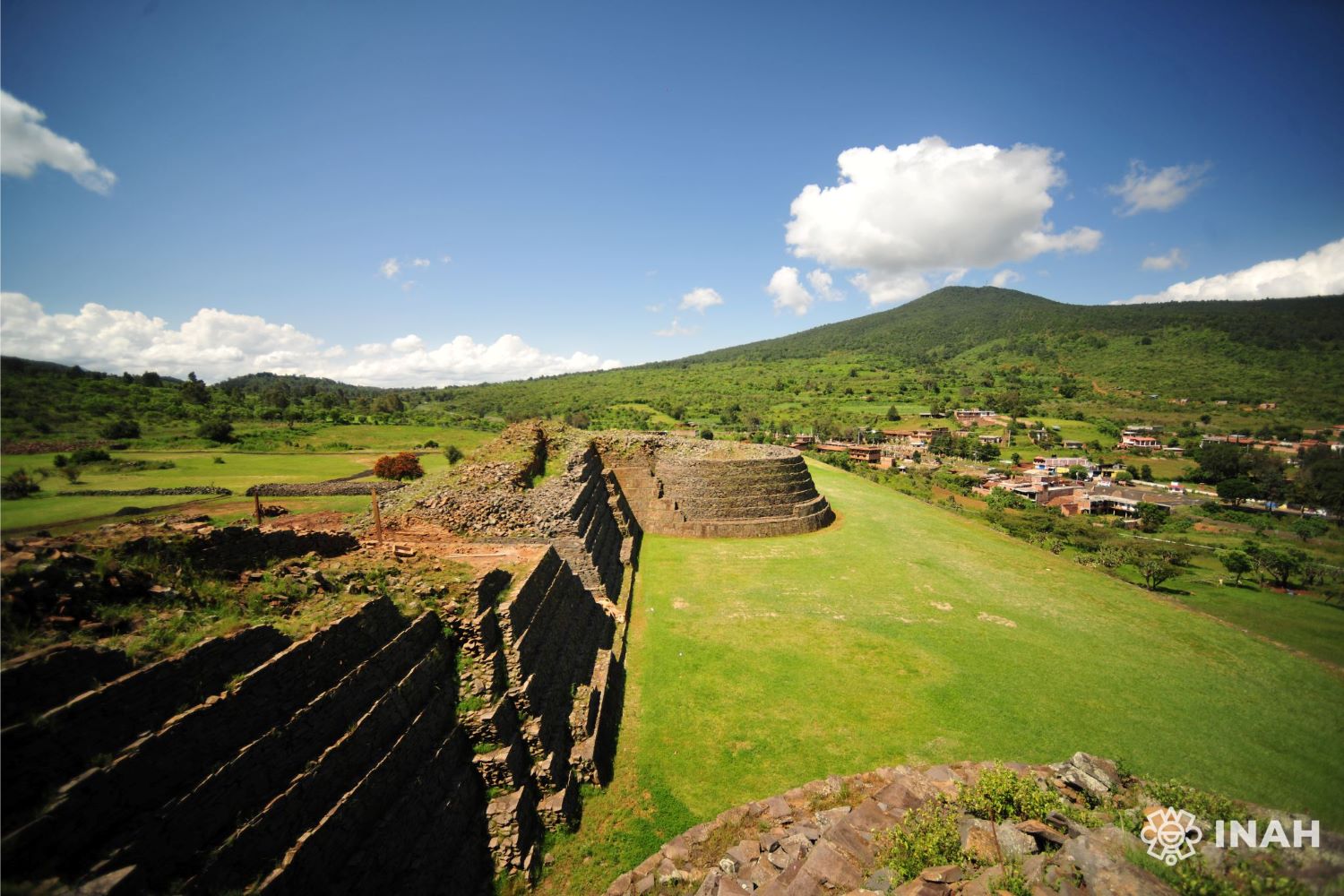
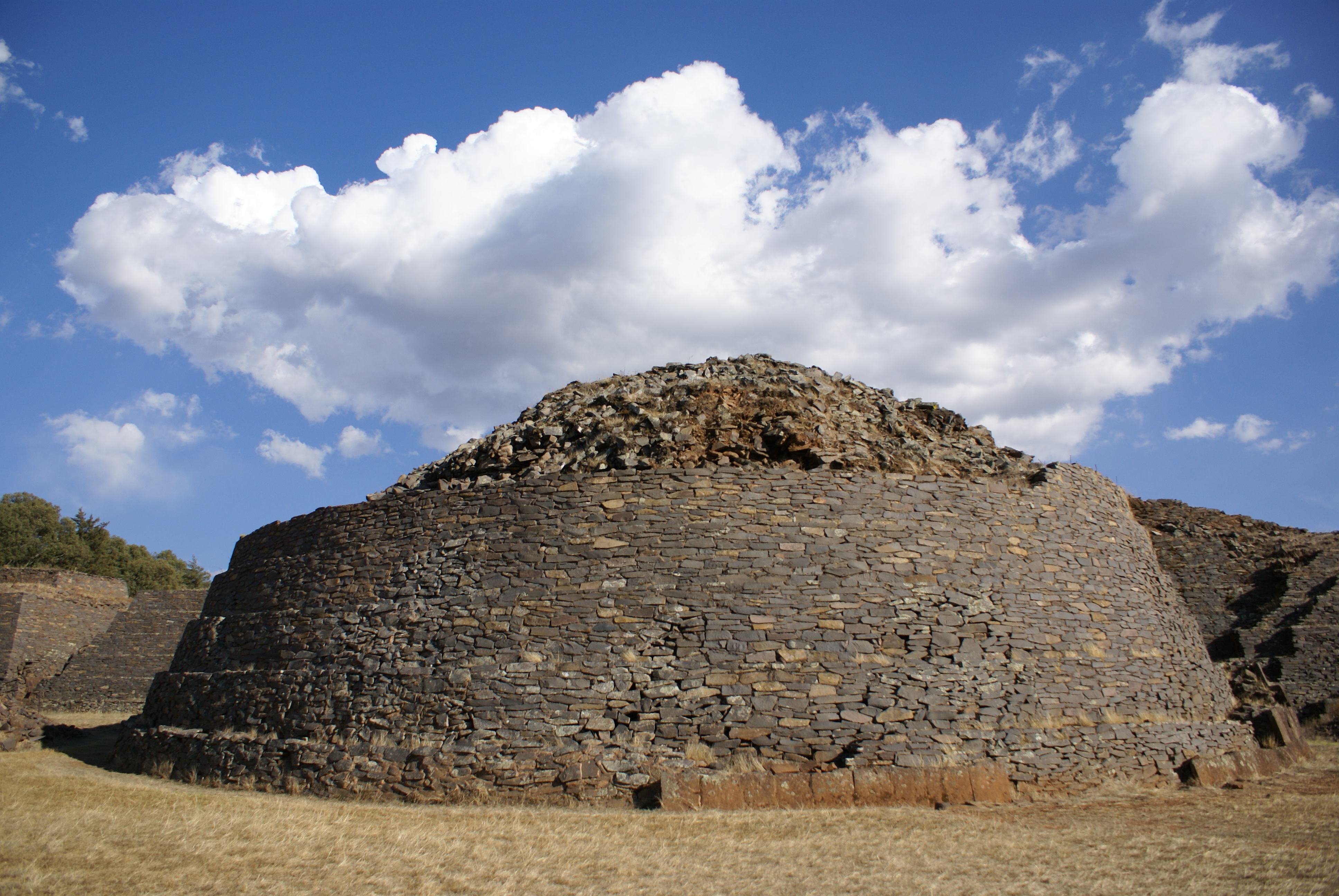
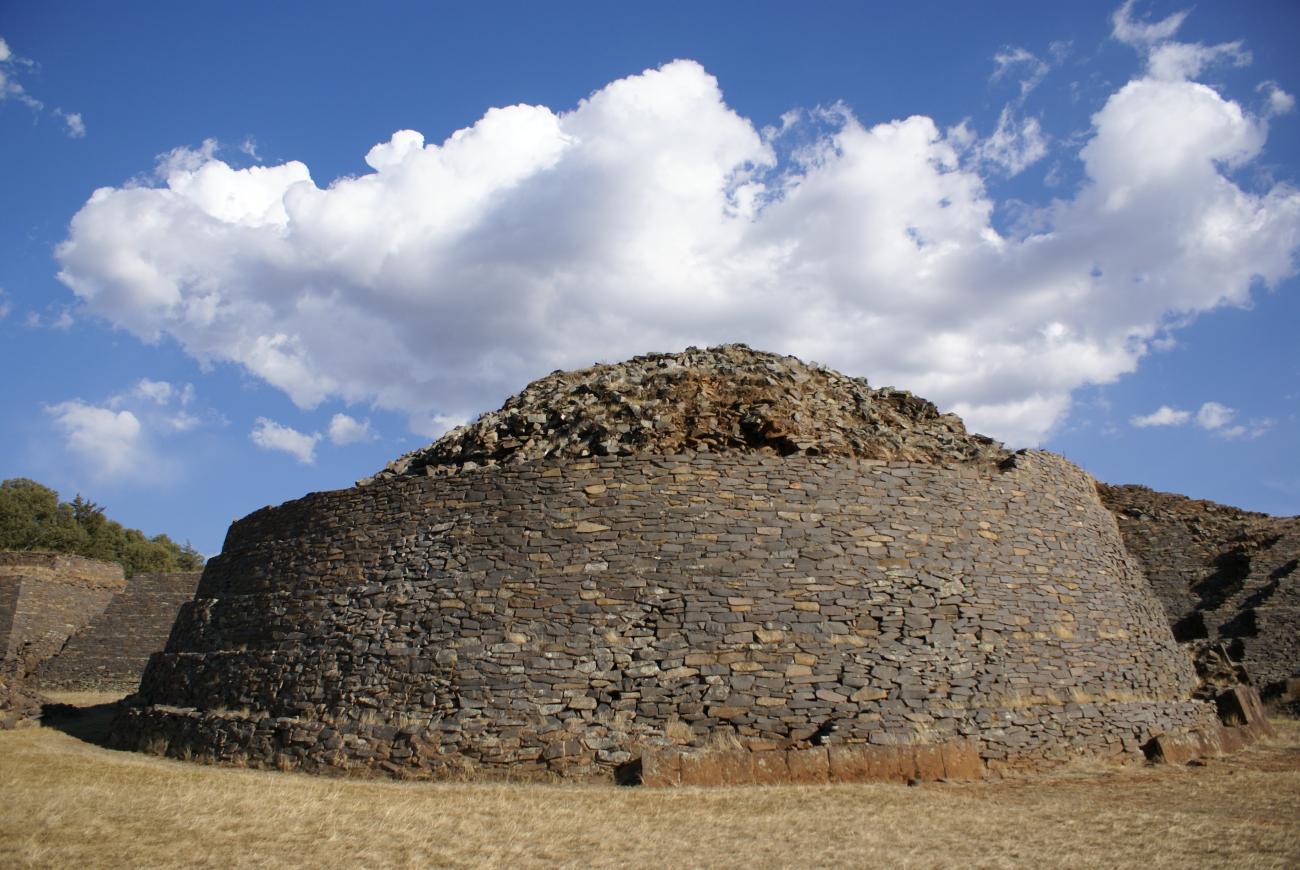
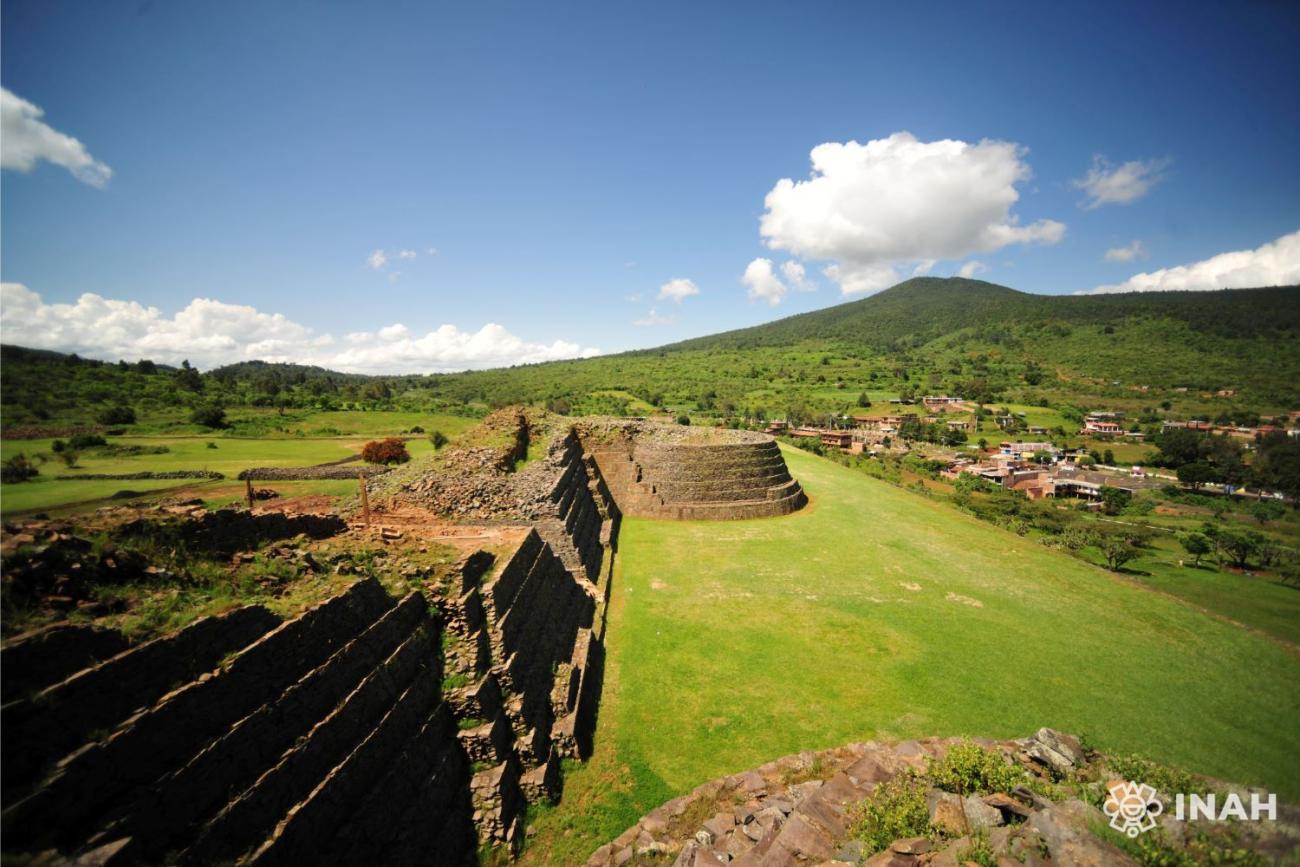
The lakeside capital of the Purépecha and its vast independent empire had a population of 30,000 at the time of the Spaniards’ arrival. Founded eight centuries ago, it was the seat of the Uacúsecha dynasty. The impressive remains include the Great Platform with its semi-circular “yacata” pyramids, one of the most voluminous structures in all Mesoamerica.
The pre-Hispanic city of Tzintzuntzan, located on the shores of Pátzcuaro Lake, was undoubtedly one of the most largest settlements at the time of the Spaniards’ arrival in the sixteenth century. As the capital of the Tarascan state, it was here that the most important political, economic and religious decisions were taken for a large territory. This site was also the residence of the Señores Uacusechas—or “Eagle Lords”—who were rulers of this important domain, where power was handed down dynastically. Tzintzuntzan functioned as “capital of the empire and the valley,” and was also the official royal residence of the Irecha, a ritual center and administrative seat, a regional market, and a center of production for simple artefacts, ritual objects, and high-quality handcrafts.
The unique character of the conquest of Michoacán, which was largely the result of a negotiated agreement, meant that for much of the sixteenth century this city was host to a mixture of Tarascan nobility and Spanish conquistadors in the city’s former location, until it was transferred to lower ground toward the end of the sixteenth century. Tzintzuntzan is therefore a unique subject of investigation into the transition between pre-Hispanic societies and those of the early vice-regal period.
The ancient city of Tzintzuntzan stretches across wide terraces and extensive platforms ranged along the sides of the Yarahuato and Tariaquere hills, providing a base for sizeable archeological structures. When the Spaniards arrived, the site had an estimated population of 30,000. Many doubts remain as to the city’s exact age, but based on the materials recovered during the archeological explorations and the typologies found so far, its occupation can be dated back to at least the Late Classic (600-1000 AD).
A little historical background is warranted to determine the Uacusechas’ arrival in Tzintzuntzan. Tariacuri, the cultural hero of the “Relación de Michoacán” saga who unified the Tarascan state and governed Pátzcuaro, established three seats of power: Pátzcuaro, Ihuatzio and Tzintzuntzan. Then he distributed them between his son and two of his nephews: Hiquingare, Hirepan and Tanganxoan, respectively. Upon the death of Hirepan, ruler of Ihuatzio, Tzintzuntzan became the most important city in the first half of the fifteenth century. According to the “Relación de Michoacán” it was Tanganxoan I who “rebuilt” this city on the orders of the goddess Xaratanga, as it seems she was no longer being worshipped.
After Tanganxoan’s death, Tzitzispandacuare (1454-1479) took over power, and he transferred the main Tarascan god, Curicaueri, together with his offerings, to the city. He also expanded the empire, making incursions into the valley of Toluca and Xocotitlán, as well as Colima and the city of Zacatula in Guerrero. His descendant, Zuangua (1479-1520), continued the state’s territorial expansion and consolidated its eastern boundaries. Zuangua knew about the conquistadors’ arrival in Tenochtitlan, but died shortly before the first Spaniards reached Michoacán. In the end it was Tzinzincha Tanganxoan II (1510-1530)—while still a very young man—who negotiated the handover of the territory with Cristóbal de Olid; he died soon afterwards at the hands of Nuño de Guzmán, after facing an unfair trial and being subjected to torture.
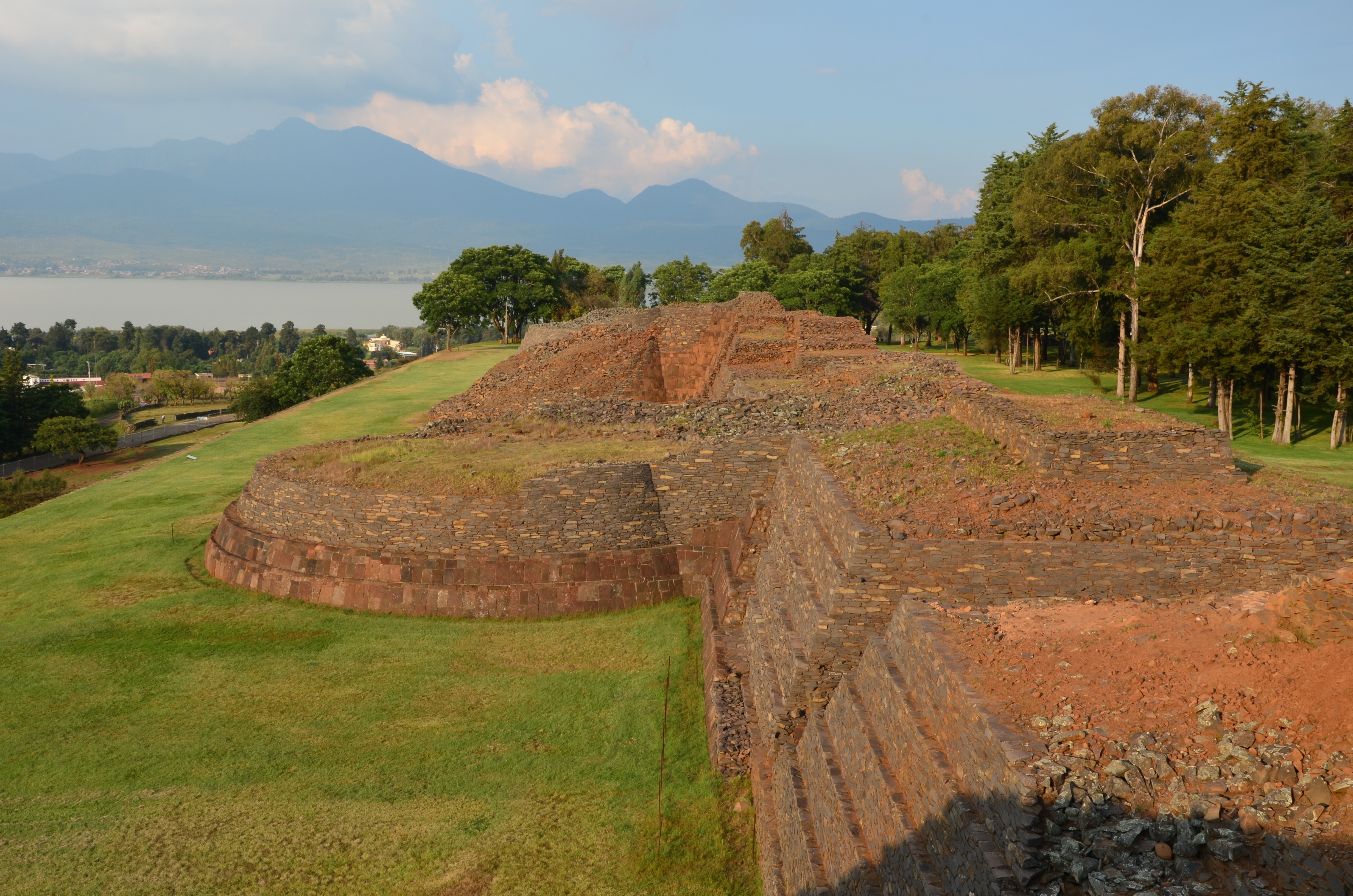
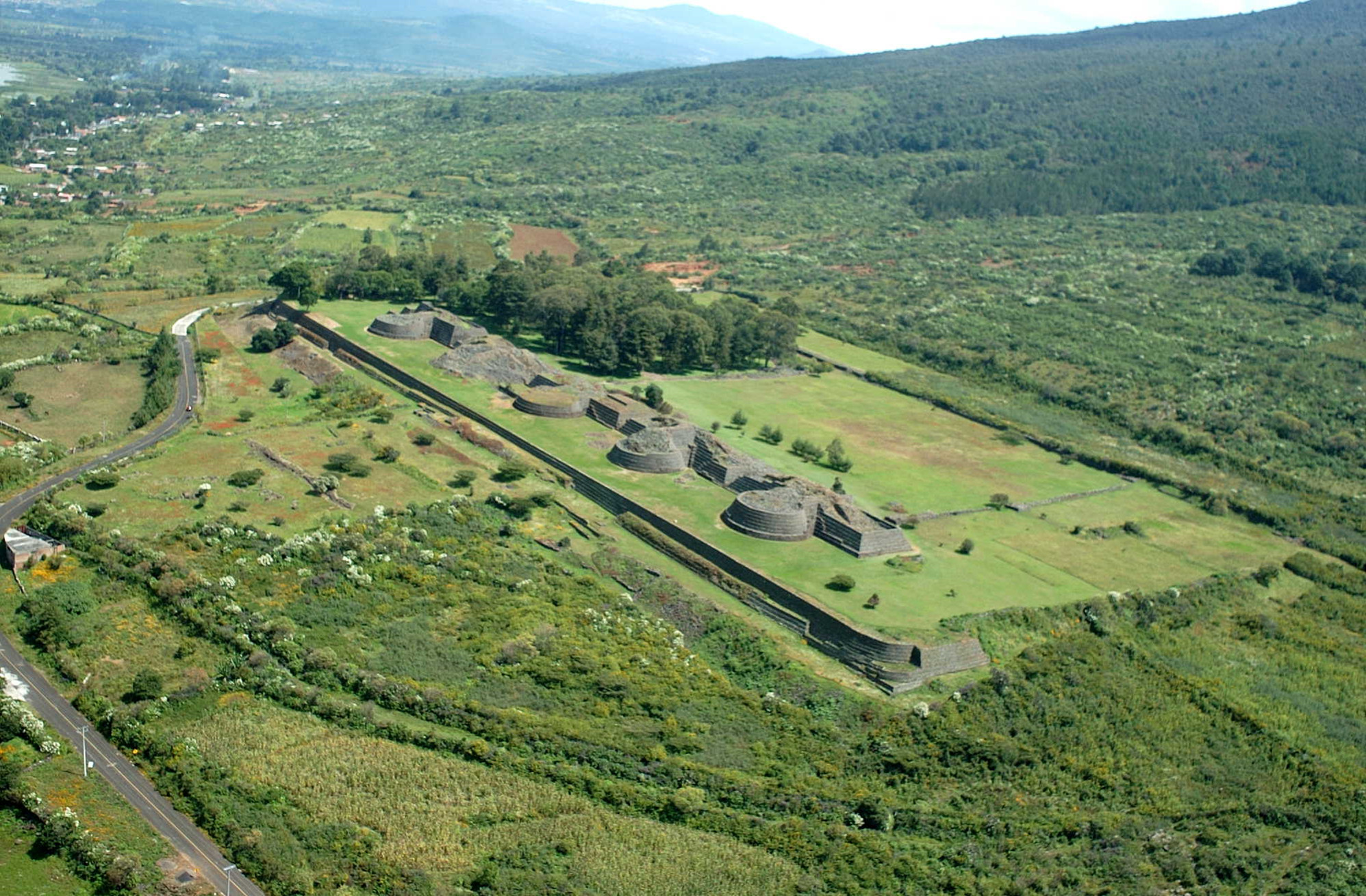
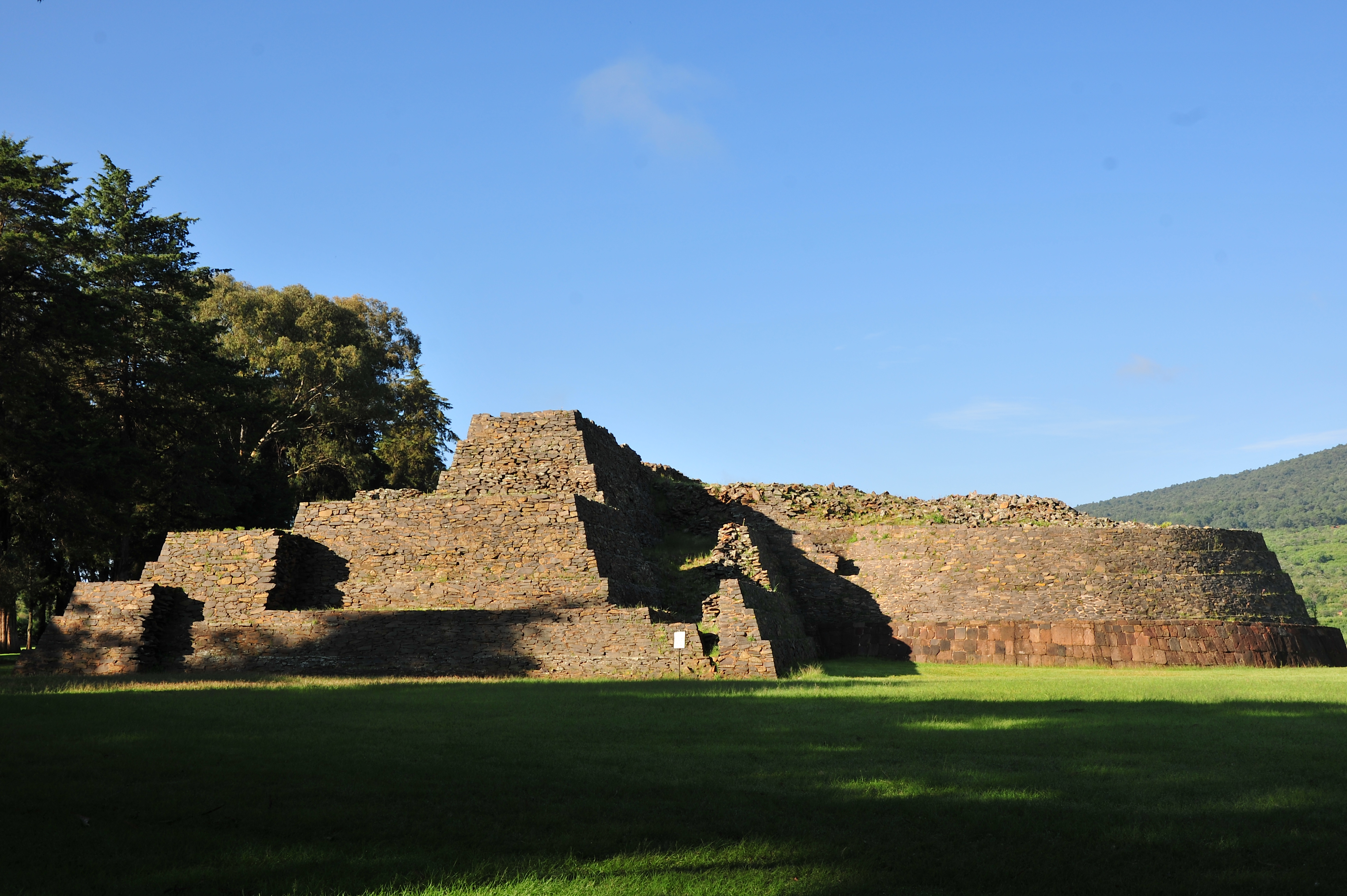
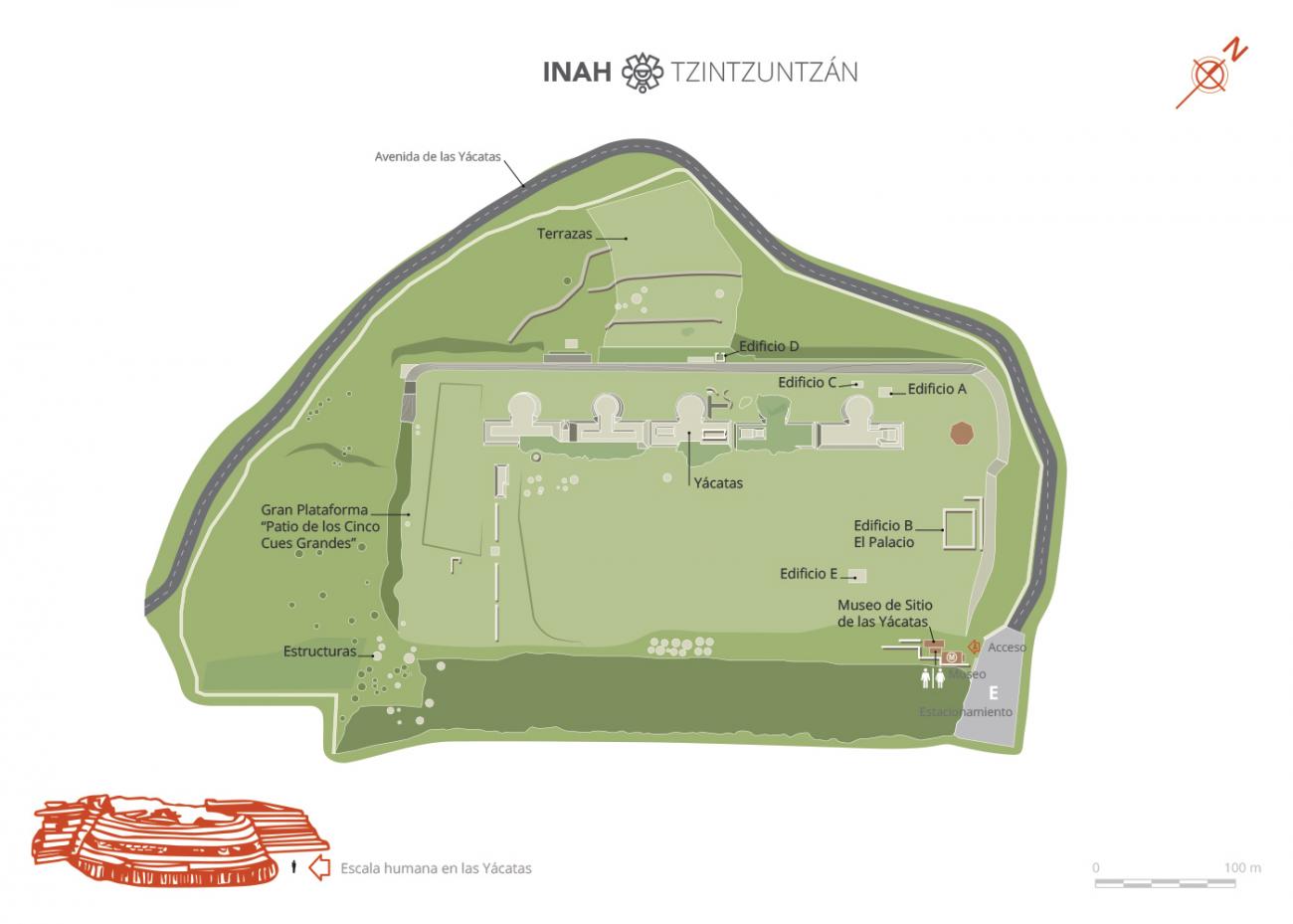
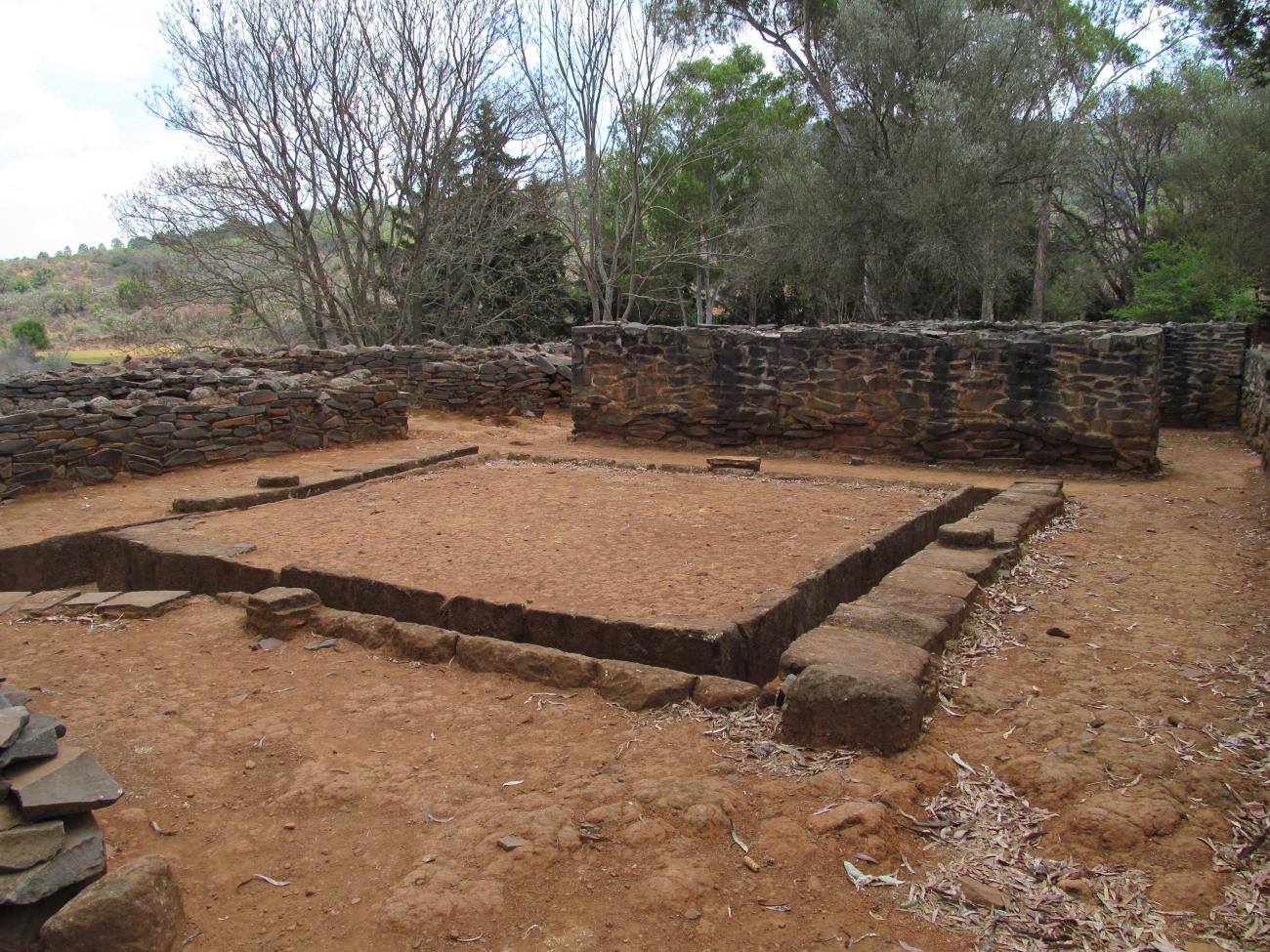
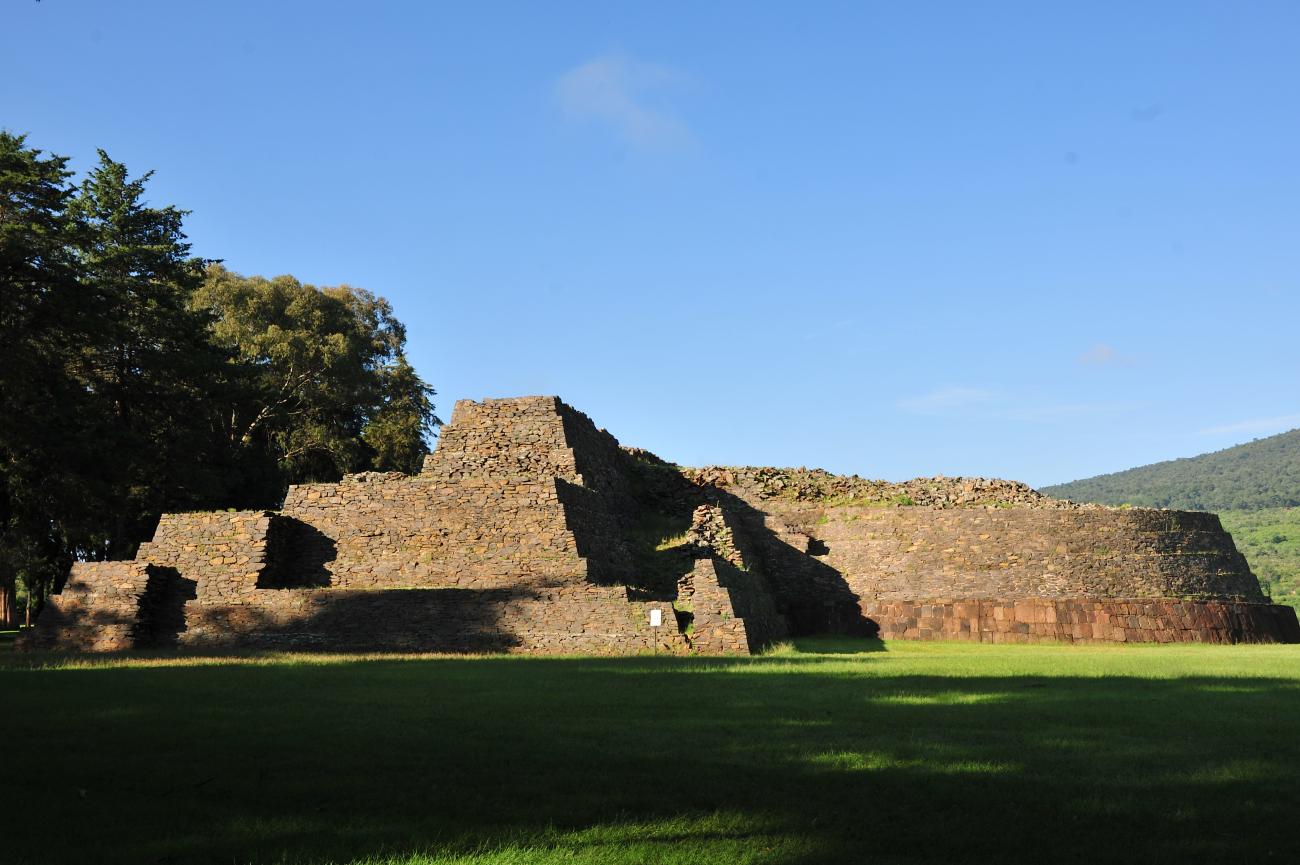
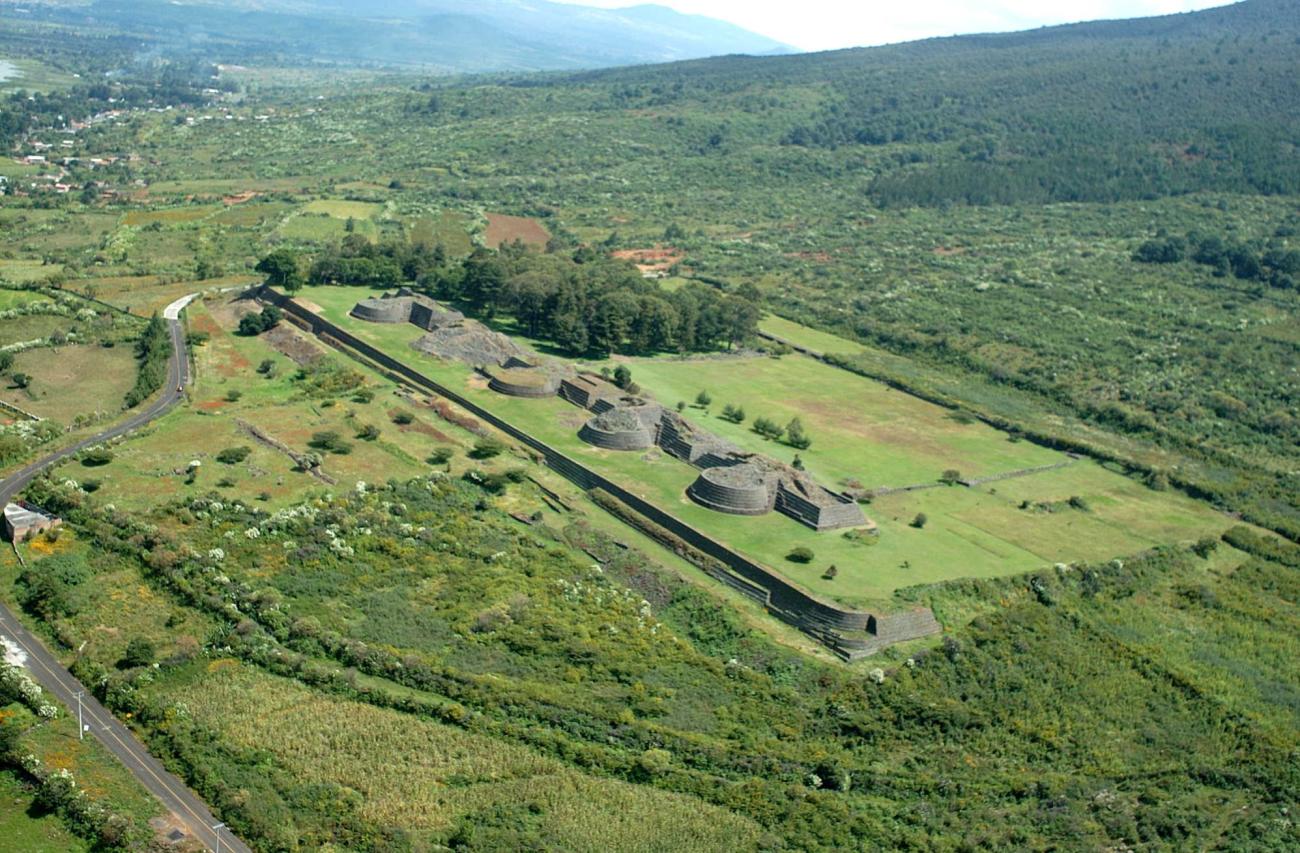
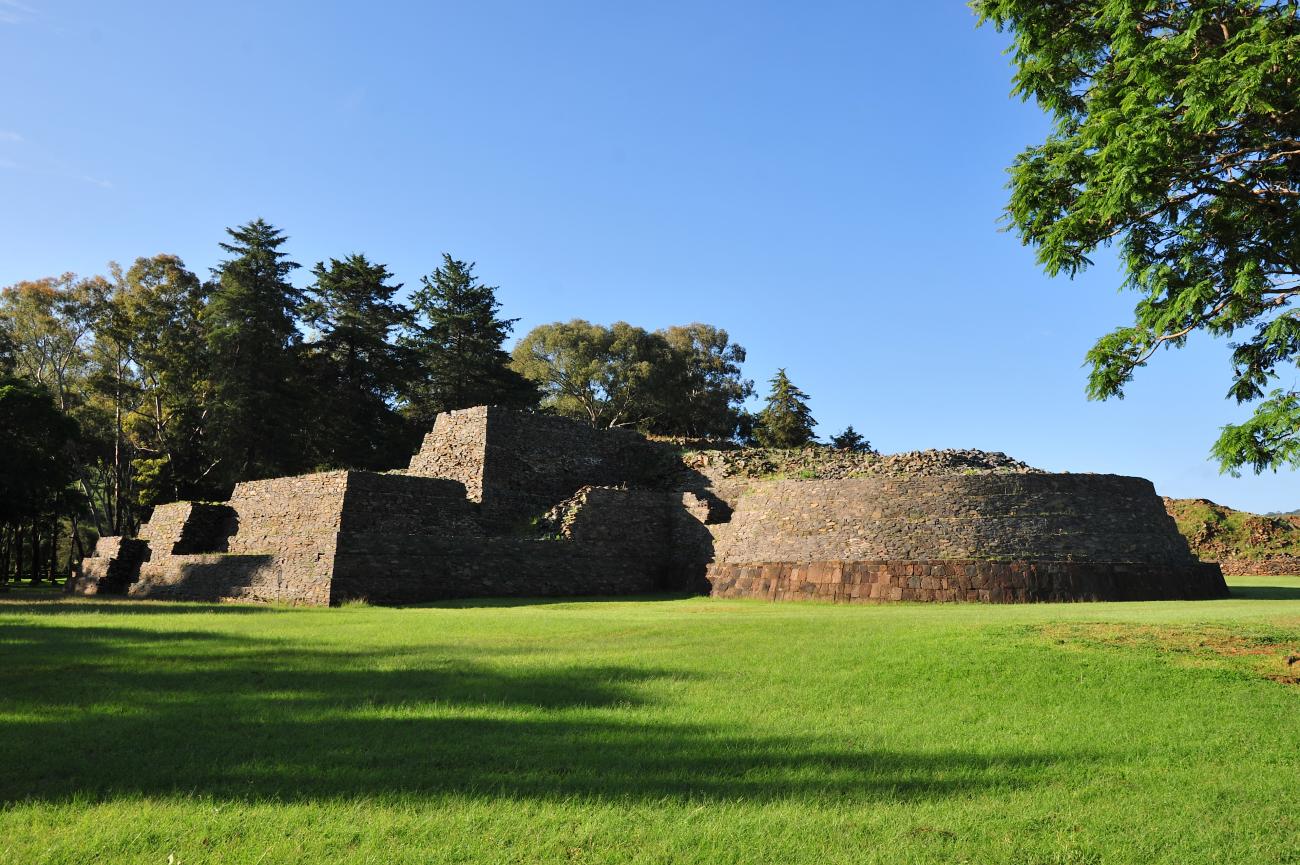
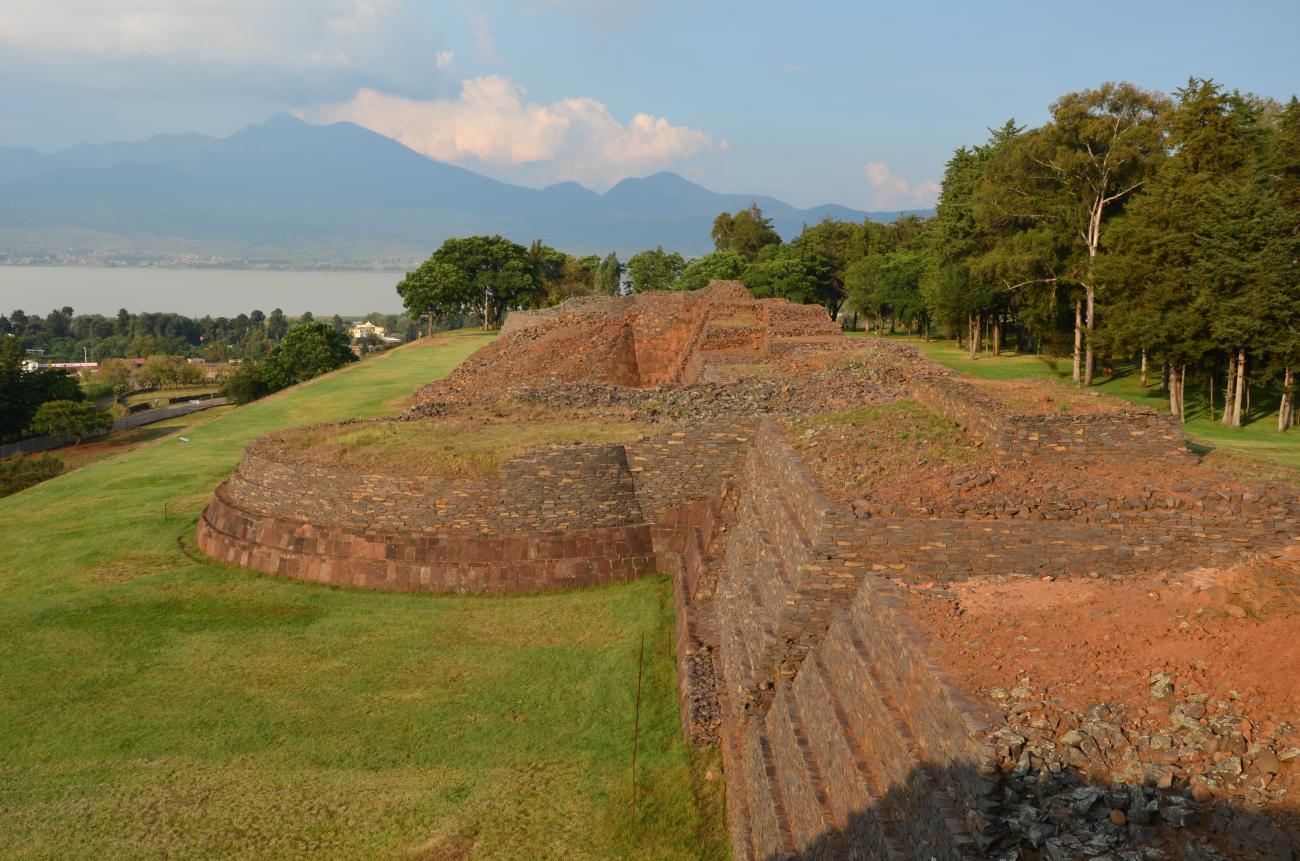
Current archeological explorations in Tzintzuntzan have been focused on the area of the Gran Plataforma ("Great Platform") and the platform known as La Tira. The Great Platform provides the base for five of the semi-circular “yacata” structures, in addition to other structures, notably Building B, also known as the Palace, which is a series of rooms distributed around a courtyard that must have once had columns to hold up the roof of a possible corridor.
Other spaces are referred to in historical accounts but have not been found by archeologists. These include La Casa de las Águilas (“The House of the Eagles”), Casa de las Plumas de Papagayos (“House of the Parrot Feathers”), Casa de las Plumas de Gallina/Guajolote (“House of the Chicken/Turkey Feathers”), the ballcourt, the baths known as “Puque huringuequa,” where sacrifices were made to the gods of the left hand known as the “Viranbanecha”; plus a zoo, a prison, the market, and the trojes, granaries where the lords’ personal belongings were kept, as well as crop harvests.
La Gran Plataforma
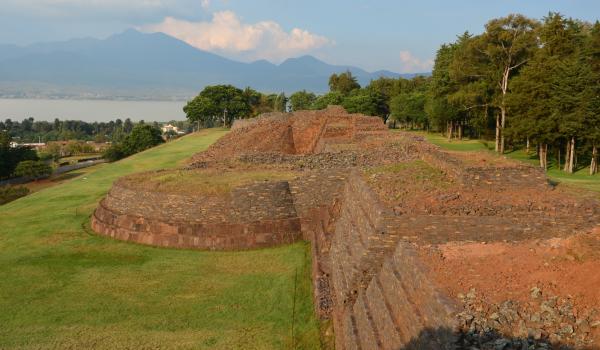
The Yácatas have stood out for being the most outstanding monuments in the area, whose singularity consists of being located on a great platform. This construction is actually a huge artificial terrace, integrated into a nearby ancient volcanic cone called Yahuarato. The terrace measures 450 m long…
La Gran Plataforma
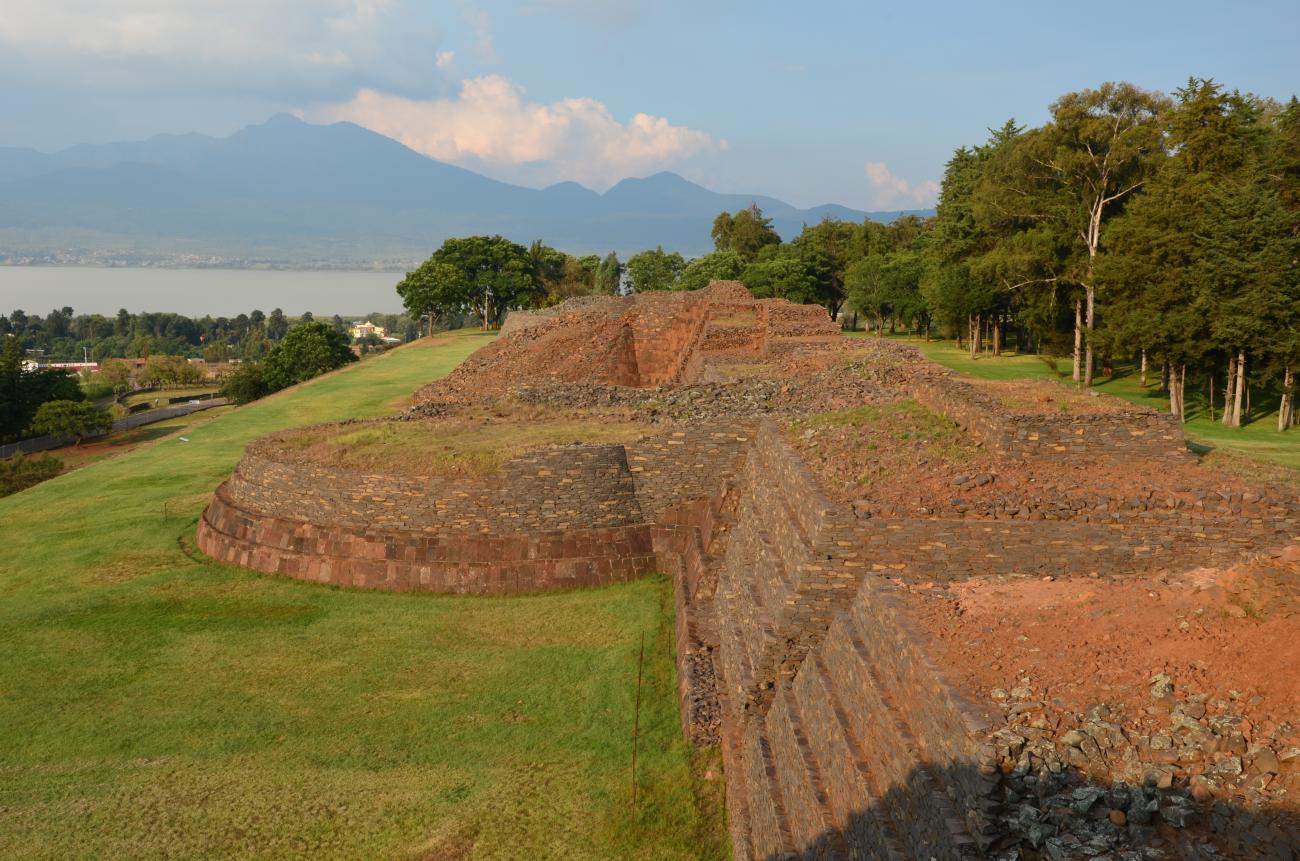
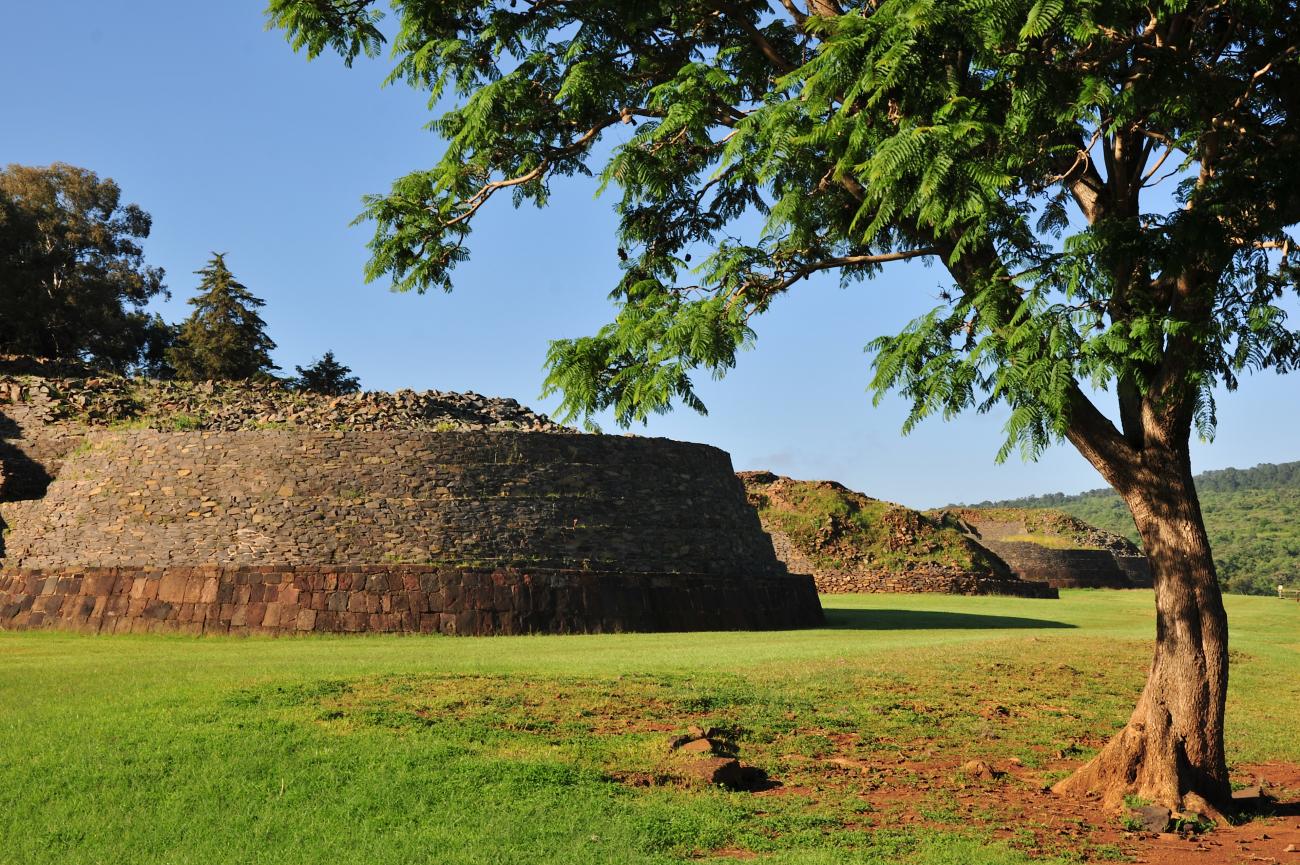
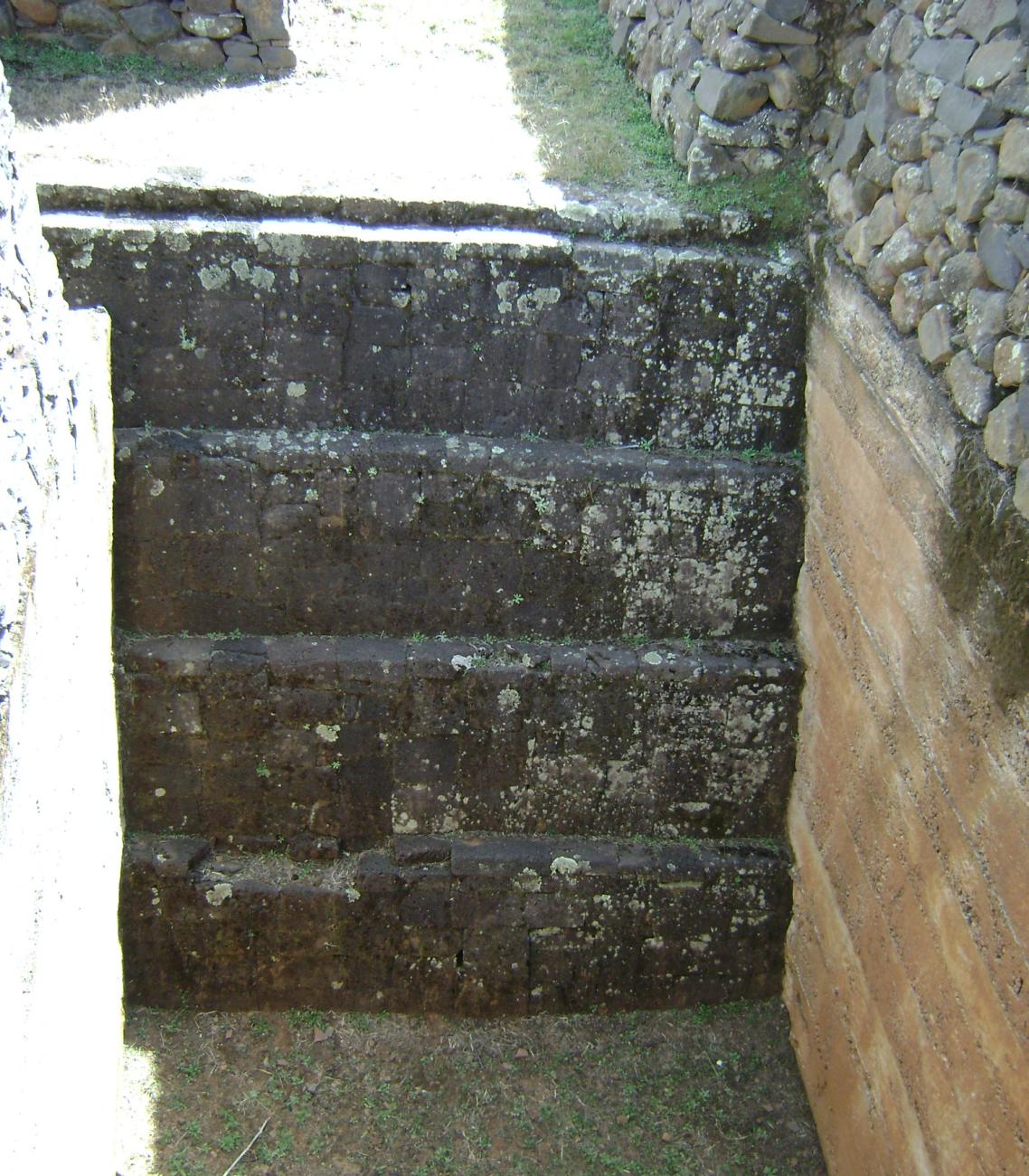
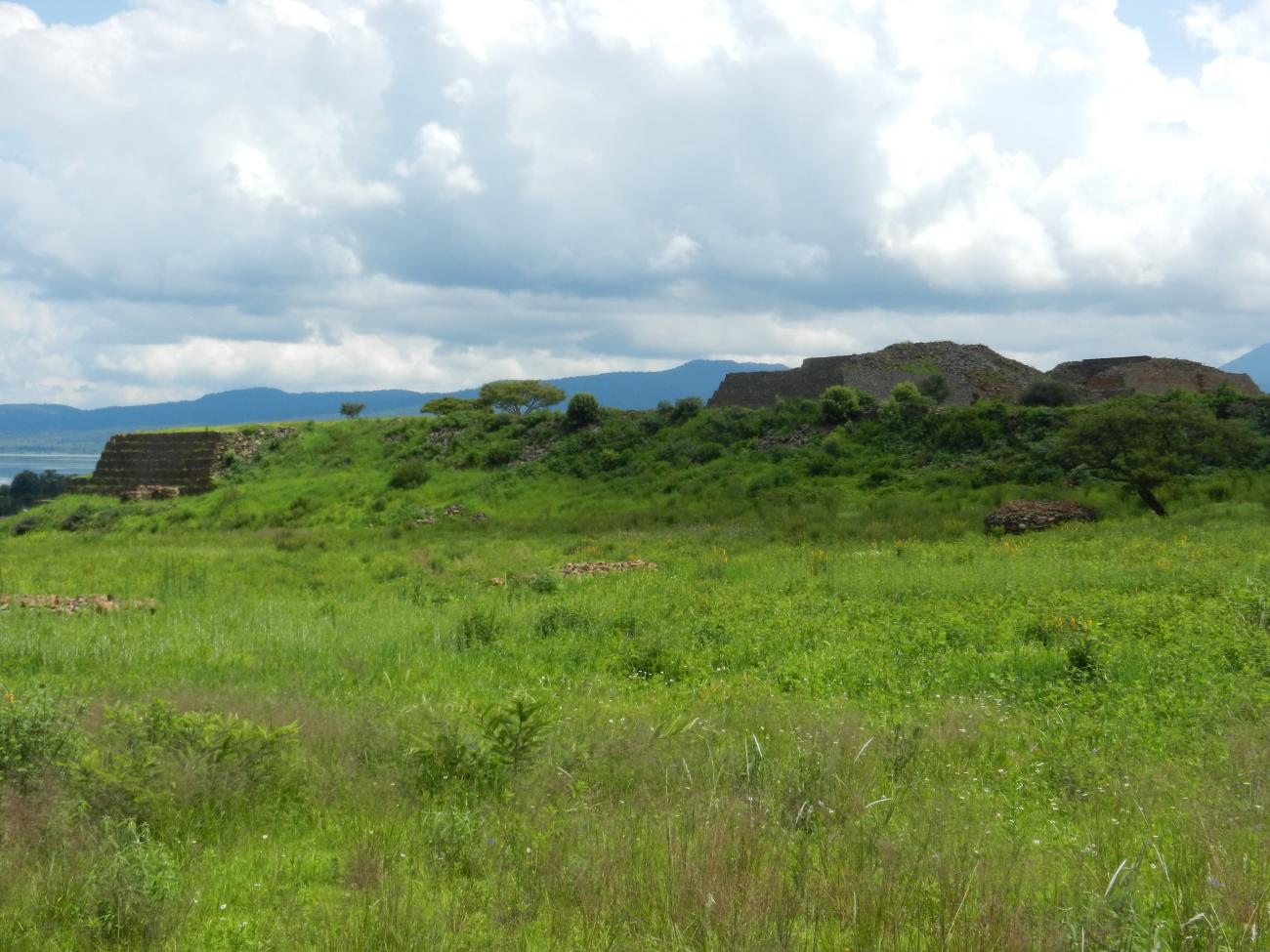
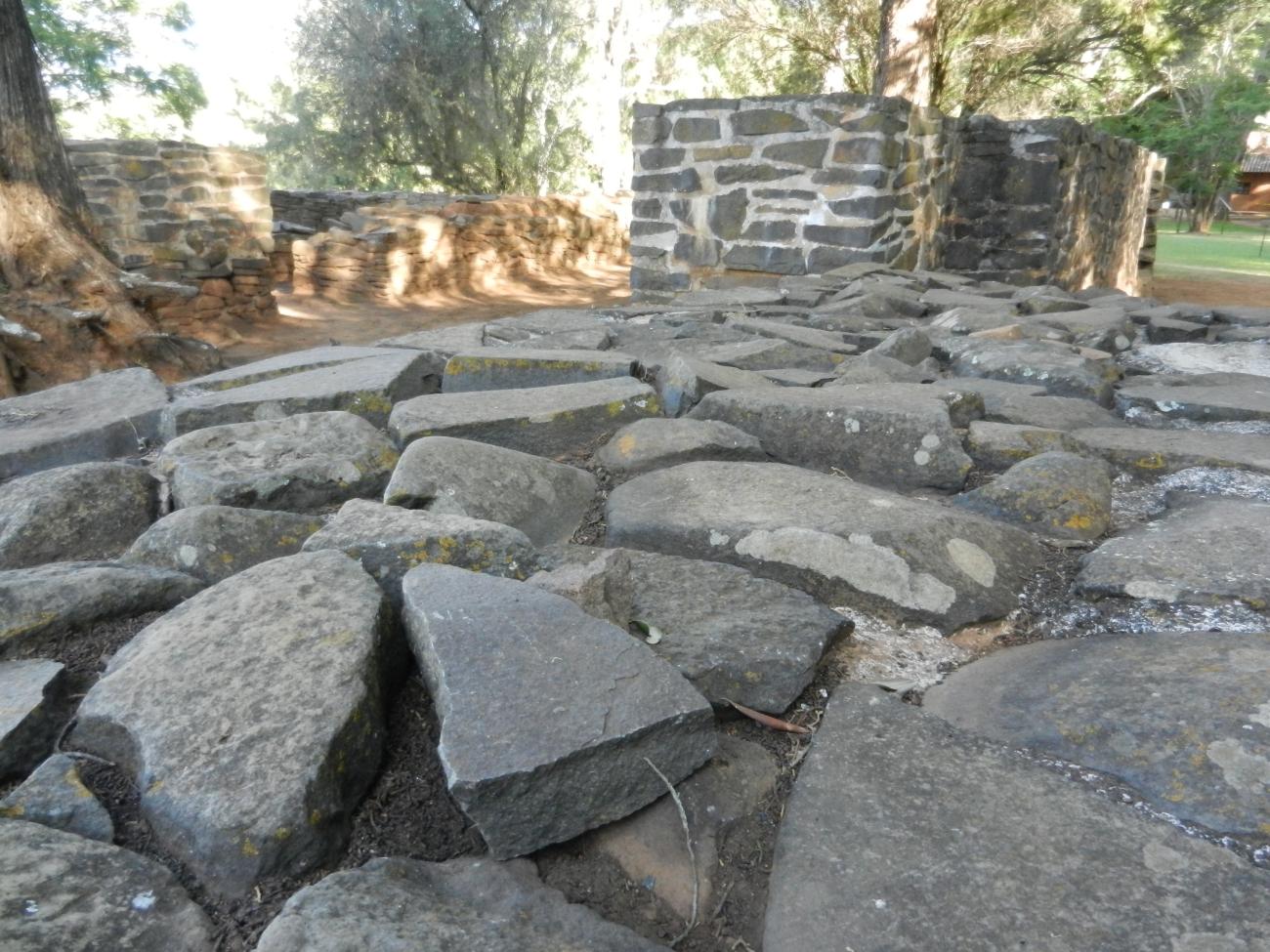
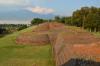
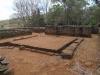
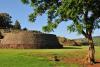
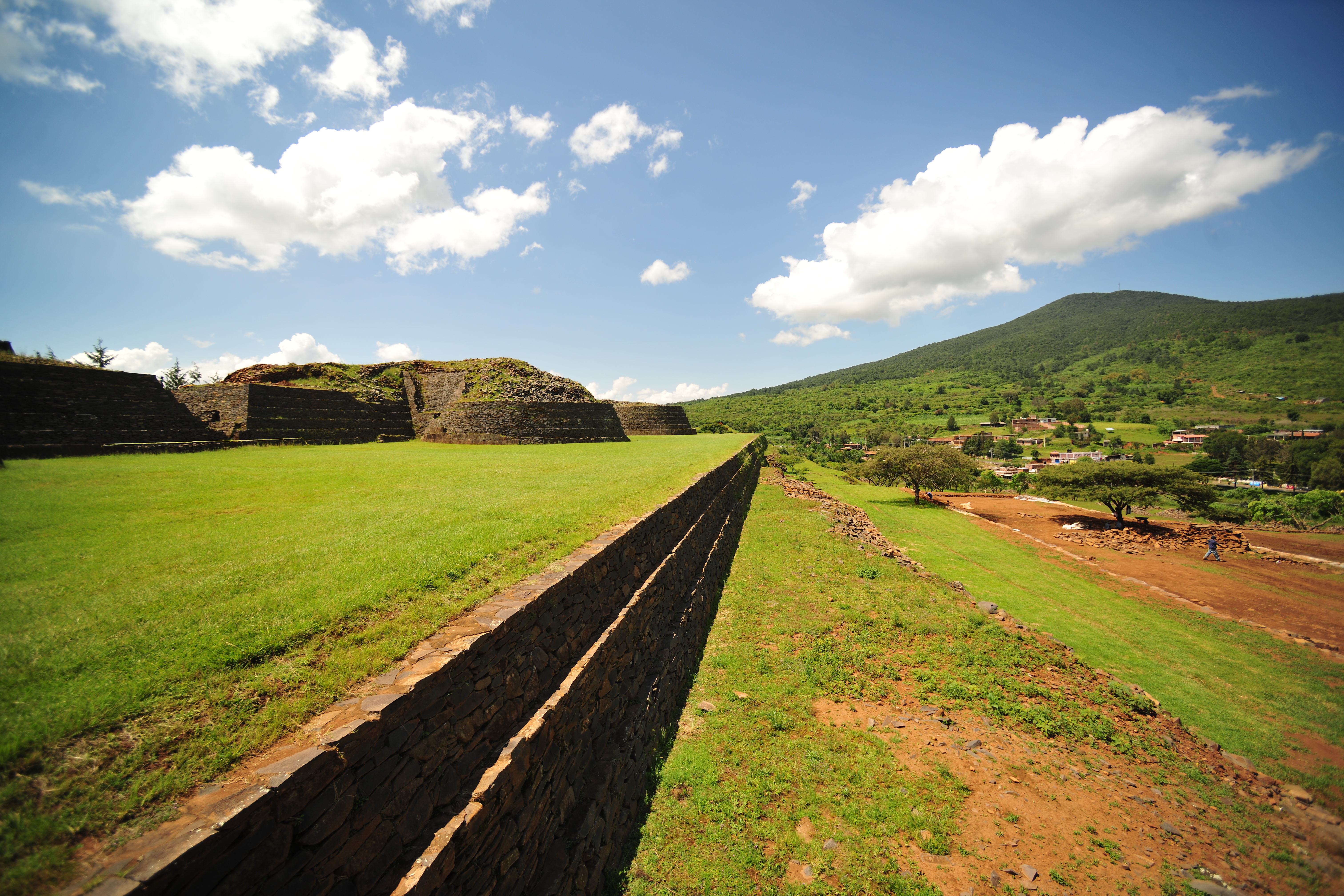
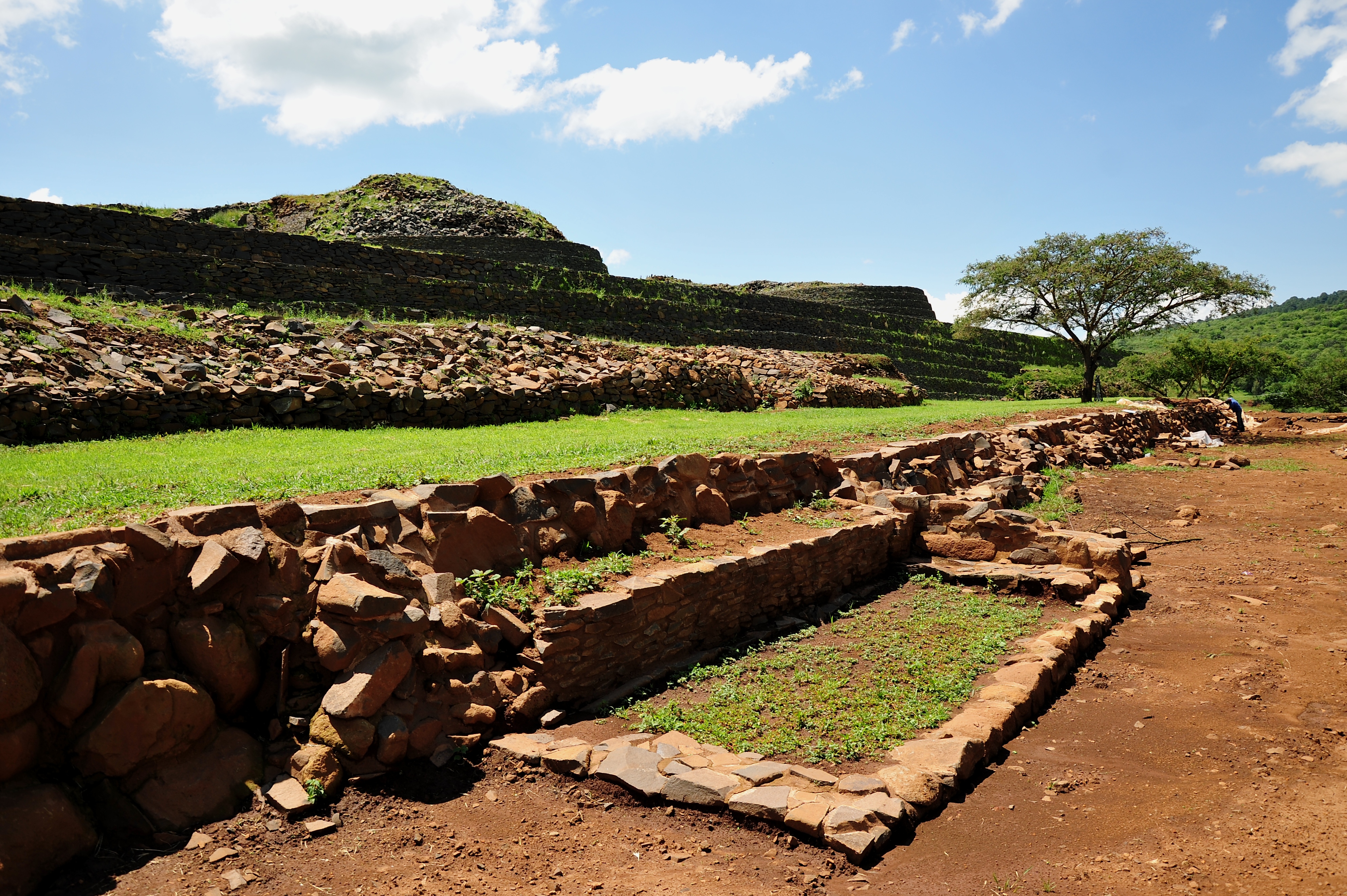
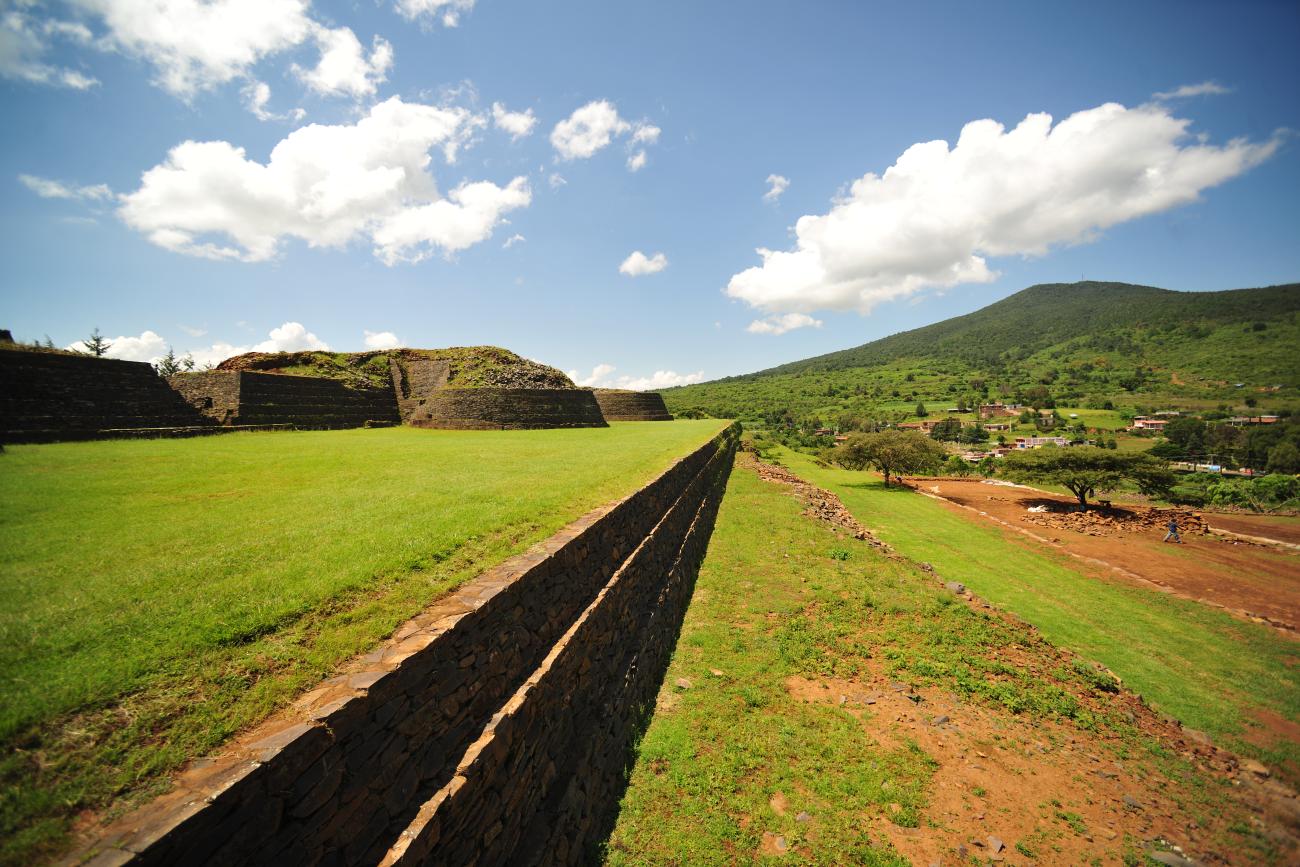
The Yácatas have stood out for being the most outstanding monuments in the area, whose singularity consists of being located on a great platform. This construction is actually a huge artificial terrace, integrated into a nearby ancient volcanic cone called Yahuarato. The terrace measures 450 m long by a little more than 250 m wide, integrated by several tons of stones that were carried by hand. In its interior are the remains of other smaller platforms, perhaps with an equal number of structures on top, a whole set built in previous times. Of these substructures, only a part of the yácata housed under the so-called Yácata is known.
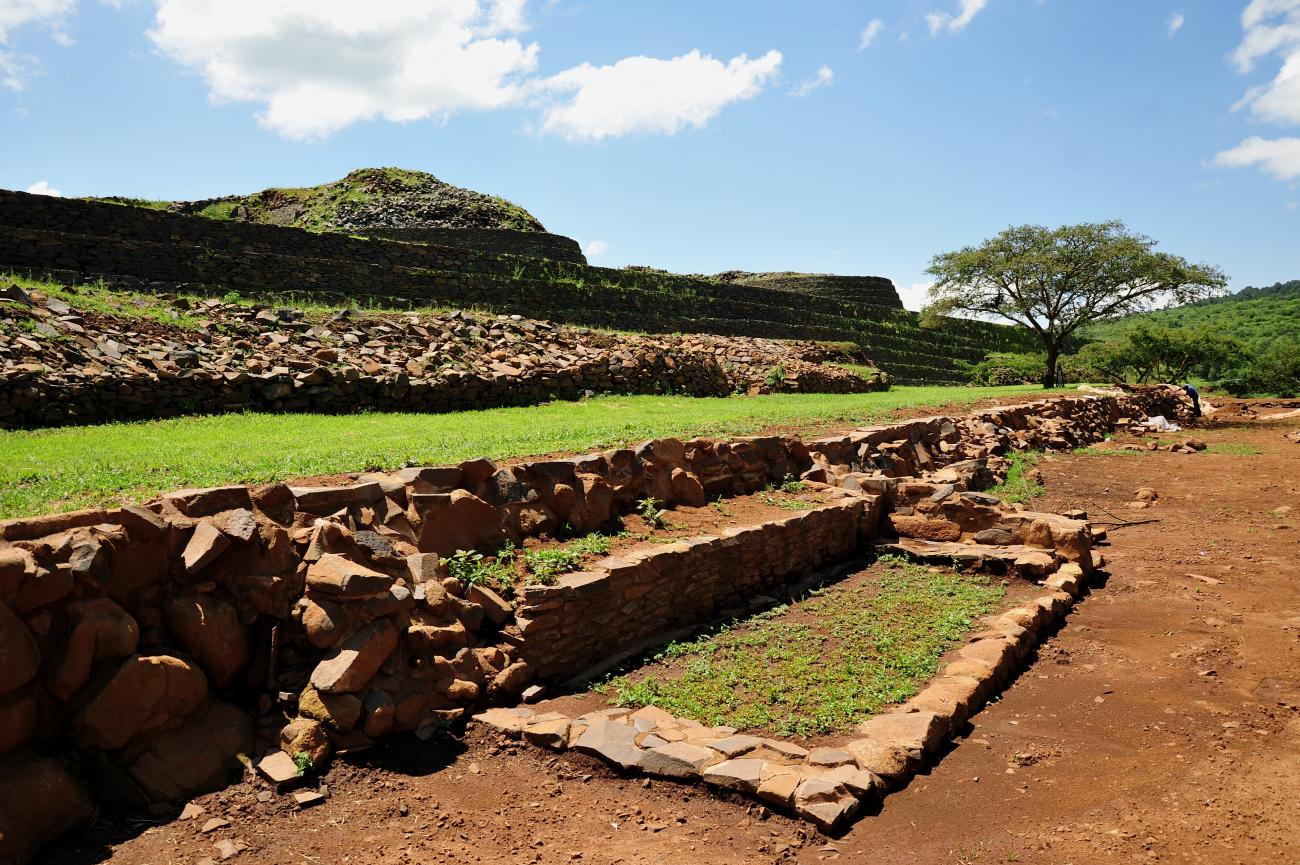
The Palace or Building B: In it was located a paved and a channel surrounded by a courtyard, which in turn surrounded rooms and a corridor, whose roof was supported by columns of which only some stones of their bases remain. Human remains were found in the rubble, including fragmented and complete skulls, some with intentional frontal deformation. One of them (male) has the upper teeth filed in the form of a “swallow tail”, a type of dental mutilation supposedly characteristic of this ethnic group, for this reason it is considered that the enclosure was destined for the use of the elite. Outside, heading north, you can see the profile of the Main Platform, remains of altars and a group of stones with engravings, which allude to the firmament and the figure of the hurricane.
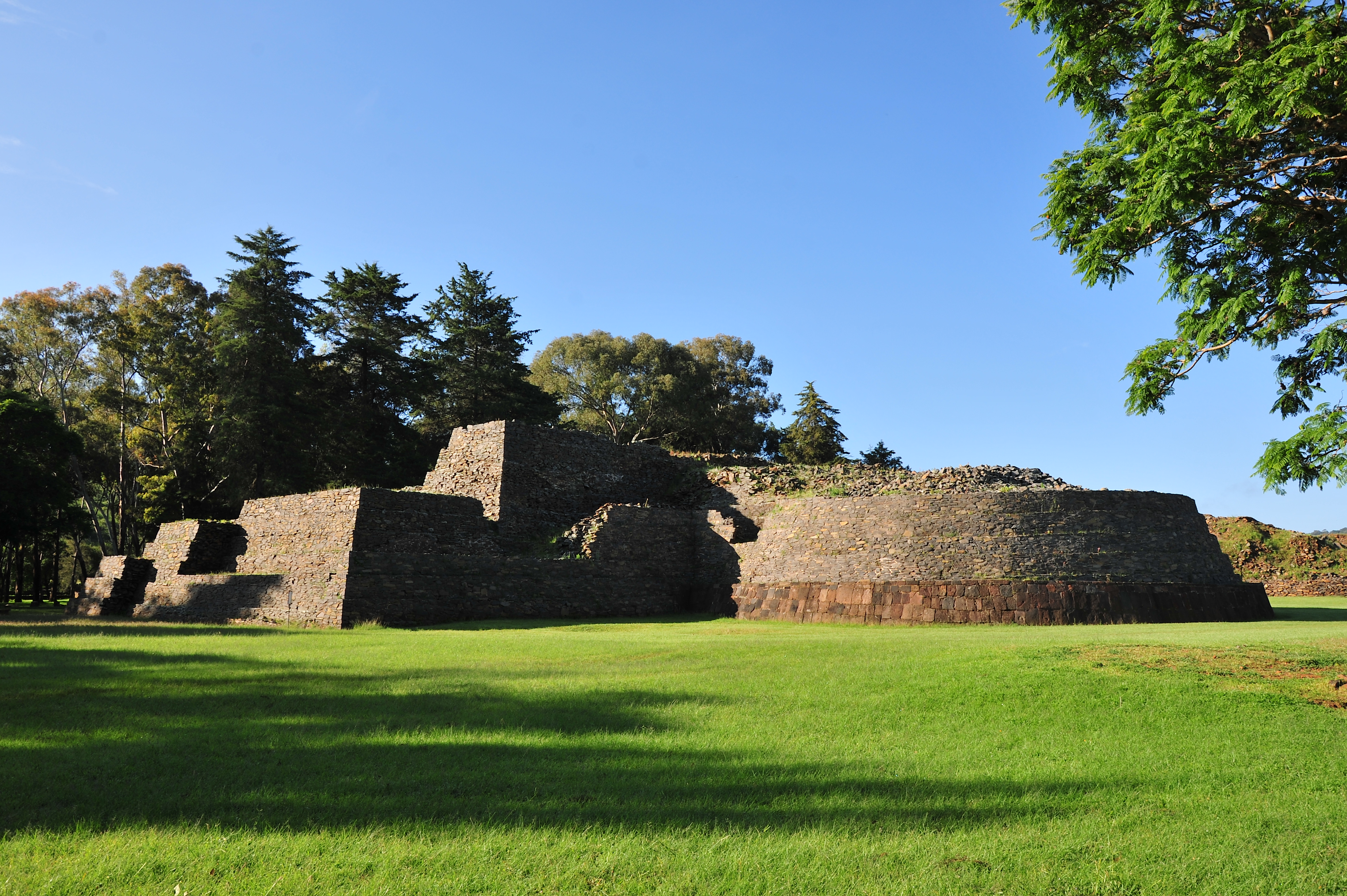
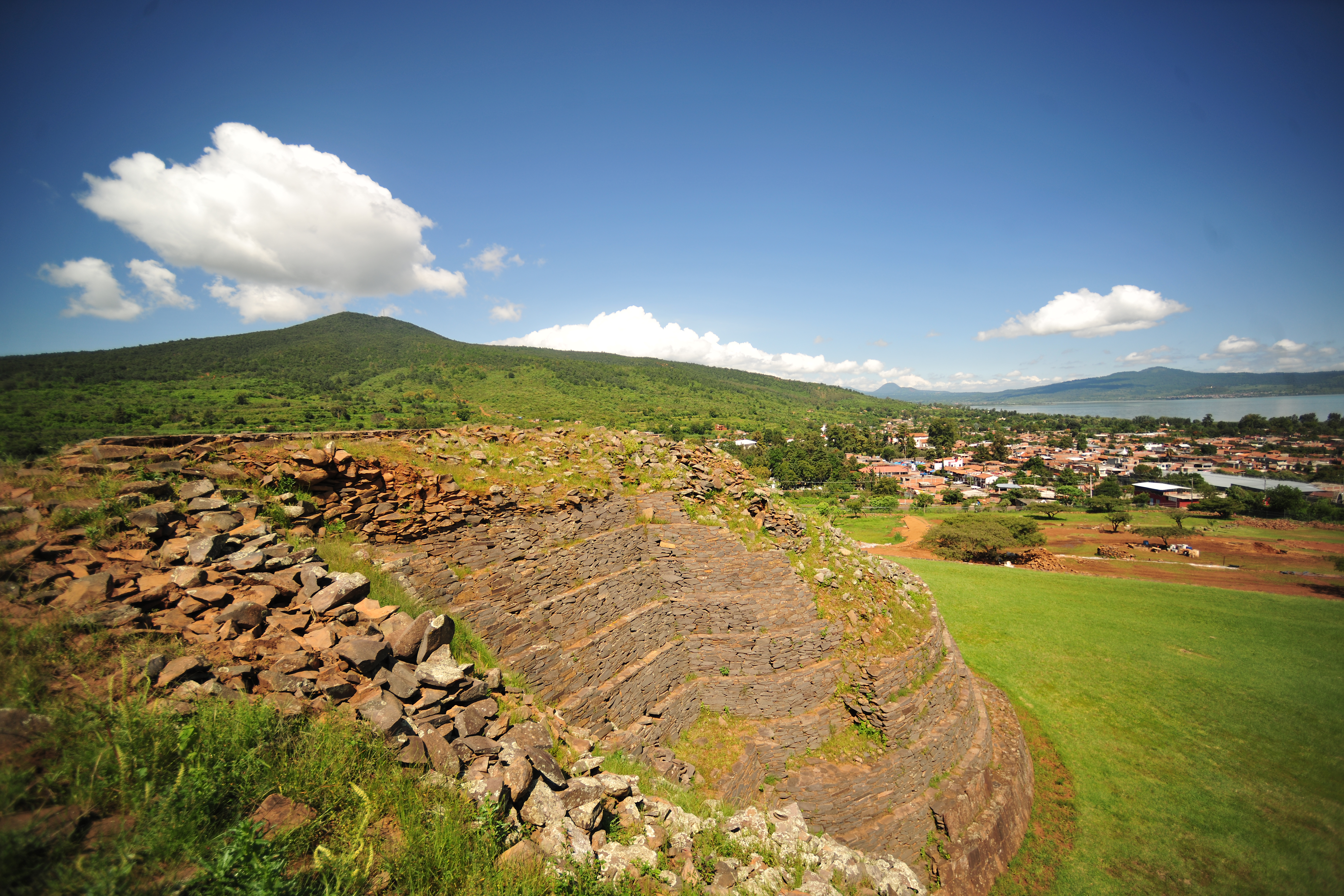
The Yácatas: The form of these constructions results from the combination of two geometric bodies: a pyramidal portion of rectangular plant, up to ten staggered bodies, parallel and in slope; plus another section with semicircular displants, made of the same form, which gives it a conical silhouette. The construction system gives the impression that they are sloping walkways. The reality is that they are several superimposed bodies, initiated from a center that was increased towards the sides and upwards with flagstones, only arranged and glued with mud. The five main buildings of Tzintzuntzan, called Yácatas 1 to 5, were accessed from the east by a narrow stairway with alfardas, of which only minimal evidence remains. The characteristic architecture of this city is common throughout the Tarascan territory and to a certain extent in other northern cultural portions of the country. To the southeast of the area open to the public, but at a higher level, on the hillside, there are two other yácatas also on an artificial platform. From there it dominates the complex of La Ciudadela, the other buildings, other areas of terraces in front and of course the lake.
The Well of the Sounding: It allows to understand the superposition of the constructive stages of the place. It is possible to appreciate that a first platform existed where certain structures were located, of which we still know very little, and on this one the today visible platform and the five Yácatas were built. At the bottom there is another base with the same silhouette and almost the same proportions of the upper ones. At its base it is possible to observe the original floor on which the first city was founded.
The Citadel: It was the center of a practically walled city, a main square where court life was developed and religious and civil ceremonies were carried out, therefore it was for residential and administrative uses or functions. The great platform served to support buildings of mixed plan, the temples that crowned them and, at the same time, functioned as a defensive wall, integrating a real fortress. Therefore, it is not strange that the Spaniards used this same space to live and shelter from any surprise attack. That occupation left as a witness a series of Hispanic objects -which have been rescued during the excavations of this plain- such as objects manufactured with glazed clay, associated to feminine figurines made in mold and clear European seal; as well as spurs, glass, coins, porcelain and crucifixes carved in stone.
The Warehouse or Building E: It is a housing complex composed of several rooms of generous dimensions, distributed around a central courtyard. One of the enclosures around this complex has its four sides almost closed, where it has been suggested that it was a granary or warehouse for the goods of the kingdom and the products of the tribute. The excavations made here uncovered fragments of Tarascan objects and some others of indigenous manufacture, although with European designs. From the above, it can be concluded that the constructions were erected for the native elites and that, years later, they were used by the Europeans who were stationed there, who modified them according to their own needs.

Last capital of the Tarascan state



Contact
- Dirección del Centro INAHMarco Antonio Rodríguez Espinosamarcoa_rodriguez@inah.gob.mx+52 (443) 313 2650