










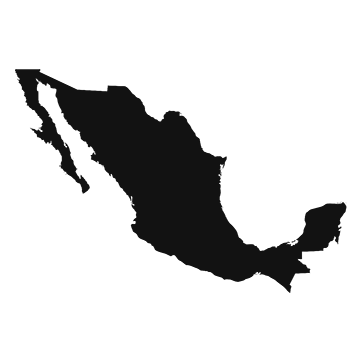
Museo Regional de Guadalupe

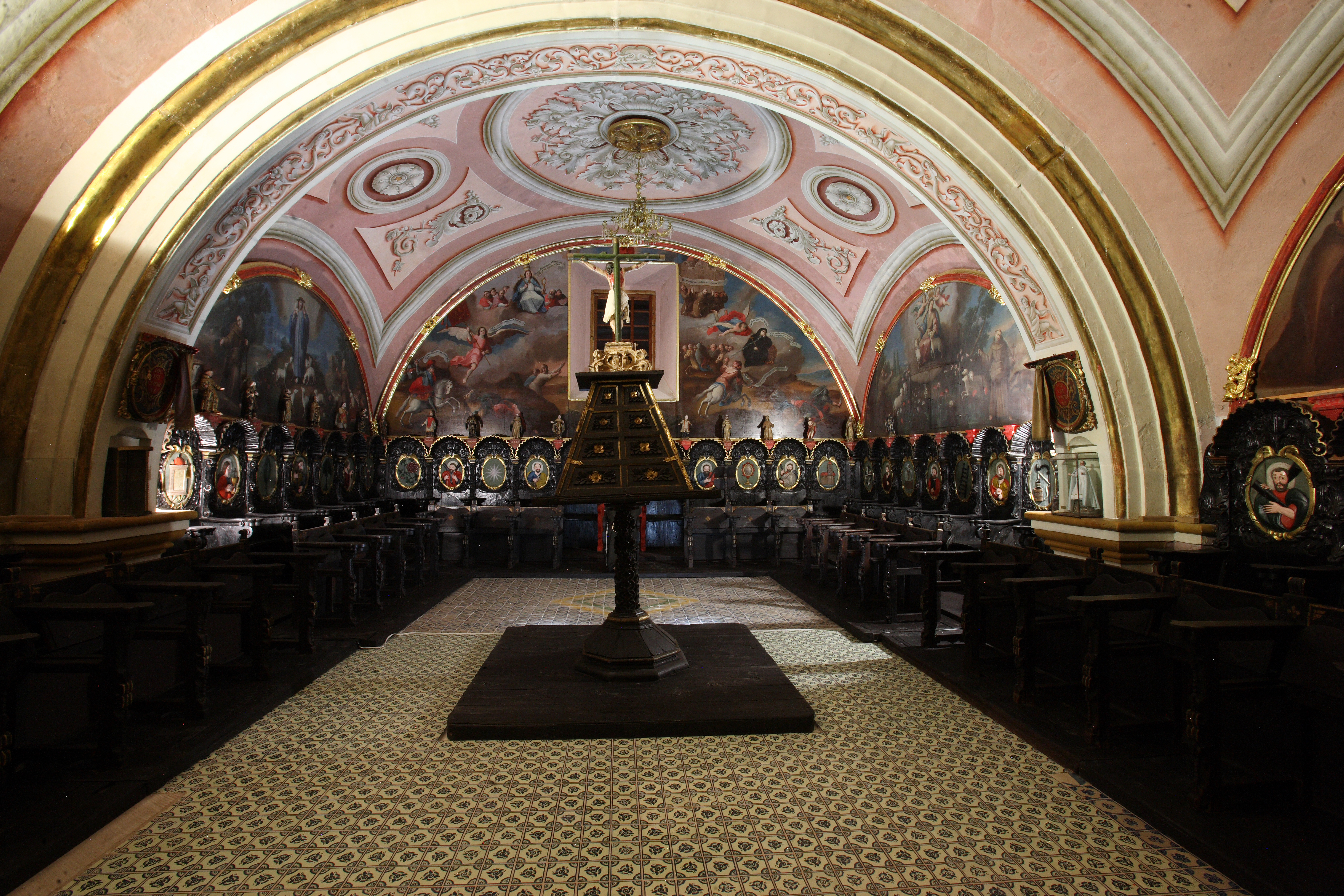
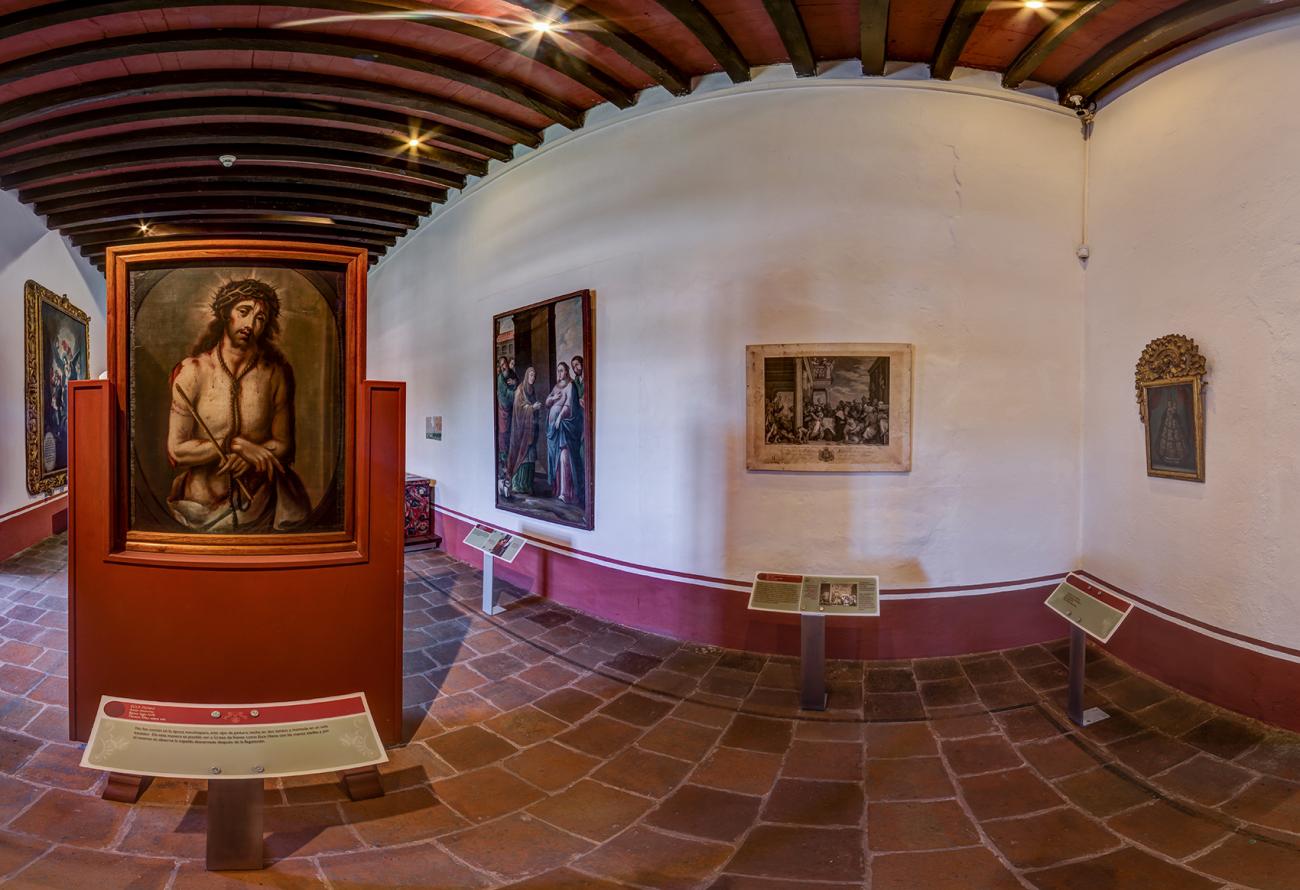
One of the most outstanding colonial buildings in Zacatecas, it contains an excellent collection of the greatest painters of the period. Complemented by a fine collection of academic and popular sculptures of the religious art of New Spain.
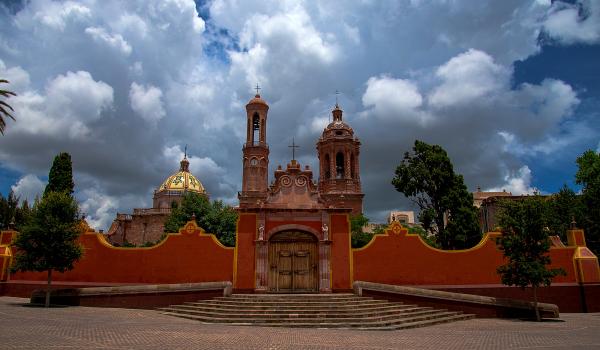
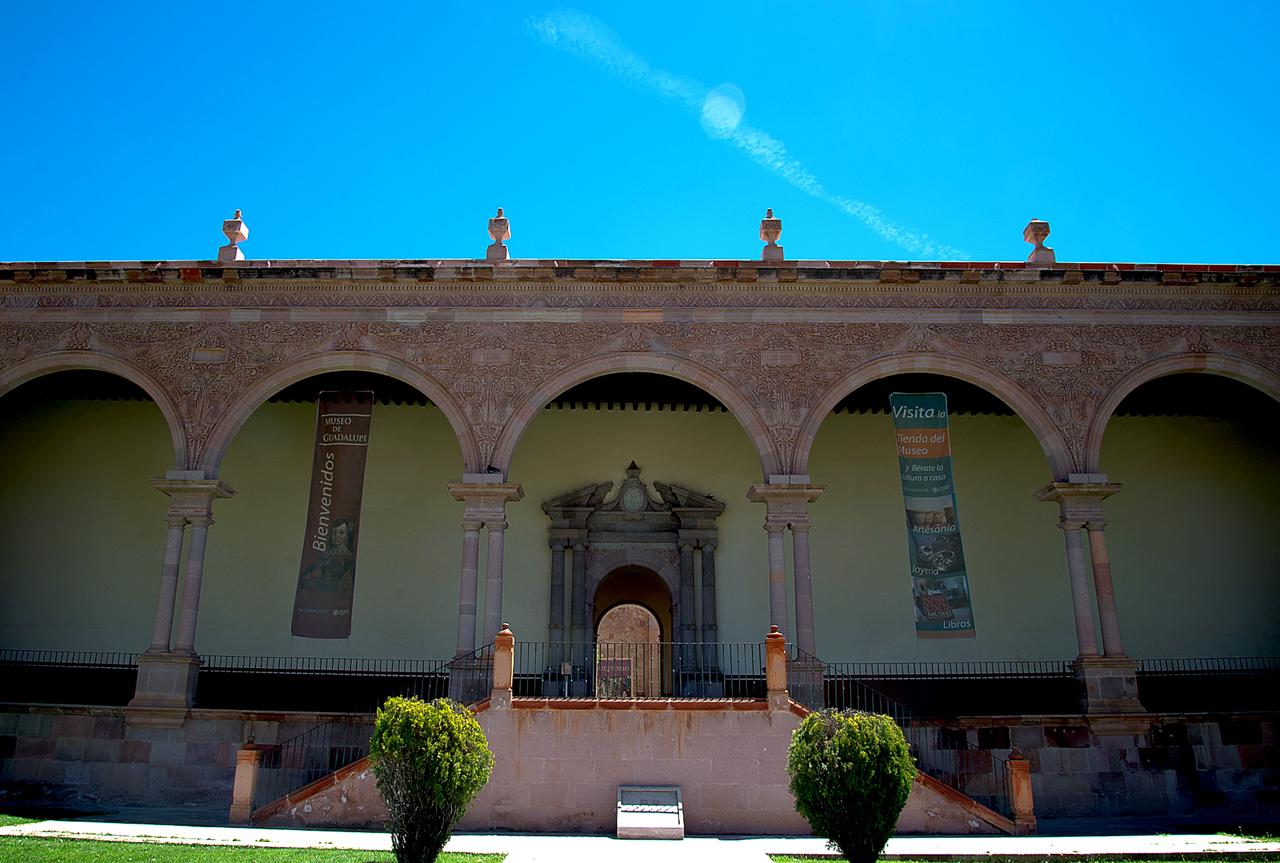
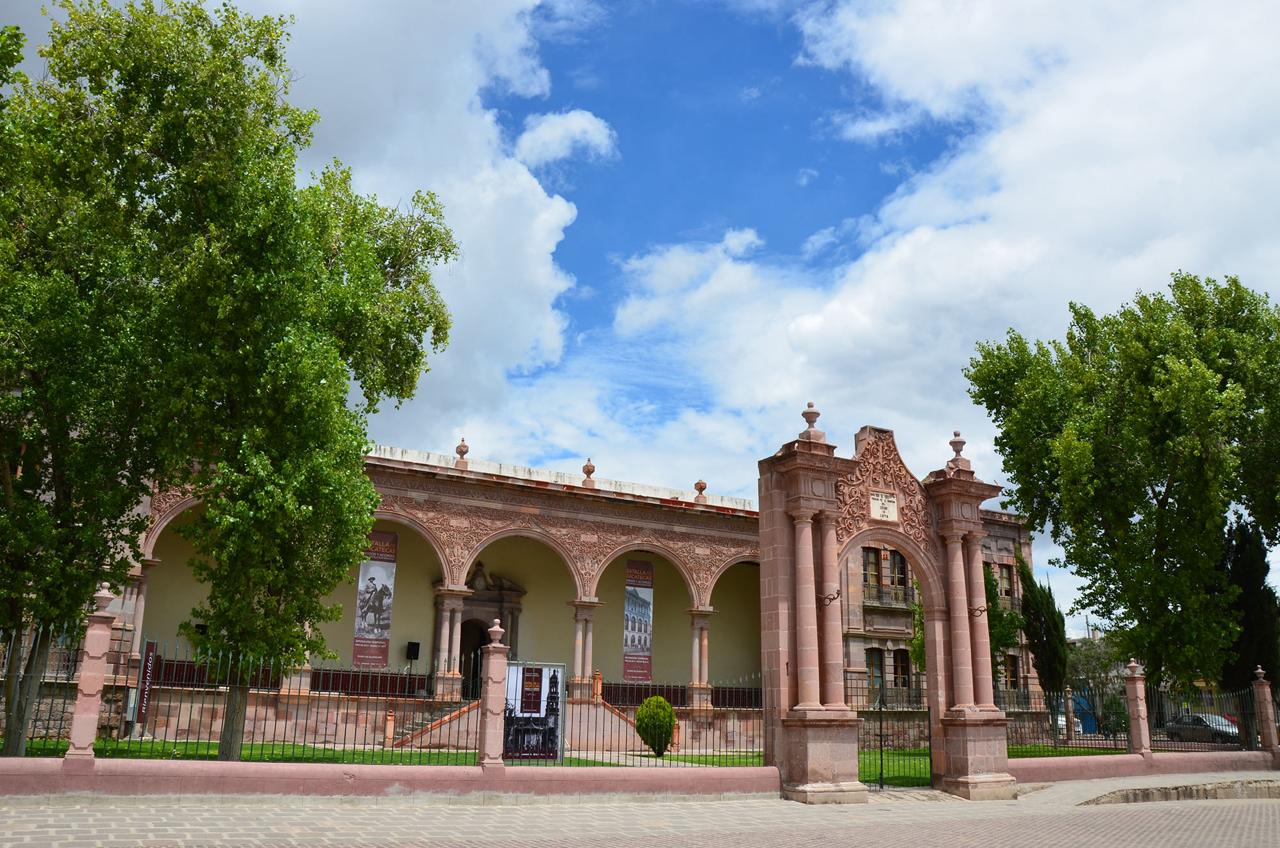
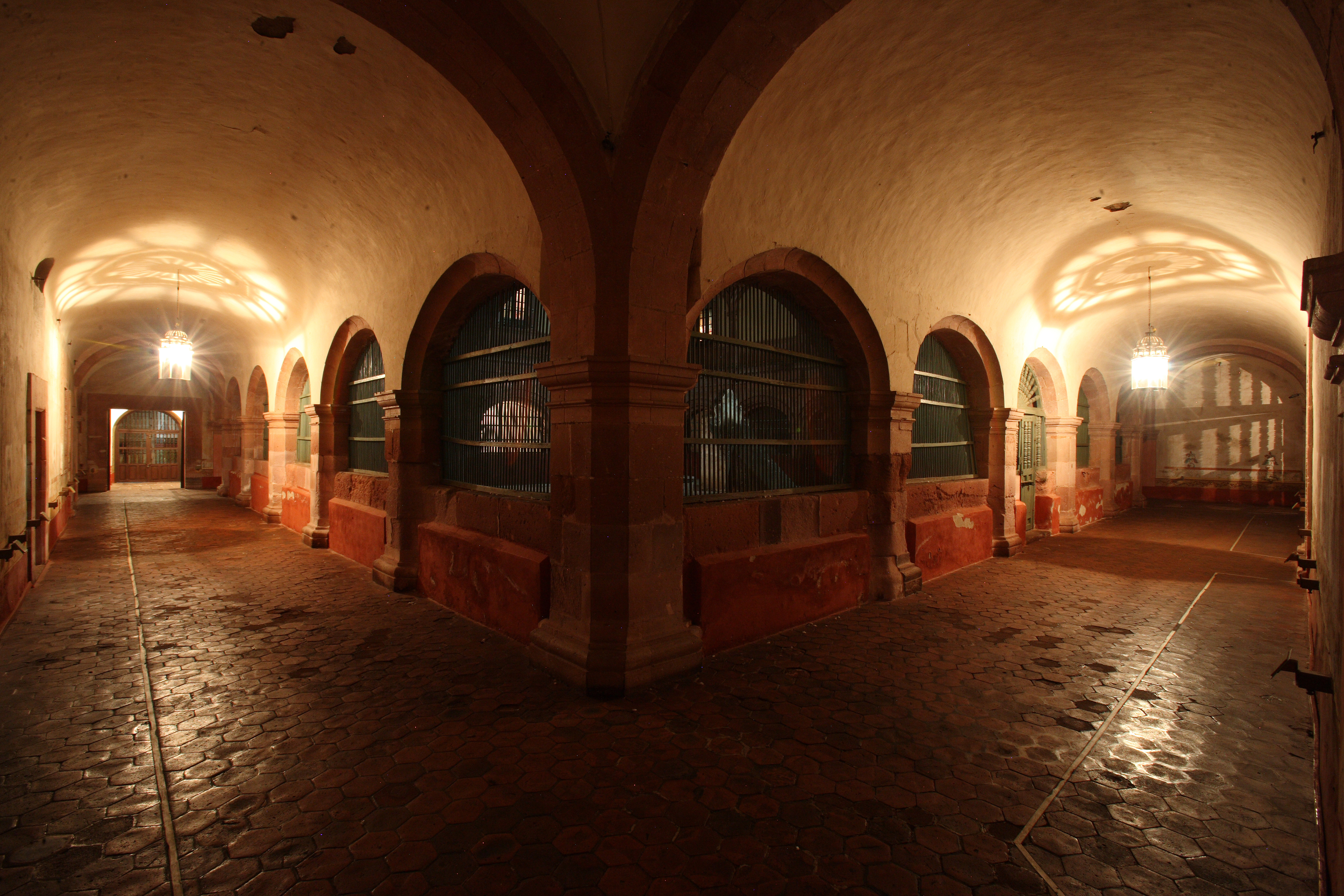
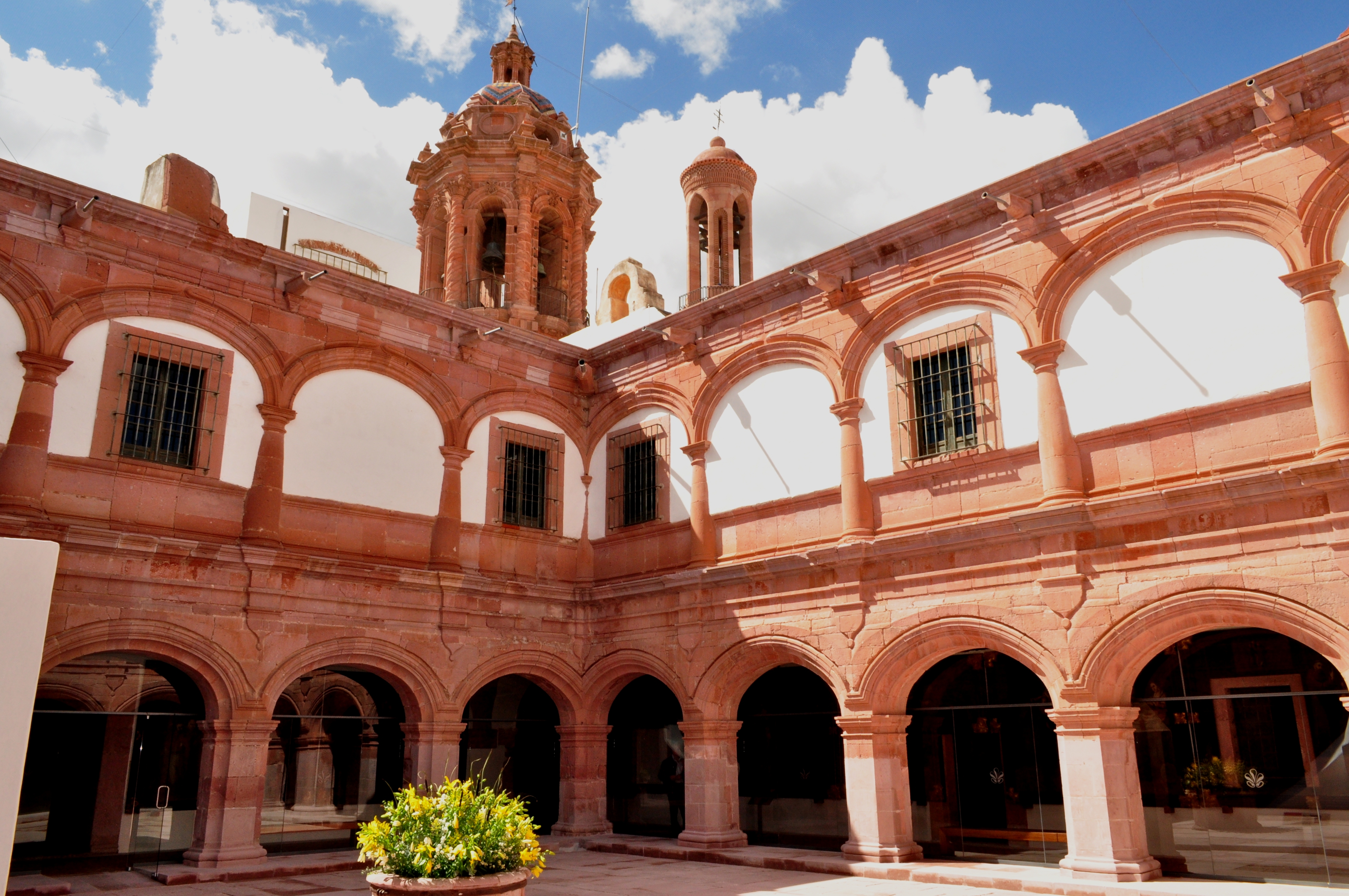
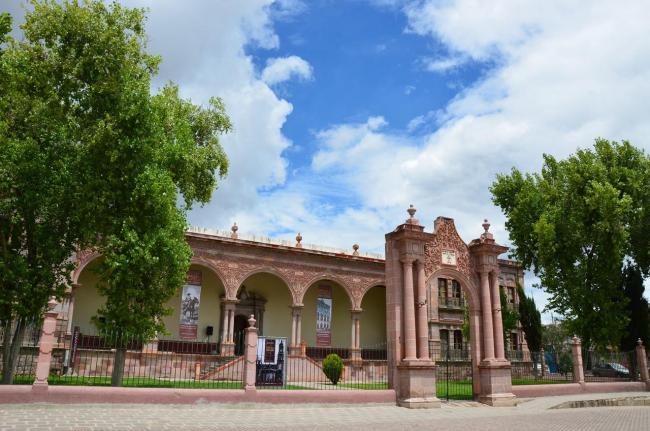
One of the most important Mexican museums of viceregal art, it sits in the former Propaganda Fide Monastery of Our Lady of Guadalupe of Zacatecas, built by Franciscans over the course of the eighteenth century. It originally covered an area of roughly ten square miles and was built with the help of contributors and the Zacatecas city government.
Due to the Reformation Laws, the friars were dismissed from the cloisters in 1859 and the Zacatecas state government allowed the building to be used for different purposes, including housing, a stables and a candle factory. Years later, some Franciscans returned and occupied the adjacent cloisters. In 1862, the Guadalupe school of arts and crafts was set up in a part of the building, on the initiative of the local authorities.
In 1878, the Guadalupe children’s orphanage was founded. In 1908, the Propaganda Fide schools were abolished, but not the Franciscan seminary. The building opened its doors as a museum of antiquities in 1917 and it was declared a national monument in 1939. In 1971, the orphanage closed, so its rooms were incorporated into the museum, which was declared a World Heritage Site by UNESCO in 2010.
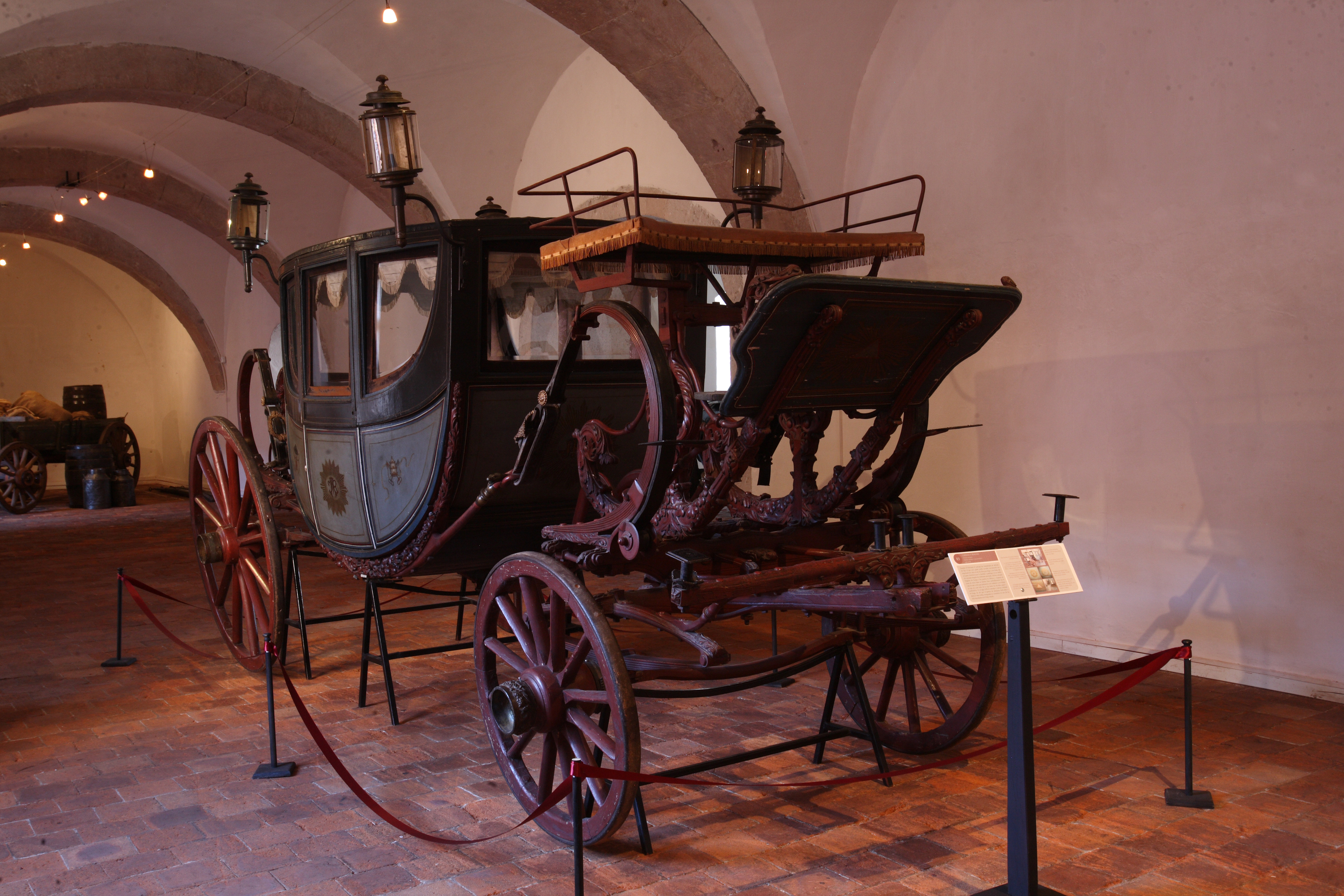
The Museum of Guadalupe, located a few minutes outside the capital of Zacatecas, has 27 permanent galleries, which include an exhibit of viceregal art from the seventeenth century, and also of Mexican art up until the twentieth century. The art collection is comprised of pieces from the most important painters of New Spain, such as Cristóbal de Villalpando, Antonio de Torres, Gabriel José de Ovalle, Miguel Cabrera, Luis Juárez, Juan Correa, Nicolás Rodríguez Juárez and Antonio de Torres, and even twentieth-century painters such as Manuel Pastrana. There is also an exhibition of feather art, sculpture made from sugarcane paste, ivory and other materials, as well as a magnificent collection of sgraffito wooden statues of saints.
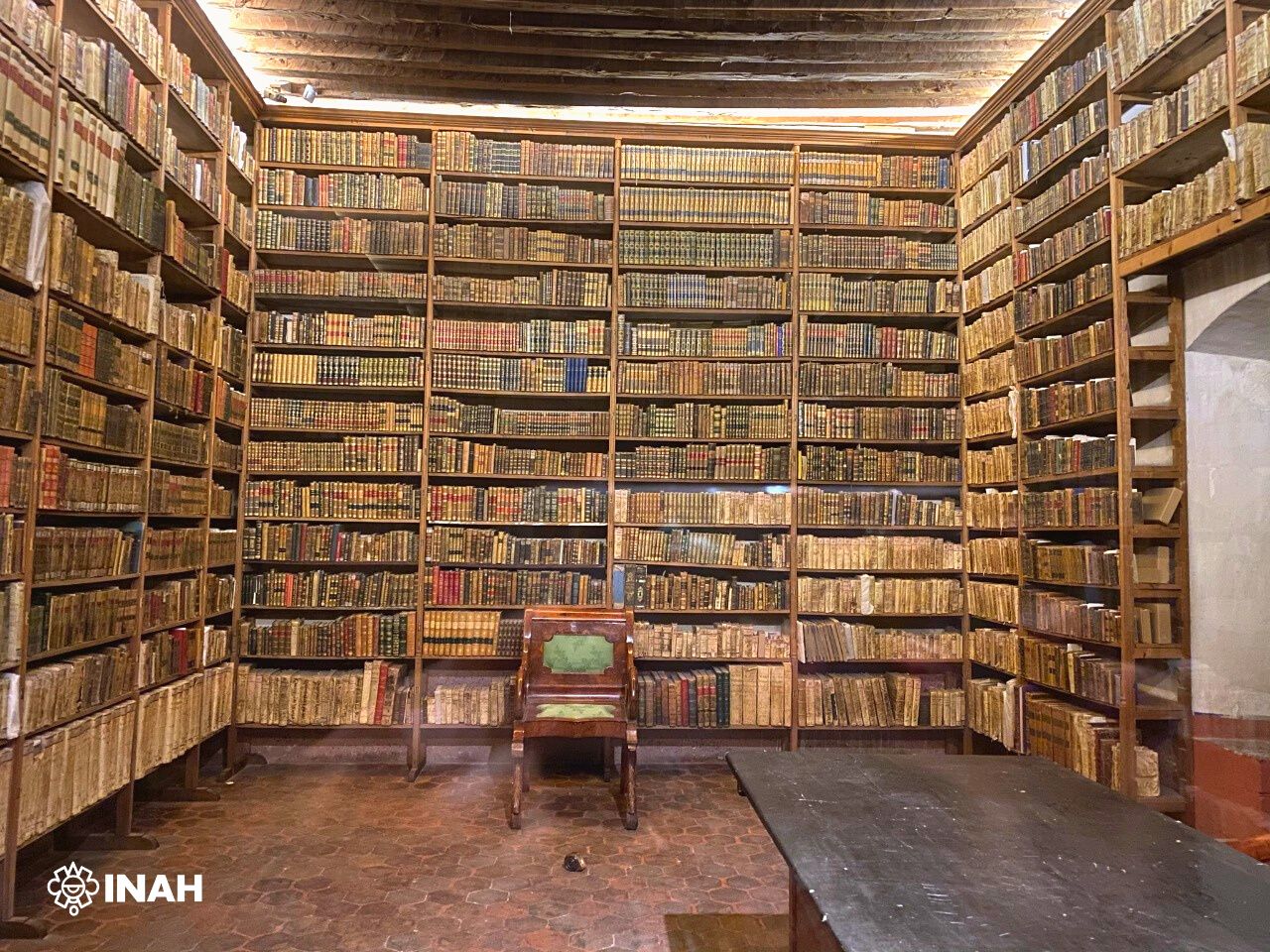
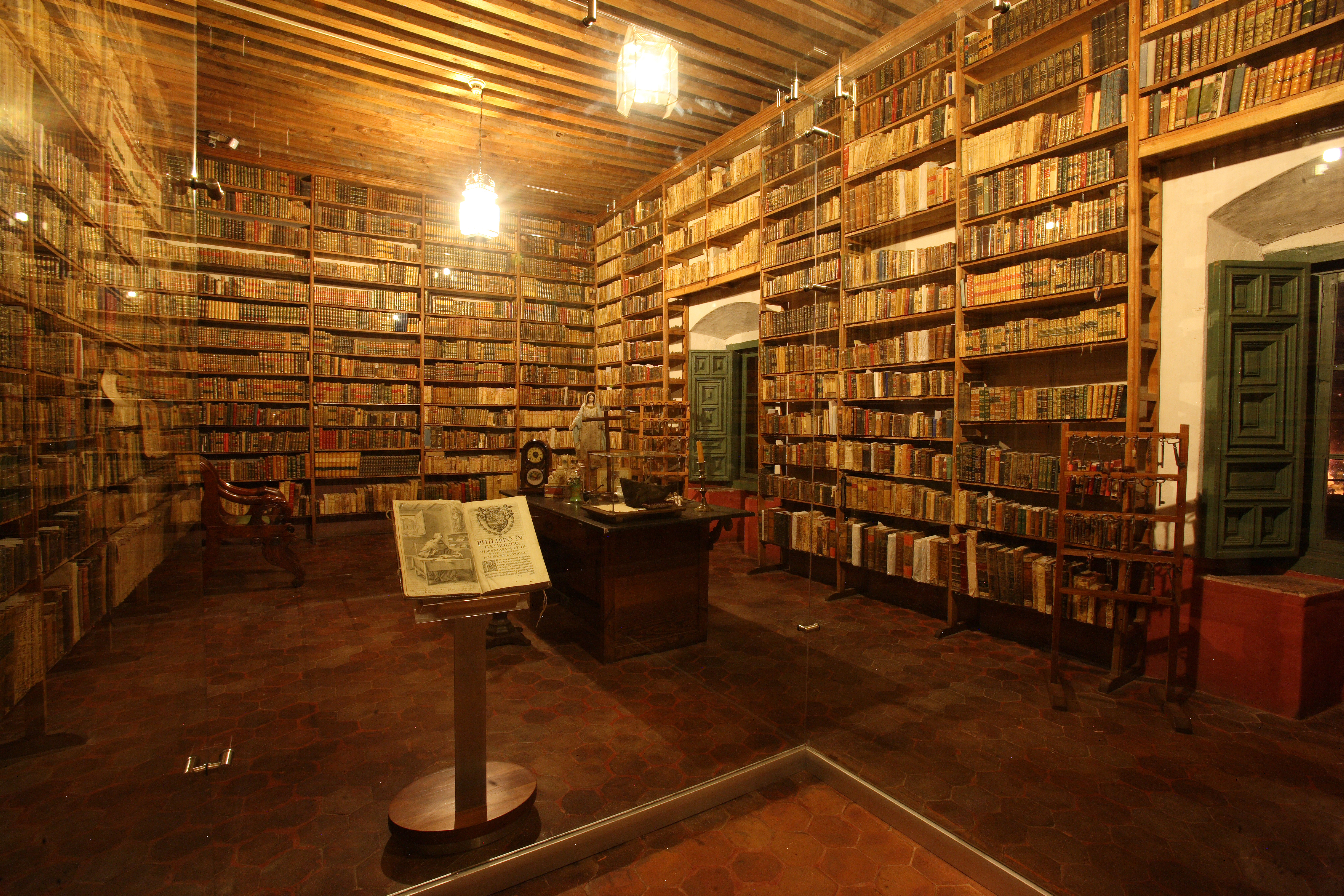
Among others, the museum visit includes the following areas: the facade, which stands out for its baroque style and its relief of Saint Francis of Assisi supporting the Virgin of Guadalupe; the San Francisco cloister, where a series of 26 canvases can be seen in their original order; a royal staircase, an example of baroque splendor, which retains three enormous canvases; the monastery library, which displays more than 9,000 volumes dating from the sixteenth century to the early twentieth century, and the Cloister of the Passion of Jesus, with 29 canvases which narrate the story of the martyrdom and crucifixion of Jesus.
Cristóbal de Villalpando
Cristóbal de Villalpando was one of the most prolific painters of New Spain and a contemporary of Sor Juana Inés de la Cruz and Juan Correa. Research on the artist suggests that he married María de Mendoza in 1669 in Mexico City. His eldest son, Carlos de Villalpando, stood out and took over his…
Cristóbal de Villalpando
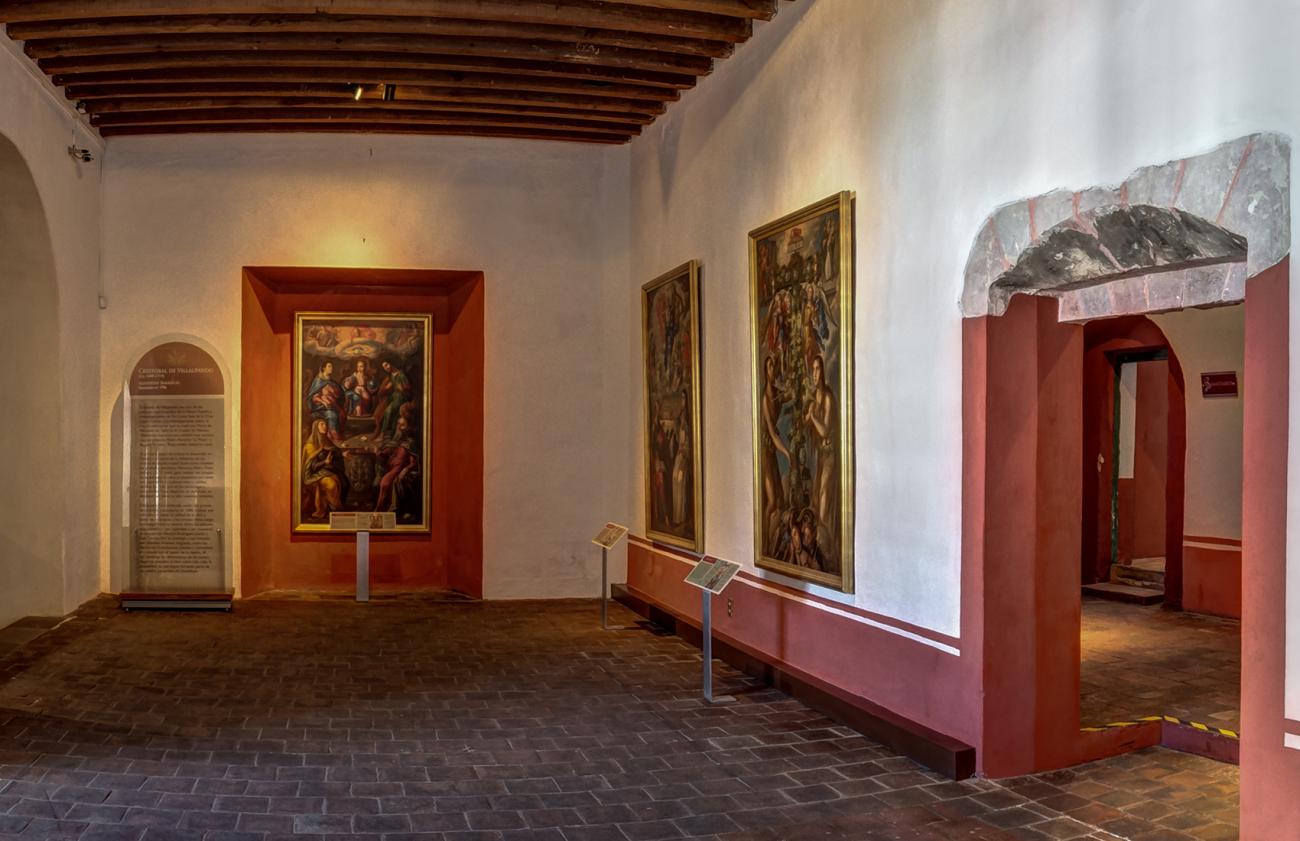
Cristóbal de Villalpando was one of the most prolific painters of New Spain and a contemporary of Sor Juana Inés de la Cruz and Juan Correa. Research on the artist suggests that he married María de Mendoza in 1669 in Mexico City. His eldest son, Carlos de Villalpando, stood out and took over his father's workshop. He also maintained a close friendship with the painters Pedro Ramírez "el Mozo" and Baltazar Echave y Rioja, both of whom were his mentors.
Villalpando began his artistic career in Puebla, where he was influenced by the artists of the city. He drew inspiration from the engravings of the Flemish painter Peter Paul Rubens (1577-1640) to create his own compositions. His work is characterized by a rich use of vivid and warm colors, intricate details in each character, and a sense of luminosity. These allegories, in particular, stand out for their strong symbolic content.
In 1686, Villalpando was appointed supervisor of the guild of painters and sculptors, a role that involved overseeing the quality of artwork and conducting examinations for aspiring artists. He held this position until his death. Among the painters he examined were Nicolás Rodríguez Juárez and Juan Correa, who were hoping to become master painters. Due to his prestige and invitations from various religious orders, such as the Dominicans, Franciscans, Jesuits, and Carmelites, he is considered the leading painter of his time. Given that the paintings in this former Propaganda Fide College have identical dimensions and are oil on canvas, it is possible that they were part of an altarpiece in the Temple of Guadalupe.
Marian Invocations
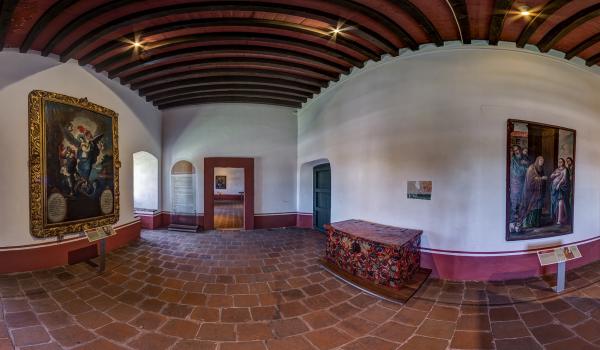
It was common in colonial Mexican homes to designate a special space for piety. These domestic chapels housed a religious image, often accompanied by flowers, cloths, candles, and other adornments that enhanced the space. Religious obligations were not limited to specific dates; instead, various…
Marian Invocations
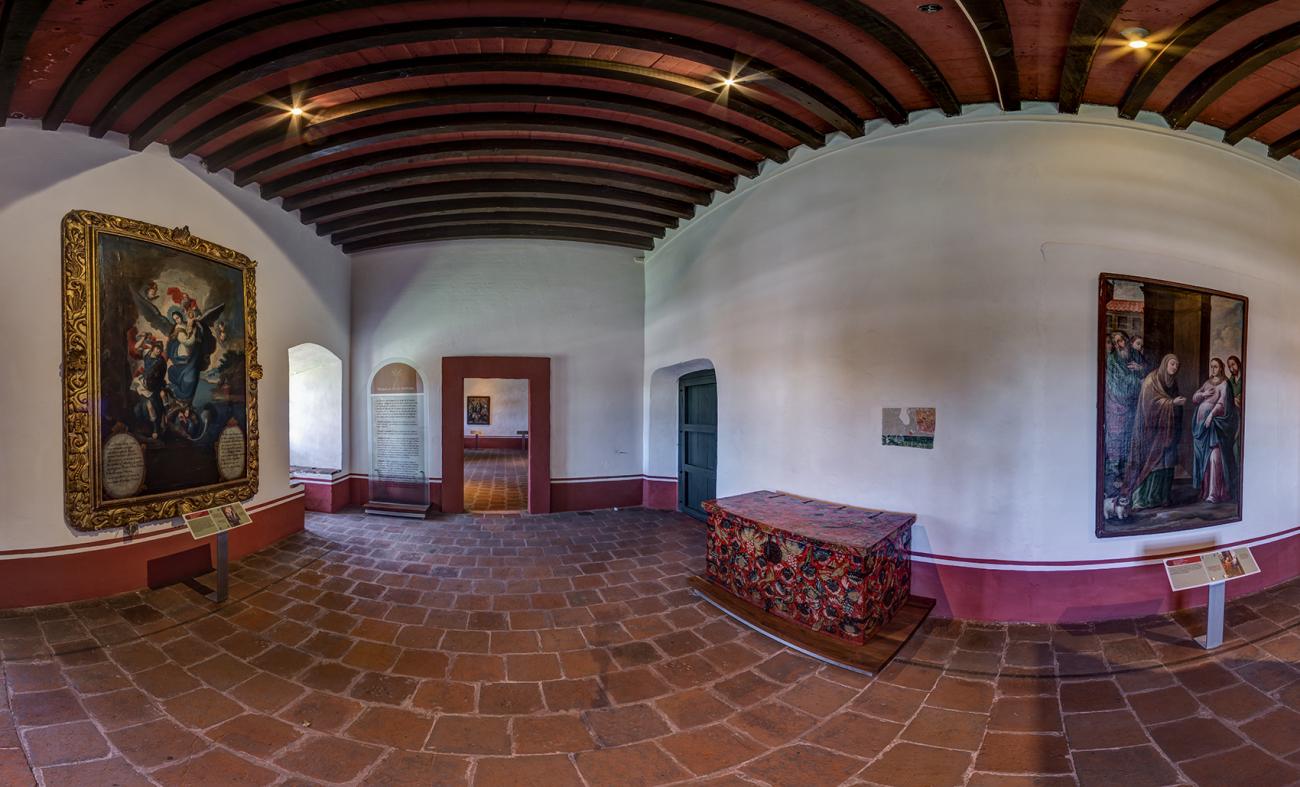
It was common in colonial Mexican homes to designate a special space for piety. These domestic chapels housed a religious image, often accompanied by flowers, cloths, candles, and other adornments that enhanced the space. Religious obligations were not limited to specific dates; instead, various prayers were offered at different times of the day, becoming part of the daily routine of the household. The Church recommended various prayers and praises to the Virgin Mary, so many men and women would entrust themselves to and invoke the Mother of the Lord.
Marian invocations refer to the gifts or attributes of the Virgin Mary, as well as her miraculous appearances. The most well-known manifestation in Mexico is that of the Virgin of Guadalupe, who appeared to the indigenous man Juan Diego in 1531 and continues to be regarded as the patroness and protector of Mexicans today.
The Virgin Mary is known by different names, according to the various moments she lived with her son, Jesus Christ. This includes titles such as the Virgin of Sorrows and Our Lady of Piety, which recall scenes from the Passion of Christ. Throughout the country, there are shrines built at sites where Marian apparitions occurred, such as Our Lady of Ocotlán in Tlaxcala, Our Lady of El Pueblito in Querétaro, Our Lady of Itzamal in Yucatán, and Our Lady of Patrocinio in Zacatecas.
Colonial Mexican Techniques
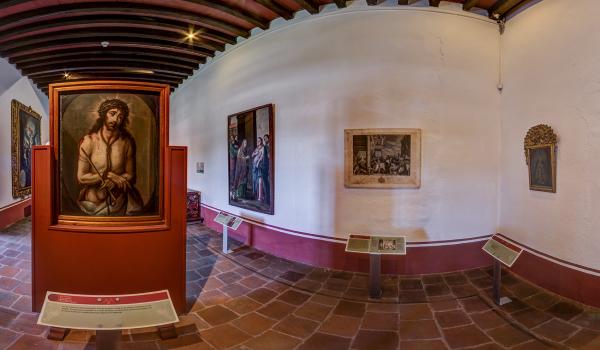
One of the characteristics of sculptural work in wood is that, unlike painters who signed their works, sculptures do not typically display the signatures of their creators. One reason for this is that in a carved, polychromed, and gilded sculpture, two workshops were involved: the sculptor's…
Colonial Mexican Techniques
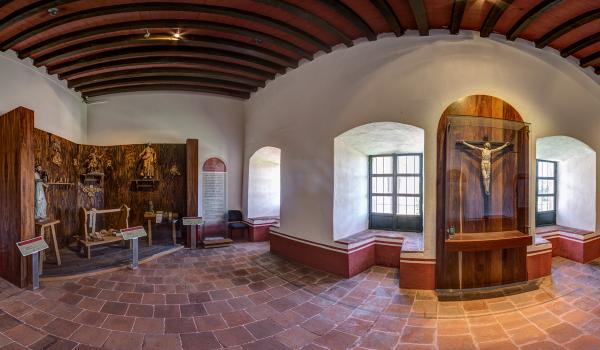
One of the characteristics of sculptural work in wood is that, unlike painters who signed their works, sculptures do not typically display the signatures of their creators. One reason for this is that in a carved, polychromed, and gilded sculpture, two workshops were involved: the sculptor's workshop, which would carve the image and leave it "unfinished," and the workshop of the painter-gilder, who would complete the polychrome work on the face and hands, as well as the gilding that mimicked the rich fabrics of the clothing. Therefore, both guild workshops were required to collaborate on these images.
Many sculptors' names are known through contracts discovered by researchers in various archives across the country. One such example is the main altarpiece of the church at the Jesuit College-Novitiate, where the workshops of the painter Miguel Cabrera and the sculptor Higinio de Chávez were involved.
Conventual Techniques
Once the military conquest of the great Tenochtitlan was completed, Hernán Cortés himself requested that King Charles I of Spain send missionaries to evangelize the indigenous people. Initially, three Franciscans arrived, but only Fray Pedro de Gante survived. Later, three religious orders were…
Conventual Techniques
Once the military conquest of the great Tenochtitlan was completed, Hernán Cortés himself requested that King Charles I of Spain send missionaries to evangelize the indigenous people. Initially, three Franciscans arrived, but only Fray Pedro de Gante survived. Later, three religious orders were sent to carry out a systematic plan of catechesis: twelve Franciscans arrived in Mexico in 1524, led by Fray Martín de Valencia; two years later, in 1526, Fray Tomás Ortiz arrived with twelve Dominicans, and finally, in 1533, eight Augustinian friars landed in Veracruz.
These friars and their successors began the catechization of the largest indigenous populations in central New Spain. To facilitate their work, they gathered the indigenous people around the convents they built throughout the territory. These magnificent structures, built by the indigenous people and overseen by the friars, became the central points around which the daily life of these communities revolved.
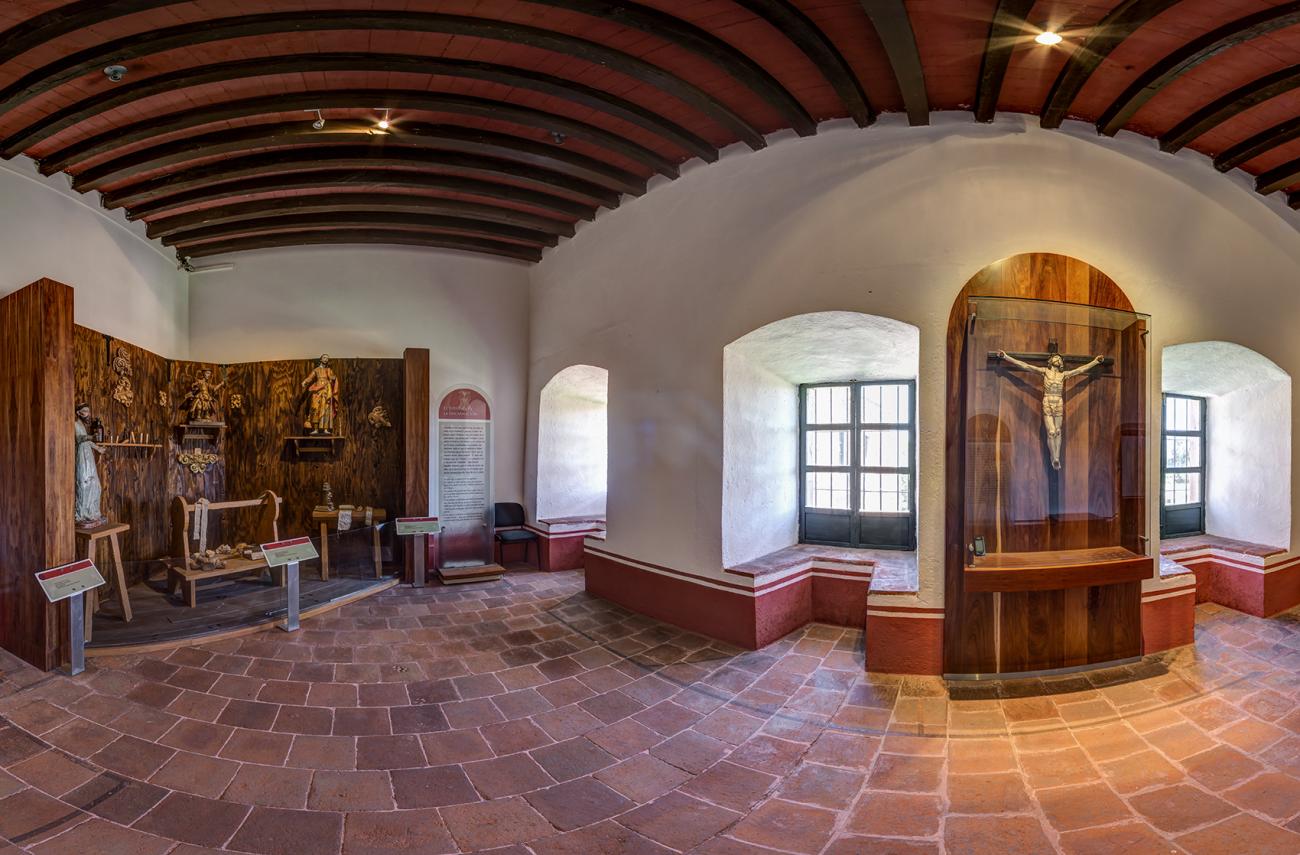
Here, examples of cane paste sculpture, particularly crucified Christs, and feather mosaics are on display. These pieces are currently stored for conservation purposes, as work is being done on a preventive conservation proposal for this room.
Manuel Pastrana, a Painter from Zacatecas
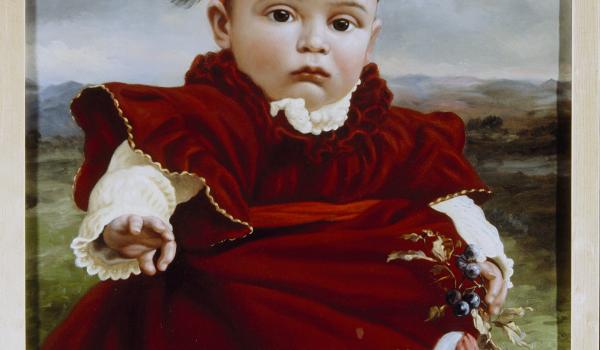
Paulino Manuel Pastrana González was born in Mexico City on June 22, 1859, into a family originally from Villanueva, Zacatecas. In 1873, after passing a rigorous exam, at the age of 13, he entered the Academia de San Carlos on a scholarship. He was one of the youngest students of his generation and…
Manuel Pastrana, a Painter from Zacatecas
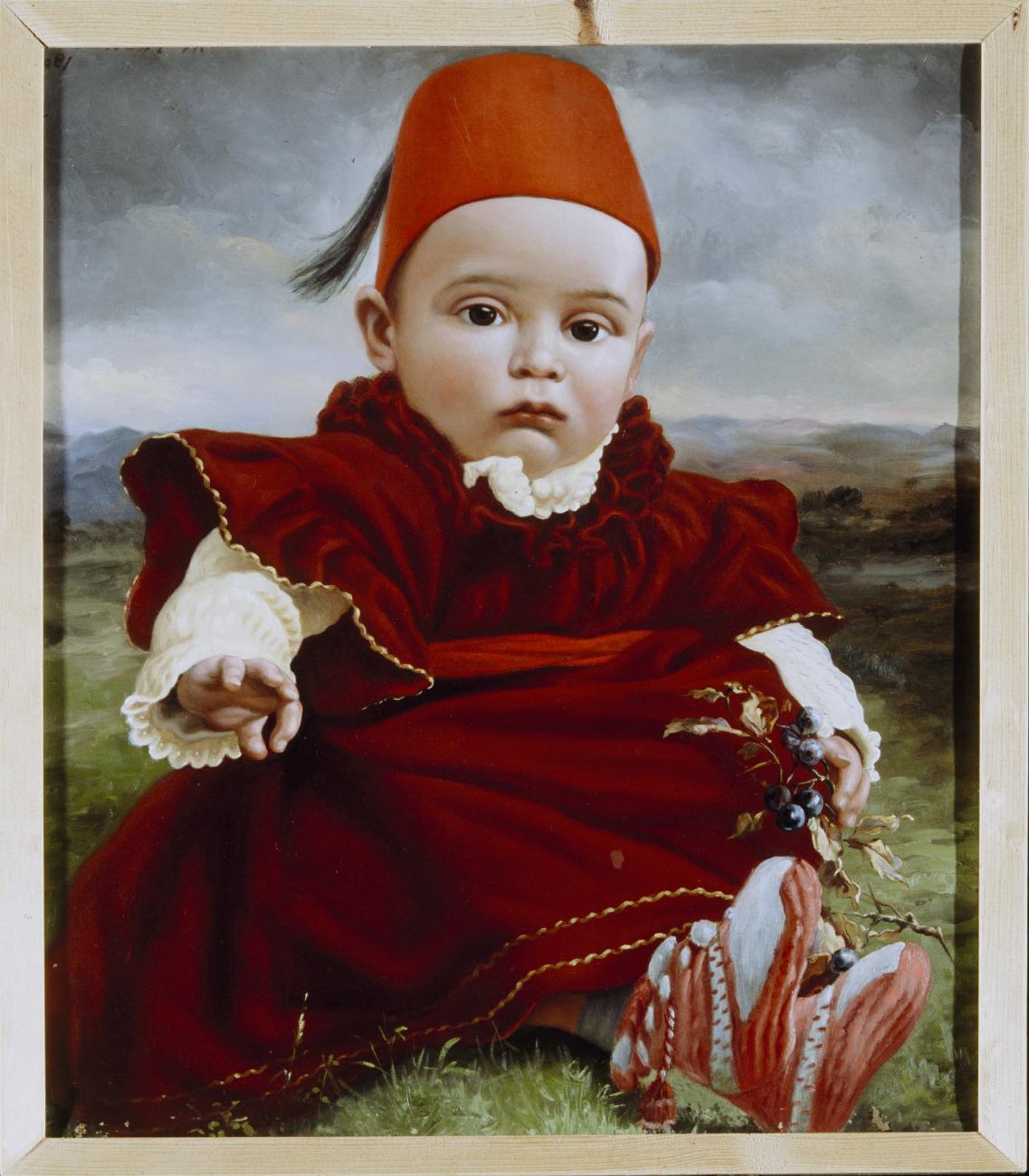
Paulino Manuel Pastrana González was born in Mexico City on June 22, 1859, into a family originally from Villanueva, Zacatecas. In 1873, after passing a rigorous exam, at the age of 13, he entered the Academia de San Carlos on a scholarship. He was one of the youngest students of his generation and became part of the select group of graduates who decided to return to their hometowns. During his early years in Zacatecas, he served as a professor at major schools such as the Instituto de Ciencias, the Escuela Normal de Señoritas, and the Hospicio de Niños.
Pastrana played a crucial role in the education of Zacatecan youth, witnessing the development of several generations who benefited from his teachings. Without prejudice, he taught painting and drawing to Zacatecan women using the method by which he himself had learned. In 1917, he received two important appointments: director of the Museum of Guadalupe and honorary local inspector of artistic monuments. Manuel Pastrana’s artistic legacy places him alongside the great masters of Zacatecan art, alongside figures such as Julio Ruelas and Francisco Goitia.
New Spanish Devotions
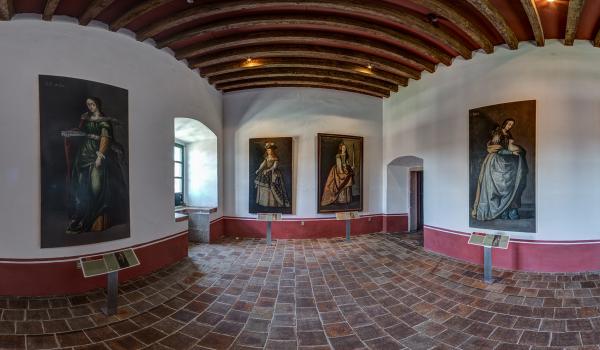
One of the educational tools used by the Church to teach the faithful was the life of the saints, depicted through their images. In this way, the childhood of the Child Jesus, his sacrifice, and the exemplary lives of the Virgin Mary and the saints served as models to be imitated by New Spanish…
New Spanish Devotions
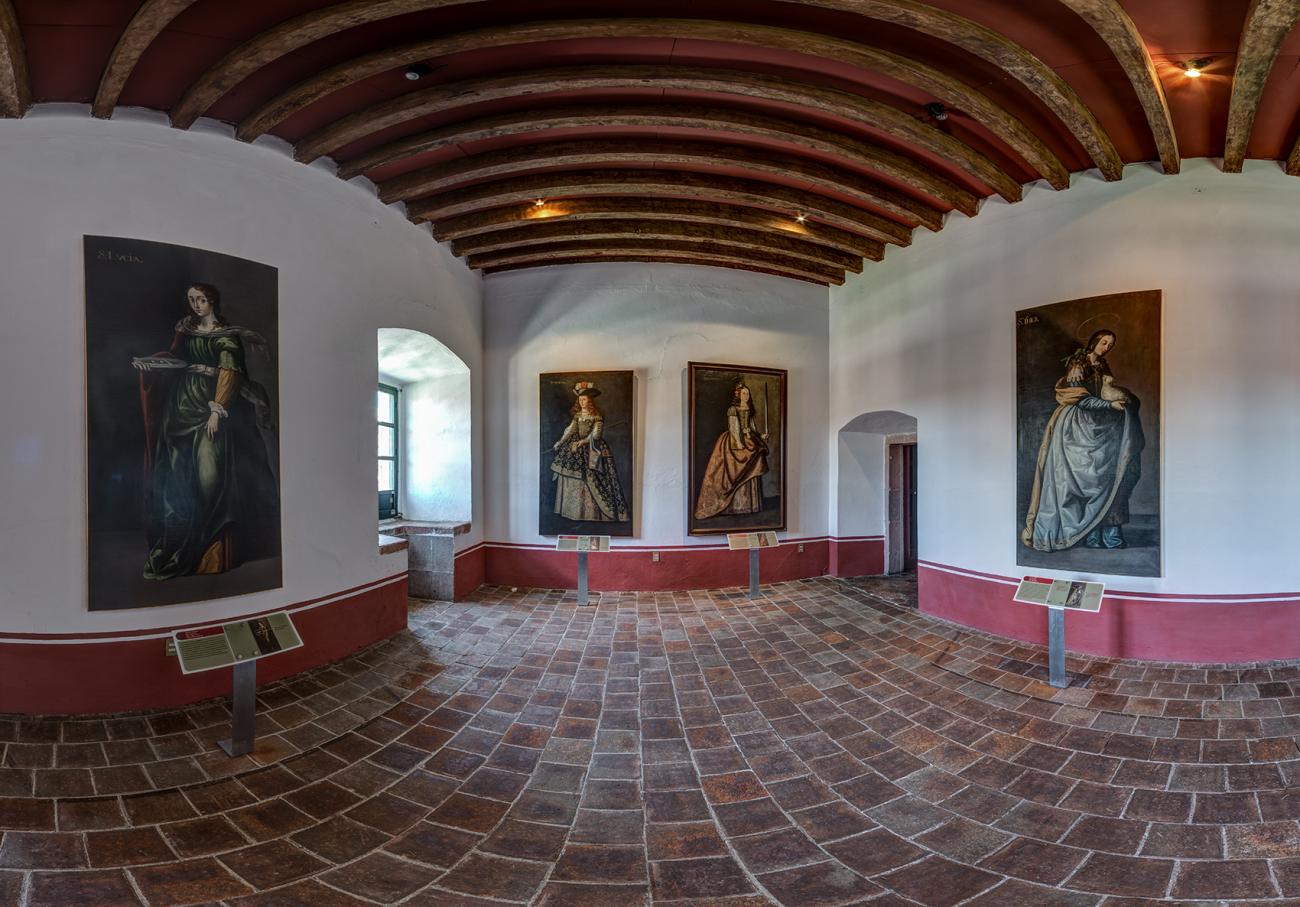
One of the educational tools used by the Church to teach the faithful was the life of the saints, depicted through their images. In this way, the childhood of the Child Jesus, his sacrifice, and the exemplary lives of the Virgin Mary and the saints served as models to be imitated by New Spanish society.
The various guilds of New Spain adopted one or more patron saints with whom they identified through their profession or, in other cases, through the martyrdom they endured. These figures are recognized by their clothing and attributes, which are objects associated with their lives and/or deaths. The discipline dedicated to studying the lives and works of these saintly figures is called hagiography.
Miguel Cabrera
Miguel Cabrera, the artist behind the series depicting the life of the Virgin Mary, was one of the most prolific painters of the New Spanish Baroque. It is believed that he was born around 1695 in the Villa de Antequera, now Oaxaca. The Museum of Guadalupe in Zacatecas, which houses one of the most…
Miguel Cabrera
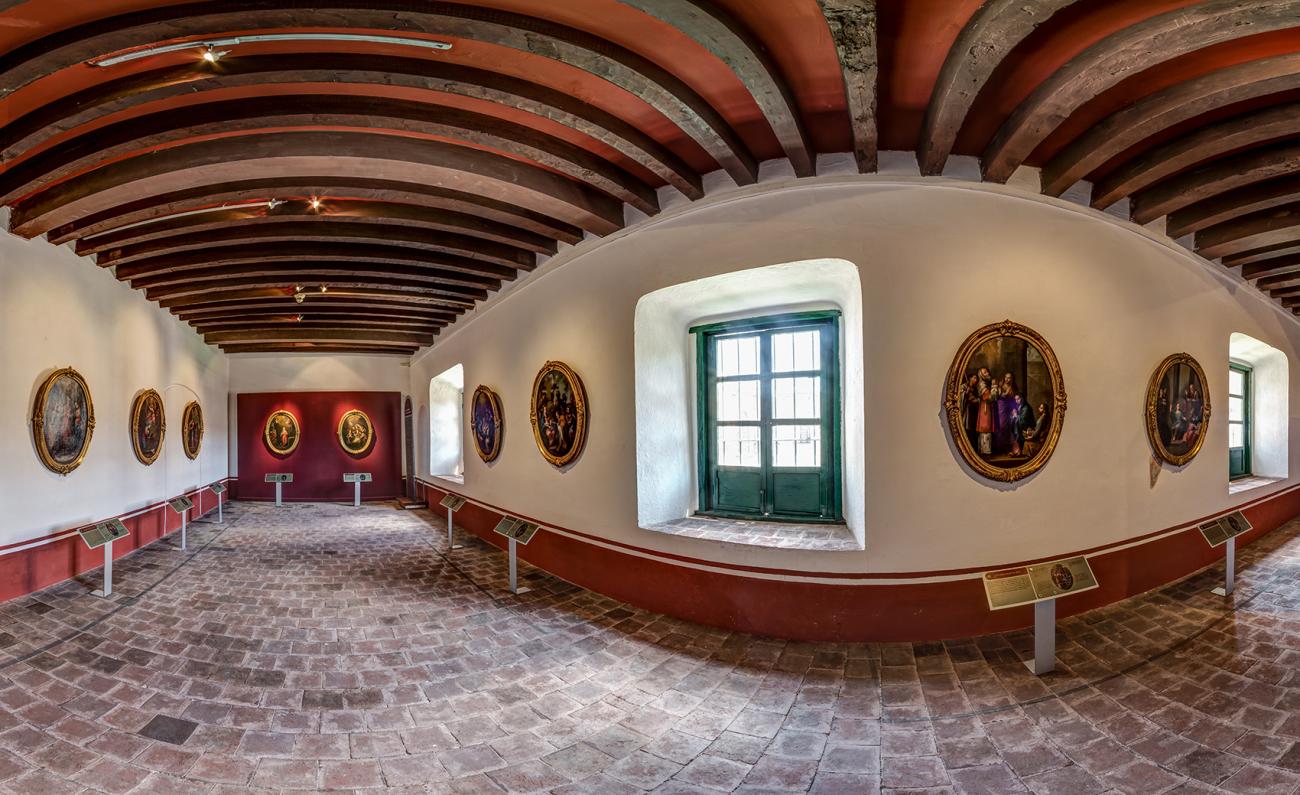
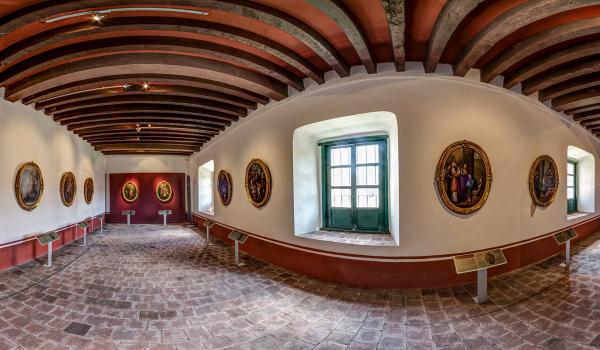
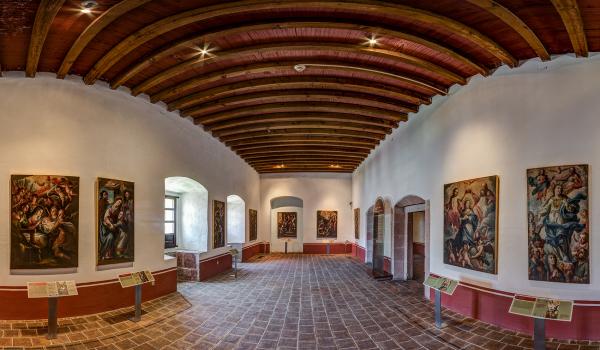
Miguel Cabrera, the artist behind the series depicting the life of the Virgin Mary, was one of the most prolific painters of the New Spanish Baroque. It is believed that he was born around 1695 in the Villa de Antequera, now Oaxaca. The Museum of Guadalupe in Zacatecas, which houses one of the most important colonial art collections in Mexico, holds this magnificent series consisting of 14 oil-on-canvas paintings from the 18th century, originally created for an altarpiece.
Baroque artists were tasked with capturing and giving form to the aesthetic aspirations of a society whose worldview and daily life were centered around the Catholic religion. In the 16th century, the Catholic Church defended Marian worship, which had been challenged by the Protestant ideals of Martin Luther, who rejected religious images in practices.
During the colonial period, especially in the 17th and 18th centuries, the female universe focused on religion. Women were content to live devoutly according to the model of the Virgin Mary, considered the most perfect being after Christ, striving to imitate her from childhood to her final years of life.
Antonio de Torres
Antonio de Torres was born in Mexico City and was the penultimate of five siblings, the son of Tomás de Torres and Lorenzana Rodríguez. He married at the age of 19, and during his youth, he trained in his uncle's workshop, Antonio Rodríguez, alongside his cousins Nicolás and Juan Rodríguez Juárez.…
Antonio de Torres
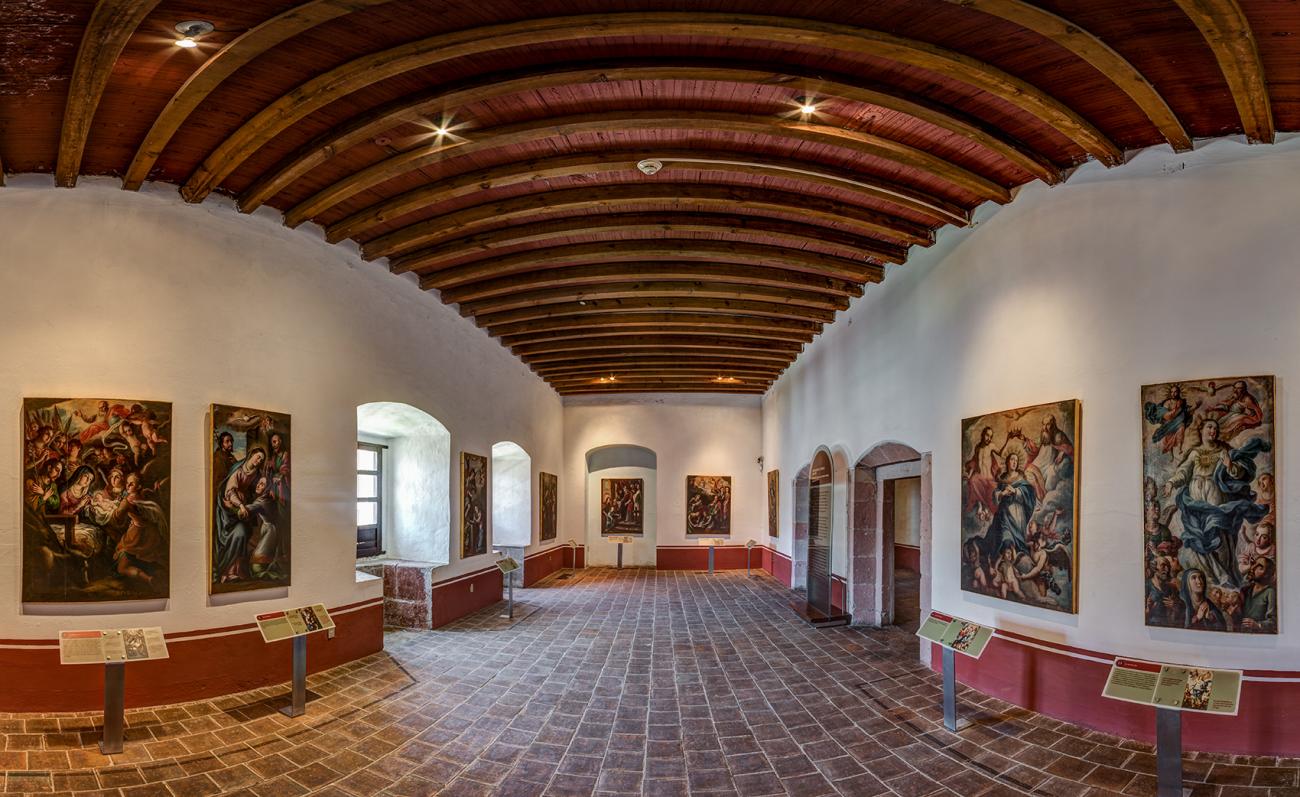
Antonio de Torres was born in Mexico City and was the penultimate of five siblings, the son of Tomás de Torres and Lorenzana Rodríguez. He married at the age of 19, and during his youth, he trained in his uncle's workshop, Antonio Rodríguez, alongside his cousins Nicolás and Juan Rodríguez Juárez.
Torres is known for being a Baroque painter, characterized by the intensity of his colors, the sweetness in the faces of his characters, and his compositions filled with various elements. An example of this is the series on the Life of the Virgin Mary, based on the Apocryphal Gospels, which detail the childhood of the Mother of the Savior.
His work is abundant and widely scattered, both in Mexico City and across much of the central and northern regions of New Spain, along the Camino Real de Tierra Adentro: San Luis Potosí, Zacatecas, Durango, Chihuahua, and Santa Fe in the present-day state of New Mexico, USA. In 1720, he worked for the Franciscans of Propaganda Fide, decorating the sacristy of the Temple of Guadalupe with three canvases, which can be considered the finest works produced by his brush.
Gabriel José Ovalle
Gabriel José de Ovalle was born in Mexico City in the last quarter of the 17th century. He began his career in painting in 1726 and married María Teresa de Almanza from Zacatecas. From that point on, he worked in Durango and Zacatecas. He considered himself more than just a producer of images; he…
Gabriel José Ovalle
Gabriel José de Ovalle was born in Mexico City in the last quarter of the 17th century. He began his career in painting in 1726 and married María Teresa de Almanza from Zacatecas. From that point on, he worked in Durango and Zacatecas. He considered himself more than just a producer of images; he saw himself as a self-aware creative artist.
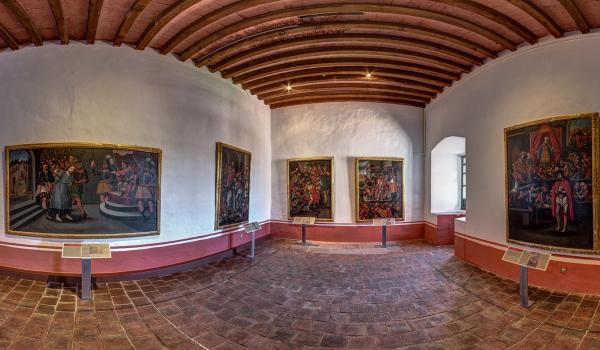
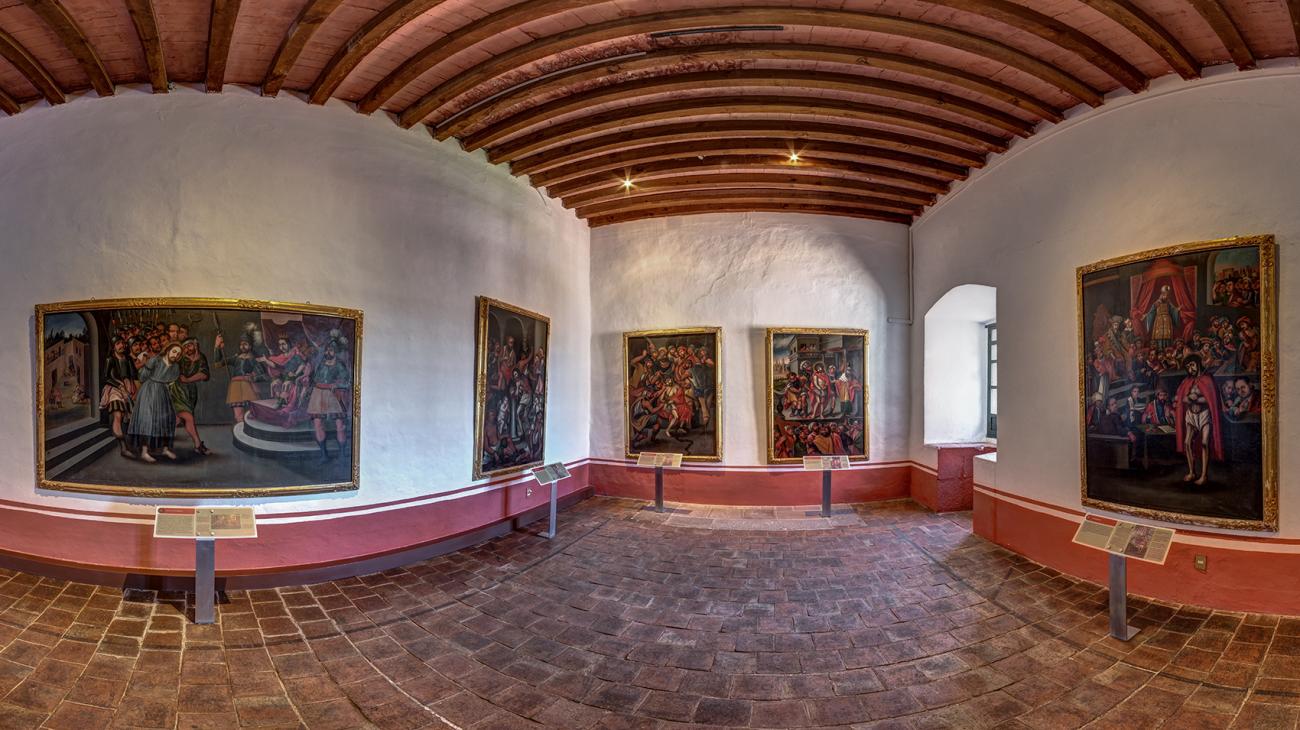
His series on the Passion of Christ consists of 15 oil paintings on canvas, completed in 1749 for the Franciscans of Propaganda Fide in Guadalupe. From then until his death, Ovalle lived in this city.
In the series, various pictorial features define Ovalle as an artist with a distinctive style. Through his use of color and drawing, he expresses emotions and feelings in his characters, who are divided between good and evil. Striking details, such as the use of red to signify evil, as well as caricatured and grotesque figures, contribute to the overall dramatic effect. Ovalle’s intentional manipulation of proportions and disproportion in the human figures to define their individual character makes him unique within the world of Baroque painters.
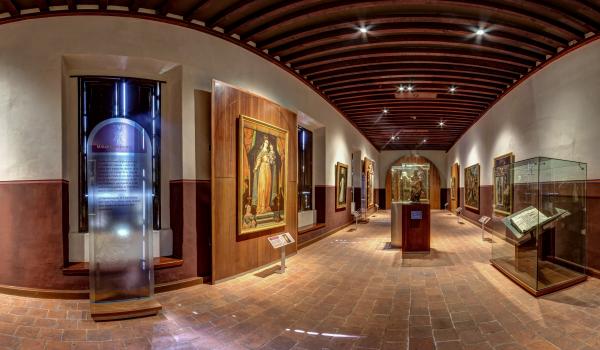
A Look at the Baroque
The Baroque was a style that transformed the way people lived, thought, and felt in the colonial world. The Museum of Guadalupe houses significant colonial artworks that fall within this trend.
Atrium
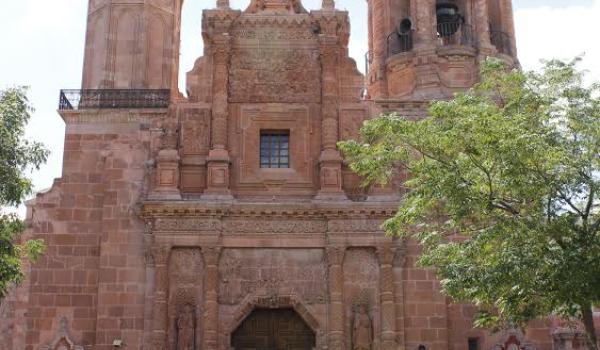
The Colegio de Guadalupe was built on the "Huertas de Melgar", land named after Jerónima de Castilla, the widow of Melgar, who donated it in 1674. On this site stood an old hermitage dedicated to Our Lady of Mount Carmel. Two years later, ecclesiastical permission was granted to construct a new…
Atrium
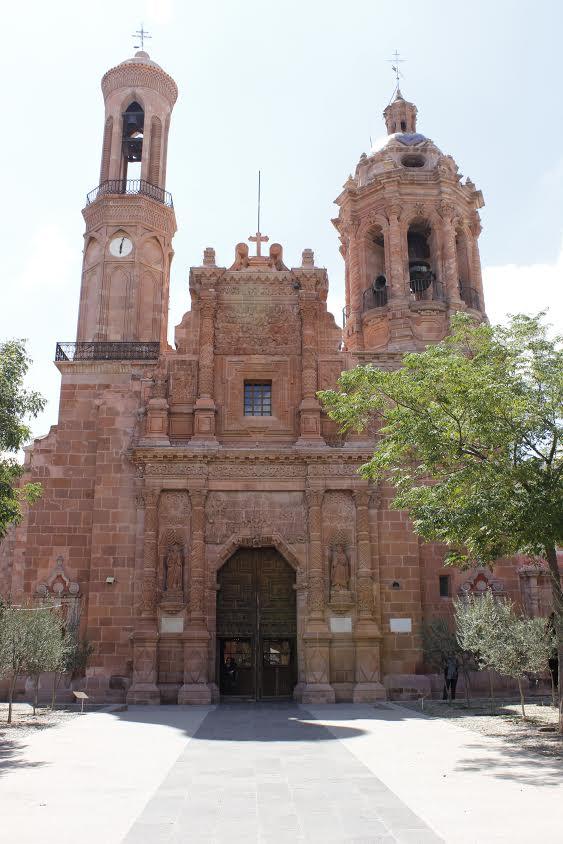
The Colegio de Guadalupe was built on the "Huertas de Melgar", land named after Jerónima de Castilla, the widow of Melgar, who donated it in 1674. On this site stood an old hermitage dedicated to Our Lady of Mount Carmel. Two years later, ecclesiastical permission was granted to construct a new sanctuary dedicated to the Virgin of Guadalupe, along with a guesthouse for friars traveling northward.
The initial construction work began in 1702 and included the lower level of the complex: the Cloister of Saint Francis, the church and its sacristy, the atrium, a cemetery for benefactors, and the novitiate. On January 12, 1707, these foundations gave rise to the Apostolic College of Propaganda Fide of Guadalupe, Zacatecas. The building efforts continued, and by 1797 the atrium’s 14 Stations of the Cross had been completed, each with a niche marked by a stone cross. These stations commemorate the path Christ followed to Calvary, where he was crucified.
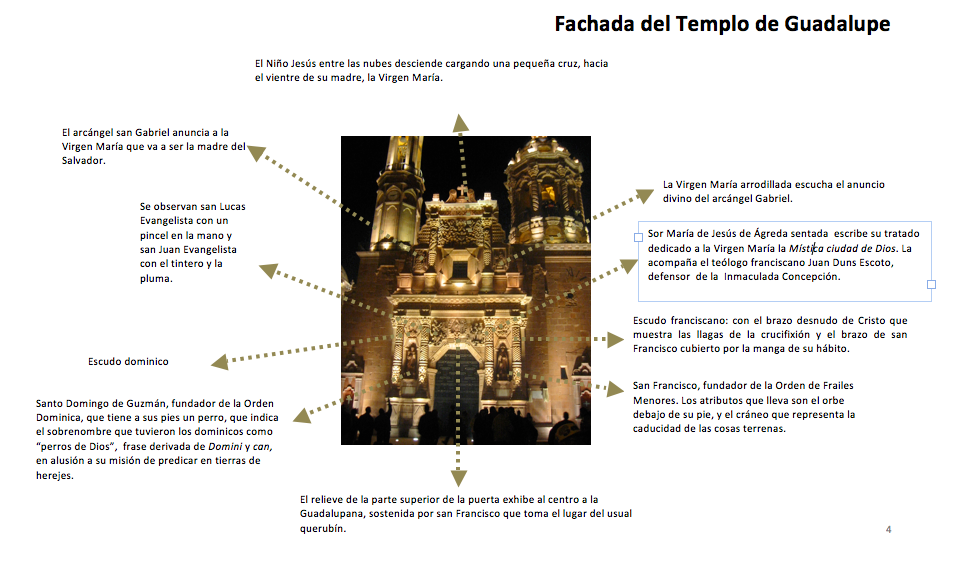
The church’s façade was constructed in the first half of the 18th century and reflects the economic prosperity enjoyed by some in the region at that time. The elaborate ornamentation and the use of twisted Solomonic columns are clear expressions of the Baroque style.
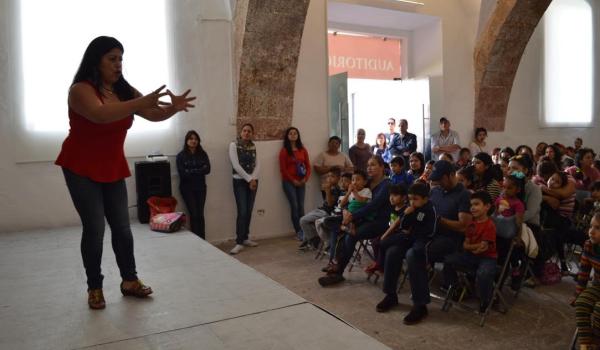
Auditorium
This space, once part of the conventual complex of the former Colegio de Propaganda Fide, now serves as a venue for a variety of events held throughout the year. It is a versatile, multi-purpose area where theatrical performances, concerts, lectures, seminars, and even temporary exhibitions take…
Auditorium
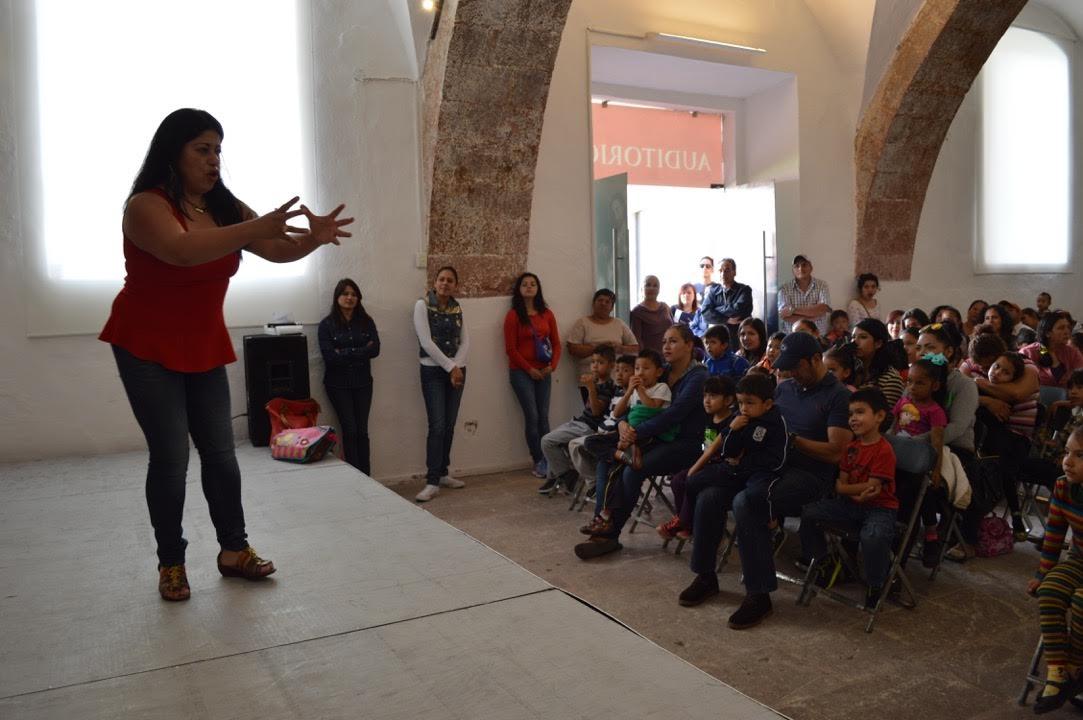
This space, once part of the conventual complex of the former Colegio de Propaganda Fide, now serves as a venue for a variety of events held throughout the year. It is a versatile, multi-purpose area where theatrical performances, concerts, lectures, seminars, and even temporary exhibitions take place.
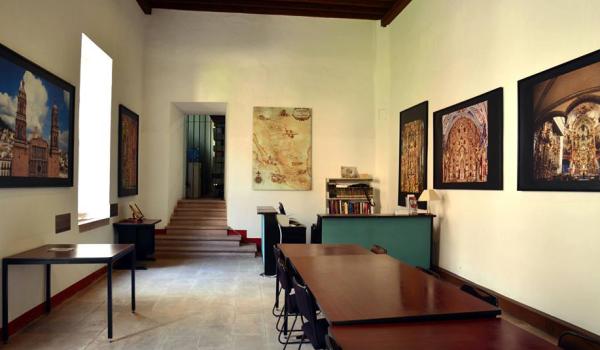
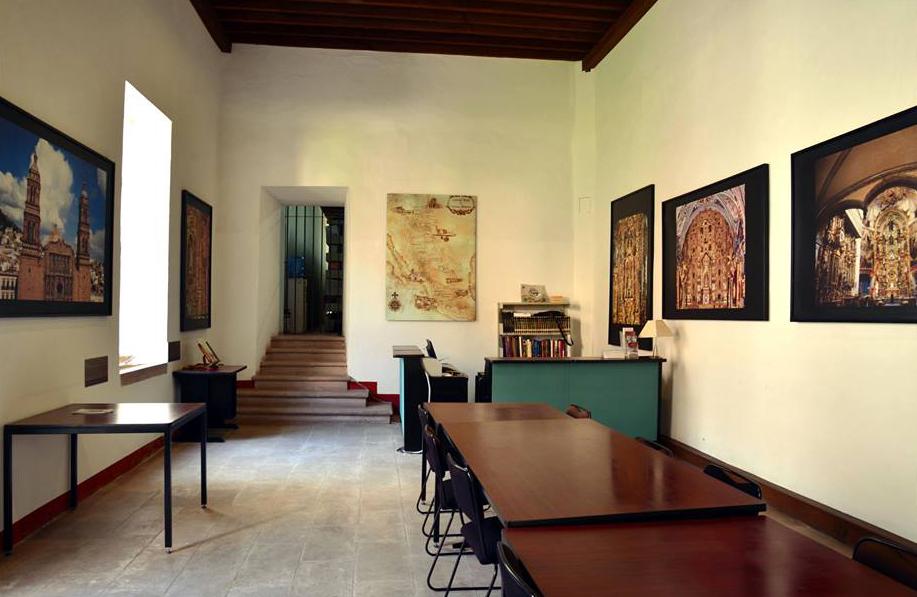
Library of the Camino Real de Tierra Adentro
The Library of the Camino Real de Tierra Adentro is open to the public Monday through Friday, from 9:00 a.m. to 5:00 p.m. It is an ideal place for in-depth research on this important historical route.
Infirmary Chapel
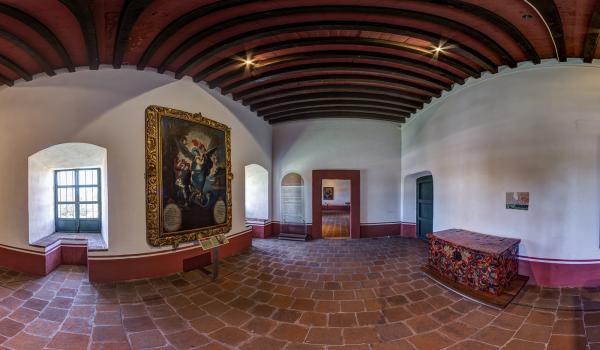
Following Franciscan convent tradition, the Colegio de Guadalupe had an infirmary for the use of friars and novices, which included 69 cells and a small oratory. Its construction took place between 1726 and 1783. Like many Franciscan oratories dedicated to healing, this chapel was consecrated to…
Infirmary Chapel

Following Franciscan convent tradition, the Colegio de Guadalupe had an infirmary for the use of friars and novices, which included 69 cells and a small oratory. Its construction took place between 1726 and 1783. Like many Franciscan oratories dedicated to healing, this chapel was consecrated to Saint Anthony of Padua, and features two arched paintings depicting scenes from his life.
On the pendentives, you can see artworks representing three of the four apparitions of the Virgin of Guadalupe, who was considered the protector of the Colegio. The chapel also houses paintings of scenes and devotions related to the Virgin Mary, as well as large antiphonaries with hymns dedicated to the Mother of Christ.
Special attention should be paid to the doorway, framed with sculpted flowering vines and adorned at the top center with a depiction of God the Father, along with monograms of the Virgin Mary and Jesus.
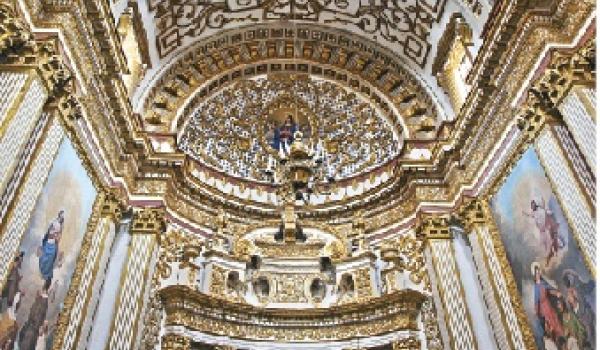
Naples Chapel
This chapel is one of the most important architectural and artistic treasures in northern Mexico. It features a unique blend of styles—its neoclassical structure is enriched with ornamentation that recalls the exuberance of the Baroque. The project was entrusted to Father Juan Bautista Méndez in…
Naples Chapel
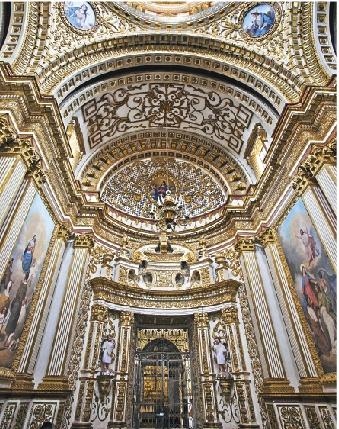
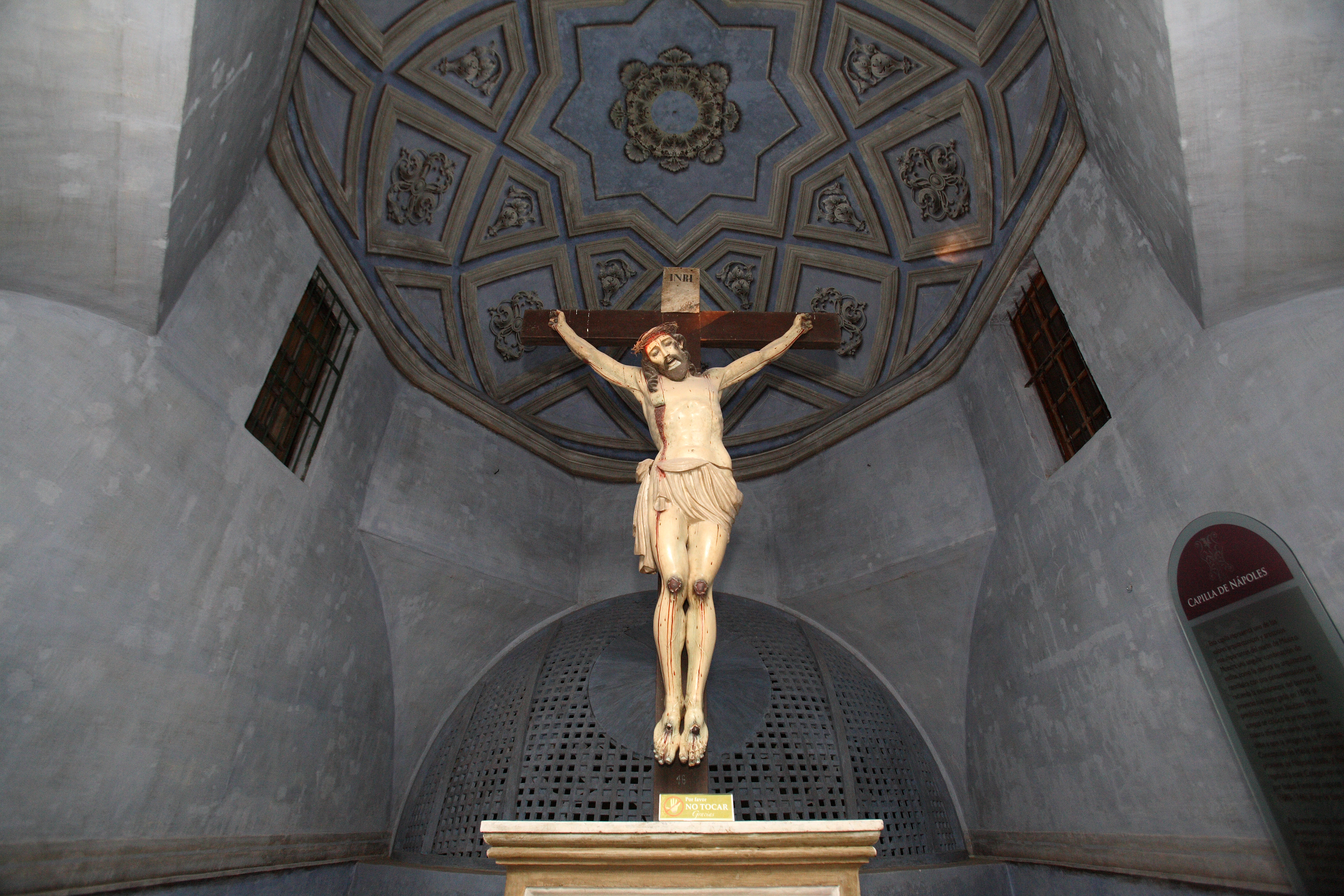
This chapel is one of the most important architectural and artistic treasures in northern Mexico. It features a unique blend of styles—its neoclassical structure is enriched with ornamentation that recalls the exuberance of the Baroque. The project was entrusted to Father Juan Bautista Méndez in 1845, although the cornerstone was laid four years later.
The chapel is named after the image of the Immaculate Conception of Mary that adorns the main altar, which came from Naples, Italy. This sculpture was gifted to the Colegio in the 18th century by Isabel Farnese, wife of King Philip V of Spain (1683–1746).
Upon entering, on the right side you’ll find an altar dedicated to the Sacred Heart of Mary, while the one on the left honors the Sacred Heart of Jesus. The eight oil paintings, completed in the last quarter of the 19th century, were created by Felipe Santiago Gutiérrez, an artist trained at the San Carlos Academy. These works, which reference the Litany of Loreto, replaced earlier paintings by Juan Nepomuceno Herrera.
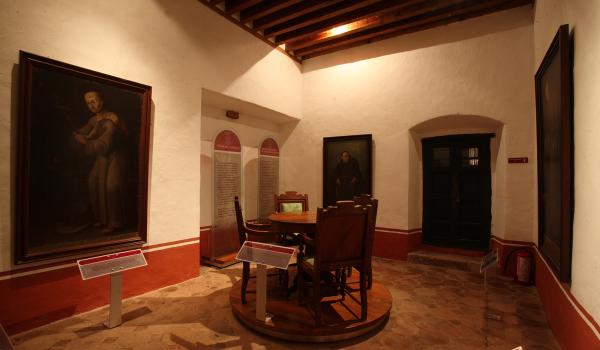
Guardian’s Cell
The highest authority within the convent was the guardian, who was supported in his duties by four senior friars known as “discretos,” forming a council called the "discretorio". Together, the guardian and his council oversaw the administration of the Colegio, which included supervising the…
Guardian’s Cell
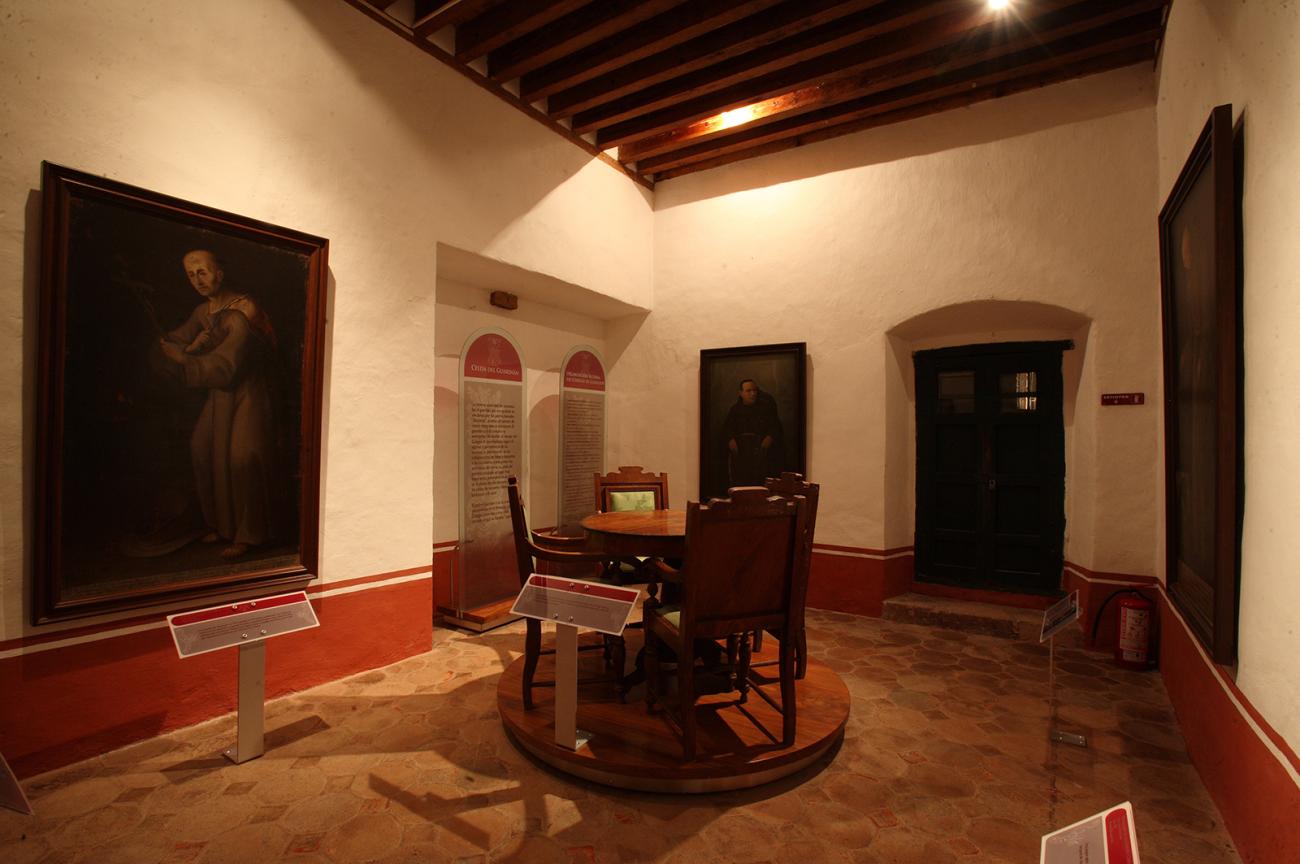
The highest authority within the convent was the guardian, who was supported in his duties by four senior friars known as “discretos,” forming a council called the "discretorio". Together, the guardian and his council oversaw the administration of the Colegio, which included supervising the admission and formation of novices, coordinating work among the faithful, and organizing missionary expeditions to evangelize the northern territories.
The guardian’s cell held a place of great importance. It was typically located on the upper floor of the cloister, near the cells of the other friars, the library, and the choir.
The guardian and his "discretorio" served as the governing body of the Colegio for a period of two to three years, a term referred to as a chapter.
Courtyards
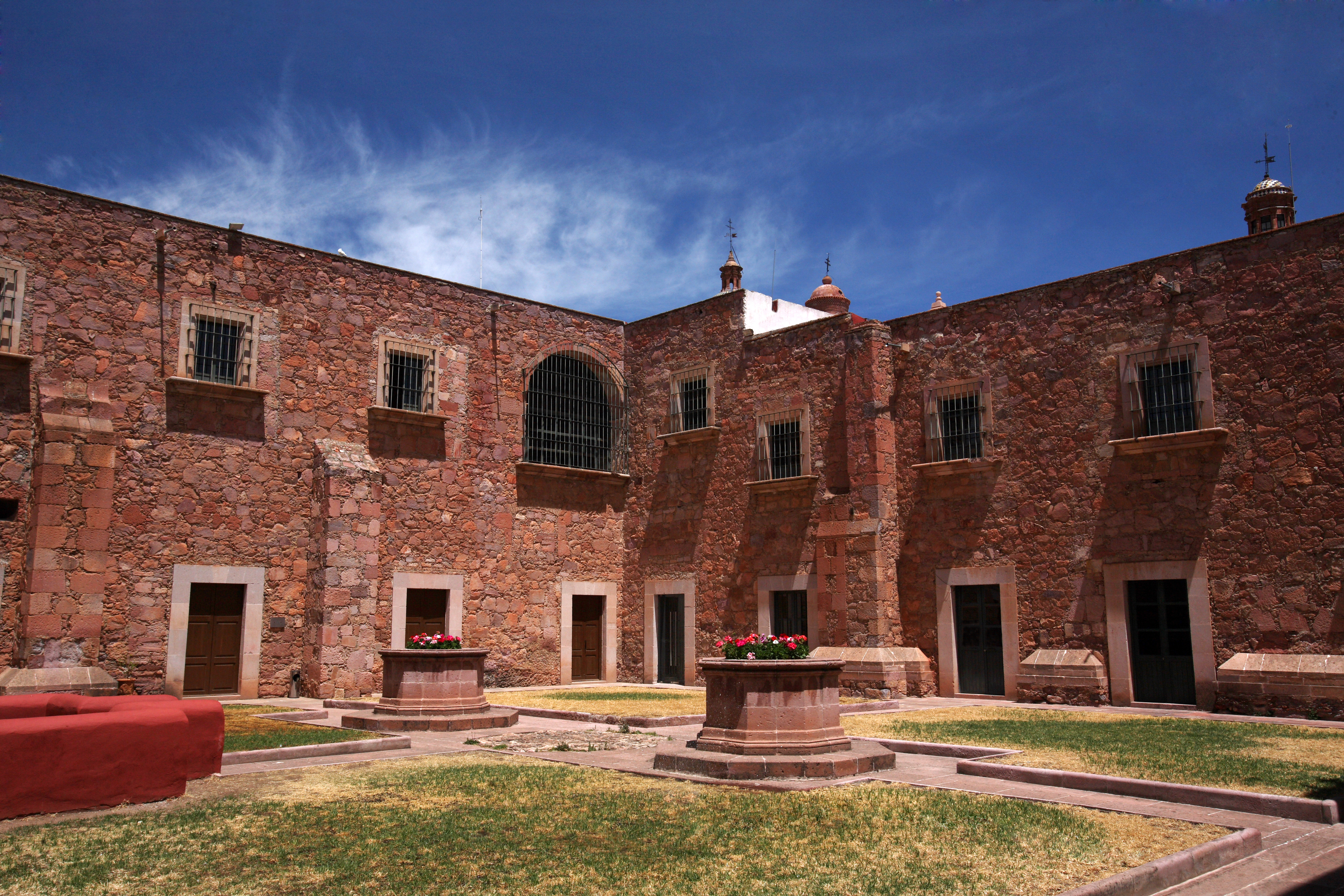
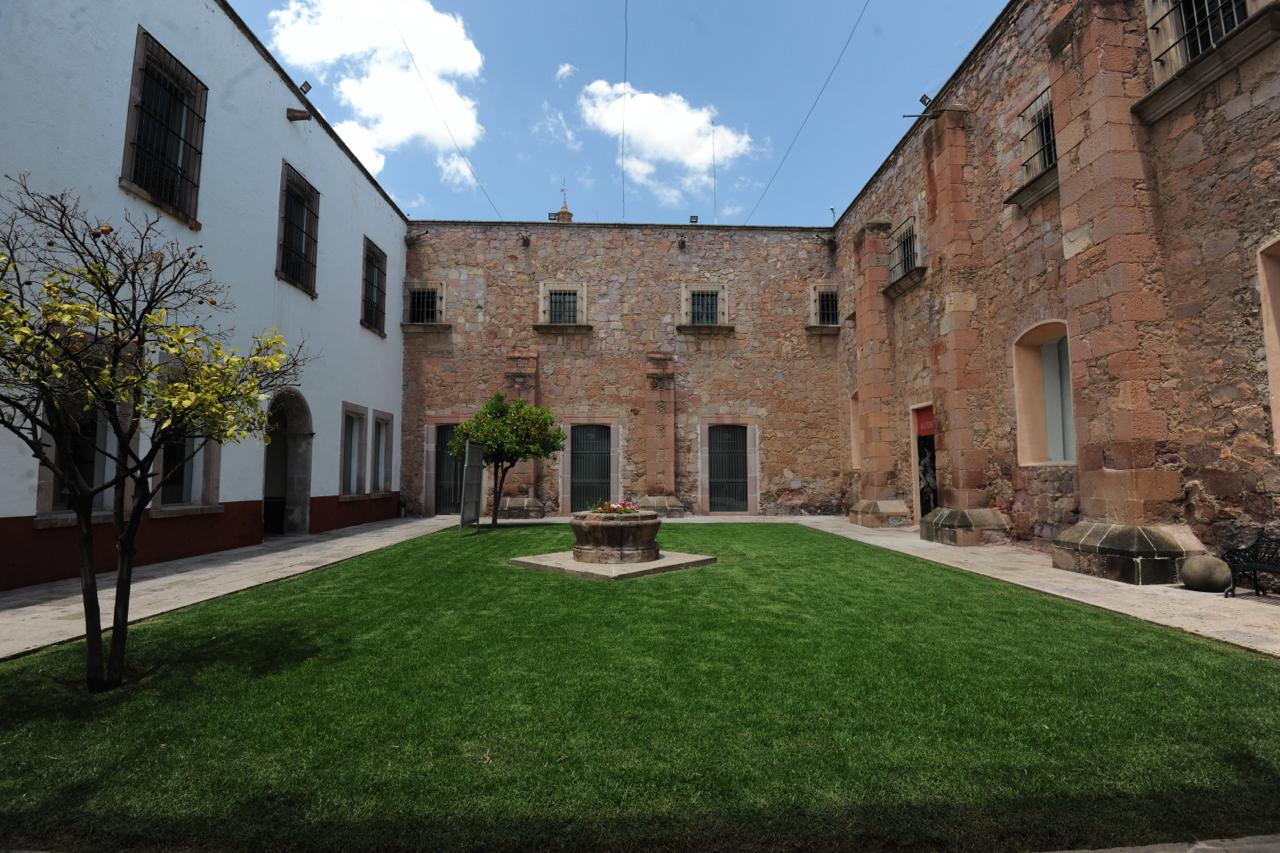
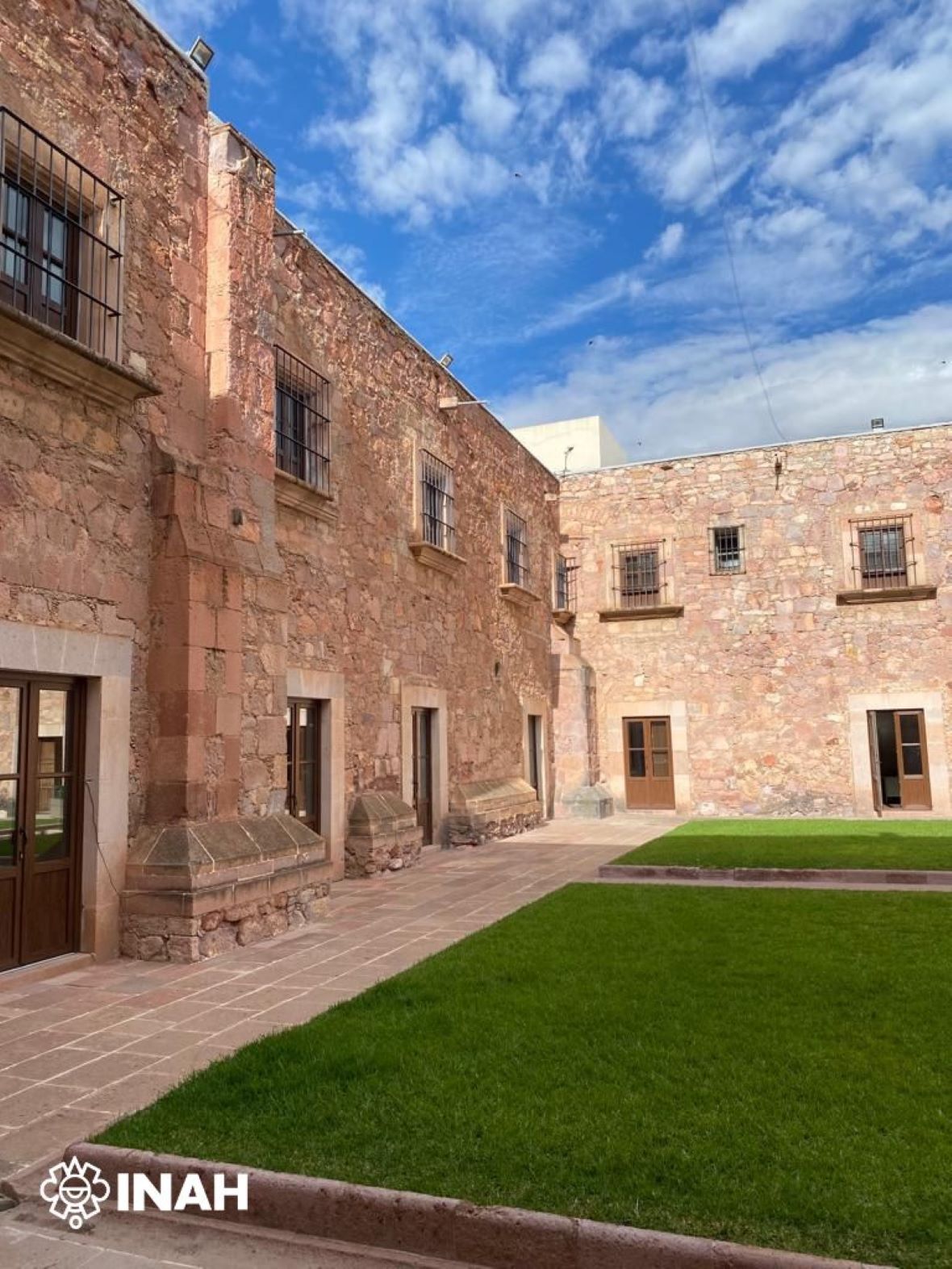
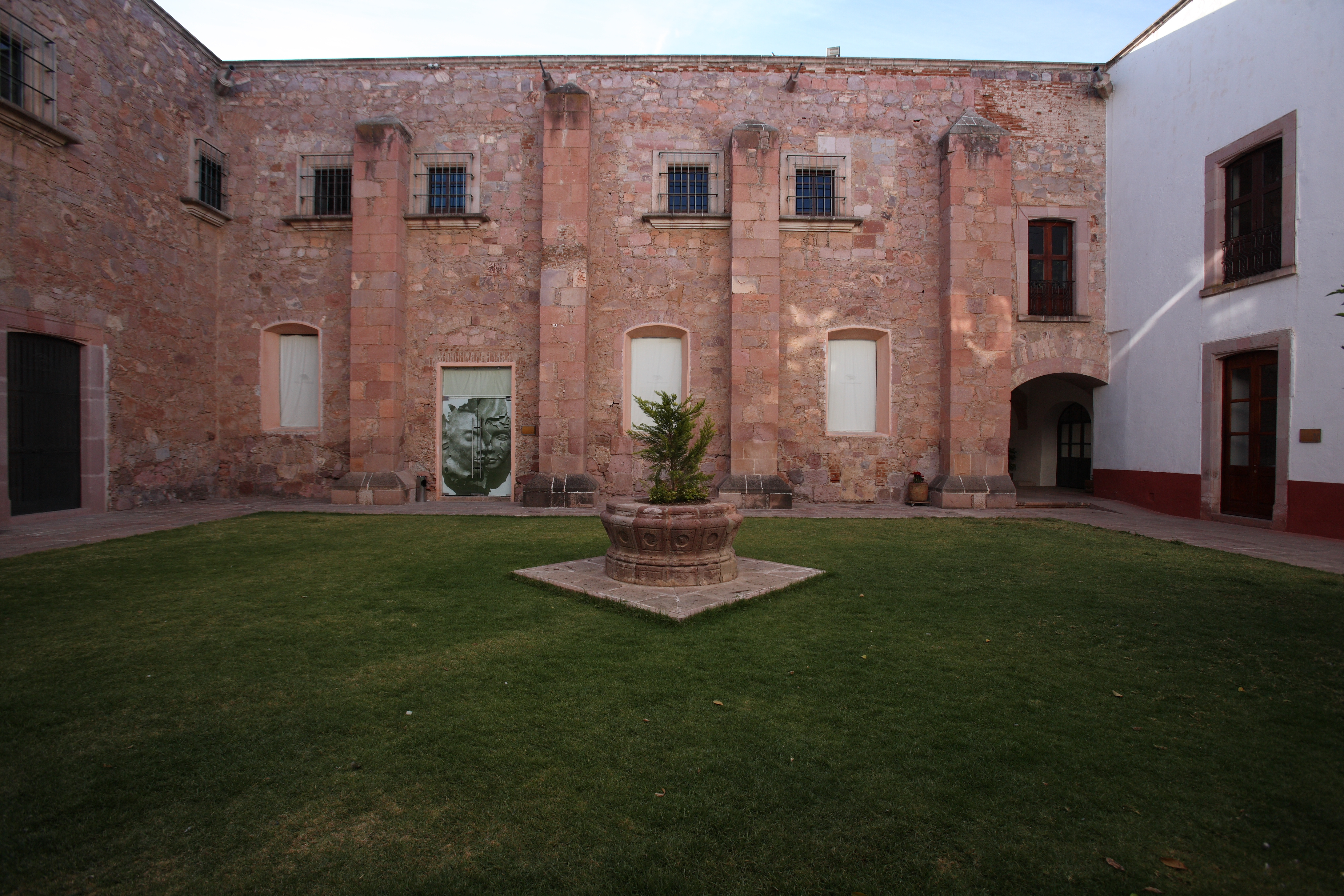
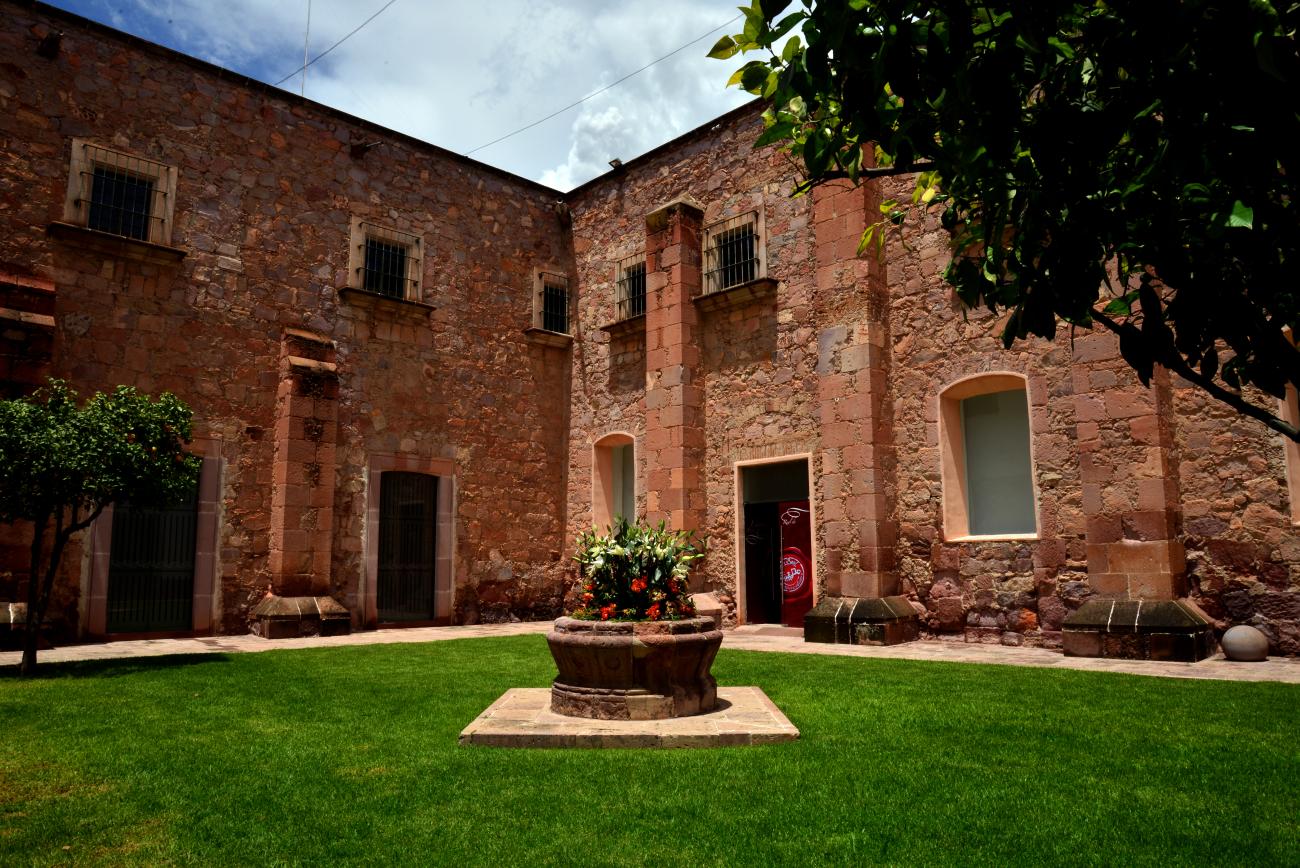
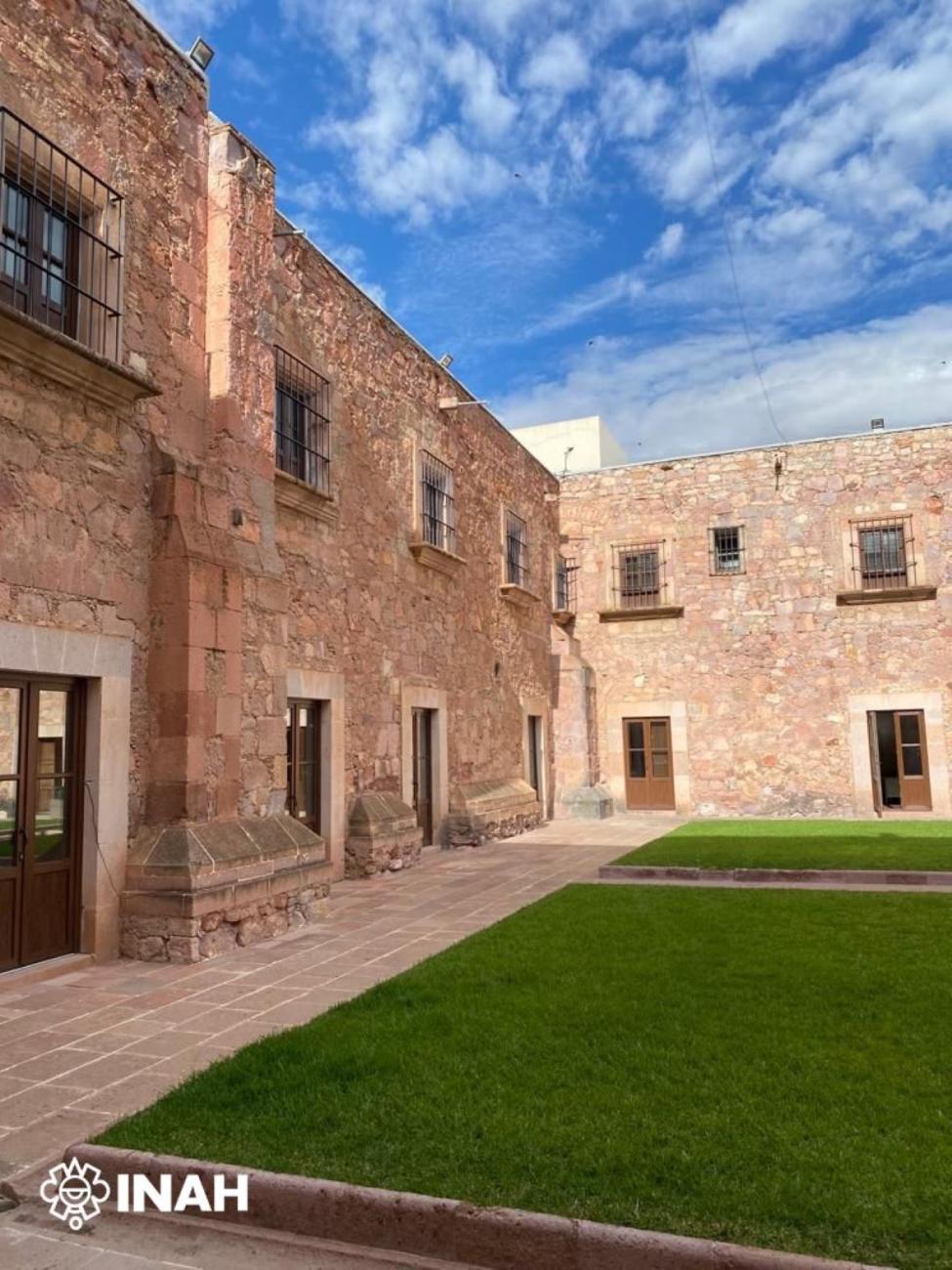
The Guadalupe Museum features three garden courtyards. In the third courtyard, visitors will find the cisterns that once supplied water to the infirmary of the former Colegio de Guadalupe.
Temple of Guadalupe
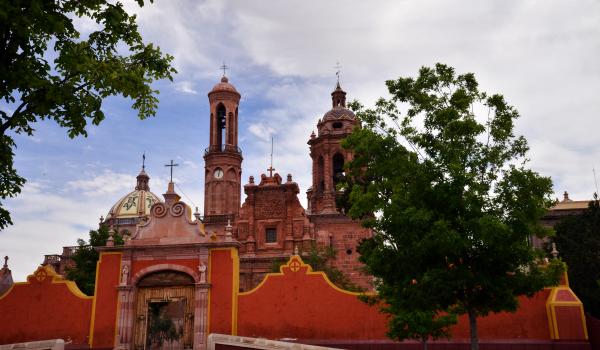
The Church of Guadalupe was built on the site of an earlier chapel dedicated to Our Lady of Mount Carmel. Later, a chapel was established in devotion to Our Lady of Guadalupe, and finally, in 1721, the Temple of Guadalupe was completed. The economic prosperity of Zacatecas, fueled by mining,…
Temple of Guadalupe
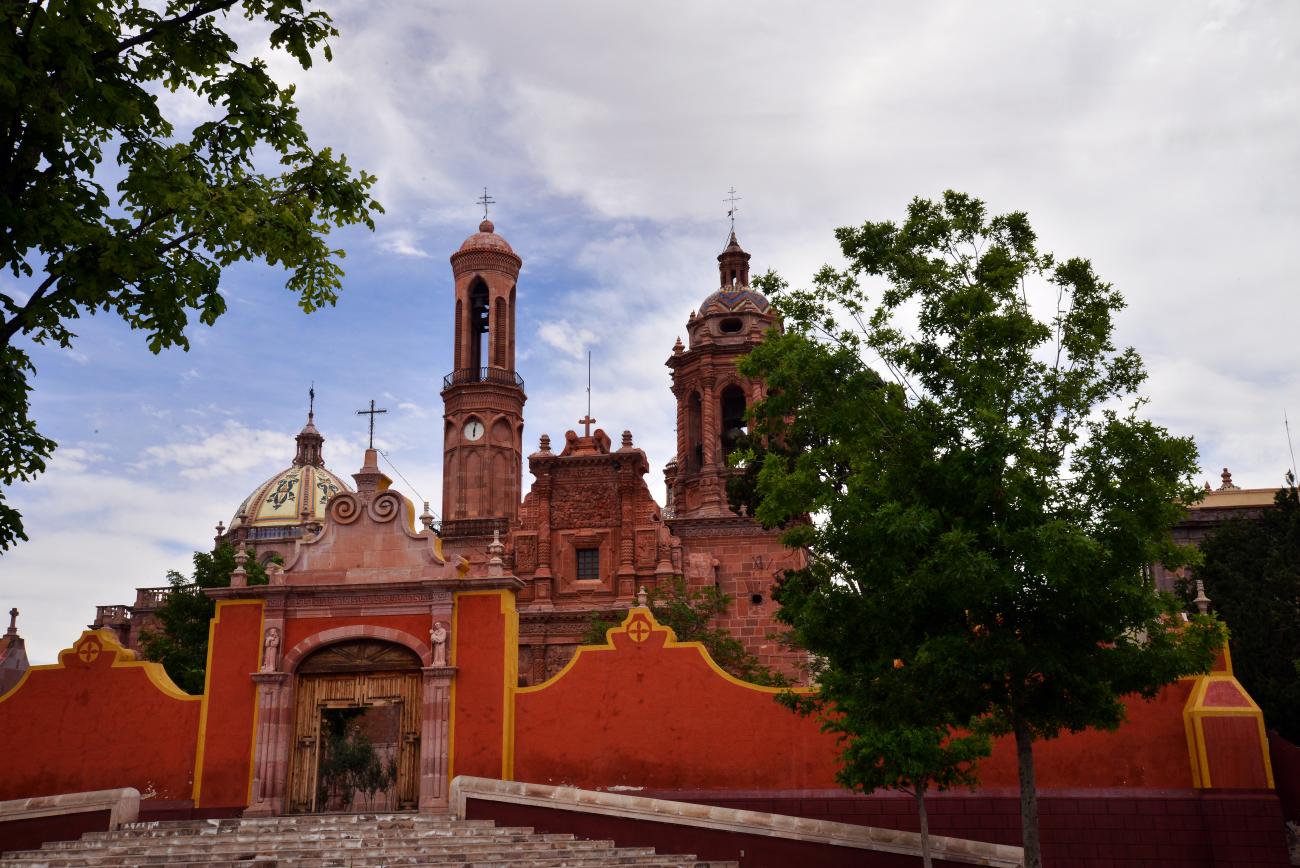
The Church of Guadalupe was built on the site of an earlier chapel dedicated to Our Lady of Mount Carmel. Later, a chapel was established in devotion to Our Lady of Guadalupe, and finally, in 1721, the Temple of Guadalupe was completed. The economic prosperity of Zacatecas, fueled by mining, greatly contributed to a flourishing of artistic activity.

The patronage of the Virgin of Guadalupe
Document
Document
- DirecciónVíctor Hugo Jasso Ortizvictorhugo_jasso@inah.gob.mx+52 (492) 923 20 89AdministraciónJosé Carlos Salas Moralesjosecarlos_salas@inah.gob.mx+52 (492) 923 20 89MuseografíaNataly Adriana Medrano Varelanataly_medrano@inah.gob.mx+52 (492) 923 20 89Protección y Resguardo de Bienes CulturalesGuadalupe Antonio de Dios Sánchezantonio_dedios@inah.gob.mx+52 (492) 923 20 89Gestión del Patrimonio CulturalEsthela Fonseca Rodríguezesthela_fonseca@inah.gob.mx+52 (492) 923 20 89